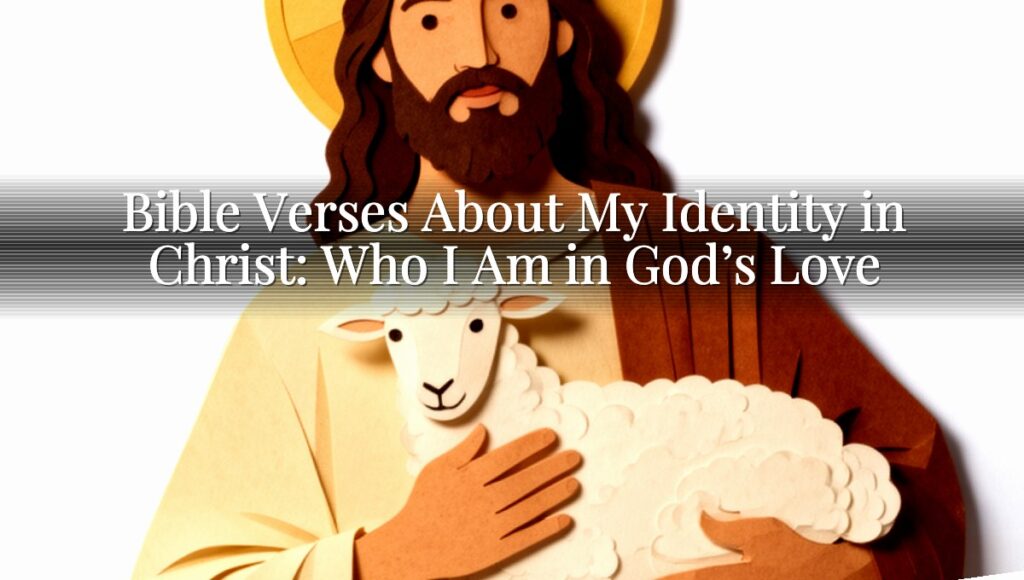
Bible Verses About My Identity in Christ: Who I Am in God’s Love
Quick Answer: bible verses about my identity in christ remind you that believers are adopted children of God, not condemned. You are chosen, set apart, and empowered to live for good works God prepared. As you walk in the Spirit, assurance grows through God’s witness, shaping how you think, speak, and live every day.
When you’re unsure who you are—or why you matter—God doesn’t leave you guessing. Scripture offers a steady foundation of no condemnation, adoption as God’s child, and a purpose that flows from being chosen in Christ. These truths are not abstract ideas; they are living identity that changes your daily decisions, your self-talk, and your courage in hard seasons. bible verses about my identity in christ pull you back to God’s perspective: you belong to Christ, you are God’s workmanship, and the Spirit witnesses that you are truly His. As you meditate on these passages, you’ll find comfort for your conscience, clarity for your calling, and hope for your future—because your identity is rooted in what God has done in Christ, not in what you feel today.
At a Glance — Verses in This Article
Romans 8:1
Romans 8:15-16
Ephesians 1:3-4
Ephesians 2:10
Philippians 3:20
1 Peter 2:9
Bible Verses
Romans 8:1 (King James Version)
“There is therefore now no condemnation to them which are in Christ Jesus, who walk not after the flesh, but after the Spirit.”
This verse anchors identity in freedom from guilt and condemnation for those who belong to Christ and walk by the Spirit.
Romans 8:15-16 (King James Version)
“For ye have not received the spirit of bondage again to fear; but ye have received the Spirit of adoption, whereby we cry, Abba, Father. The Spirit itself beareth witness with our spirit, that we are the children of God:”
It reveals that God’s Spirit adopts believers as children of God and bears witness within their hearts.
Ephesians 1:3-4 (King James Version)
“Blessed be the God and Father of our Lord Jesus Christ, who hath blessed us with all spiritual blessings in heavenly places in Christ: According as he hath chosen us in him before the foundation of the world, that we should be holy and without blame before him in love:”
These verses teach that believers are chosen in Christ to be holy and without blame before God.
“For we are his workmanship, created in Christ Jesus unto good works, which God hath before ordained that we should walk in them.”
They define your purpose: you are God’s workmanship created in Christ for good works He ordained.
Philippians 3:20 (King James Version)
“For our conversation is in heaven; from whence also we look for the Saviour, the Lord Jesus Christ:”
This passage shapes identity by reminding believers their citizenship is in heaven, forming how they live now.
1 Peter 2:9 (King James Version)
“But ye are a chosen generation, a royal priesthood, an holy nation, a peculiar people; that ye should shew forth the praises of him who hath called you out of darkness into his marvellous light:”
It describes believers as a chosen, royal priesthood set apart to proclaim God’s praises from darkness into light.
Identity Starts With Freedom: “No Condemnation” in Christ
One of the most common ways identity gets distorted is through condemnation—thinking, “I’m not good enough,” “God must be disappointed,” or “I’ll never change.” Romans 8:1 confronts that lie directly: there is now no condemnation for those in Christ Jesus who walk not after the flesh, but after the Spirit. Notice how identity is tied to relationship and direction: you are “in Christ,” and you are learning to walk by the Spirit.
This does not mean life is trouble-free, or that God ignores sin. Instead, it means your standing with God is not determined by every failure you experience. Condemnation tries to make your past your permanent label. The gospel makes you a new person—secure in Christ—so you can grow without fear-driven bondage.
When you build your identity on condemnation, you will either hide or perform. But when you build your identity on Christ, you can repent honestly and continue forward with hope. You are not condemned; you are being transformed.
As you meditate on this verse, ask: “Am I reading God’s heart through my feelings, or through His truth?” Then let God’s word correct your inner courtroom. Romans 8:1 is an invitation to live from acceptance in Christ, not from panic.
Take a moment today to speak this reality over yourself: “In Christ, I am not under condemnation. I will walk by the Spirit today.” That simple choice reorients the way you view yourself—and the way you approach prayer, obedience, and endurance.
If freedom from condemnation is one side of identity, adoption is the other. Romans 8:15-16 teaches that believers are not given “the spirit of bondage again to fear.” Instead, God has given “the Spirit of adoption,” and the result is intimacy: “we cry, Abba, Father.” That word Abba carries warmth, closeness, and trust.
This means your identity is not built on terror, uncertainty, or striving to earn love. Your identity is built on God’s action: He adopts you through Christ, and then the Spirit itself beareth witness with your spirit that you are truly God’s child.
Some people struggle with identity because they are always waiting to “feel adopted.” But the witness of the Spirit is meant to move you from guessing to assurance—steady faith over emotional instability. When fear speaks loudly, adoption answers with a louder voice: God is your Father.
Practically, this changes how you relate to God. Fear tends to shrink prayer to quick apologies and dread. Adoption expands prayer into relationship: you can come boldly, honestly, and expectantly. You can also confront guilt without being mastered by it. Guilt says, “Fix it.” Condemnation says, “You’re finished.” Adoption says, “Return to your Father; He will restore you.”
As you internalize these truths, your identity begins to reshape your worldview. You start to interpret your life through God’s fatherhood. In hard seasons, you don’t only endure—you belong. You are not an orphan wandering through spiritual life. You are a child of God with access to your Father.
Let this be one of your identity anchors: no fear as your default, and Abba Father as your constant.
Chosen Before the World: God’s Purpose for Your Life
Identity is more than what you hope to become; it includes what God declares you to be in Christ. Ephesians 1:3-4 opens with blessing and purpose. God has blessed believers with all spiritual blessings in heavenly places in Christ, and He has chosen them “before the foundation of the world.” That choice is not random; it has a goal: believers should be “holy and without blame before him in love.”
This verse fights two extremes. One extreme says, “My life is accidental; nothing matters.” The other says, “I must create my own worth.” Ephesians 1 answers both. God’s election means your life is held in divine intention. Your identity is not a guess—it’s a calling rooted in God’s eternal plan.
Then Ephesians 2:10 gives the “how” of identity lived out. “For we are his workmanship, created in Christ Jesus unto good works.” You are not only chosen—you are shaped. God does not save you and then abandon you to figure it out. He creates, forms, and trains you toward a purpose: “God hath before ordained that we should walk in them.”
That means your identity has direction. You are God’s workmanship, and good works are not a means to earn salvation; they are the fruit of salvation.
When you understand you are chosen in Christ, your obedience changes. It becomes less about proving your worth and more about expressing God’s workmanship through your daily choices. Love becomes the atmosphere of holiness—because you are loved, you can grow.
So if you feel behind, ask a better question: “What is God shaping in me today?” Your identity isn’t static; it is being formed. Chosen in Christ means you can move forward with confidence, not with despair.
Heaven’s Citizenship and Earth’s Calling: Live From Your Home
Another layer of identity is where you belong. Philippians 3:20 reminds believers: “our conversation is in heaven; from whence also we look for the Saviour, the Lord Jesus Christ.” The word “conversation” points to how life is conducted—your manner of living, your perspective, your priorities. Because your true home is heaven, your daily life begins to reflect that reality.
This verse counters the identity trap of “I am what my circumstances say.” Circumstances can be loud, but they don’t define your origin or destination. Your identity is tied to the Saviour and your heavenly citizenship. That influences how you respond to pressure and how you endure delays.
Finally, 1 Peter 2:9 gives a vivid description of who believers are in community and mission. You are “a chosen generation, a royal priesthood, an holy nation, a peculiar people.” Those phrases don’t only describe personal value; they describe a people with a purpose. “That ye should shew forth the praises of him who hath called you out of darkness into his marvellous light.”
So your identity has both inward security and outward witness. Inward, you know you belong. Outward, you proclaim and show God’s praises.
When these verses connect, you see a whole identity picture: you are secure in Christ (no condemnation), adopted by the Father (Abba), chosen and shaped by God’s plan (holy and without blame, created for good works), and oriented toward heaven (citizenship). Then you live as God’s called people—revealing His glory in real ways.
This is why identity matters: it’s not just how you think; it’s how you live. Let heaven’s reality shape your choices today, and let your calling as God’s people show up where you work, speak, serve, and pray.
Daily Steps to Live Your Identity in Christ
To live with confidence, you need rhythms that retrain your mind. Here are simple, practical ways to apply these truths every day.
First, replace fear-driven self-talk with Spirit-led truth. When condemnation tries to label you, return to no condemnation in Romans 8:1. A quick practice: pause, name the feeling (“I’m feeling condemned”), and then speak the gospel outcome (“I am in Christ; there is no condemnation to me”). This doesn’t ignore sin; it puts your heart back in the right relationship with God.
Second, pray as an adopted child. Romans 8:15-16 encourages intimacy—Abba, Father. Try a two-sentence prayer: “Father, thank You that You adopted me. Spirit, witness with my spirit that I am Your child.” Over time, this builds assurance rather than anxious striving.
Third, remember that your life has a prepared purpose. Ephesians 2:10 says you are God’s workmanship created in Christ unto good works. Each morning, ask: “God, what good work have You prepared for me today?” Then choose one concrete obedience step—kindness at work, forgiveness toward someone, generosity, or persistence in prayer.
Fourth, let heaven direct your daily priorities. Philippians 3:20 reminds you to live with heaven in view. Before big decisions, ask, “Does this reflect my heavenly citizenship?” Your choices will begin to align with your true home.
Finally, show God’s praises as His called people. 1 Peter 2:9 places your identity in a mission. Choose one way to display God’s light today—encourage a believer, share hope in a conversation, or serve quietly where you are.
Small actions repeated create strong identity.
Frequently Asked Questions
What bible verses define who I am in Christ when I feel unworthy?
Romans 8:1 reminds you that there is no condemnation for those in Christ Jesus. When your feelings argue against you, this verse restores your standing with God. Pair it with Romans 8:15-16 so fear is replaced with the Spirit’s witness that you are God’s child.
Which verses explain my identity as a child of God?
Romans 8:15-16 clearly teaches adoption: you do not receive a spirit of bondage to fear, but the Spirit of adoption. The Spirit bears witness with your spirit that you are a child of God, giving reassurance for both prayer and daily living.
How do passages about living your identity in Christ shape my purpose?
Ephesians 1:3-4 shows God chose you in Christ with the goal of holiness in love. Ephesians 2:10 explains that you are created in Christ Jesus for good works God ordained. Your purpose is not self-made—it is prepared by God and lived out through Him.
What scripture helps me remember I belong in heaven while I live on earth?
Philippians 3:20 reminds you that your conversation is in heaven and that you look for the Savior. That heavenly citizenship reframes priorities and endurance. It helps you respond to life with hope instead of being controlled by temporary circumstances.
A Short Prayer
Father, thank You for the identity You have given me in Christ. I confess that fear and condemnation sometimes try to speak louder than Your Word. Fill my heart again with the truth that there is no condemnation for those in Christ Jesus. Strengthen my assurance that I am Your child through the Spirit’s witness. Lead me in the good works You prepared, keep my eyes on heaven, and help me show forth Your praises in this world. In Jesus’ name, amen.
Key Takeaway: Your identity in Christ is secure, adopted, chosen, purposed, and heavenly-minded—so you can live in hope and obedience every day.