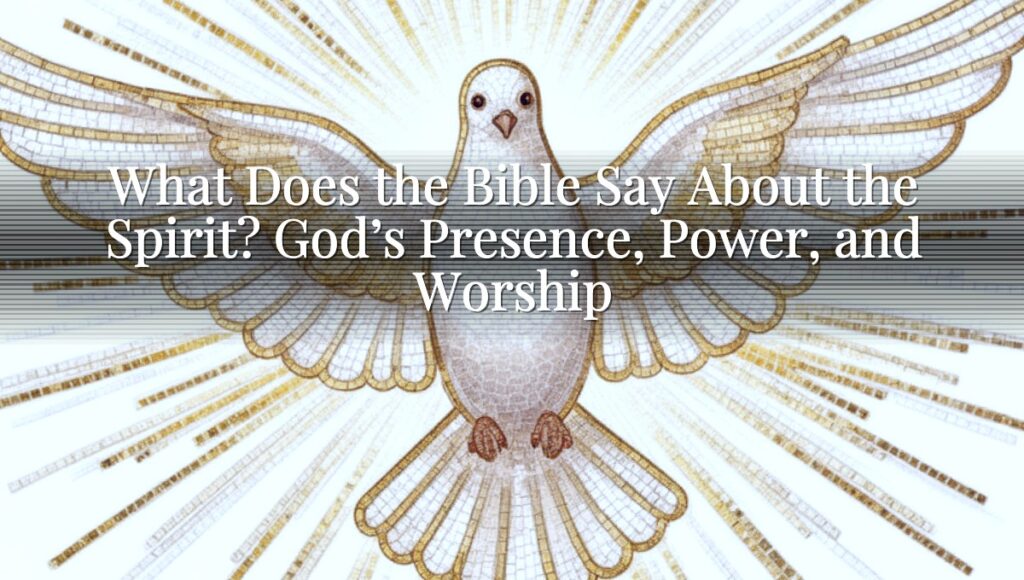
What Does the Bible Say About the Spirit? God’s Presence, Power, and Worship
Quick Answer: What does the bible say about the spirit? Scripture shows that God is Spirit, the Spirit of God moves and works powerfully, and God pours out His Spirit on people. The Spirit brings wisdom, understanding, counsel, might, knowledge, and reverence. Believers also worship in spirit and in truth, and they can’t escape God’s presence.
If you’ve ever wondered what does the bible say about the spirit, you’re not alone. The Bible doesn’t treat “spirit” as a mystery to avoid; it presents the Spirit as real—God’s active presence, God’s power, and God’s guidance. From the beginning, the Spirit of God is shown moving over the waters, signaling that God’s Spirit brings life where there was chaos. Scripture also describes the Spirit’s character: wisdom, understanding, counsel, might, knowledge, and fear of the LORD. And it assures believers that God is not distant; His presence is inescapable. Finally, the Bible calls worshipers to worship in spirit and in truth, meaning your inner life and your sincere faith must align with God’s reality. In the following verses, you’ll see how the Spirit draws near, equips, and transforms everyday worship and trust.
At a Glance — Verses in This Article
Genesis 1:2
Psalms 139:7
Isaiah 11:2
Joel 2:28-29
John 4:24
Bible Verses
Genesis 1:2 (King James Version)
“And the earth was without form, and void; and darkness was upon the face of the deep. And the Spirit of God moved upon the face of the waters.”
This verse shows the Spirit of God moving at the start of creation, highlighting the Spirit’s active presence and power to bring order.
Psalms 139:7 (King James Version)
“Whither shall I go from thy spirit? or whither shall I flee from thy presence?”
It emphasizes that you cannot flee from God’s presence, connecting the Spirit to God’s ever-close presence with you.
“And the spirit of the LORD shall rest upon him, the spirit of wisdom and understanding, the spirit of counsel and might, the spirit of knowledge and of the fear of the LORD;”
It describes the Spirit resting with God’s people in qualities like wisdom and reverence, showing what the Spirit produces.
Joel 2:28-29 (King James Version)
“And it shall come to pass afterward, that I will pour out my spirit upon all flesh; and your sons and your daughters shall prophesy, your old men shall dream dreams, your young men shall see visions: And also upon the servants and upon the handmaids in those days will I pour out my spirit.”
It promises God will pour out His Spirit on all flesh, demonstrating the Spirit’s mission to empower and bless many.
John 4:24 (King James Version)
“God is a Spirit: and they that worship him must worship him in spirit and in truth.”
It teaches that God is Spirit and that true worship happens in spirit and in truth.
The Spirit of God is present and active
When you read what the Bible says about the Spirit, you begin with God’s initiating work. In Genesis 1:2, the Spirit of God “moved upon the face of the waters.” That picture matters: before there is light, before there is order, the Spirit is already at work. The Spirit isn’t just a theological label—it is the living presence of God bringing direction and renewal.
This also means the Spirit is not restrained to certain seasons of life or certain “spiritual moments.” God’s Spirit moves; it does something. If your life feels formless, heavy, or uncertain, the opening message of Scripture is that God’s Spirit is able to move over what seems empty.
The Bible then assures you that this Spirit-led nearness is personal. Psalms 139:7 asks, “Whither shall I go from thy spirit? or whither shall I flee from thy presence?” In other words, God’s presence is not something you accidentally stumble into—it’s something that surrounds you. Even when you try to run, you can’t outrun Him.
So the Spirit is both near and effective. He moves over disorder, and He remains with His people. That combination should bring courage: God is not absent, and God does not waste His power.
What the Spirit brings: wisdom, understanding, counsel, and reverence
One of the most encouraging parts of Scripture is that it describes the Spirit’s “fruit” in real virtues. Isaiah 11:2 speaks of “the spirit of the LORD” resting with someone, bringing “the spirit of wisdom and understanding, the spirit of counsel and might, the spirit of knowledge and of the fear of the LORD.”
Notice the pattern. The Spirit produces not only knowledge but reverence—a “fear of the LORD” that deepens faith rather than merely increasing information. The Spirit also strengthens decision-making (“counsel”) and endurance (“might”). That means the Spirit is not limited to emotional comfort; He equips the whole person to live faithfully.
This is crucial for people who feel spiritually stuck. If your prayers feel weak, Isaiah 11:2 reminds you that the Spirit can rest upon you with wisdom to understand God’s ways, counsel to navigate pressure, and knowledge that grounds your hope. The Spirit of God is able to change what you do with daily questions.
And because God’s Spirit is not distant (as Psalms 139:7 suggests), you can pray with confidence. You’re not begging a far-off deity for help—you’re appealing to the God whose presence you can’t escape, whose Spirit brings wisdom and reverence.
The Spirit poured out and worship that matches God’s reality
God’s work through the Spirit is not only personal—it is shared. Joel 2:28-29 promises that God will “pour out my spirit upon all flesh.” It includes sons and daughters, old men and young men, and even servants and handmaids. The Spirit’s blessing is expansive, crossing social boundaries and reaching people who might otherwise be overlooked.
This same passage connects the outpouring to prophetic vision and dreams. While details may be debated in interpretation, the central message is unmistakable: God intends to empower His people by His Spirit and to draw them into His purposes.
Finally, John 4:24 anchors everything in worship. Jesus declares: “God is a Spirit: and they that worship him must worship him in spirit and in truth.” Worship isn’t only outward religion; it’s inner alignment with God’s nature. If God is Spirit, then worship that pleases Him engages the heart—your genuine faith—while staying anchored in truth.
Put these verses together, and you get a clear devotional rhythm. God’s Spirit moves and equips (Genesis 1:2; Isaiah 11:2). God’s presence is real and unavoidable (Psalms 139:7). God pours out His Spirit broadly to bless and empower many (Joel 2:28-29). And worship flows from who God is—worship in spirit and in truth (John 4:24).
That’s hope for daily life: your faith is not guesswork. The Spirit of God is active, God’s presence is near, and worship is meant to be sincere and real.
Daily steps to live in step with the Spirit
Here are practical ways to respond to what the Bible teaches about the Spirit—without needing complicated theories.
1) Start your day with presence, not panic. Because God asks, “Whither shall I go from thy spirit?” (Psalms 139:7), you can pause and speak honestly to Him as you begin. Even if you feel scattered, remember you are not alone.
2) Ask for Spirit-given discernment. Isaiah 11:2 highlights wisdom, understanding, counsel, might, knowledge, and fear of the LORD. Before you make decisions—text responses, spending choices, conversations—pray for wisdom and counsel rather than only outcomes.
3) Practice worship that reaches the heart. John 4:24 calls you to worship in spirit and in truth. Choose one worship moment today (prayer, singing, reading) and ask: “Am I worshiping with sincerity, or with routine?” Aim for truth in your motives.
4) Expect God’s Spirit to reach beyond you. Joel 2:28-29 shows the Spirit poured out on “all flesh,” including people different from you. Pray for opportunities to encourage others and recognize that the Spirit works broadly.
5) Let God’s moving work reframe your “formless” moments. Genesis 1:2 shows the Spirit moving over the waters. When life feels unstructured or dark, don’t conclude that God has stopped working. Pray for Him to move—not just to fix problems, but to bring order.
These steps turn doctrine into discipleship: presence, wisdom, worship, compassion, and hope.
Frequently Asked Questions
What the Bible teaches about the Spirit in everyday life?
The Bible presents the Spirit as active and near. God’s Spirit moved over creation (Genesis 1:2), and you cannot escape God’s presence (Psalms 139:7). The Spirit also brings guidance through wisdom, understanding, counsel, and reverence (Isaiah 11:2).
Are there Bible verses about the Spirit that describe worship?
Yes. In John 4:24, Jesus says God is Spirit and that worship must be “in spirit and in truth.” This means worship isn’t only external; it engages your heart with sincerity and aligns with God’s reality.
How do we understand the Spirit being poured out on all flesh?
Joel 2:28-29 teaches that God will pour out His Spirit on all people, including sons and daughters, old and young, and servants and handmaids. The point is that God’s Spirit empowers widely and reaches those often left out.
What does the Spirit’s work look like according to Isaiah 11:2?
Isaiah 11:2 describes the Spirit resting with qualities like wisdom and understanding, counsel and might, knowledge, and the fear of the LORD. This shows the Spirit equips believers to live with discernment and reverent trust, not just fleeting emotion.
A Short Prayer
Father, thank You that You are not distant, for Your Spirit is active and near. When my life feels formless, move over it as You did at the beginning. Grant me wisdom, understanding, counsel, and might, and deepen in me the fear of the LORD. Teach me to worship You in spirit and in truth, with sincere hearts grounded in Your reality. Pour out Your Spirit again in and through Your people. In Jesus’ name, amen.
Key Takeaway: The Bible presents God’s Spirit as present, empowering, and personal—drawing you into worship that is true in heart and life.