Introduction: Why a Simple Framework Helps in Sharing Faith
In a busy world where conversations about meaning, faith, and purpose often happen in fleeting moments, having a practical and memorable method to share what you believe can be transformative. The 3-circle gospel, also known as the three-circle framework or the three-circle model, is designed to provide a clear, visual map for communicating the core message of the Christian faith in everyday dialogue. It emphasizes clarity, compassion, and listening, so that the person you are talking with can follow the thread from creation to restoration in a natural, relational way.
This article offers an in-depth, educational look at the 3-circle gospel, including its core components, practical steps for using it in conversation, variations in terminology, and considerations for adapting the framework to different audiences and contexts. Whether you are a church leader teaching others to share their faith, a student seeking a respectful approach to evangelism, or a curious reader exploring how simple tools can aid communication, you will find practical guidance and examples here.
What is the 3-circle gospel?
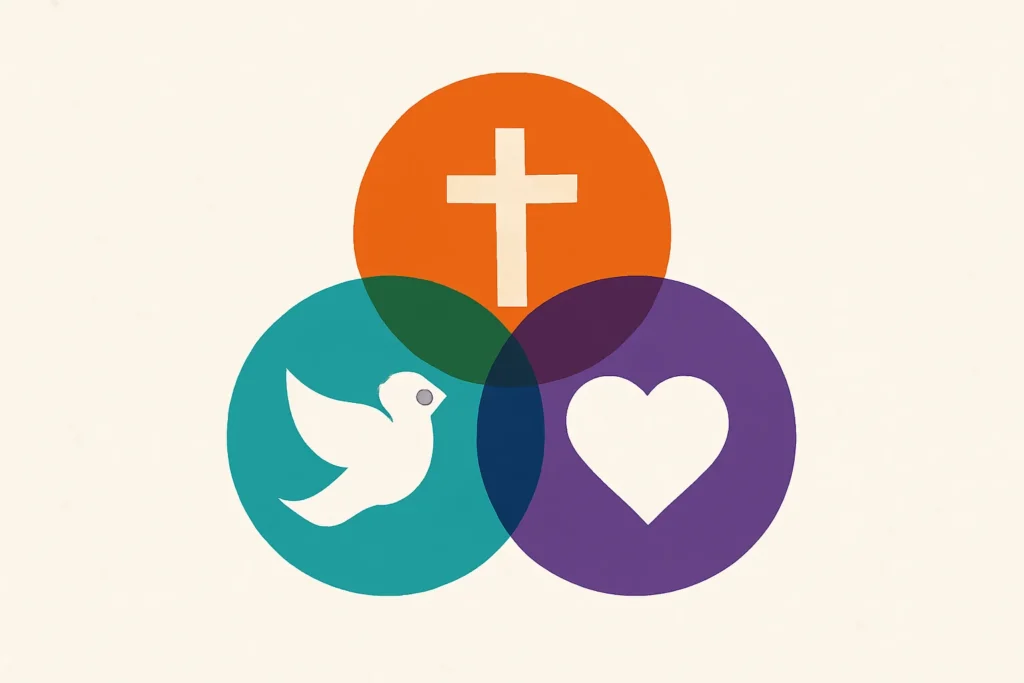
The 3-circle gospel is a concise, visual method for explaining the Christian story in three interconnected circles. Each circle represents a fundamental piece of the narrative, and the overlaps illustrate how these pieces relate to one another. The goal is not to win an argument but to guide a person toward understanding, curiosity, and a personal response.
At its heart, the three-circle evangelism approach invites a listener to consider:
God’s design for humanity and the world;
Our shared brokenness or separation from that design;
God’s solution through Jesus and the invitation to respond with faith and trust.
The framework is intentionally simple, which makes it adaptable across ages, cultures, and settings. It is often used in one-on-one conversations, small group studies, and even large church outreach events. In many contexts, people remember it as three circles that come together to tell a story—one that begins with creation, moves through human need, and culminates in restoration through Christ.
The three circles at a glance
The three-circle gospel rests on three essential ideas. Each one corresponds to a circle, and the points where circles overlap help communicate the relationships between the ideas. Here is a compact overview of the circles and how they connect.
Circle One: God’s Design
This circle captures the belief that God created the world intentionally and declared it good. It highlights relationships—between humans and God, between people, and with the rest of creation. In this circle you might emphasize phrases like origin, purpose, and intimacy with God.
When people hear about God’s design, they are invited to consider what life looks like when things are aligned with the Creator’s intentions. This circle sets a hopeful baseline: life is meant to be lived in relationship with God and others, with meaning that goes beyond personal success or mere pleasure.
Circle Two: Humanity’s Brokenness
The second circle acknowledges the universal experience of brokenness, separation, or pain that disrupts God’s design. This is often described in terms of sin, turning away from God, or destructive patterns that distort relationships—especially the relationship with God.
Rather than presenting brokenness as a distant problem, the framework situates it within everyday life: isolation, shame, fear, conflict, addiction, or the weight of guilt. The goal is not to shame but to help the listener recognize a real, present need for relief, healing, and restoration.
Circle Three: The Gospel and Response
The third circle centers on God’s answer to human brokenness: the gospel—often summarized as the good news about Jesus’ life, death, and resurrection, and the invitation to respond in faith. This circle answers the question: What can fix what is broken? The message typically includes:
What Jesus accomplished on the cross and through the empty tomb;
The offer of grace, forgiveness, and new life;
The call to respond with trust, repentance, and a decision to follow Jesus.
The final step in this framework is the response: a person is invited to consider what it would mean to trust God, turn away from destructive patterns, and begin or renew a relationship with God through Jesus.
How to navigate the three-circle gospel in conversation
Using the three-circle approach effectively requires a mix of clarity, sensitivity, and listening. The flow below provides a practical guide to moving through the circles in a natural conversation, with emphasis on relationship-building and genuine curiosity about the other person’s experiences.
Prepare the space and your posture
Enter the conversation with respect and patience; view the other person as a fellow traveler rather than a project.
Ask open-ended questions to understand their worldview, pain points, and questions about God or faith.
Be ready to share your own story briefly, showing how God’s design, brokenness, and the gospel have intersected your life.
Bridge from listening to sharing
After listening, you can introduce the first circle—God’s design—by sharing what you understand about life’s meaning and purpose within a created order. Then transition to the second circle by naming the places where that design is disrupted in real life.
The moment you move to the third circle, couch the gospel in terms of hope and invitation: Jesus’ life, death, and resurrection as a path toward restoration and reconciliation.
Guidelines for a respectful, relational tone
Focus on questions and listening rather than arguing about doctrines or denominations.
Avoid pressuring the other person toward a decision; emphasize informed response and personal journey.
Use language that is accessible and relevant to the person’s background and life circumstances.
Practical tools for teaching and using the 3-circle gospel
For groups and individuals, there are a few reliable tools that can reinforce learning and assist in real-world sharing. The following suggestions help you train others to explain the framework confidently and compassionately.
Printable or digital circle diagrams that show three overlapping circles labeled God’s Design, Humanity’s Brokenness, and The Gospel.
Simple captions for each circle and brief “bridge questions” to prompt discussion.
Color coding or icons to make the diagram memorable, especially for youth or non-native speakers.
Dialog scripts and practice conversations
Short, adaptable scripts that start with questions like, “What do you think life is about?” followed by mapping responses onto the three circles.
Sample dialogue templates that demonstrate how to transition smoothly from one circle to the next.
Practice prompts for partners to role-play different perspectives (skeptical, curious, neutral, believer) so that the method remains flexible under pressure.
Digital tools and online formats
Interactive online diagrams that users can customize to reflect their own experience of God’s design and brokenness.
Short video introductions that illustrate the three-circle narrative in 60-90 seconds for social media or outreach events.
Mobile-friendly versions of the diagram that are easy to share in casual chats or messaging apps.
Variations and semantic breadth: linguistic and cultural considerations
While the core content of the 3-circle gospel remains consistent, it is useful to adapt language and emphasis to fit different contexts. Below are some variations and synonyms you’ll encounter in training materials, seminars, and churches around the world.
Three-circle gospel
Three-circle framework
Three-circle model of the gospel
Three circles evangelism
Circle-by-circle gospel presentation
Emphasizing God’s design and purpose as foundational for life choices and ethics.
Highlighting human brokenness as a universal condition rather than a personal accusation.
Framing the gospel response as a decision that begins a journey of discipleship rather than a one-time event.
Adaptation across contexts: who can benefit from the 3-circle approach?
The three-circle gospel framework is versatile enough to be used with a wide range of audiences. Here are a few illustrative settings and how the framework can be tailored to each.
Campus and young adult ministry
On campuses, students often respond to brevity, relevance, and a non-coercive tone. You can use the three-circle diagram to connect faith with questions about meaning, social responsibility, and identity. Emphasize the practical outcomes of following Jesus in areas like relationships, integrity, and service.
Neighbors and community outreach
In neighborhood outreach, the first circle can be linked to everyday life—how good relationships, families, and communities flourish when aligned with God’s design. The second circle speaks to conflict, loneliness, or cycles of harm, while the third circle offers hope through Jesus and a path to reconciliation.
Interfaith engagements
When engaging in interfaith conversations, the three-circle framework can function as a storytelling tool that invites dialogue about shared concerns—meaning, purpose, justice, and love—without reducing other faith traditions to a caricature. It is important to listen actively and avoid presenting the framework as the only viable path to God.
Addressing questions, objections, and critiques
As with any evangelistic tool, the 3-circle gospel invites questions and invites believers to examine the assumptions behind its claims. Here are some common questions and respectful responses to help you maintain integrity in conversation.
Common questions
Is this a formula or a relationship? The intention is to guide a conversation toward a meaningful relationship with God, not to replace relationship-building with a rigid script.
What if someone disagrees with the premise of God’s design? Invite them to share their perspective and explore how differing worldviews address purpose, suffering, and meaning.
Does reducing faith to three circles oversimplify Christianity? It is a starting point for dialogue. It invites deeper exploration while providing clarity about core beliefs.
Constructive critiques and how to respond
Critique: The framework might feel manipulative or coercive. Response: Emphasize consent and curiosity; the aim is to share a narrative, not to coerce a decision.
Critique: It may oversimplify complex theology. Response: Use it as a doorway to broader discussion, not a final authority on every theological issue.
Critique: It can appear exclusive. Response: Frame it as an invitation rather than a declaration, and acknowledge the validity of many faith journeys.
Training and practice: how to get proficient with the 3-circle gospel
Proficiency comes through practice, feedback, and humility. Here are practical steps you can take to become comfortable and persuasive in sharing the three-circle gospel.
Structured practice routines
Pair up with a friend or mentor and role-play a 10-minute conversation using the three circles.
Record conversations (with consent) and review for clarity, tone, and balance between listening and speaking.
Rotate roles so each person experiences being the listener, the presenter, and the observer who offers feedback.
Reflection questions after conversations
What part of the conversation felt most natural? Where did you stumble?
Did you listen more than you spoke? Were there moments you could have asked a clarifying question?
Was the listener able to articulate their own view clearly? How did you respond to their perspective?
Sample conversation excerpts: seeing the three-circle gospel in action
Real-life examples help illuminate how the framework functions in practice. The following short dialogues illustrate how someone might introduce and move through the three circles with a neighbor, a classmate, and a coworker. Note how each conversation centers the other person’s questions and feelings while staying true to the core message.
Neighbor: “I’ve been thinking about what life is for lately.”
Presenter: “That’s a big question. In the three-circle gospel framework, some people describe life as designed by God to be in relationship with Him and with others. That’s the God’s Design circle. But many people feel disconnected from that design—anger, loneliness, or broken relationships—what we might call humanity’s brokenness. If that resonates with you, we can map your experience onto the second circle and then share how the third circle speaks into that need.”
Example 2: A classmate at the library
Classmate: “I’m curious about faith, but I’ve seen a lot of contradictions in religion.”
Presenter: “That’s understandable. The three-circle gospel approach begins with God’s Design: life as it was meant to be, flourishing in harmony. The question is whether something in our world or in our choices disrupts that harmony—this is the Humanity’s Brokenness circle. Then, we look at the Gospel and Response circle, where Jesus is presented as God’s answer to that brokenness, offering forgiveness and restoration.”
Example 3: A coworker who is skeptical
Coworker: “I don’t really buy into the Bible, but I like the idea of meaning and hope.”
Presenter: “That’s a legitimate concern. The three-circle framework can still be meaningful here. We can discuss God’s Design as a vision for human flourishing, then acknowledge that life often doesn’t align with that vision—our Brokenness—before talking about how the Gospel offers a path toward restoration. If the listener is open, you can invite them to explore the idea of faith as a hopeful narrative rather than a rulebook.”
Common missteps and how to avoid them
Even experienced practitioners occasionally trip over simple missteps. Being mindful of these can improve clarity, respect, and receptivity in conversations.
Overloading with information: Keep the flow simple and pause to invite questions. Allow space for the other person to reflect rather than moving too quickly through each circle.
Lecturing instead of listening: The framework works best when the other person feels heard. Use questions to guide the conversation rather than giving a monologue.
Assuming alignment with your beliefs: Check for understanding and invite the person to summarize what they heard. This helps avoid miscommunication and shows respect for their perspective.
Conclusion: embracing a practical path for sharing faith
The 3-circle gospel is not a rigid script but a scalable, memorable framework designed to help people encounter the story of Jesus in a way that respects their humanity. By focusing on God’s Design, acknowledging Humanity’s Brokenness, and presenting the Gospel and Response as a meaningful invitation, you can guide conversations that are compassionate, clear, and constructive. The goal is not simply to explain a concept but to walk with someone toward greater understanding, curiosity, and, if they are open, a personal decision to follow Christ.
As you incorporate this approach into your own life and ministry, remember that the most powerful tool you bring to any conversation is a listening heart. When you pair honest listening with a well-structured, compassionate presentation—the three circles gospel—you offer a way forward that respects the person in front of you and invites them into a story larger than any single conversation.
Additional resources and next steps
If you want to deepen your grasp of the three-circle gospel and equip others to share it well, consider the following practical routes:
Attend a local workshop or course on evangelism that uses the three-circle framework as a core teaching tool.
Access visual diagrams and practice guides that can be customized to your context.
Find a mentor or small group focused on outreach and discipleship to provide ongoing feedback and accountability.
In the end, what matters most is your genuine care for the people you encounter and your clarity in communicating a hopeful, inclusive story. The 3-circle gospel is a practical, relational way to share faith—an invitation to explore what life looks like when it is oriented toward God’s design, aware of human brokenness, and opened to the transformative message of Jesus.