Introduction to the Guide: Exploring Ax the Saint John
Ax the Saint John is presented here as a carefully constructed, educational framework for exploring mythic
storytelling, symbolism, and cultural adaptation. This article treats Ax the Saint John as a fictional or allegorical
figure designed for analysis, worldbuilding, and creative learning. It is not a canonical entry in any official list of saints.
Throughout this guide you will encounter various expressions that refer to the same core idea using different
names and angles—for example Axe the Saint John, Saint John with the Axe, St. John the Axe-bearer, or St. John the Craftsman.
The purpose of this comprehensive article is to illuminate how such a figure can be used in literature, visual art,
education, and game design. By presenting Ax the Saint John in multiple contexts, we can examine
symbolism, narrative archetypes, iconography, and practical methods for teaching complex ideas such as transformation,
skill, and moral decision-making.
Origins and Nomenclature: Variants of Ax the Saint John
The naming of a figure like Ax the Saint John matters because it carries different connotations
depending on linguistic, historical, and cultural frames. To support semantic breadth, this guide uses a spectrum
of variants that emphasize different facets of the character.
Key name variants and their nuances
Axe the Saint John — emphasizes the tool itself as a symbol and a means of action.
Ax the Saint John — a compact form that reads as a proper name with a single-letter prefix for rhythm.
Saint John with the Axe — foregrounds the relationship between the saint and the instrument.
St. John the Axe-bearer — casts the figure as a bearer or custodian of an axe, implying responsibility.
St. John the Craftsman — highlights skill, workmanship, and the shaping of material and meaning.
St. John the Axeman — a sharper, more mythic title that suggests boldness and action.
In practice, writers and educators may switch among these variants to avoid repetition and to signal shifts
in tone or emphasis. The consistent thread in all forms is the blend of craft, judgment, and transformation.
Thematic Foundations: What Ax the Saint John Represents
The figure called Ax the Saint John integrates several timeless motifs that recur in world literature and
sacred storytelling. The following themes are central to understanding the archetype and how to apply it in
teaching, writing, and art.
Core themes
Transformation — cutting away the unnecessary to reveal what lies beneath, whether in material form or moral character.
Craftsmanship — the axe as a tool of disciplined skill, precision, and deliberate creation.
Judgment — choosing when and where to apply force, and recognizing consequences.
Protection — safeguarding communities, knowledge, and traditions through measured action.
Legacy — the idea that acts of shaping the world leave enduring traces for future generations.
A balanced portrayal of Ax the Saint John avoids glamorizing blunt force while emphasizing deliberate, meaningful
intervention. In literary terms, the ax becomes a metaphor for making critical distinctions, delineating boundaries,
and performing a constructive repair—whether of a tissue, a system, or a narrative.
Origins in Symbol and Iconography
Iconography around a figure like Ax the Saint John draws on a cross-cultural repertoire of symbols: the
axe itself, robes or armor appropriate to a saintly figure, and often a light or book that signals wisdom.
Tool of transformation — a device that changes the material world by removing what is not needed.
Instrument of craft — representing the discipline and patience required in skilled work.
Authority and justice — historically, axes have signified power to execute judgment in some cultures; in this guide, that power is framed as moral discernment rather than coercion.
Protection and guardianship — the act of clearing danger or creating safe spaces for learning and community life.
The artistic depiction typically merges iconic simplicity with narrative detail. For instance, a stately robe paired with a
prominently displayed axe can communicate a fusion of spiritual authority and practical skill. The color palette might
emphasize earth tones for grounded wisdom, with a contrasting metal hue for the axe to suggest precision and clarity.
Cross-cultural resonances
Across traditions, axes appear in myth and legend as tools of builders, hunters, and judges. When blended with a saintly
archetype, the instrument ceases to be merely a weapon and becomes a symbol of constructive intervention. In a classroom or
workshop setting, this combination invites learners to discuss how moral action can be both principled and practical.
Character Archetypes: How Ax the Saint John Fits Into Storytelling
The figure of Ax the Saint John can inhabit multiple archetypal roles within a narrative universe. Below are
common paths and how to leverage them for creative work.
Possible archetypal roles
The Reluctant Guardian — a protector who hesitates, weighs consequences, and acts with precision when required.
The Wise Artisan — a master craftsman whose work reveals hidden truths about a culture or a problem.
The Boundary Setter — someone who delineates safe limits or ethical lines in a chaotic situation.
The Reform Leader — a figure who uses skill and insight to rebuild broken systems or rituals.
The Mentor-Builder — guiding apprentices to learn not only technique but also care, responsibility, and humility.
Each archetype can be blended with others to create layered characters. For example, the Reluctant Guardian who becomes a Wise Artisan interacts with communities by demonstrating how thoughtful craft can heal rifts and restore trust.
Common narrative arcs
Call to Action — an external threat or internal conflict invites the saintly craftsman to act.
Tools and Tests — the axe is used to test limits, reveal hidden strengths, and teach a lesson about restraint.
Transformation — consequences of action lead to a changed community or self, not merely victory or defeat.
Legacy-Seeding — the character lays groundwork for future generations or later chapters in the story world.
Applications in Education, Literature, and Game Design
The concept of Ax the Saint John offers a versatile toolkit for educators, authors, and game developers.
By employing this archetype, you can explore ethical decision-making, the value of craftsmanship, and the tension between
action and restraint.
Educational uses
Ethics discussions — examine moments where decisive action is necessary and when patience is preferable.
Art and symbolism — study how tools, attire, and color convey character intent and moral stance.
Problem-solving exercises — present students with scenarios that require calibrated interventions.
Creative writing and storytelling
Character sketches — write short profiles that emphasize the transforming power of craft.
Worldbuilding prompts — design a culture where the axe is a revered emblem of skill and stewardship.
Plot devices — use the axe as a catalyst for discovering truth, healing a community, or breaking stalemates.
Game design considerations
Mechanics — implement a system where actions must be weighed for impact, not just damage dealt.
Visual language — align art direction with the archetype: stable silhouettes, tactile textures, and precise lines.
Narrative branching — offer choices that reflect different facets of Ax the Saint John (craft, restraint, justice).
Iconography, Imagery, and Visual Language
If you are illustrating or designing assets around Ax the Saint John, attention to iconographic clarity helps
audiences connect quickly with the character’s essence. The following guidelines support consistent and evocative imagery.
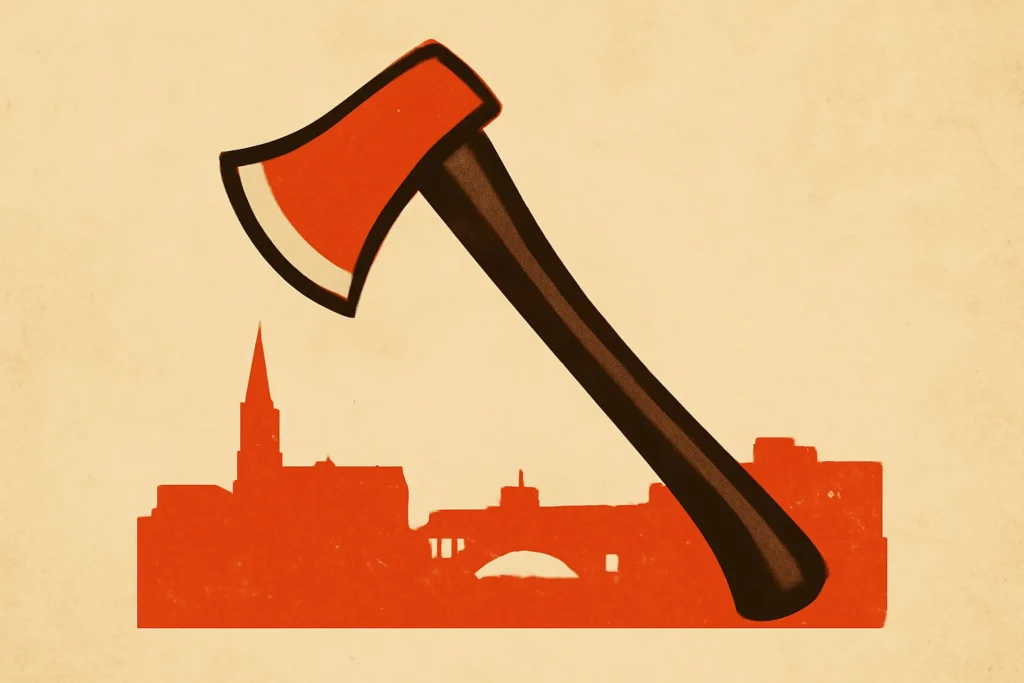
The axe as a centerpiece — ensure the tool’s design signals precision and care.
Robes or garments — blend traditional saintly vestments with practical, workshop-inspired elements (aprons, leather belts, tool pouches).
Light and shadow — use contrasts to suggest revelation achieved through deliberate action.
Environment — frames that show workspaces, quarries, forests, or workshop corridors where transformation occurs.
Color choices further reinforce meaning. Earth tones can ground the character in realism and stewardship, while metallic accents on the axe
convey clarity and precision. Accents of indigo or deep violet may evoke wisdom and introspection, whereas warm ochres can symbolize
growth and renewal.
Descriptive writing prompts
Describe a scene in which Ax the Saint John uses the axe to carve a pattern that reveals a hidden message within a wooden relic.
Write a dialogue between St. John the Craftsman and a novice who questions the necessity of cutting away parts of a stubborn problem.
Paint a portrait of a ceremony where the axe is presented as a symbol of trust, responsibility, and communal care.
Language, Translation, and Cultural Reach
The phrase Ax the Saint John lends itself to polysemy across languages. Translations can preserve the tension
between action and wisdom, while adapting idiomatic nuance to local traditions. Here are some strategies for expanding accessibility.
Approaches to multilingual adaptation
Lexical adaptation — choose words for “ax” that align with local crafts (e.g., “hatchet,” “cleaver,” “axe-blade”).
Honorific phrasing — reflect regional naming conventions for saints and craftspeople (e.g., “Saint John the Axe-bearer” vs. “St. John the Artificer”).
Symbolic fidelity — maintain the core symbolism of transformation and skill, even when imagery shifts (e.g., a sword in some cultures, a hammer in others, but always tied to construction and discernment).
If you are localizing content about Ax the Saint John, consider including glossaries that explain the symbolic
significance of the axe, the saintly prefix, and the ethical dimensions of action within the cultural frame you are presenting.
Translations and variant titles
French: Saint Jean et la Hache or Jean le Hacheur
Spanish: San Juan y el Hacha or San Juan El Portador del Hacha
German: St. Johannes mit der Axt or St. Johann der Axtträger
Italian: San Giovanni e l'Ascia or San Giovanni l'Ariete del Taglio
Practical Guidance for Creators: How to Build a World Around Ax the Saint John
If you are developing a story, game, curriculum, or art exhibit around Ax the Saint John, these practical steps
can help you plan and implement a cohesive project.
Step-by-step development checklist
Define the core message — decide what you want audiences to reflect on: moral action, craft, or community healing.
Choose a setting — a workshop-dominated culture, a rural monastery, or a modern city with hidden guilds.
Design the iconography — sketch the axe, robes, and environment with attention to symbolism and readability.
Craft key scenes — plan moments of decision, consequence, and legacy to anchor the narrative arc.
Balance action and introspection — ensure that decisive moments are earned and morally explored.
Worldbuilding tips
Develop a backstory for the axe: where it came from, who forged it, and why it is revered.
Create a codex or creed that frames the ethics of intervention—what warrants action, and what calls for restraint.
Introduce secondary characters (apprentices, elders, skeptics) who challenge or reinforce the axiom of thoughtful skill.
Dialogue and voice guidelines
Use measured, deliberate speech to reflect a character who weighs consequences before speaking or acting.
Incorporate sensory details of the workshop: scent of oil, the rhythm of hammer on wood, the glow of the forge.
Vary register: formal invocations for ceremonial moments, plainspoken guidance in teaching scenes.
Assessment and learning outcomes
Students or players should be able to articulate three central themes associated with Ax the Saint John.
Participants should describe how the axe functions as a symbol beyond mere violence—namely, as a tool of realization and repair.
Creators should demonstrate how actions taken by the figure influence a community’s future choices.
Ethical Considerations and Sensitivity in Depicting Ax the Saint John
When engaging with a figure that intersects spirituality, craft, and moral action, it is essential to approach with respect,
accuracy, and sensitivity. The fictionalized concept of Ax the Saint John is a vehicle for inquiry rather than a
dogmatic claim about real-world beliefs. Teachers, writers, and designers should:
Clarify the fictional or allegorical nature of the figure at the outset to avoid confusion with canonical saints.
Avoid conflating religious practice with dangerous violence; emphasize responsible decisions and the power of craftsmanship to heal.
Provide diverse perspectives within the narrative or curriculum to reflect multiple cultural viewpoints about action, virtue, and tradition.
A distinct advantage of the Ax the Saint John concept is its flexibility across languages and media. By using
a spectrum of names and descriptors, you can tailor the narrative voice to different audiences while preserving core ideas.
Sample semantic expansions
Ax the Saint John as a modern parable about purposeful action.
Axe-bearing Saint John for ceremonial or liturgical-inspired scenes.
Saint John the Carpenter of Truth to emphasize precision and honesty in workmanship.
St. John the Axed-Warder to suggest a guardian role that clears trouble or misinformation.
When writing, you can weave these variants into dialogue, chapter headings, or in-world inscriptions to reinforce
the notion that the same figure can be approached from multiple angles without losing coherence.
To help crystallize the concept, here are a few short, illustrative passages that demonstrate Ax the Saint John in action.
Passage 1: The workshop revelation
In the quiet dawn, St. John the Craftsman traced his palm along the axe’s cool edge, not to threaten, but to
awaken. He spoke to the apprentices, “We cut away what is not needed so that what remains can bear more light.” The wood
did not groan beneath the blade; it woke to a new form, and with that form a quiet truth settled into the room.
Passage 2: The test of restraint
A crisis pressed upon the city—dust and fear, a problem unyielding as stone. Axe-bearing Saint John did not rush.
He measured each outcome, weighed the cost of action, and chose to redirect resources toward healing rather than destruction.
The crowd learned that power is most holy when it is tempered by mercy.
Passage 3: The legacy scene
Years later, a new generation gathered around a wooden bench where the old axes hung. A student asked what remained of Ax the Saint John after all the deeds. An elder replied, “What endures is not the steel, but the pattern of care
you leave behind—the skill to build, the discipline to decide, and the courage to repair.”
This article has offered a comprehensive guide to Ax the Saint John as a fictional or allegorical construct
that blends symbolism, craft, and ethical inquiry. By exploring multiple name variants, iconographic strategies, and
narrative applications, readers can apply these ideas across literature, education, and media design. Remember:
the power of this figure lies not in a single display of force but in the nuanced, deliberate shaping of a world through skill,
wisdom, and compassionate action.
Whether you are using Ax the Saint John as a teaching tool, a character in a novel, or a centerpiece in a game,
the approach outlined in this guide aims to support thoughtful creation, respectful interpretation, and enduring engagement with
a mythic archetype that invites us to think about transformation, responsibility, and the craft of making a better world.










Leave a Reply