James is often read as a collection of short moral teachings, but its background helps explain why those teachings fit together. The letter addresses communities facing trials, social inequality, divided loyalties, and conflicts within the church. Its central concern is not religious knowledge separated from life. James asks what faith looks like when it meets pressure, money, speech, temptation, and responsibility.
The writing also stands close to the world of Jewish wisdom teaching. Like Proverbs and other wisdom writings, it focuses on recognizable patterns of behavior: the wise person listens, controls anger, treats people fairly, and seeks peace; the foolish person boasts, quarrels, shows favoritism, and ignores the needs of others. James applies this wisdom to followers of Jesus.
Knowing the letter’s setting can prevent two common misunderstandings. First, James is not teaching that people earn salvation through good deeds. Second, it is not merely a list of unrelated rules. The practical commands expose the difference between a faith that only claims to believe and a faith that becomes visible in conduct.
Who wrote the book of James?
The letter identifies its writer simply as “James, a servant of God and of the Lord Jesus Christ.” Several men named James appear in the New Testament, so the short identification has led to discussion. The most widely considered possibilities are James the brother of Jesus, James the son of Zebedee, and James the son of Alphaeus.
James the son of Zebedee was one of Jesus’ closest disciples and the brother of John. He was killed by Herod Agrippa I early in the history of the church, as recorded in Acts 12. Because the letter is usually dated after the earliest years of Christianity by many scholars, this James is often considered less likely to be the author.
James the son of Alphaeus was also one of the Twelve, but the New Testament gives little information about him. There is no clear historical connection between him and the letter. His identification remains possible in theory, yet the letter itself does not provide details that strongly support it.
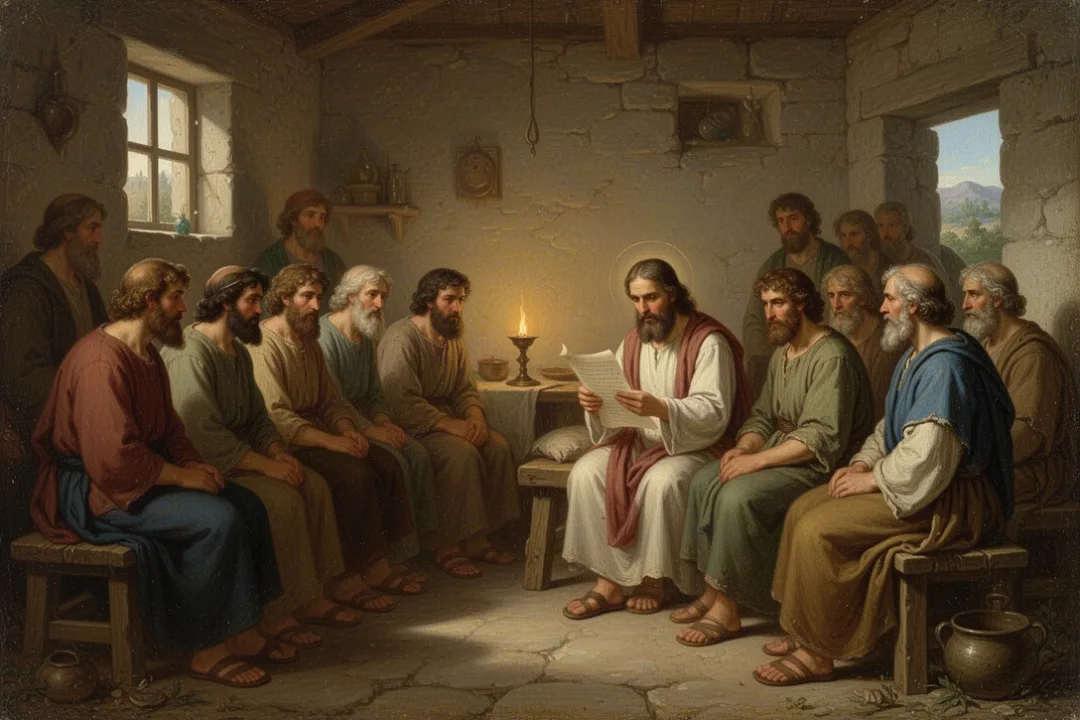
The leading traditional view identifies the writer as James, the brother of Jesus. During Jesus’ public ministry, Jesus’ brothers are portrayed as not yet believing in him, but later James appears among the believers. Paul describes him as a prominent leader in Jerusalem, and Acts presents him as an influential voice in the Jerusalem church.
This James appears to have held a respected position among Jewish followers of Jesus. He participated in the Jerusalem council described in Acts 15, where leaders discussed how Gentile converts should be received. His leadership helps explain why the letter addresses believers living in a broad Jewish-Christian setting while also speaking to serious questions about Christian behavior.
Most likely identification: The traditional attribution to James, the brother of Jesus, fits the letter’s Jewish setting, its authority within early Christianity, and its connection with the Jerusalem church, although some authorship questions remain debated.
What James’s connection to Jesus tells us about the letter
If James the brother of Jesus wrote the letter, his relationship to Jesus gives the work a distinctive perspective. He was not presented as one of Jesus’ original Twelve apostles, yet he became a major leader after Jesus’ death and resurrection. His authority seems to come from faithful leadership and recognized wisdom, not from a claim to personal status.
James does not spend much time narrating events from Jesus’ life. Instead, he uses teachings that closely resemble themes found in Jesus’ instruction, especially the Sermon on the Mount. He emphasizes humility, mercy, care for the poor, purity of heart, peacemaking, and warnings against wealth used selfishly.
The letter also echoes Jesus’ concern with hearing and doing. A person who listens to God’s word without acting on it is compared with someone who looks at a mirror and immediately forgets what was seen. James’s point is that exposure to religious truth is not the same as obedience to it.
This connection does not mean James is simply repeating one Gospel account. The letter has its own voice and purpose. It offers concentrated instruction for churches whose members must learn how to live faithfully amid economic pressure, personal temptation, and disputes over status.
Who first received the letter?
James addresses his readers as “the twelve tribes in the dispersion.” This language most naturally evokes Jewish people living outside their ancestral homeland. It may refer to Jewish Christians scattered across different regions, or it may use the image of Israel’s dispersion to describe the worldwide people of God.
The phrase “the dispersion” does not identify one city or one congregation. It suggests a network of communities rather than a single local church. These Christians likely lived in places where they had to maintain their identity while dealing with social tensions, financial differences, and pressure from the surrounding culture.
The audience appears to include people who profess faith in Jesus and gather with other believers. James refers to assemblies, teachers, elders, prayer, sickness, confession, and conflict. The communities are not portrayed as ideal. Some members favor wealthy visitors, some quarrel, some compete for influence, and some fail to help fellow believers in need.
The readers may have been primarily Jewish Christians, but the ethical instruction has a wider reach. James repeatedly speaks about “brothers and sisters,” suggesting a family-like community bound by faith. His concerns apply to any church in which social standing, wealth, speech, and personal ambition threaten unity.
When was James written?
The date of James is uncertain. Some readers and scholars place it relatively early, possibly before the destruction of Jerusalem in A.D. 70. Others date it later, based on questions about the letter’s language, theological development, and the form in which its teaching was circulated.
Several features can support an early date. James reflects a strongly Jewish-Christian environment and does not mention the destruction of Jerusalem, the Roman-Jewish war, or debates that appear prominently in some later Christian writings. The letter also seems comfortable addressing communities in a period when Jewish identity and Christian confession were closely connected.
Other interpreters observe that the letter’s polished Greek and its developed use of Christian teaching could fit a later setting. They also question whether a Galilean leader such as James would have written the sophisticated Greek found in the text, though an author could have used a secretary, received literary training, or composed the work through a larger circle of leaders.
Ancient letters were sometimes written by a central figure with assistance from a trained writer. The New Testament itself shows that early Christian leaders operated in multilingual environments. As a result, the style alone cannot settle the question of authorship or date.
A careful reading should distinguish between what is certain and what is proposed. The letter’s exact date and authorship remain debated, but its setting is clear enough to understand its main concerns: communities of believers, Jewish wisdom, practical discipleship, and social tension.
What kind of writing is James?
James is usually called a general or catholic letter because it is not addressed to one named congregation. It is also a form of pastoral instruction. The writer speaks directly to recurring problems and expects the readers to change their behavior.
The letter begins with the conventional features of an ancient epistle: a sender, a description of the recipients, and a greeting. After that opening, however, it moves through short sections of exhortation rather than developing one extended argument. Each section has its own focus, but repeated ideas link the material together.
James also resembles a collection of wisdom sayings. Its vivid images include waves driven by wind, a bridle controlling a horse, a rudder guiding a ship, a small fire spreading through a forest, and a mirror that reveals a person’s appearance. These images make moral teaching concrete and memorable.
The letter’s form may reflect oral instruction used in early Christian communities. Short teachings could be read aloud, remembered, and applied to daily situations. The shifts in topic are not necessarily evidence of disorder. Wisdom teaching often returns to related themes from different angles rather than following a modern essay structure.
How James is organized around practical faith
James does not provide a formal outline, but its major movements can be traced. The opening chapter introduces trials, wisdom, temptation, hearing God’s word, and care for vulnerable people. These themes become the foundation for later discussions.
Chapter 2 turns to favoritism and the relationship between faith and works. The writer condemns giving special treatment to wealthy people while humiliating the poor. He then argues that faith without corresponding action is dead, using Abraham and Rahab as examples of belief expressed through obedience.
Chapter 3 concentrates on speech and wisdom. Teachers are warned that they face stricter judgment, and the tongue is described through several powerful comparisons. James contrasts earthly wisdom, marked by jealousy and selfish ambition, with wisdom characterized by purity, peace, gentleness, mercy, and good fruit.
Chapter 4 addresses quarrels, friendship with the world, pride, judgment, and presumptuous planning. The writer calls readers to submit to God, resist evil, repent of divided loyalties, and speak about the future with humility rather than confidence that ignores God’s will.
Chapter 5 condemns the exploitation of workers and the hoarding of wealth. It then encourages patient endurance, points to the prophets and Job as examples, and closes with teaching about prayer, confession, healing, and restoring those who wander from the truth.
James 1: faithful endurance, wisdom, temptation, obedience, and care for the vulnerable.
James 2: impartial treatment and faith demonstrated through action.
James 3: responsible speech and the difference between earthly and heavenly wisdom.
James 4: humility, repentance, conflict, worldly desire, and dependence on God.
James 5: economic injustice, patient hope, prayer, suffering, and restoration.
How trials shape James’s message
James opens by telling believers to regard trials as an opportunity for endurance to mature. This does not mean suffering is pleasant or that every hardship is directly sent by God. The focus is on what steadfast trust can produce when believers respond to difficulty with perseverance and dependence on God.
The letter connects trials with wisdom. People under pressure may not know what to do, how to respond, or whom to trust. James directs them to ask God for wisdom in confidence. The desired wisdom is not merely information; it is the ability to make faithful decisions in difficult circumstances.
James also distinguishes testing from temptation. God may use hardship to reveal and strengthen faith, but the writer rejects the idea that God entices people to do evil. Temptation develops through a person’s own disordered desire, which can grow into destructive action.
This distinction gives James a realistic view of responsibility. Believers live in difficult circumstances, but they cannot blame God for every sinful response. The proper answer to pressure includes prayer, honest self-examination, patience, and practical obedience.
Why James emphasizes the poor and condemns favoritism
One of James’s clearest social concerns appears when a wealthy person receives a prominent place in a gathering while a poor person is treated as inferior. The problem is not simply bad manners. It reveals a community judging people by status, clothing, money, and social influence rather than by the values of God’s kingdom.
James calls such behavior a violation of the command to love one’s neighbor. He reminds readers that God has chosen the poor in the world to be rich in faith and heirs of the kingdom. This does not romanticize poverty or suggest that every poor person is morally superior. It challenges the church to stop using wealth as a measure of worth.
The letter also exposes wealthy people who exploit workers and live in luxury while others suffer. The force of this warning comes from a world in which laborers depended on timely wages and the powerful could use legal and economic advantages against them.
James therefore presents economic ethics as a test of spiritual integrity. Generosity, impartiality, and justice are not optional extras added to private belief. They show whether a community has understood the character of God and the meaning of love.
What James means by faith and works
James is best known for saying that faith without works is dead. This teaching has sometimes been treated as a contradiction of Paul’s teaching about justification by faith. The tension becomes smaller when each writer’s question is considered.
Paul argues against relying on religious performance, ethnic identity, or law observance as the basis for being accepted by God. James challenges people who claim to believe but do nothing for suffering fellow believers. Paul attacks self-reliant religious boasting; James attacks empty verbal belief.
For James, works do not replace faith. They reveal whether faith is alive. If a Christian sees a person without clothing or food and offers only kind words without practical help, the profession of concern has no useful effect. Faith that never acts has become merely an opinion.
Abraham illustrates this relationship. His trust in God was demonstrated through obedience, and the action brought his faith to completion. Rahab illustrates the same principle from a different background: she acted courageously to protect God’s messengers. In both examples, belief becomes visible through a costly decision.
The letter’s message can be stated simply: real faith works through love and obedience. James is not asking believers to earn God’s favor by accumulating good deeds. He is asking whether the faith they claim has enough life to change how they treat other people.
Why James gives special attention to speech
James treats speech as one of the most revealing tests of character. Teachers influence many people and therefore carry greater responsibility. The writer does not suggest that no one should teach. He warns that teaching requires humility because words can guide, wound, mislead, or condemn others.
The tongue is small but powerful. James compares it to a bit in a horse’s mouth, a rudder on a ship, and a spark that can set a forest on fire. These images emphasize that a small organ can direct a whole life or damage an entire community.
Another problem is inconsistency. People bless God and then curse those made in God’s likeness. James argues that this contradiction should not characterize the same mouth. Speech reveals the condition of the heart because words carry attitudes of anger, envy, pride, contempt, or mercy.
James does not demand silence. He calls for speech governed by wisdom. That includes listening before answering, resisting angry reactions, refusing gossip, speaking truthfully, and using words to restore rather than dominate. A church’s spiritual health can often be seen in the way its members speak about one another.
How James describes wisdom from above
James presents two competing kinds of wisdom. One is driven by bitter jealousy and selfish ambition. Although it may appear clever or successful, it produces disorder and harmful behavior. Its source is earthly and self-centered rather than aligned with God.
Wisdom from above is described through its moral fruit. It is pure, peaceable, gentle, willing to yield, full of mercy and good deeds, impartial, and sincere. These qualities do not describe passivity. A wise person can confront wrongdoing, but does so without the pride and hostility that deepen conflict.
The connection between wisdom and relationships is central. James does not measure wisdom by how much someone knows, how forcefully someone argues, or how impressive someone sounds. Wisdom appears in conduct, especially in the ability to pursue peace without abandoning truth.
This teaching helps explain why James moves from the tongue to conflict. Harmful speech and selfish ambition create quarrels. Humble wisdom, by contrast, plants a harvest of righteousness in an atmosphere of peace.
How prayer, healing, and restoration fit the ending
The final chapter gives prayer a central role in every condition. Those who suffer should pray; those who are cheerful may praise God; those who are sick should seek the care and prayer of the elders. James presents prayer as a shared practice rather than a private technique for controlling outcomes.
The passage about anointing with oil and praying for the sick has been understood in different ways across Christian traditions. Its central point is clear: suffering and illness should be brought before God within the community, with care, faith, confession, and support. The text does not promise that every illness will end immediately or that sickness always results from personal sin.
James also commends the prayer of a righteous person and refers to Elijah as an example of earnest prayer. The point is not that some Christians possess a magical level of influence. It is that God hears faithful prayer and that prayer can be active, persistent, and aligned with God’s purposes.
The letter ends by directing believers toward those who wander from the truth. Restoring such a person is described as an act that protects the individual and covers a multitude of sins. The closing image is communal: mature faith seeks not only personal holiness but also the recovery and well-being of others.
Practical ways to read James carefully
James is direct, but its compressed style can lead to shallow readings. The best approach is to read each command within the letter’s larger concern for mature, active faith. Pay attention to repeated ideas rather than treating every paragraph as an isolated proverb.
Read the whole letter in one sitting. Its short length makes it possible to hear the recurring links between trials, wisdom, speech, wealth, and obedience.
Ask what behavior James is confronting. Identify whether the problem is favoritism, anger, envy, selfish ambition, neglect of the poor, or empty religious speech.
Separate testing from temptation. James encourages endurance in hardship but does not blame God for evil or remove human responsibility.
Read faith and works together. Do not use James to claim that human effort earns salvation, and do not use grace as an excuse for refusing practical obedience.
Notice the community setting. Many commands concern how believers treat one another, not just how individuals manage private spiritual habits.
Compare related teachings carefully. When reading James alongside Paul or Jesus, ask what question each writer is answering instead of assuming they use every term in exactly the same way.
Common mistakes when interpreting James
Reducing James to a list of self-help advice: its ethical teaching grows out of devotion to God and the Lord Jesus Christ.
Assuming every hardship is a direct test sent by God: James distinguishes trials from sinful temptation and recognizes human desire as a source of evil.
Ignoring economic injustice: warnings about favoritism and exploited workers are major themes, not brief side comments.
Treating speech as a minor issue: James repeatedly presents words as evidence of spiritual maturity or corruption.
Reading “faith without works” as salvation by achievement: James is confronting claims of faith that produce no mercy, obedience, or practical help.
Expecting a modern systematic argument: the letter uses wisdom sayings, images, warnings, and exhortations that reinforce one another thematically.
A useful reading question: After each major section, ask, “What would this teaching look like in a real church, workplace, family, or neighborhood?” James consistently moves from belief to observable conduct.
Why the book of James still speaks to churches
James remains relevant because the situations it addresses are ordinary and persistent. Churches still face differences in wealth, arguments driven by pride, careless speech, leaders who seek recognition, and people who confuse hearing religious teaching with practicing it.
Its message is demanding but coherent. Mature faith listens, acts, endures, prays, speaks carefully, resists pride, and protects the vulnerable. These qualities are not separate achievements. They are different expressions of a life oriented toward God.
The letter also gives churches a way to examine their shared life. A congregation can ask whether it welcomes people without regard to status, responds to suffering with practical care, handles disagreement peacefully, and restores those who have wandered. James measures spiritual health by these visible patterns.
Its background in Jewish wisdom, the early Christian movement, and the social pressures of scattered communities gives the letter historical depth. Its direct concern with integrity gives it continuing force. James insists that faith is not proved by confident language alone but by a life that makes God’s mercy recognizable.
Frequently asked questions
Was James written by the brother of Jesus?
The traditional and most widely accepted Christian view identifies the author as James, the brother of Jesus and a leader of the Jerusalem church. The letter itself only names “James,” so absolute certainty is not possible. Other men named James appear in the New Testament, but the brother of Jesus best fits the letter’s historical authority and Jewish-Christian setting.
Is the book of James mainly about faith or good works?
James focuses on faith that produces action. It does not present good deeds as a way to earn God’s acceptance. Instead, it argues that a claim to faith is empty when it never leads to mercy, obedience, generosity, or practical help for people in need. Works function as evidence that faith is living rather than merely verbal.
What does James mean by “the twelve tribes in the dispersion”?
The phrase likely refers to Jewish believers living outside their ancestral homeland, although it may also describe the wider people of God using the imagery of Israel’s dispersion. It does not identify one specific church. The wording fits a network of communities dealing with hardship, social differences, and the challenges of maintaining faith away from Jerusalem.
How does James differ from Paul on faith and works?
Paul usually confronts the belief that people can establish their standing with God through religious performance or law observance. James confronts people who claim faith but show no compassion or obedience. Their immediate questions differ, so their teachings need not conflict: Paul emphasizes the basis of acceptance before God, while James emphasizes the visible evidence of genuine faith.








Leave a Reply