Best C.S. Lewis Books on Christianity: Top Picks and Why to Read
C.S. Lewis remains one of the most influential voices in modern Christian thought. His writing blends rigorous reasoning with accessible prose, weaving together apologetics, moral philosophy, devotional insight, and imaginative storytelling. For readers seeking the best CS Lewis books on Christianity, there is a broad spectrum: explicit apologetics, thoughtful treatment of pain and suffering, devotional reflections on prayer, imaginative fiction with clear Christian themes, and candid autobiographical accounts of faith. This article surveys the top picks and explains why each title deserves a place on your shelf, how to read them, and what you’ll gain from them. Whether you are a skeptic seeking a fair argument, a student of theology, or a believer looking for spiritual nourishment, Lewis offers something that can illuminate the Christian life from multiple angles.
To give the most useful guide, this article organizes the discussion around categories of Christian writing rather than simply listing titles. You’ll encounter classic apologetics, moral philosophy, spiritual reflection, theological exploration, autobiographical testimony, and fiction that embodies Christian truth in narrative form. You’ll also find practical reading advice, suggested order, and notes on who each work is best suited for. If you search for the best CS Lewis books on Christianity, you’re likely looking for works that illuminate belief, deepen faith, or sharpen conscience—these selections aim to do all three.
Mere Christianity: A Practical, Accessible Case for the Christian Faith
Mere Christianity is often the entry point for readers exploring Lewis’s Christian thought. Originating as radio talks broadcast during World War II and later compiled into a single volume (1952 in its classic form), this work is praised for its clear argumentation, logical progression, and practical focus. It is widely considered one of the best CS Lewis books on Christianity for newcomers and seasoned readers alike because it articulates a confident, sober case for the core claims of the Christian faith.
What you’ll find inside:
Three parts: the logical case for morality, the nature of Christian belief, and the Christian life in practice.
an accessible defense of moral law, human nature, and the existence of a transcendent standard
an explanation of the Narrow Path—how Christian ethics shape everyday decisions
Why read it? Because it presents a robust, fair, and memorable argument for Christianity without requiring specialized theological training. Lewis’s style is calm, measured, and persuasive, emphasizing common ground and shared human experience. For readers encountering CS Lewis’s work for the first time, Mere Christianity often feels like the most humane and credible starting point among the best CS Lewis books on Christianity.
Reading tips:
Approach it as a guided tour of Christian moral reasoning rather than a ledger of propositions.
Take time with the sections on Christian virtue and the moral law; they set the stage for Lewis’s later arguments.
Consider pairing with A Grief Observed for a fuller sense of Lewis’s personal faith in action.
The Screwtape Letters: A Sharp Satire on Temptation and Christian Life
What this book is and how it works
The Screwtape Letters is a brilliant example of Lewis’s moral imagination in narrative form. Written as a collection of letters from a senior demon, Screwtape, to his nephew Wormwood, the book invites readers to see the Christian life from a spiritual warfare perspective. The work is not just entertainment; it’s a practical guide to recognizing temptations, cultivating virtue, and understanding how everyday choices shape the soul. This makes it one of the top CS Lewis books on Christianity for readers who want to engage with spiritual formation in a novel, memorable way.
Key themes include:
temptation in daily life and the ways small choices compound over time
humility, prayer, and the health of the spiritual life
the danger of pride and self-righteousness in religious life
Why read it? The letters’ epistolary format makes abstract ideas concrete and memorable. Lewis’s wit and irony open a window on spiritual realities that are easy to overlook. For readers who want accessible theology with literary flair, The Screwtape Letters is a quintessential choice among the CS Lewis books on Christianity.
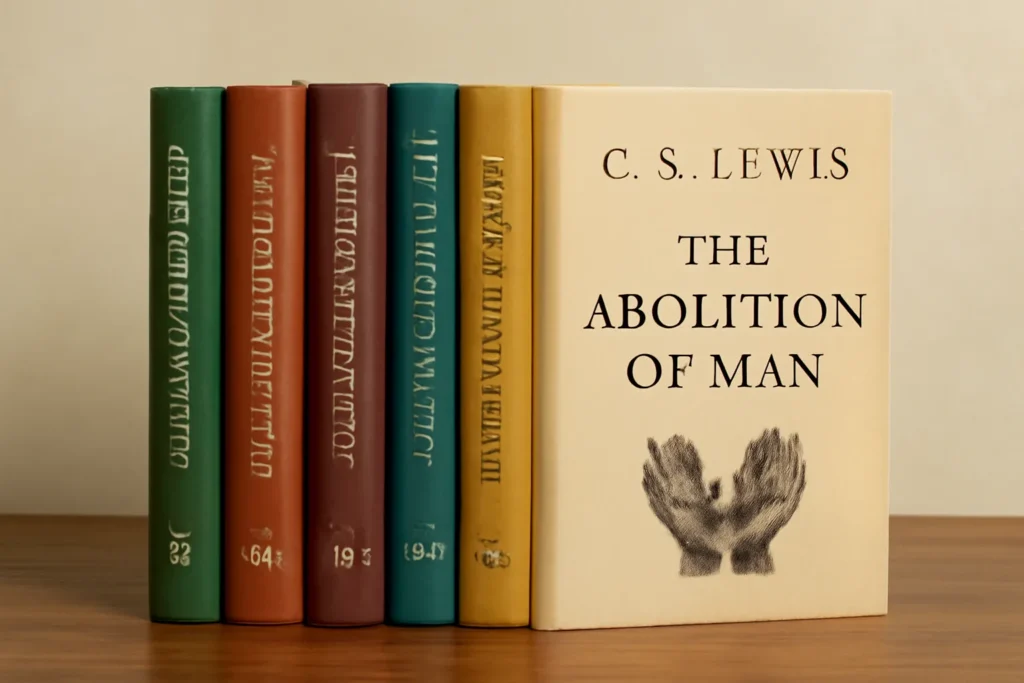
The Abolition of Man: Moral Objectivity and the Danger of Subjectivism
What this book tackles
The Abolition of Man is a compact, strenuous, and sweeping meditation on value, ethics, and education. Lewis argues that there is a universal moral law—an objective standard that transcends culture and time—and that modernity’s skepticism about objective values leads to a dangerous redefinition of humanity. This book is often recommended for readers who want deeper philosophical grounding in Christian ethics and a critique of relativism, placing it among the best CS Lewis books on Christianity for those who enjoy rigorous argumentation.
the notion that education should cultivate virtue, not simply train opinions
the idea that the modern world risks turning people into “men without chests” by severing affections from moral truths
Why it matters The Abolition of Man isn’t a light read, but its implications reverberate across education, politics, and daily life. For the most impactful CS Lewis works on Christianity, this book stands as a keystone in understanding Lewis’s critique of moral relativism and his defense of objective values rooted in the Christian tradition.
The Great Divorce: A C.S. Lewis Classic on Heaven, Hell, and the Moral Imagination
Why it resonates
The Great Divorce is a visionary novella that imagines a rail-ride from a gray, dreary city to a radiant, eternal country. The narrative unfolds as a series of encounters in which passengers choose between conversion, self-will, and community. Lewis uses this dramatic scenario to explore questions about freedom, moral choice, and the nature of happiness. It remains one of the best CS Lewis books on Christianity for readers who appreciate philosophical probing framed as allegory and fable.
What readers often notice:
the contrast between earthly “comforts” and heavenly joy
the role of imagination in perceiving spiritual realities
the emphasis on the patient, costly work of growth in grace
Why read it? If you enjoy fiction that probes theological questions without heavy-handed sermonizing, The Great Divorce offers a compelling, gently challenging exploration of Christian anthropology and eschatology. It’s frequently cited among the CS Lewis’s best Christian fictions that teach through imaginative storytelling.
Miracles: A Philosophical Case for the Reality of the Supernatural
Elements of Lewis’s apologetics in this work
Miracles examines the possibility of miraculous events within a scientific age that often dismisses the supernatural. Lewis argues that acknowledging miracles does not require abandoning reason; rather, it can complete and refine rational inquiry by recognizing the possibility of a transcendent cause behind extraordinary events. This book is a staple among the best CS Lewis books on Christianity for readers who want a grounded exploration of supernatural claims in an era of naturalism.
Highlights include:
a careful analysis of what constitutes evidence for miracles
an exploration of the nature of God’s activity within the created order
the balance between rational inquiry and theological imagination
Reading tip: Pair with Mere Christianity to see how Lewis builds a cumulative case for Christian belief—logical argument in one book, experiential and theological reflection in another.
The Problem of Pain: Explaining Suffering from a Christian Perspective
Addressing the oldest question in Christian thought
The Problem of Pain tackles a question that has puzzled people across generations: Why would a benevolent, all-powerful God permit suffering? Lewis does not offer simplistic platitudes. Instead, he provides a thoughtful, carefully argued exploration of pain, moral development, the problem of evil, and the purpose of sorrow within the Christian narrative. This title is frequently included among the top CS Lewis books on Christianity for readers seeking a compassionate, intellectually honest handling of one of faith’s enduring challenges.
Key themes include:
the purpose of pain in moral and spiritual growth
the limits of human understanding and the confidence of faith
the problem of gratuitous suffering versus the meaning of redemptive suffering
Why read it? It helps readers think carefully about theodicy while staying open to mystery and trust in God. If you want devotional depth coupled with philosophical clarity, this is one of the most reliable picks among the CS Lewis Christian works.
A Grief Observed: Faith, Doubt, and Grief in the Wake of Loss
A personal companion for sorrow
A Grief Observed is Lewis’s raw, honest diary after the death of his wife, Joy Davidman. It is uncomplicated in form but profound in content, offering a window into the cycles of doubt, longing, anger, and eventual trust that can accompany bereavement. This book is not for every reader in every season, but it remains one of the best CS Lewis books on Christianity for those who want to encounter real struggle and genuine faith side by side.
the fragility and complexity of human faith under personal tragedy
a candid portrait of how grief can coexist with belief and hope
an intimate reflection on how God’s presence may feel distant yet remain real
Approach to reading: It can be emotionally demanding. Some readers return to this book in phases—using it as a spiritual companion during times of trial, not as a constant daily read. It shows that Christian faith can survive doubt and pain and still retain trust in God.
Reflections on the Psalms: A Faithful, Personal Reading of Scripture
Lewis’s devotional encounter with biblical poetry
Reflections on the Psalms is a collection of essays in which Lewis offers intimate meditations on particular Psalms. He does not present a dry critical commentary; instead, he engages Scripture through the lens of wonder, humility, and a robust Christian imagination. This work is often recommended for readers seeking devotional insight and a mature, reflective approach to Scripture within the Christian life.
Why it stands out:
deep respect for the Psalms as a vehicle of truth, prayer, and proclamation
an inviting model of interpreting Scripture as a living conversation with God
clear, accessible prose that invites repeated reading
Best use: read a chapter a day as part of a personal devotion or study on how to engage Scripture with intellectual honesty and emotional honesty.
Surprised by Joy: The Story of His Conversion
Autobiographical path to faith
Surprised by Joy traces Lewis’s own journey from atheism to Christian faith, emphasizing the role of longing and the sense that something real and transcendent beckons. This work offers readers a candid account of conversion, not because it pursues a dramatic conversion moment but because it reveals how a life can be transformed gradually through the interplay of intellect, emotion, and spiritual experience. It is widely regarded as one of the CS Lewis’s best Christian writings for understanding the personal dimensions of faith and the way intellectual questions intersect with spiritual longing.
What you’ll gain:
insight into Lewis’s temperament: a blend of scholarly habit and imaginative longing
an example of how Christian belief can emerge from a robust naturalist skepticism
an invitation to examine your own longings as potential pointers toward God
Note: This is not a theological manual but a narrative of conversion. For readers interested in how Lewis reconciled reason with faith, it is an essential companion piece to Mere Christianity and other apologetic works.
Letters to Malcolm: Chiefly on Prayer and Other Woes
Concise, practical reflections on prayer
Letters to Malcolm: Chiefly on Prayer consists of a series of letters in which Lewis discusses the nature and practice of prayer, the discipline of silence, and the life of faith in relation to God. It is a concise and approachable resource for readers who want practical guidance on how to pray and how prayer shapes character. This is among the CS Lewis’s best short Christian writings for readers seeking accessible, thoughtful counsel on the spiritual discipline of prayer.
Highlights include:
practical reflections on the meaning and practice of prayer
an emphasis on humility, listening, and perseverance in prayer
clear, compact prose that makes complex spiritual ideas negotiable
Who should read it? Anyone looking for a compact, frank guide to praying with honesty and fidelity. It also serves well as a bridge between Lewis’s apologetics and his more devotional or contemplative writings.
The Chronicles of Narnia: Christian Themes in a Fantasy World
Fiction as a vessel for spiritual truth
While The Chronicles of Narnia is primarily a work of fantasy literature, it is widely recognized as a powerful vehicle for conveying Christian truth to readers of all ages. Lewis’s allegorical storytelling uses myth, adventure, and moral drama to illuminate key Christian convictions—creation, fall, redemption, and new creation. Among the best CS Lewis books on Christianity in the broader sense, Narnia occupies a unique place because it makes theological ideas tangible through character, plot, and symbol.
Core themes across the series include:
the goodness of creation and the presence of a divine authority
the problem of sin and the possibility of redemption through sacrifice
the promise of renewal and the ultimate victory of grace
Reading approach: Starting with The Lion, the Witch and the Wardrobe (the most widely read entry) and then following the publication order or chronological order can help build an appreciation for Lewis’s theological threads. For readers who prefer literature to pure doctrine, this is often cited as the best CS Lewis book on Christianity for families and younger readers.
Given the breadth of Lewis’s Christian writings—from apologetics to poetry, from autobiography to fiction—many readers benefit from a structured plan. Here are a few recommended orders that reflect different goals, whether you want a rigorous intellectual case, devotional depth, or a holistic exposure to Lewis’s Christian imagination:
For beginners seeking a solid introduction to Christian apologetics: Mere Christianity → The Screwtape Letters → Miracles → The Problem of Pain
For readers interested in ethics and moral formation: The Abolition of Man → Surprised by Joy → A Grief Observed
For devotional life and prayer: Letters to Malcolm → Reflections on the Psalms → The Problem of Pain
For exploring faith through fiction: The Chronicles of Narnia (start with The Lion, the Witch and the Wardrobe) → The Great Divorce
In any plan, the goal is to encounter the Christian faith from multiple angles—reason, imagination, experience, and prayer. When you sample the best CS Lewis books on Christianity, you will notice a common thread: Lewis treats Christianity as a plausible, integrated way of life rather than a set of abstract propositions detached from daily living.
Different readers will find different entries most compelling. Here is a quick guide to match titles with readers’ interests and needs:
New to Christian belief: start with Mere Christianity for a stable, accessible foundation, then explore The Screwtape Letters for moral formation.
Interested in spiritual formation and prayer: try Letters to Malcolm and Reflections on the Psalms, followed by The Problem of Pain for a compassionate explanation of suffering.
Want a thoughtful reading on ethics and education: read The Abolition of Man and then explore how Lewis connects moral law to civilization’s health.
Seeking comfort and honest grappling with loss: A Grief Observed offers a raw but faithful portrait of faith under duress.
Enjoy theological fiction with moral weight: the entire Chronicles of Narnia cycle offers accessible spiritual formation through imaginative storytelling.
What makes these works still compelling after decades is not only their intellectual rigor but their emotional honesty and moral seriousness. Lewis’s concern with the human condition—the tug-of-war between desire and virtue, the presence of longing for something transcendent, and the need for a coherent life lived in light of belief—resonates with readers across generations. His writing invites readers to think clearly about faith while developing a compassionate, resilient form of faith that can weather doubt, pain, and cultural change. In this sense, the best CS Lewis books on Christianity serve as both intellectual aids and spiritual companions.
If you are reading these works in a group or forming a study plan, here are a few practical tips to maximize learning and reflection:
Pair apologetic and devotional titles to balance intellect and devotion—Mere Christianity alongside Reflections on the Psalms or A Grief Observed can offer a holistic experience.
Use specific questions to anchor discussion, such as: What is Lewis arguing for regarding moral law? How does fear or doubt function in the narrative of pain or longing?
Take note of how Lewis handles counterarguments and skepticism. He often models a fair, charitable engagement with opposing views, which is valuable for critical thinking.
Consider keeping a reading journal to track how your understanding of faith deepens or shifts as you progress through different genres: apologetics, philosophy, poetry, and fiction.
When people ask which titles constitute the best CS Lewis books on Christianity, they are often seeking access points that align with their current questions, their intellectual temperament, and their spiritual life. Lewis offers multiple such access points, each with its own strengths. Whether you want to argue for the rational plausibility of Christian belief, explore the moral imagination that sustains virtue, wrestle with the problem of pain, or simply encounter grace through story, Lewis provides a robust, humane, and enduring collection of Christian writings.
In sum, this curated set of top picks demonstrates not only the diversity of Lewis’s Christian thought but also the consistency of his aim: to invite readers into a life shaped by truth, goodness, and beauty as found in the Christian faith. For anyone seeking the best CS Lewis books on Christianity, these titles offer a comprehensive itinerary—one that can illuminate reasoning, nurture virtue, and awaken wonder about a reality larger than oneself.
If you’d like, I can tailor a customized reading plan based on your interests (apologetics, ethics, spiritual formation, or fiction with Christian themes) and provide a week-by-week schedule to cover these works in a way that fits your pace and goals. Either way, you will discover that the CS Lewis Christian writings remain a vital resource for thoughtful engagement with the Christian faith and a lasting source of insight for readers across ages.










Leave a Reply