Introduction: Understanding Bible Submission in Marriage
Bible submission in marriage is a topic that invites attention, careful study, and thoughtful application. At its core, it refers to a biblical framework for how two people enter into a covenant partnership under God, seeking harmony, love, and growth. This article offers a comprehensive guide to biblical submission and its related concepts, including mutual submission, biblical headship, and the practical ways couples can live out these ideas with dignity, care, and integrity.
The subject is often discussed in church circles, marriage counseling, and family life resources. The goal here is not to advocate for a rigid set of rules but to present a balanced, biblically faithful understanding that emphasizes respectful relationship, shared purpose, and the glorification of God through healthy marriage dynamics. While terms like submission, leadership, and roles can be loaded, they are best understood in a larger scriptural context where both spouses are called to love, honor, serve, and support one another.
Biblical Foundations for Submission in Marriage
The Bible offers a number of passages that have shaped Christian teaching about marriage. It is important to read these texts together, considering the broader message of Scripture—God's design for companionship, mutual respect, and spiritual growth.
Key verses and guiding themes
Ephesians 5:21 introduces the idea of mutual submission within the body of Christ, providing a framework for how believers relate to one another in all relationships, including marriage.
Ephesians 5:22-33 contrasts two complementary callings: wives submit to your husbands and husbands love your wives as Christ loved the church. The combination of obedience and sacrificial leadership is intended to create a harmony that reflects the gospel.
Colossians 3:18-19 echoes the marriage dynamic with the call for wives to submit and husbands to lead with love and gentleness.
1 Peter 3:1-7 emphasizes conduct that can win a spouse through respectful behavior, highlighting that enduring relationships often begin with character and virtue.
Genesis 2:18-24 presents the creation narrative in which God fashions companionship and unity, culminating in the union of husband and wife as one flesh.
Mutual submission and the unity of purpose
A robust biblical view sees submission not as domination or subjugation but as a shared posture of humility, deference, and partnership. The apostle Paul later clarifies that the husband’s leadership is not a unilateral rule but a responsibility to care for and sacrificially love the wife, mirroring Christ’s relationship with the church. In this sense, the Bible teaches mutual submission in marriage, where both spouses are called to put the other first and to seek God’s glory together.
Historical and Cultural Context of Biblical Marriage Language
When reading passages about submission and leadership, it helps to consider the historical and cultural setting of the biblical world. The household codes of the ancient Near East and the Greco-Roman world shaped expectations about family order. However, biblical writers frequently subverted oppressive customs by elevating love, protection, and mutual respect as essential components of proper conduct within marriage.
What history teaches about roles and responsibilities
The biblical model is not about creating inequality in value between spouses; both are created in the image of God and share a unique dignity.
Leadership in the Bible is often described in terms of responsibility and service, not dominance. A husband’s leadership is depicted as a call to sacrificial love that nurtures and protects.
Wives are invited to courageously participate in the marriage and family life, contributing gifts, wisdom, and influence that honor God and benefit the household.
In many communities today, healthy marriages incorporate cultural norms and personal conscience alongside biblical principles, always aiming for love, respect, and unity.
Practical Application: How Bible Submission Works in Everyday Marriage
Translating biblical principles into daily life requires intentional practices, clear communication, and ongoing discipleship. The aim is to cultivate a partnership in which both spouses flourish spiritually, emotionally, and relationally.
Guiding principles for couples
Love as the foundation: A husband’s leadership and a wife’s counsel are grounded in sacrificial love, mirroring Christ’s devotion to the church, and in turn, cultivating trust and security in the home.
Respect and honor: Respect for one another’s gifts, opinions, and differences builds a healthy environment for decision-making.
Communication: Ongoing, honest, and humble conversation helps couples discern God’s will together and avoid coercive dynamics.
Shared decision-making: Not every choice must be made by one person; many decisions benefit from joint discernment and collaborative problem-solving.
Spiritual leadership in context: Spiritual leadership is expressed through prayer, Scripture study, and modeling Christlike character, not through control or intimidation.
Practical steps for wives: living out biblical submission wisely
Submit to God first: Submission in marriage starts with one’s relationship with God; personal devotion strengthens the ability to respond wisely to a spouse's leadership.
Offer counsel with gentleness: Wives are encouraged to share perspectives respectfully, contributing insight that can guide the couple toward wise choices.
Choose to support and affirm: Encouragement and affirmation help a husband lead with confidence and humility.
Set boundaries in love: Submitting does not imply tolerating harm; couples should establish healthy boundaries and seek help when needed.
Practical steps for husbands: living out biblical leadership with love
Lead with sacrificial love: A husband’s leadership is a call to lay down personal preferences for the sake of the family’s well-being and spiritual growth.
Protect and provide: Responsible leadership involves providing for physical, emotional, and spiritual needs, while avoiding manipulation or coercion.
Invite participation: Encourage your spouse’s gifts, counsel, and collaboration in decisions that affect the home and family.
Model humility: Leadership is enhanced when it is tempered by humility, accountability, and a willingness to apologize and grow.
Family life: building harmony through shared spiritual rhythms
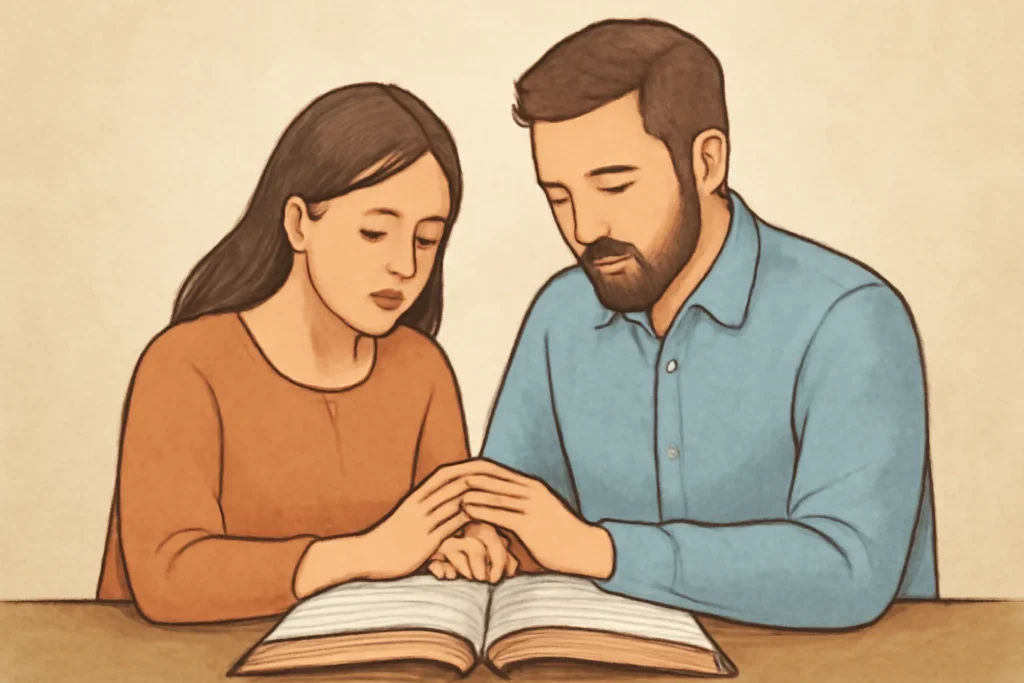
Pray together: Regular family prayer aligns hearts toward God and fosters unity in purpose.
Study Scripture as a couple: Shared Bible study deepens understanding, sharpens discernment, and strengthens relational bonds.
Serve together: Acts of service inside and outside the home cultivate teamwork and compassion.
Celebrate mercy and grace: When one spouse errs, grace, forgiveness, and restorative conversations restore trust and connection.
Frequently Asked Questions and Common Misunderstandings
The Bible presents submission within a framework of mutual love and responsibility. It does not call spouses to yield in ways that harm themselves or others or that violate God’s higher moral law. Healthy submission is voluntary, relational, and always oriented toward godly character and the good of the family.
What about equality and dignity?
Biblical teaching emphasizes the fundamental equality of men and women in God’s sight. Galatians 3:28 is often cited to affirm that in Christ there is no distinction that would negate dignity or value. In marriage, equality and mutual respect sit alongside distinct roles that are carried out with love and humility.
How does submission handle conflict or disagreement?
Disagreement is normal in every marriage. Biblical submission is not about avoiding conflict but handling it well—through humble listening, gentle communication, and seeking the Lord’s wisdom together. If conflict becomes harmful, seeking wise counsel, pastoral guidance, or counseling is prudent.
A biblical framework for marriage never endorses abuse or coercion. If any form of abuse is present—physical, emotional, or relational—resources should be sought immediately, including professional counseling and, if necessary, safety planning. Submission in a healthy sense never requires tolerating harm.
Healthy Models of Submission: Mutuality, Respect, and Growth
Realistic and healthy biblical marriage models emphasize mutual submission and shared leadership in practice. Here are some constructive patterns that align with biblical principles.
Couples make room for each other’s gifts and callings, recognizing that both partners contribute to the family’s flourishing.
Decision-making is collaborative, with care given to the needs and convictions of both spouses.
Family routines reflect shared responsibility, with chores, finances, and caregiving distributed in ways that suit the family’s context.
Spiritual leadership as service
Spiritual leadership involves guiding the family in worship, prayer, and Scripture, while inviting input from the spouse and children.
Leaders model integrity, humility, and accountability, demonstrating that leadership is a form of stewardship rather than control.
Communication strategies for harmony
Establish regular times for dialogue about finances, plans, parenting, and goals.
Practice reflective listening: summarize what the other person said before responding.
Use “I” statements to own feelings and needs without blaming.
Spiritual practices to strengthen submission in marriage
Praying together daily, even briefly, to invite God into decisions and challenges.
Reading Scripture together to discern God’s will for the family and to align values.
Engaging in regular church and community life to build supportive networks.
Boundaries, Respect, and Safety in Biblical Marriage
A healthy understanding of biblical submission must always recognize boundaries that protect all members of the family. Respect, consent, and safety are non-negotiable. When personal safety is at risk or when boundaries are violated, seeking help from trusted counselors, pastors, or professional services is essential.
When boundaries are tested
Consider whether a request or expectation contradicts God’s commands or harms a family member.
Communicate boundaries clearly and lovingly, with a plan for accountability and accountability partners.
Seek collaborative conflict resolution with professional support if needed.
Conclusion: A Biblical Vision of Harmony Through Submission
The concept of biblical submission in marriage is best understood as a unified, grace-filled call to partnership. It envisions a home where both spouses honor one another, where leadership is exercised with love and responsibility, and where both people grow in their walk with God. When practiced in the context of mutual submission, respect, and humility, Christian marriages can experience deep harmony, resilience in trials, and a powerful witness of the gospel in daily life.
Remember that biblical guidance is not a rigid code but a living invitation to reflect Christ in marriage. The most important elements are love, servanthood, and a shared dependence on God. As couples learn to navigate the complexities of modern life, they can draw strength from the biblical vision of partnership—where each person’s gifts are honored, where decisions are made in mutuality, and where the home becomes a sanctuary of grace, growth, and godly influence.











Leave a Reply