Meaning and Terminology: What Is the Bible Tribulation Period?
The phrase commonly translated as the bible tribulation period refers to a distinct era described in biblical prophecy marked by extraordinary upheaval, trials, and spiritual testing preceding the return of Jesus Christ. In many translations, scholars and readers encounter terms such as the great tribulation, the end-times period, the seven-year tribulation, and Daniel’s 70 weeks. Although these labels come from different biblical books and interpretive traditions, they point to one shared idea: a climactic season when humanity undergoes intense judgment, global upheaval, and a reset of spiritual priorities before God establishes his kingdom in full. This article explains what the tribulation period means, surveys the major signs associated with it, and outlines the most influential timeline interpretations that have shaped Christian eschatology over the centuries.
Approaching the topic with care is essential because the biblical texts are largely apocalyptic and symbolic. The genre often uses vivid imagery—seals, trumpets, and bowls—to convey truths about cosmic conflict, moral testing, and ultimate deliverance. For readers, the key is to distinguish between enduring spiritual lessons about perseverance and the literal prediction of future events. In this light, the biblical tribulation period becomes not only a forecast of future catastrophe but also a framework for understanding faith, witness, and hope under pressure.
Below, we explore the terminology, summarize the core passages, and present a balanced survey of how Christians have understood the timeline of these events across different traditions. Throughout, you will see variants of the phrase “tribulation period” used to reflect the breadth of scholarship and interpretation, including tribulation era, time of testing, and end-times prophecy.
Core Passages and Meanings: Where the Tribulation Is Found
The biblical basis for the tribulation period appears most prominently in two literary streams: the prophetic books of Daniel (particularly the so-called 70 weeks prophecy) and the apocalyptic visions in the Book of Revelation. Additionally, Jesus’ own teaching in the Gospels (notably Matthew 24–25) frames a broader eschatological expectation about the last things. Interpreters sometimes distinguish between a “shadow” of tribulation that has historical precedents (persecution, natural disasters, and spiritual conflict) and a climactic, global outpouring that marks the end of the present age.
Daniel 9: The 70 Weeks and the Timing Question
In Daniel 9, the prophet is given a prophecy about seventy weeks that speak to God’s plan for his people and the city of Jerusalem. Most readers connect these weeks to a future period in which a final, decisive sequence unfolds before the appearance of the Messiah’s kingdom. The classic reading links this “week” to a seven-year timeframe, with symbolic markers that anticipate a covenant, a confrontation, and a decisive crisis at its midpoint. Because the language is highly symbolic—weeks, anointing, prince, and desolation—interpretations vary. Still, the overarching idea remains: a predetermined period in which God’s purposes unfold in history, culminating in Christ’s return.
Revelation 6–19: The Apocalypse as a Roadmap
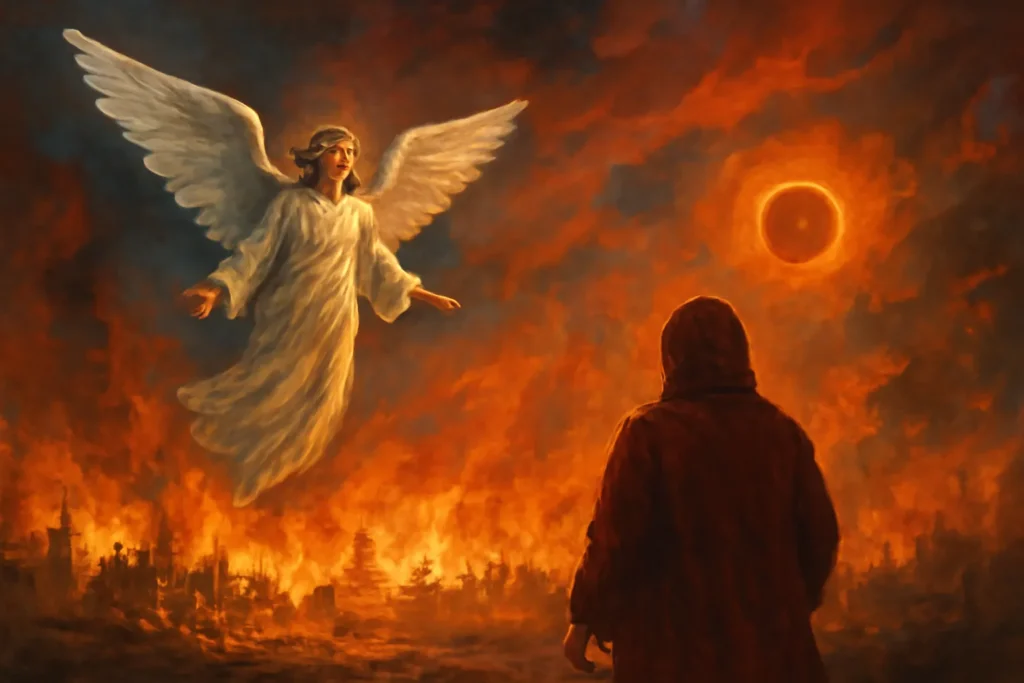
Revelation presents a series of judgments—often described as seals, trumpets, and bowls—that intensify as history approaches the consummation. In Revelation, the tribulation period is inseparably linked to the rise of the Beast, the anti-Christ figure who exercises global authority, and the associated deception and persecution of faithful followers. The text also depicts cycles of divine justice and mercy, including calls to repentance, heavenly worship, and the ultimate defeat of Satan. The images of the Beast, the mark of the Beast, the Great Tribulation, and the judgments of Revelation provide a framework for understanding the severity and scope of the end-times period from a theological perspective.
Jesus’ Teachings on the End Times (Gospels)
In the Olivet Discourse, Jesus describes events that will accompany the end of the age—wars, famines, earthquakes, persecution, false prophets, and preaching of the gospel to all nations. While Jesus emphasizes watchfulness and moral readiness, he also underscores the need for steadfast faith in a time of tribulation. Christian readers frequently integrate these teachings with Daniel and Revelation to form a coherent portrait of what the “tribulation period” signifies in terms of spiritual testing and ultimate redemption.
Because different Christian traditions highlight various aspects of the same phenomenon, you will encounter several synonymous phrases. Some of the most common are:
Great tribulation
End-times period
Seven-year tribulation
Daniel’s seventy weeks
Time of Jacob’s trouble (a phrase drawn from Jeremiah and other prophetic language)
Each term points to a facet of the broader concept: intensity, duration, or the theological idea of a decisive moment in history when divine justice intersects human history most directly.
Major Interpretive Pathways: When and How the Tribulation Occurs
Christian thinkers have proposed several major timelines for the bible tribulation period. These views differ primarily on the timing of the rapture (the catching up of believers to meet Christ) and the relationship between the tribulation and Christ’s second coming. Here are the three most influential families of interpretation, along with a brief note on related variations:
Pre-tribulation Rapture Perspective
In this widely known framework, the church is raptured before the onset of the tribulation period. The sequence is typically summarized as: rapture occurs first, then the seven-year period of persecution and judgment, followed by the visible return of Christ with his saints and the establishment of the messianic kingdom. Proponents often emphasize a separation between God’s people and the intense wrath poured out during the end-times events. This view is closely associated with dispensational premillennialism and has strong popularity in modern evangelical circles.
Mid-tribulation or Post-tribulation Variants
Other interpreters contend that the church will endure some portion of the tribulation or even that believers will go through the entire period. In the mid-tribulation model, the rapture occurs at or near the midpoint of the seven-year week, coinciding with dramatic events described in Revelation (sometimes linked to the abomination of desolation). In the post-tribulation view, Christians experience the whole tribulation and are then gathered at the coming of Christ. Each variant emphasizes different biblical cues, such as the chronology of Revelation’s trumpets and seals, or Jesus’ Olivet Discourse, to argue for a particular sequence.
Other Theological Streams
Beyond the classic pre-, mid-, and post-tribulation schemes, several other frameworks exist:
Pre-wrath theology, which places the rapture shortly before God’s final outpouring of wrath but after much of the tribulation’s distress.
Historical premillennialism, which emphasizes Christ’s return before a literal thousand-year reign and often incorporates a more symbolic reading of some visions.
Amillennial and postmillennial perspectives tend to read biblical prophecy as primarily symbolic or as pointing toward the ongoing spiritual victory of the gospel through history rather than a single, climactic sequence.
These positions differ not only in their timing but also in how they interpret symbolic numbers, dates, and figures. For readers, recognizing this diversity helps illuminate why the tribulation period remains a rich field of study, debate, and prayerful reflection within Christian theology.
Signs of the Tribulation: What the Bible Foretells Will Unfold
Across the biblical text, a set of converging signs marks the approach of the tribulation period. Some signs are presented as warnings to the church, others as judgments on a rebellious world. The following overview highlights major categories of signs commonly discussed by scholars and readers alike. While the exact order and literalness of these signs are debated, the themes recur across interpreters and serve as a guide for spiritual discernment during difficult times.
Global religious deception and the rise of a deceptive, charismatic leader who figures prominently in Revelation as the Beast or Antichrist. This figure wields political power and spiritual influence, attracting large followings and enforcing an economy of allegiance.
False prophets and counterfeit miracles that accompany the Beast’s authority, testing the church’s fidelity to the gospel.
Intense persecution of faithful followers and widespread hostility toward those who adhere to Christ, including moral and doctrinal testings that challenge conscience and witness.
Global turmoil in the form of wars, rumors of wars, famines, earthquakes, and ecological upheavals that reflect cosmic disorder.
The preaching of the gospel to all nations as a sign of the gospel’s universal reach, even in the midst of chaos, inviting repentance and faith.
The covenant with many or a series of political agreements that the Beast uses to consolidate power, setting the stage for the abomination of desolation in some interpretations.
The abomination of desolation—a pivotal crisis described in Daniel and Jesus’ words—often understood as a desecration of a holy site that signals the transition into the most intense phase of the tribulation.
The marking and control of commerce through a mark or sign that enables economic participation, sometimes understood as a literal mark or as a metaphor for loyalty and allegiance.
Cosmic signs and heavenly disturbances that accompany the final judgments, reminding readers that spiritual warfare operates at the level of creation itself.
Harvest of the saints and the martyrs who remain faithful under pressure, highlighting the virtue of steadfast endurance and the hope of divine justice.
Readers should note that many of these signs are described with symbolic language. Historicists, futurists, and idealists may interpret the same signs differently—some as specific future events, others as enduring patterns in church history, and still others as symbolic truths about spiritual warfare, perseverance, and faithfulness under trial.
Timeline and Structure: What a Common, Readable Map Looks Like
The idea of a timeline for the bible tribulation period helps believers keep track of prophetic expectations and the moral exhortations that accompany them. Because there is no single universally accepted chart, most readers are helped by understanding the major phases that appear in Scripture and in traditional commentaries. Here is a compact, readable outline that reflects the most common structures, with explicit caveats about interpretive differences.
The start point of the tribulation era is viewed differently by interpreters. In a pre-trib view, the church is removed before the first major judgment; in other timelines, the church remains through part or all of the trials. In any case, a catalytic event—often framed as a covenant, a peace accord, or another political arrangement—often serves as a symbolic starting signal.
The rise of the Beast and the consolidation of political power, accompanied by a surge of deception, persecution, and apostasy. The Beast’s authority is the epicenter of political and spiritual conflict in the end-times narrative.
The midpoint crisis when an abomination or explicit desecration occurs, signaling a shift toward intensified persecution and divine judgments. This point often corresponds in readers’ minds to a “midpoint” of seven years or a major pivot in apocalyptic timeframes.
The Great Tribulation—an era of extraordinary distress described in Revelation 7-13 and elsewhere, during which the faithful face significant pressure and the severity of judgments intensifies.
Judgments intensify with the trumpet and bowl sequences, culminating in the next-to-last and final plagues that demonstrate God’s justice and mercy in history.
The Second Coming of Christ, visible to the whole world, bringing victory over evil and the establishment of a new order in which righteousness prevails.
The Millennium and Final Judgment in traditional eschatologies that hold to a literal reign of Christ on earth for a thousand years followed by a final judgment and the creation of a new heavens and new earth.
Important note: within this timeline, the exact sequence, duration, and even existence of a single, universal event are debated. Some readers emphasize a relatively short, symbolic period; others insist on a precise, literal seven-year timeframe with a clear chronology. The point of agreement across perspectives is that this period is climactic, designed to reveal faith, prove loyalty, and demonstrate God’s ultimate victory over evil.
Phases and Durations: What’s the Significance of Time in the End-Game?
In many traditional readings, specific durations recur as symbolic numbers that convey theological truths rather than precise calendar dates. For example:
42 months often corresponds to 3.5 years, marking half of a ceremonial week in prophetic language and marking the period of Beastly authority in Revelation.
1260 days is another way the same interval is counted in various texts, reinforcing the idea of a compact but consequential period.
Time, times, and half a time—a phrase used in Daniel and Revelation that is interpreted by many commentators as 3.5 years in certain contexts and as a broader period of testing in others.
In addition to these numbers, many readers attend to the symbolic meaning of numbers in biblical literature. The use of seven to denote completion or fullness and twelve to signify God’s people often appears in discussions of the tribulation period. The result is a timeline that serves as a theological map—encouraging prudence, watchfulness, and a call to faithful living rather than a mere forecast of dates.
The concept of a climactic end-times period has roots in early Christian writers who interpreted Jesus’ warnings about the end of the age within the immediate crises faced by the early church, as well as in later centuries when church leaders confronted new political and social upheavals. Over time, the understanding of the tribulation has been refracted through different theological lenses:
Early Christian perspective often saw tribulation as ongoing persecution under Roman rule and other powers, interpreted through prophetic frameworks that connected to Daniel and Revelation.
Medieval and Reformation era readers expanded the act of prophetic reading to incorporate broader systemic judgments—corrupt religious institutions, political upheavals, and moral decay—as signs of the coming end times.
Modern dispensational theology popularized a tight, futurist map that locates the bulk of end-times events in a distinct, anticipated future seven-year period. This view aligns with a pre-tribulation rapture in many circles and emphasizes a clear, sequential forecast.
Contemporary approaches often stress a multifaceted hermeneutic, recognizing that apocalyptic literature blends history, symbol, and prophecy. Many scholars encourage careful reading, humility before difficult passages, and a focus on practical faithfulness rather than sensational speculation.
One enduring lesson from church history is that the tribulation topic has repeatedly tested the church’s readiness, its moral courage, and its commitment to the gospel in the face of pressure. Regardless of one’s position on the exact timing, the core exhortations—remain faithful, live righteously, proclaim the gospel, and trust in God’s sovereignty—remain central across traditions.
Practical Considerations: How to Read End-Times Prophecy Today
For readers who want to engage with the bible tribulation period in a thoughtful, responsible way, here are practical guidelines and questions to consider as you study:
Context first: Always read prophetic texts in their literary and canonical context. Apocalyptic literature uses symbolic language that often requires cross-referencing with both older prophetic books (like Daniel) and other New Testament writings (like Revelation and the Gospels).
Literal vs. symbolic: Distinguish when a passage is likely intended symbolically (numbers, beasts, horns) from when a verse is meant to describe real-world events. Be open to multiple levels of meaning.
Hearers’ perspective: Acknowledge that first-century audiences would have heard these messages within specific historical circumstances—tribulation, persecution, and expectations about the Messiah—before applying them to future events.
Ethical focus: The prophetic literature emphasizes moral conduct: faithfulness, endurance, mercy, and justice. Let these ethical lessons guide your personal life and community witness.
Balanced scholarship: Compare multiple viewpoints, consult reputable commentaries, and avoid sensationalism. A balanced approach values exegesis (what the text means) over speculation (what it might mean for me today).
Pastoral care: The prophetic texts can provoke anxiety. Ground your study in pastoral care, focusing on hope in Christ, the assurance of God’s sovereignty, and practical ways to live out faith in uncertain times.
In practice, many readers use the tribulation framework to motivate prayer, ethical action, and compassionate witness in communities facing real-world challenges—natural disasters, social upheaval, or political polarization. The broader aim is not merely to predict the future but to cultivate resilient faith in the present.
Concluding Reflections: Why the Tribulation Period Remains Important
Whether you interpret the bible tribulation period as a literal seven-year sequence, a symbolic period of testing, or a combination of both, the topic invites readers to engage deeply with questions about suffering, justice, and hope. The end-times narrative challenges believers to:
Persevere in faith amid trials, persecution, or moral ambiguity.
Maintain discernment about spiritual deception and real gospel truth.
Proclaim the gospel with courage and compassion to people from all nations.
Trust God’s sovereignty even when events seem chaotic or confusing.
Ultimately, the tribulation period—whether viewed through a biblical-luturgy lens or a theological framework—invites each generation to respond with reverence, humility, and faithfulness. The prophetic horizon points to the return of Christ and the renewal of all things, a horizon that has inspired hope and ethical living for two millennia and continues to shape the way believers understand suffering, salvation, and the ultimate reconciliation of all things in God’s good purposes.







Leave a Reply