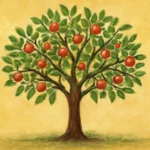
Bible Verse About Knowing Them by Their Fruits: True Character Revealed
Quick Answer: A bible verse about knowing them by their fruits reminds us that what a person truly is shows up in what they produce. Scripture teaches that good trees bring forth good fruit, and corrupt trees bring forth evil fruit. Instead of guessing by words alone, look at consistent actions and outcomes that reveal the heart.
Christians often feel the tension of dealing with people who may speak confidently but live inconsistently. Yet God does not ask us to rely only on impressions or marketing. The bible verse about knowing them by their fruits directs our attention to what is produced over time. When Jesus teaches that a good tree brings forth good fruit and that a corrupt tree brings forth evil fruit, He gives us a spiritual pattern for discernment. In other words, real faith is not only claimed—it is expressed. As you apply these truths, you can respond with wisdom, guard your heart, and choose rightly. The goal is never suspicion for its own sake, but clarity that brings protection and encouragement, pointing others toward Christ-like character.
At a Glance — Verses in This Article
Matthew 7:17
Matthew 7:18
2 Corinthians 9:6
Bible Verses
Matthew 7:17 (King James Version)
“Even so every good tree bringeth forth good fruit; but a corrupt tree bringeth forth evil fruit.”
Jesus explains that trees show who they are by the fruit they bear, making this verse central to discernment.
Matthew 7:18 (King James Version)
“A good tree cannot bring forth evil fruit, neither can a corrupt tree bring forth good fruit.”
This verse reinforces that genuine righteousness and corrupt nature cannot produce the opposite kind of fruit.
“But this I say, He which soweth sparingly shall reap also sparingly; and he which soweth bountifully shall reap also bountifully.”
Paul connects sowing and reaping, showing that spiritual life results in a measurable harvest over time.
The Bible’s Pattern: Fruit Over Words
When people talk about discernment, they sometimes mean “instant intuition” or “a bad feeling.” But Scripture sets a different standard—fruit over words. Jesus teaches that every good tree produces good fruit, while a corrupt tree produces evil fruit (Matthew 7:17). This is not a call to be harsh; it is a call to be honest about reality. A tree does not manufacture apples to impress passersby. It grows and bears what matches its nature.
This matters because spiritual language can be imitated. Someone may use church terms, quote verses, or sound sincere, but the life behind the words tells the truth. Jesus further clarifies this with a clear boundary: a good tree cannot produce evil fruit, and a corrupt tree cannot produce good fruit (Matthew 7:18). In other words, what is truly in the heart will eventually surface in consistent behavior.
So how do you practice this wisely? Look for patterns. Do the “fruits” match the claims? Are there ongoing acts of integrity, humility, mercy, and obedience—or a continual cycle of manipulation, harm, and self-justification? Fruit is not one dramatic moment. Fruit is the recognizable outcome of what has been growing.
You may also remember that fruit often grows slowly. That is why Paul describes sowing and reaping: he which sows sparingly will reap sparingly, and he which sows bountifully will reap bountifully (2 Corinthians 9:6). Spiritual life is not only a matter of speech; it is a matter of what is sown—whether kindness or selfishness, generosity or fear—and what eventually comes out in the harvest. Over time, the seed reveals itself.
In this way, knowing them by their fruits becomes both a warning and a comfort. It is a warning against pretending. It is a comfort that God’s truth is stable and observable.
Discernment With Mercy: Recognize, Respond, and Rebuild
Jesus’ teaching could be misunderstood as “judge everyone quickly.” But the aim is not to condemn; it is to discern. When you recognize fruit, you can respond with wisdom and mercy—without enabling harm.
Matthew 7:17–18 emphasizes that character has a direction. A good tree is oriented toward good fruit, while a corrupt tree is oriented toward evil fruit. This means discernment is not merely spotting bad behavior; it’s understanding the direction of the heart. The more consistent the pattern, the more reliable the conclusion.
At the same time, fruit can sometimes appear after seasons of struggle, repentance, and growth. This is why the concept of sowing and reaping is so helpful. Paul says the one who sows sparingly will reap sparingly, and the one who sows bountifully will reap bountifully (2 Corinthians 9:6). Seeds need time. Practices need repetition. God uses seasons to shape people.
So what do you do practically?
First, examine consistency. Are actions aligning with professed beliefs? If someone’s life repeatedly produces fruit contrary to their claims, you have grounds for caution.
Second, respond with boundaries when necessary. Fruit is meant to protect you. If evil fruit continues—lies, exploitation, cruelty—love does not require you to remain in situations that endanger your faith and well-being.
Third, if you have influence, encourage change. Discernment should never erase compassion. You can speak truth in love, urging repentance and pointing toward the fruit God intends.
Finally, keep your own heart accountable. The same Jesus who calls you to observe others also calls you to be the kind of tree that bears good fruit. Discernment begins with humility.
When you combine these ideas, you get a balanced spiritual posture: learn to recognize fruit without losing mercy, and act with courage without falling into pride. God cares about truth, but He also cares about people.
Your Harvest Matters: What You Sow Shapes What You See
A powerful devotional effect of these passages is that they not only teach you how to evaluate others—they also challenge you about what you are planting. Paul’s message in 2 Corinthians 9:6 is straightforward: sow sparingly and reap sparingly; sow bountifully and reap bountifully. That principle applies to generosity, but spiritually it also applies to attitudes, habits, and investments of time.
If you want to recognize good fruit, you can’t live with spiritual “blind spots.” Ask God to show you what you are watering in your own life. What fruit is being produced in your speech? In your patience? In your handling of conflict? In your willingness to forgive? In your faithfulness when no one applauds?
Matthew 7:17 teaches that a good tree brings forth good fruit. Matthew 7:18 teaches that corrupt trees cannot reliably produce the opposite kind of fruit. That means your life cannot stay in contradiction with itself forever. Either the heart is being cultivated toward righteousness, or it is being trained toward inconsistency.
When you sow bountifully—choosing obedience, practicing generosity, telling the truth, serving when it is inconvenient—you help create an environment where good fruit becomes more evident. When you sow sparingly—choosing selfish comfort, withholding help, indulging anger—you should not be surprised when spiritual harvest looks thin.
So this becomes a cycle of discipleship: you discern fruit in others, and you also inspect fruit in yourself. God uses both sides of the lesson to train your mind and strengthen your faith.
Let your discernment make you more prayerful, not more cynical. Let it make you more consistent, not more self-righteous. If God’s Word says good trees produce good fruit, then you can trust Him to cultivate you. And as He changes you, you will be better equipped to encourage others and to step away from what damages the soul.
In short, fruit is evidence—but it is also a call to become evidence of God’s transforming work.
Daily Practices for Knowing Them by Their Fruit
You can turn these teachings into a steady, faith-building rhythm. Here are simple daily practices that align with Jesus’ pattern and Paul’s sowing principle.
1) Watch for consistent outcomes. Before trusting a claim, notice how the person behaves over time. Are their actions steadily producing what is good—or are you repeatedly faced with the same pattern of harm? Fruit is not a snapshot; it’s a storyline.
2) Compare words to life. A person may say many things, but Matthew 7:17–18 reminds you that the tree shows itself by its fruit. If their “good talk” repeatedly fails to produce good behavior, take that seriously.
3) Ask God for wisdom, not suspicion. Pray, “Lord, give me discernment.” Then look honestly. Spiritual discernment helps you avoid enabling evil fruit while still treating people with compassion.
4) Sow what you want to see. Apply Paul’s teaching in your own daily choices. If you want good fruit around you, sow bountifully through generosity, honesty, prayer, and service (2 Corinthians 9:6). Over time, your own life becomes clearer evidence of the direction of your heart.
5) Use boundaries as an act of love. If evil fruit is ongoing, you may need limits. Love does not require you to remain in situations where harm continues.
Make this personal: choose one habit this week that increases your good-fruit growth—such as speaking truthfully, giving sacrificially, or forgiving quickly. Then invite God to help you discern with clarity and respond with grace.
Frequently Asked Questions
What does the Bible mean by knowing others by their fruit in scripture?
It means evaluating the consistent outcomes of a person’s life rather than relying only on words or appearances. Jesus teaches that a good tree brings forth good fruit, while a corrupt tree brings forth evil fruit. Look for patterns that reveal the direction of the heart over time.
How can I recognize true believers by their works without being judgmental?
Start by praying for wisdom and using scripture honestly. Focus on long-term behavior and consistent fruit. Jesus’ point is evidence, not condemnation—choose responses that protect you and encourage repentance where possible.
Is there a biblical test for fruit reveals character in the Bible?
Yes. Jesus states that a good tree cannot produce evil fruit, and a corrupt tree cannot produce good fruit. This provides a spiritual standard: watch what life repeatedly produces and compare it with what is professed.
How does sowing and reaping (2 Corinthians 9:6) relate to test by actions and outcomes spiritually?
Paul teaches that what is sown determines what is reaped. In the same way, spiritual actions create future outcomes. When you see consistent sowing—generosity, integrity, or selfishness—you can expect corresponding harvest in the way a life develops.
A Short Prayer
Lord, thank You for giving discernment through Your Word. Help me to observe fruit with wisdom and to respond with mercy. Guard my heart from pride and from cynicism. Teach me to sow bountifully in daily choices—so that my life shows integrity, kindness, and obedience. When evil fruit appears, give me courage to set wise boundaries. When good fruit grows, help me encourage and bless it. In Jesus’ name, amen.
Key Takeaway: Knowing them by their fruits means trusting God’s pattern: character reveals itself over time through consistent action and harvest.