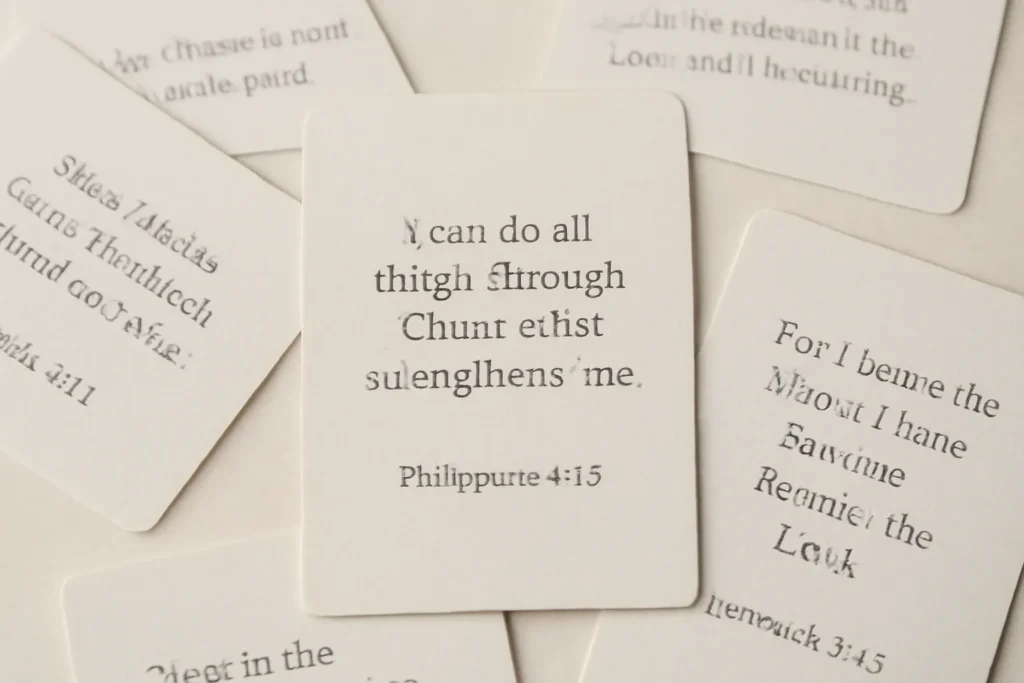
Bible verse cards are small, portable cards that feature specific passages from the Bible. They are designed to be read, memorized, reflected upon, and shared. These printable scripture cards come in a variety of formats and can cover a wide range of themes—comfort in times of stress, encouragement during difficulty, gratitude for blessings, or guidance for daily decisions. Whether you call them memory verse cards, pocket scripture cards, or encouragement cards, the core idea remains the same: a compact tool that brings sacred words into everyday life.
The beauty of Bible verse cards is that they are designed for quick engagement. In a busy day, you can pull out a single card, read the verse, reflect on its meaning, and carry the message with you. Because they are often printable, you can customize them to your needs, print them at home or in a print shop, and even share sets with friends, family, church groups, or students. In this article, you’ll find a thorough guide to everything you need to know about scripture cards and how to use them for sustained encouragement.
Why Printable Scripture Cards Are Powerful
The appeal of printable verse cards lies in how they support routine, reflection, and community. They are not meant to replace daily reading or communal study, but to supplement those practices with a tangible quick-reference tool. Here are several reasons why these cards can be transformative:
Accessibility: With cards in hand, you can access meaningful verses without opening a book or app. This is especially helpful during travel, commutes, or moments of quiet in a busy day.
Memory aid: Repetition is a proven method for memory. Short verses on cards encourage regular practice and long-term retention.
Tailored focus: By selecting verses by topic—comfort, courage, forgiveness, or joy—you create a personalized toolkit for the season you’re in.
Giftability: A well-designed set makes a thoughtful present for graduates, new believers, caregivers, and students in need of encouragement.
Portability: Small formats fit in wallets, purses, Bible covers, or desk drawers, ensuring that sources of hope are always within reach.
Variations of Bible Verse Cards
There isn’t a single template for these cards. The field invites a spectrum of formats and phrases that each serve different preferences and contexts. Here are common variations you’ll encounter and why they matter:
Bible verse cards: The classic version, often with a single verse and its reference on the front, and space for a brief reflection on the back.
Scripture cards: A broader label that may include passages from multiple translations or thematic sets (e.g., healing, faith, peace).
Memory verse cards: Optimized for memorization, sometimes with the verse text in a larger font and a cue word or phrase to trigger recall.
Pocket scriptures: Ultra-portable cards designed to slip into a wallet or small pocket, typically 3x5 inches or smaller.
Encouragement cards: Focused on uplifting phrases, short prayers, or affirmation-like statements that point toward hope and resilience.
Devotional card sets: Themed collections that pair a verse with a brief devotional reflection, prayer prompt, or journaling cue.
Artistic or decorative cards: Cards that emphasize aesthetic elements—hand-lettered typography, color schemes, and paired imagery—to enhance engagement.
Family or classroom bundles: Larger sets designed for groups, with verses tied to shared topics such as kindness, teamwork, or God’s provision.
Design and Content Considerations
When you’re choosing or creating verse cards, design and content decisions play a crucial role in readability, memorability, and impact. The following considerations help ensure that your cards are both beautiful and functional.
Choosing verses by theme
One practical approach is to assemble themed sets. For example, you might create a comfort and peace set featuring verses like “Be still, and know that I am God” (Psalm 46:10) or “The Lord gives strength to his people” (Psalm 29:11). A courage and resilience set could include “I can do all things through Christ who strengthens me” (Philippians 4:13). The key is to align verses with real-life circumstances or seasonal needs.
Typography and readability
Readability is essential. Choose clear fonts with adequate letterforms, high contrast between text and background, and generous line spacing. For small cards, consider a font size that remains legible without crowding the card. If you offer alternative translations, ensure that differences in wording don’t impede comprehension.
The front of a verse card typically features the verse text and its reference. The back can host a short reflection, a prayer prompt, or journaling lines. Some creators include prompts like “What does this verse tell you about God?” or “How can you apply this verse today?” This back-side content can deepen engagement and support daily practice.
Color, imagery, and symbolism
Color palettes and subtle imagery can reinforce the message. For example, cool blues and greens may convey calm and trust, while sunrise hues can evoke renewal. When using imagery, ensure it does not distract from the verse text. If you design for a group or church context, consider using brand colors or a unifying motif across the card set.
How to Create and Print Your Own Verse Cards
Creating your own verse cards can be a rewarding project, whether you’re making a personal toolkit, a teaching resource, or a gift package. Below is a practical workflow you can follow, with options for different skill levels and budgets.
Decide the format: Choose a size (commonly 3x5 inches or 4x6 inches) and a one- or two-sided design. If you want a compact wallet set, 3x5 might be ideal; for a display-ready set, 4x6 offers more room for back-side reflections.
Gather verses: Compile a list of verses based on your chosen themes. You can curate from a single translation or offer several translations for variety.
Plan layout: Draft a layout that places the verse prominently on the front and a reflection or prompt on the back. Consider margins that allow for clean trimming.
Choose software: For beginners, word processors (Word, Google Docs) work, while Canva, Adobe InDesign, or Inkscape provide more design flexibility. If you’re comfortable with templates, you can speed up the process using pre-made print templates.
Design elements: Pick a readable font, set an appropriate font size, select a color scheme, and include a small decorative element (line ornament, border, or motif) that does not crowd the text.
Printing options:
Home printing on cardstock (80–110 lb cover stock or 210–300 gsm) with a matte or satin finish.
Use print shop services for higher-quality results, better color fidelity, and professional cutting.
Consider lamination or pouches to protect cards that will be handled frequently.
Cutting and finishing: If you cut at home, use a metal ruler, a craft knife, and a straight-edge cutter for precision. Round corners with a corner-rounding punch for a finished look and safer edges.
Quality check: Review legibility, alignment, and the balance between front and back content. Test print a sample before producing a full run.
Packaging: Package sets in a small box, a resealable pouch, or a binder with card sleeves. Label sets clearly by theme and provide a brief usage guide if needed.
DIY workflow options
If you want to start quickly, consider these ready-to-use approaches:
Use a simple, single-verse template and rotate verses monthly for a monthly devotional card.
Publish thematic bundles (e.g., grace and mercy, strength in weakness) with matching back-side prompts.
Collaborate with a local church or classroom to create a shared verse card project where students or congregants contribute verses.
Printing Sizes, Materials, and Practical Tips
The physical properties of verse cards can dramatically affect their usability and durability. Here are practical recommendations to help you choose the best combination of size, stock, and finishing.
Common sizes: 3x5 inches (wallet-friendly), 4x6 inches (display-ready), and 5x7 inches (more space for reflection).
Cardstock weight: 80–110 lb cover stock (approximately 210–300 gsm) provides a sturdy feel without bulk. For premium sets, 120–140 lb (around 325–420 gsm) adds heft.
Finish: Matte finishes reduce glare and improve readability in various lighting conditions. Gloss finishes may enhance color, but can cause glare when photographed or scanned.
Lamination and protection: Self-sealing laminating pouches or external laminating sheets protect cards from moisture, oil, and wear. Lamination adds bulk, so plan for space in your packaging.
Edge treatment: Smooth edges prevent paper cuts and snagging in wallets or card holders. Round corners with a corner-rounding tool for safety and aesthetics.
Binding options: If you’re creating a larger set, consider loose cards in a pocket binder, a small spiral-bound booklet, or individual cards stored in a desktop tray or acrylic stand.
Ways to Use Bible Verse Cards in Daily Life
The practical applications of scripture cards are as varied as the people who use them. Here are some effective ways to integrate verse cards into daily routines, family life, classrooms, and faith communities.
Morning ritual: Start the day by drawing a card and reflecting on its meaning before you begin daily tasks.
Midday check-in: Place a card on a workspace or kitchen counter to serve as a midday reminder during busy hours.
Evening reflection: Use a different card each evening to guide contemplation, prayer, or journaling.
Memory practice: Use a set specifically designed for memorization, repeating the verse aloud several times to reinforce recall.
Group study: Distribute cards in a small group, classroom, or church setting to spark discussion and shared reflection on a verse’s relevance.
Organization and planning: Tie verses to goals or practices—e.g., a “kindness” card for a week of intentional acts of generosity.
Gift-giving and outreach: Create thoughtful gift sets for friends, family, or neighbors who could use a message of encouragement.
Digital and Hybrid Options
In an increasingly digital world, you can combine physical verse cards with online resources to reach broader audiences. Here are some effective digital and hybrid approaches:
Printable PDFs: Create PDFs that people can print at home. Offer multi-verse bundles aligned to seasons or themes.
Digital cards: Use image files or interactive slides that can be displayed on devices, shared via messaging apps, or used in classrooms.
QR codes: Attach QR codes to physical cards that link to devotionals, full verses in different translations, or short video reflections.
Video or audio companions: Provide short audio reflections or video prompts that correspond with each card’s verse for multisensory engagement.
Accessibility, Inclusivity, and Language Options
Designing verse cards with accessibility in mind broadens their reach and impact. Consider these practices:
High-contrast designs for legibility, especially for readers with visual impairments.
Large-print variants with bigger font sizes for those who benefit from enhanced readability.
Clear language translations or bilingual options to serve diverse communities.
Dyslexia-friendly typography choices, such as clean sans-serif fonts and generous spacing.
Alt text and accessible descriptions for digital card versions, enabling screen readers to interpret content.
Hosting, Packaging, and Sharing Your Sets
If you’re producing verse cards for a church, school, or community group, thoughtful packaging and sharing strategies can maximize impact. Consider the following:
Left-behind sets: Create compact sets that can be distributed after services or events as encouragement tools for attendees.
Teacher and leader kits: Curate sets to support curricula, Sunday school lessons, or small-group discussions with guiding questions.
Gift bundles: Pair verse cards with small tokens (a bookmark, a notepad, or a devotional booklet) for a meaningful gift package.
Seasonal collections: Release limited editions aligned with liturgical seasons (Advent, Lent, Easter) or awareness campaigns.
Digital sharing: Make a portion of the set available as a free download to attract interest and build community around the materials.
Quality Assurance and Ethical Considerations
When producing Bible verse cards, aim for accuracy, authenticity, and respect for the sacred text. Here are a few best practices:
Cross-check verses to ensure accuracy of wording and reference, particularly when multiple translations are presented.
Respect translation licenses if you choose translations that are copyrighted; consider public-domain translations (like the King James Version) for free, widely shareable options.
Credit sources for translations and design inspiration if you publish publicly, especially for commercial or educational use.
Offer opt-out or sensitivity options for users who prefer not to engage with certain themes, ensuring inclusivity and accessibility.
FAQs About Bible Verse Cards
What is the main purpose of Bible verse cards?
Their primary aim is to provide brief, accessible Scripture portions for daily reflection, memory work, and encouragement. They serve as portable reminders of faith and hope, designed to fit into real-life routines.
What sizes are typical for verse cards?
Common sizes are 3x5 inches or 4x6 inches. Smaller sizes (2x3 inches) are often used for wallet-friendly sets, while larger formats (5x7 inches) provide more space for back-side reflections.
What should I include on the back of a card?
Back-side content can include a brief reflection, a prompt for journaling, a short prayer, or a practical application question related to the verse. The goal is to deepen understanding and encourage action.
Can I use Bible verse cards in a classroom?
Absolutely. verse cards can be excellent teaching aids. They can support memory work, discussion prompts, and group prayer. For students of various ages, adjust the complexity of the verses and the accompanying prompts accordingly.
Are digital versions as effective as physical cards?
Both formats have value. Physical cards offer tactile engagement and portability, while digital versions provide convenience, searchability, and easy sharing. A hybrid approach can combine the strengths of both formats.
Bible verse cards are more than simple pieces of paper. They are intentional tools that translate the vastness of Scripture into daily, actionable moments. By offering printable scripture cards, you create tangible access to God’s words—moments of comfort, courage, and guidance that people can carry with them wherever life takes them. Whether you call them memory verse cards, pocket scriptures, or encouragement cards, the underlying value remains clear: a small card can hold a big truth, and a simple habit can become a meaningful spiritual practice.
If you’re a creator, teacher, pastor, parent, or friend, consider starting with a modest set and growing as your community’s needs evolve. With thoughtful design, practical printing options, and a focus on accessibility and inclusivity, Bible verse cards can become a cherished resource that encourages and uplifts for years to come.








Leave a Reply