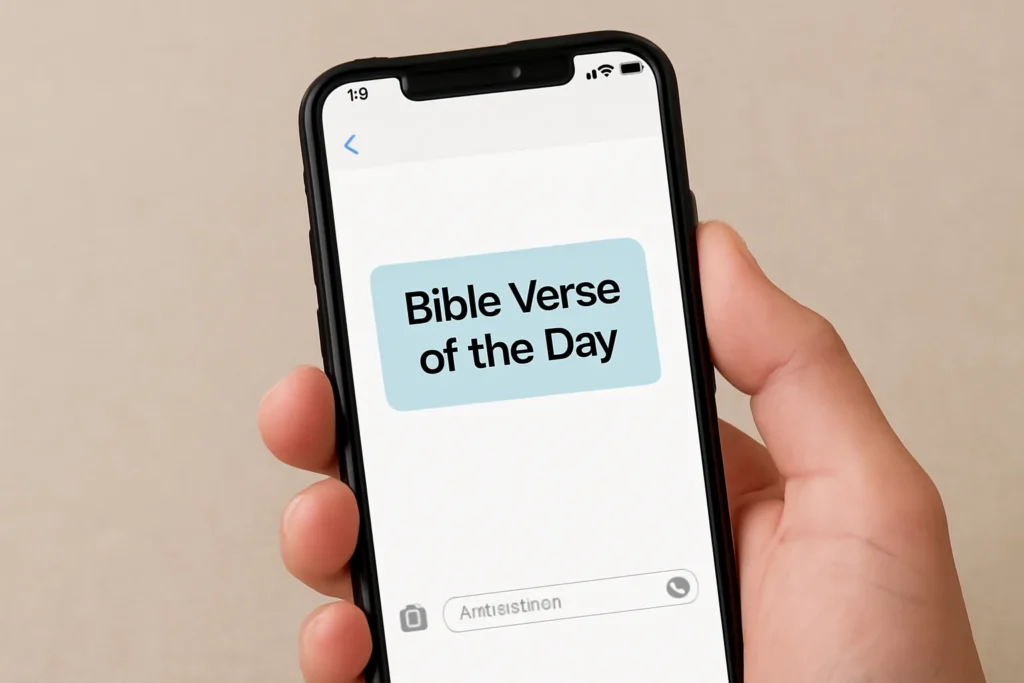
A Bible Verse of the Day Text Message is a short, often daily, communication that delivers a Bible verse or a brief devotional thought directly to a person’s mobile phone. The format is simple: a concise scripture excerpt, sometimes accompanied by a short reflection, a CTA to reflect or pray, and a reminder to revisit the verse later. The core idea is to create a reliable, low-effort spiritual rhythm—an everyday moment where a piece of Scripture comes to mind, inviting contemplation, prayer, or action.
Historically, the practice has roots in devotional reading and early morning disciplines, but modern technology makes it easy to automate and scale. In today’s digital landscape, the phrase is often used in several interchangeable ways: daily verse text, verse of the day SMS, scripture of the day notification, or daily scripture alert. Despite the variety of labels, the intention remains the same: to place a meaningful piece of the Bible into a person’s daily routine in a non-intrusive way.
Why people seek a daily message: benefits and motivations
The appeal of a Bible Verse of the Day Text Message stems from several practical and spiritual motivations. Here are some frequently cited benefits:
Consistency: A reliable daily prompt helps practitioners form a habit, turning spiritual practice into a routine rather than an occasional activity.
Accessibility: People can access Scripture even on busy days, without needing to carry a physical Bible or navigate apps.
Encouragement: Short verses offer reassurance, hope, or direction during challenging seasons, reinforcing emotional resilience.
Reminder of values: Regular verses can anchor priorities such as gratitude, patience, kindness, and trust in God.
Community and conversation: Shared verses can spark conversations with family, friends, or small groups, deepening understanding and accountability.
When done well, a daily verse text feels light and non-intrusive, yet spiritually meaningful. It strikes a balance between being a helpful nudge and a scholarly study, serving as an invitation to pause, reflect, and respond in everyday life.
Variants of the concept: variations on the theme
To accommodate different tastes, cultures, and devotional styles, the idea translates into several formats and naming conventions. Consider these common variations:
Daily Verse Text or Verse of the Day SMS: A straightforward delivery of one verse by text message each day.
Scripture of the Day Notification: A push notification or text that highlights a curated verse with minimal commentary.
Morning Verse Alarms: A timed reminder that nudges you to start the day with Scripture.
Verse-a-Day Digest: A longer format that may include a short devotional reflection or study question.
Scripture Snippets: Very short verses (or even a single line) designed for quick read and recall.
Each variation has its own rhythm and audience. Some people prefer a simple, uncluttered verse; others appreciate a brief reflection tied to the verse. Some systems combine multiple verses weekly to offer a thematic arc, such as hope in adversity, guidance for decision-making, or expressions of gratitude.
How it works: from delivery to daily reflection
The practical workflow behind a Bible Verse of the Day Text Message typically involves three components: content curation, transmission, and engagement. Here’s a high-level look at how it happens.
Content curation: A verse is selected, sometimes from a pre-approved list, a monthly theme, or a randomized pool. Some programs pair a verse with a brief reflection, meditation prompt, or prayer idea.
Scheduling: The verse is scheduled for delivery at a specific time, often morning or midday, to align with daily routines.
Delivery: The message is sent via SMS or a messaging platform. Recipients opt in and can usually opt out at any time.
Engagement: Follow-up prompts encourage readers to reflect, memorize, or discuss the verse with others.
The beauty of this system is its simplicity: a concise, meaningful text arrives at the moment when someone has a brief window to reflect, pray, or jot a thought. It’s not a replacement for Bible study or community worship, but an accessible entry point into a daily rhythm of Scripture.
Whether you’re a pastor, a church administrator, a ministry leader, or a curious individual, you can set up a Bible Verse of the Day Text Message system with varying levels of complexity. Below are practical pathways, from do-it-yourself approaches to automated platforms.
Do-it-yourself, manual curation
If you’re ministering to a small group or starting a personal habit, a manual approach can work well. You can prepare a library of verses and rotate through them. Here are steps to get started:
Build a small collection of verses that cover a range of themes (trust, courage, forgiveness, joy, wisdom, steadfastness).
Choose a fixed time for your daily message and set up a reminder for yourself to send it, or share it with your family via a group chat.
Decide whether to include a short reflection or question (for example, “How can this verse shape your prayers today?”).
Respect privacy and consent if you’re sending messages to others—obtain permission and provide opt-out instructions.
A manually curated approach can feel personal and relational, especially if you tailor verses to the needs or life events of the recipients. It also provides you with the freedom to adapt the message to cultural sensitivities and language preferences.
Automated approaches: platforms and services
For larger groups, or for individuals who want a hands-off experience, automation is a practical choice. You can leverage modern communication platforms to deliver a Verse of the Day to many subscribers. Common pathways include:
SMS gateways (e.g., services that send text messages to phone numbers): You can set up a daily script that pulls a verse and delivers via SMS.
Automation tools like Zapier or Integromat: These tools can trigger a message at a scheduled time, pulling verses from a Google Sheet, Airtable, or a small database.
Communication APIs (e.g., Twilio, Vonage, or Plivo): Use to programmatically send SMS or MMS with optional short reflections or memory aids.
Content management/delivery platforms: Some church management or devotional platforms offer built-in daily scripture delivery as part of their feature set.
If you choose automation, keep a few best practices in mind: ensure you have explicit consent from recipients, provide an easy opt-out method, and schedule messages to avoid spamming at inconvenient hours. In some regions, compliance with local communication laws (like TCPA in the United States) requires clear opt-in and opt-out processes and transparent data handling.
Choosing the right verses and themes
The heart of a successful Bible Verse of the Day Text Message program is the verse itself. Selection should be intentional, thoughtful, and adaptable to readers' life contexts. Here are some guiding principles.
Thematic rotation: Plan around recurring themes (hope, courage, guidance, mercy, gratitude) to provide variety and sustained relevance.
Context and clarity: Favor verses that are clear in their immediate message, especially for readers who may not have time for deep study every day.
Balance between testaments and genres: Mix wisdom literature (Proverbs), prophetic writings, the Gospels, and Epistles to expose readers to a broad biblical witness.
Memorable or quotable verses: Short, easily memorizable lines tend to be more shareable and easier to recall during daily life.
A practical approach is to establish a monthly theme and assign a handful of verses that fit that theme. For example, a "Strength in Weakness" month might include 2 Corinthians 12:9-10, Isaiah 40:29-31, and Psalm 46:1-3, among others, with brief reflections that tie the verses to everyday situations.
Some readers benefit from a short reflection or a couple of study questions appended to the verse. This can deepen engagement without requiring a full Bible study session. Ideas include:
Ask a single reflective question: “What does this verse invite you to do today?”
Suggest a practical application: “How can you live out this truth in your work or home this week?”
Include a prayer prompt: “Pray this verse into your day with a short petition for guidance.”
When adding reflections, maintain brevity. One or two concise sentences are typically enough to supplement the verse without turning the message into a long devotional essay.
Best practices for frequency and personalization
The success of a daily scripture alert hinges on balancing frequency with personalization. Here are essential considerations:
Opt-in and opt-out: Always obtain explicit consent and provide clear instructions to unsubscribe. Honor requests promptly.
Respect time: Schedule messages for reasonable hours and consider different time zones for a global audience.
Personalization options: Allow recipients to choose themes (e.g., “verse of the week” vs. “verse of the day”), and perhaps select preferred language or translation.
Frequency customization: Some users may want daily messages; others may prefer three times a week or a weekend recap. Offer choices where possible.
A light-touch approach to personalization respects the user while still delivering value. Avoid aggressive daily messaging if your audience expresses concerns about fatigue or overwhelm.
Privacy, consent, and ethical considerations
When distributing religious content via text messages, privacy and consent are paramount. Even though the content is spiritual, it resides in personal communication channels, which makes consent and data handling essential. Key considerations include:
Clear opt-in mechanisms: Ensure subscribers understand what they are signing up for and what they will receive.
Documentation of consent: Keep records of opt-ins and any changes in preferences.
Transparent data usage: Explain how contact information will be used, stored, and protected.
Easy opt-out: Provide a straightforward, frictionless way to unsubscribe at any time.
Respect for diverse beliefs: Recognize and respect the variety of faith backgrounds among recipients and refrain from content that could be perceived as coercive or disrespectful.
Ethical sending practices align with both legal requirements and pastoral integrity. When done well, the ministry of daily Scripture remains a source of grace and invitation rather than intrusion.
While the classic Bible Verse of the Day Text Message is plain text, you can extend engagement while maintaining simplicity:
Rich media versions: Include a short image or a branded card with the verse, a calming background, and legible typography for those who prefer visuals.
Audio snippets: A 20- to 60-second spoken verse can be delivered via MMS or a linked audio file for users who benefit from listening.
Discussion prompts: A daily question encourages users to share insights in a family chat, small group, or online community.
Reminders for memorization: Offer a weekly verse to memorize and provide simple prompts to practice recall during the day.
The best approach is to experiment with formats and observe what resonates with recipients. Some audiences respond more to visual aesthetics, others to concise textual content, and others to audio engagement.
Integrating with daily routines and spiritual disciplines
A daily verse message is most effective when it integrates with daily routines rather than competing with them. Consider these integration strategies:
Morning routines: A verse delivered at wake-up time can set a tone for the day.
Commute moments: A short verse can be read during a drive (where safe to do so) or listened to during a commute via audio delivery.
Lunchtime pauses: A midday verse can serve as a reminder to pause, reflect, and reset for the afternoon.
Evening reflection: A verse at the end of the day can help with gratitude, repentance, or contemplation before sleep.
By aligning with natural breaks in daily life, a verse of the day message complements other spiritual disciplines—public worship, personal Bible study, meditation, prayer, and journaling.
Beyond devotional value, a daily scripture text can function as an informal catechesis—especially when verses are selected to highlight key biblical themes, ethical teachings, and theological narratives. Here are some educational considerations:
Scripture literacy: Regular exposure to Scripture helps readers become more familiar with the Bible’s cadence, vocabulary, and structure.
Theological breadth: Include verses from various genres (law, wisdom, prophecy, gospel, epistle) to reflect the Bible’s diverse witness.
Context awareness: When possible, provide brief context to prevent misinterpretation, especially for readers new to Scripture.
If you’re leading a church or a Bible study group, you might rotate verses to illustrate a doctrinal point or to accompany a teaching series. The intention is to equip, not confuse, and to invite further exploration rather than presuppose agreement on every interpretation.
Sample verses and thematic examples for daily messages
To illustrate the breadth of possible content, here are examples of Bible Verse of the Day Text Message ideas, including different translations and themes. These serve as starting points for your own rotation.
Hope and assurance: “For I know the plans I have for you,” declares the LORD, “plans to prosper you and not to harm you, plans to give you hope and a future.” (Jeremiah 29:11, NIV)
Grace in weakness: “But he said to me, ‘My grace is sufficient for you, for my power is made perfect in weakness.’” Therefore I will boast all the more gladly about my weaknesses, so that











Leave a Reply