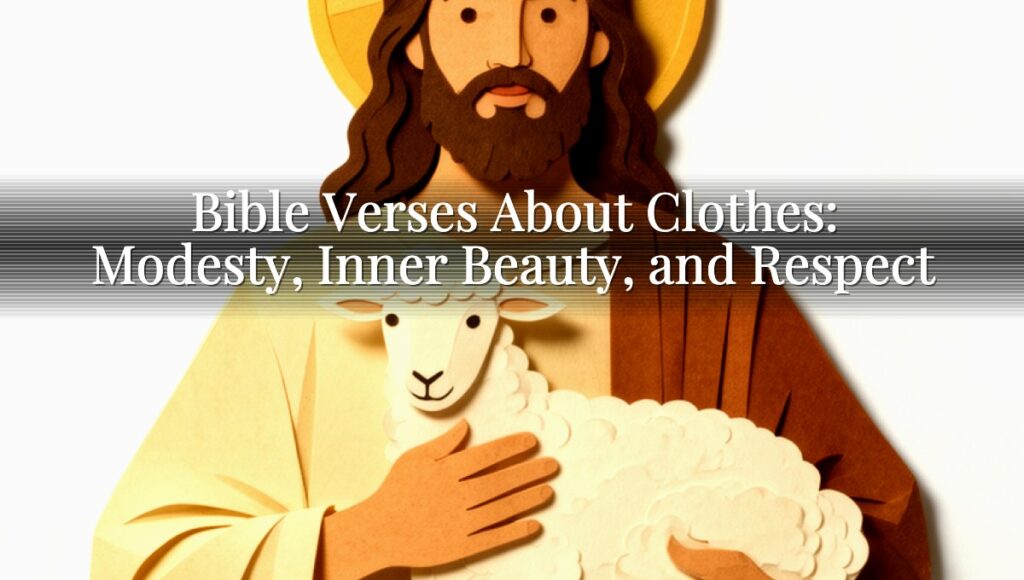
Bible Verses About Clothes: Modesty, Inner Beauty, and Respect
Quick Answer: If you’re looking for Bible verses about clothes, Scripture repeatedly teaches that what we wear should reflect godliness: modesty, humility, and respect for people. God cares more about the “hidden man of the heart” than external adornment. The Bible also warns against favoritism based on outward appearance, urging believers to honor the poor and the rich equally.
When Christians search for Bible verses about clothes, they’re usually asking a deeper question: “How should God shape what I wear—and why?” Scripture doesn’t treat clothing as meaningless; it treats it as a visible expression that can either draw attention to pride or point to Christlike character. The Bible emphasizes modest apparel, a heart shaped by humility, and the refusal to judge people by social status. It also confronts the temptation to favor those with outward display and neglect those who are overlooked. These truths are especially comforting today, when culture constantly trains us to measure worth by appearance. As you read the following verses, pray for wisdom to dress with godliness, to honor others with fairness, and to cultivate an inner beauty that lasts.
At a Glance — Verses in This Article
James 2:2-3
1 Timothy 2:9-10
1 Peter 3:3-4
Bible Verses
James 2:2-3 (King James Version)
“For if there come unto your assembly a man with a gold ring, in goodly apparel, and there come in also a poor man in vile raiment; And ye have respect to him that weareth the gay clothing, and say unto him, Sit thou here in a good place; and say to the poor, Stand thou there, or sit here under my footstool:”
1 Timothy 2:9-10 (King James Version)
“In like manner also, that women adorn themselves in modest apparel, with shamefacedness and sobriety; not with broided hair, or gold, or pearls, or costly array; But (which becometh women professing godliness) with good works.”
“Whose adorning let it not be that outward adorning of plaiting the hair, and of wearing of gold, or of putting on of apparel; But let it be the hidden man of the heart, in that which is not corruptible, even the ornament of a meek and quiet spirit, which is in the sight of God of great price.”
Clothing Reveals the Heart: Avoid Favoritism (James 2)
It’s possible to attend church while carrying silent assumptions about people—especially assumptions based on appearance. In James 2:2-3, the scenario is vivid: a man arrives wearing a gold ring and “goodly apparel,” and another arrives poor in “vile raiment.” The troubling detail is not merely that clothing differs; it’s that respect is given according to what can be seen. James exposes how quickly outward looks can become a doorway into partiality.
The lesson for Christians is sobering: our clothing choices (and our clothing-based judgments) can either reinforce love or damage unity. When we let fabric, jewelry, or “status signals” determine who deserves attention, we betray the heart of the gospel. In Christ, God’s regard is not measured by visible wealth; it is measured by faith.
As you consider bible verses about clothes, remember that God is concerned with more than dress codes. He is concerned with the ways clothing can train our hearts to treat people differently. So ask: Do I show honor only when someone looks like they “fit in”? Do I speak warmly to the polished while ignoring those who are quietly struggling? If so, James calls us back to impartial love.
A practical next step is to practice deliberately greeting those who are easy to overlook. Choose to listen first. Let respect be consistent. Clothing may be what people notice first, but our compassion must be what people feel most.
Modest Apparel That Cultivates Godliness (1 Timothy 2)
In 1 Timothy 2:9-10, Paul offers guidance that is both practical and spiritual. He says women should adorn themselves “in modest apparel, with shamefacedness and sobriety,” and he explicitly mentions avoiding “broided hair, or gold, or pearls, or costly array.” The point isn’t to deny that beauty exists—it’s to insist that adornment should not become a spotlight for pride or a tool for drawing attention to self.
Notice the balance: Paul doesn’t simply say “avoid.” He points to what truly “becometh women professing godliness”—it is “good works.” That phrase grounds the instruction in a deeper motive. Modesty is not just restraint; it’s representation. It is a posture that says, “I belong to God, and my life should look like Christ.”
This helps Christians avoid a shallow approach to clothing. Some people respond to Bible teaching with fear or legalism, as if modesty means never expressing beauty. But Scripture connects modesty with sobriety and shamefacedness—a respectful clarity that understands how appearance affects character and community. Costly array is not condemned only because it is expensive; it is discouraged because it can become a substitute for spiritual worth.
If you’re trying to apply these scriptures, start by asking whether your clothing communicates humility or self-promotion. Then bring it back to purpose: does it support worship, reinforce a good testimony, and encourage others to focus on what matters most?
The Hidden Man of the Heart: Outward Is Not the Main Ornament (1 Peter 3)
Many believers want a clear answer to the question, “What really matters about what I wear?” 1 Peter 3:3-4 gives a decisive perspective. Peter says the “adorning” should not be “outward adorning of plaiting the hair, and of wearing of gold, or of putting on of apparel.” Instead, he points to a different kind of beauty: “let it be the hidden man of the heart,” the “ornament of a meek and quiet spirit.”
This is not an argument that clothing is irrelevant; it is an argument about what cannot be replaced. External appearance fades, changes with seasons, and is often temporary. But the “ornament” Peter describes—meekness and quietness—is described as “in that which is not corruptible.” That phrase means the quality God values endures.
So when you think about biblical guidance on what to wear, think of Peter’s emphasis: the heart’s condition should set the direction of the outward life. A meek and quiet spirit doesn’t mean weakness; it means strength under God’s control. It means the kind of character that remains steady regardless of social pressure, attention, or criticism.
For everyday life, this verse encourages believers to treat clothing as a servant, not a master. Let your wardrobe support your witness. If a garment reliably provokes pride, draws unnecessary attention, or undermines peace, Peter’s teaching challenges you to rethink it.
Ultimately, 1 Peter points to “great price” in God’s sight—beauty that comes from God’s work in you. As you dress each day, invite the Spirit to shape your inner ornament first, and let outward choices follow naturally.
Practical Ways to Dress with Respect and Christlike Character
Christian clothing isn’t just about personal taste; it’s connected to testimony, relationships, and worship. Start with a heart check. Before you leave the house, pause and ask whether your choices reflect modest apparel and humility—or whether they are feeding pride and attention-seeking. Scripture’s call to avoid showy display encourages a life that points beyond self.
Next, practice impartial love. Based on James 2:2-3, deliberately honor people regardless of appearance. Greet the person who seems “less important” first. Offer kindness without assumptions. Let your clothing-based perceptions shrink as your compassion grows. This aligns with God’s heart for unity and fairness.
Finally, focus on what’s lasting. In 1 Peter 3:3-4, the “ornament” is the hidden man of the heart—the meek and quiet spirit. Choose outfits that support calm, reverent engagement rather than distraction. If you notice that your wardrobe makes you anxious about being seen, ask God to replace that anxiety with peace.
A simple daily plan: (1) pray briefly for a meek spirit, (2) choose clothing that encourages humility and respect, (3) enter your day ready to serve others. In time, your outward choices will increasingly mirror inward devotion.
Frequently Asked Questions
What do the verses about modest clothing teach about outward appearance?
They teach that outward appearance should reflect godliness rather than pride. Scripture emphasizes modesty, sobriety, and good works, and it warns against adornment that becomes costly display or a substitute for spiritual character.
Are there scriptures on modesty and appearance that focus on the heart?
Yes. 1 Peter 3:3-4 shifts attention from outward adornment to the “hidden man of the heart,” highlighting the ornament of a meek and quiet spirit as something that lasts and matters greatly to God.
How should I apply biblical guidance on what to wear in everyday life?
Ask how your clothing choices affect your witness and relationships. Aim for humility, avoid showy priorities, and choose garments that promote peace and respect for others. Let good works and a gentle spirit—not attention—shape your life.
What does the Bible teaching about outward adornment say about judging people?
James 2:2-3 shows that clothing-based favoritism is wrong. God calls believers to honor people without partiality, especially refusing to give more respect to the wealthy or well-dressed than to the poor.
A Short Prayer
Lord, thank You for Your Word that guides my choices and corrects my heart. Help me to dress with humility, avoiding pride and costly display. Teach me to value the ornament of a meek and quiet spirit, and to let my good works show through my life. Forgive me for any favoritism I’ve allowed in my attitudes. Make me a person who honors others regardless of appearance. In Jesus’ name, amen.
Key Takeaway: God calls us to let our clothing reflect humility, reject favoritism, and cultivate the inner beauty that lasts.