Introduction: A Practice Rooted in Scripture and Tradition
Across the vast landscape of Christianity, the topic of head covering for women, and the related question of modesty in worship, has sparked thoughtful discussion, heated debate, and faithful obedience in different communities. This article offers a bible-based guide to understanding the practice, its historical context, and how believers today choose to approach it with wisdom, humility, and discernment. We will explore the biblical foundations, the various historical expressions, the theological underpinnings, and practical considerations for individuals and churches seeking to honor God while remaining culturally engaged and biblically faithful.
Biblical Foundations for Head Covering
Old Testament and Creation Order: A Beginning Point for Modesty
While the explicit practice of women wearing a veil or head covering is most clearly debated in the New Testament, many readers begin their study by noting that modesty and order in creation are themes woven throughout Scripture. Some interpret patterns of headship and reverence as spanning both Testaments. In this light, the discussion about head coverings is often framed not merely as a rule about what to wear, but as a reflection of divine order, gendered roles in worship, and a call to reflect God’s glory in public assembly.
New Testament Teachings: 1 Corinthians 11 and the Question of Worship Norms
The central biblical text most often cited in discussions of Christian head coverings is found in Paul’s First Epistle to the Corinthians, specifically in 1 Corinthians 11:2–16. In this passage, Paul addresses a worshiping community about the norms of prayer and prophesying in which a “head covering” or veil is discussed as part of an entire argument about honor, authority, and presentation in public worship.
Paul’s argument about authority: The text emphasizes a distinction between “the head” of every person and the relationship of man to Christ and woman to man, using imagery of authority and glory. Many readers see the covering as a visible sign of that order in a worship setting.
Symbolism of glory and honor: The phrase “the head of every man is Christ, and the head of a wife is her husband” (depending on translation) has been understood by some as describing a visible sign that communicates the divine pattern in creation and redemption.
Nature of cultural context: Paul writes within a particular cultural moment. Several scholars argue that the practice he describes was intimately tied to cultural norms of the time, including expectations about modesty, gender roles, and public appearance. For this reason, many modern readers emphasize principles over prescriptions—principles such as order, reverence, and modesty—while recognizing that the specific gesture of head coverings may vary by culture and era.
Some readers emphasize the phrase “nature itself” in key translations, arguing that long hair for a woman functions as a natural covering. Others stress the practical and symbolic dimensions of a veil or hood in public worship. The text’s complexity invites careful exegesis and a charitable, nuanced approach when applying it to contemporary worship life.
1 Corinthians 11:4–16: Practical Exegesis and Theological Themes
The specific verses frequently cited include a sequence about who should cover their head and under what circumstances. Important themes emerge:
Head as authority: The passage frames head coverings as a sign of authority relations within the assembly.
Respect in worship: Covering the head is connected with reverence and keeping order in prayer and prophesying.
Hair as covering: Some interpretations highlight a distinction between using a veil and relying on natural hair as a covering, depending on cultural norms and the practical considerations of modest dress.
Angels and order: Some translations and commentators mention the presence of angels as part of the argument for maintaining proper order in worship.
Across denominations and scholars, there is robust debate about how strictly to apply these verses today. Some see head coverings as a non-essential cultural practice that may be observed when it communicates modesty and honor in a given cultural setting, while others regard it as a timeless command binding in all Christian assemblies. The essential takeaway for many is not a rigid ritual but a disposition of humble obedience, modesty, and reverence when approaching God in corporate worship.
The Broader Biblical Narrative: 1 Peter and Other Texts
In addition to Paul's letter, some Christians reference 1 Peter 3:3–4, which emphasizes inner beauty, gentleness, and a quiet spirit. While this passage does not specify head coverings, it contributes to a broader biblical ethic of modesty and inner grace as the essential aim of a Christian woman’s presentation. For readers who approach head covering as a symbolic act of modesty, these verses reinforce the point that Scripture often prioritizes the heart’s condition and the outward expression that flows from it.
Historical and Denominational Variations
Catholic Traditions: Veils, Mantillas, and Worship Norms
In parts of the Catholic tradition, especially in certain parishes and historical periods, women wore chapel veils or mantillas during Mass as an expression of modesty and reverence. The practice has waxed and waned in emphasis through church history, with notable changes after the Second Vatican Council when lay participation and modest dress were recontextualized within liturgical life. Today, many Catholic communities do not require head coverings for women in most settings, yet some still observe the tradition in specific rituals or cultural contexts. The guiding principle often cited is reverence before God and the recognition that outward appearance can reflect an interior disposition toward worship.
Orthodox Practices: Women’s Head Coverings in Church
Orthodox Christian communities frequently maintain a tradition of women wearing head coverings in church, though practices vary widely by jurisdiction and culture. For some Orthodox believers, a simple scarf or veil is worn indoors as a sign of respect and modesty during liturgical services. Men’s dress in Orthodox worship likewise reflects modesty and propriety, but the specific practice of hats or coverings is less uniform than in some Protestant groups. The overarching aim is to cultivate a sense of worshipful order and to honor the sacred space of the liturgy.
Protestant Traditions: From Early Reformers to Modern Practice
Among Protestant denominations, the stance on head coverings ranges from strict practice to symbolic acknowledgment or complete absence of formal requirements. Several streams, including some Anabaptist groups (such as Mennonites and Amish), have retained explicit norms requiring women to wear head coverings in worship and sometimes in daily life as a sign of obedience to Scripture and differences in gendered roles. Other Protestant communities interpret 1 Corinthians 11 as a historical-cultural statement, urging modesty and order in worship without enforcing a ceremonial covering. In many evangelical and mainline churches today, leaders emphasize the principles of modesty, reverence, and order rather than a universal mandate to wear a veil.
African Independent and Global Churches: Diverse Expressions
Across continents, Christian communities reflect a rich spectrum of expression. In some African and Pacific churches, head coverings for women in worship are aligned with longstanding cultural practices and biblical interpretation that sees modesty and public testimony as essential. In other parts of the world, urban congregations emphasize practical modesty and personal conscience, choosing to adapt the practice to local culture while seeking to honor biblical principles. This diversity highlights how the principles of modesty, honor, and worshipful decorum can be lived out in many contexts without reducing the gospel to a single external gesture.
Types of Head Coverings: From Historical to Contemporary Options
Veils and Mantillas: Classic Symbols of Modesty
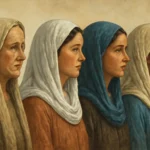
A veiling tradition ranges from delicate lace mantillas to simple fabrics worn over the hair. In churches where the practice is observed, veils can function as a tangible sign of the commitment to modesty and the order of worship. For some, the veil carries a deep sense of beauty and reverence; for others, it is a cultural marker with historical resonance.
A common contemporary option is the simple headscarf or wrap that covers the crown and hair. These coverings can be composed of cotton, silk, or rayon and may be styled in ways that suit personal comfort and climate. Strengthening the modesty principle while maintaining practicality, scarves provide a flexible approach that many churches find acceptable in a wide range of settings.
Caps, Bonnets, and Traditional Head Coverings
In several Christian communities, women wear caps, bonnets, or other traditional head coverings as a cultural expression of faith. Such items can be handcrafted or store-bought and may reflect regional or family customs. The key idea is that the garment is intentional, modest, and fitting for a worshipful environment.
Natural Hair as a Form of Covering: A Subtle Perspective
Some readers interpret 1 Corinthians 11 as allowing natural hair itself to function as a covering, especially in contexts where an additional veil would be impractical or culturally unnecessary. In these readings, the emphasis is on maintaining modesty and decorum in public prayer and teaching, with hair length and presentation serving as part of the broader expression of order and reverence.
Theological Perspectives: How Believers Understand the Practice
Complementarian and Egalitarian Frameworks
Two broad theological insights shape how Christians view the head covering and related modesty practices:
Complementarian: In this view, scriptures describe a divinely ordained structure of gender roles within the church and home. Proponents may argue for continued observance of head coverings in worship as a meaningful sign of authority structures and women’s submission within a biblically grounded order.
Egalitarian: In this view, the emphasis is placed on spiritual equality before God and the belief that outward practices should not be made mandatory for all believers. Advocates may interpret the passage as addressing a historical context and focus on principles such as modesty, reverence, and humility rather than a universal ritual command.
Cultural Hermeneutics: Reading Scripture in Context
A widely respected approach to head coverings is to read Scripture in its cultural and historical context—the hermeneutic of culture. In this framework, readers examine:
The audience and the cultural expectations that shaped Paul’s instructions
The symbolic meaning behind the gesture and how it communicates respect for God and order in worship
The principles at stake, such as modesty, humility, and communal discernment, and how they translate into modern worship settings
Practical Guidance for Today: How to Apply the Practice in Modern Contexts
When Might a Head Covering Be Appropriate?
For many Christians, deciding when and whether to wear a head covering depends on multiple factors, including church tradition, local culture, and personal conscience. Practical considerations include:
Cultural alignment: In a church with a strong tradition of head coverings, wearing one may communicate solidarity and reverence for communal norms.
Occasion: Special services, weddings, or solemn gatherings may be occasions where a head covering is particularly meaningful.
Personal conscience: Some believers may feel more comfortable wearing a complementing sign of modesty, while others may prefer not to observe the external gesture in everyday worship.
Community guidance: Church leadership and denominational teaching can provide clarity and unity on expectations for dress in worship.
Aspects of Modesty Beyond Head Coverings
Modesty is broader than any single garment. A robust approach to modesty includes:
No. The historical practice is not universally observed across all Christian traditions today. The central question is often framed as principles of modesty, reverence, and order rather than a blanket command. Some communities maintain explicit norms, others adopt a more flexible approach, and many emphasize personal conscience and church leadership guidance.
What about men and head coverings?
In the biblical text, attention is often directed toward women’s coverings, but there are implications for men as well. A cultural moment may have seen men removing hats or head coverings in worship as a sign of humility before God. In modern practice, many churches do not require men to wear head coverings, yet some traditions encourage or expect hats or headwear in outdoor or formal contexts as a sign of respect and discipline in worship.
How should a church decide its policy?
Church policy should be guided by a combination of scriptural engagement, historical awareness, and pastoral discernment. A collaborative process that respects diverse viewpoints, maintains unity in essentials, and shows mercy in non-essentials often leads to a more harmonious practice. Churches may publish their norms in a statement of conduct or worship guidelines that reflect their interpretation of scripture, tradition, and cultural realities.
Conclusion: A Balanced, Biblically Grounded Approach to Modesty
The conversation about head coverings within Christianity is ultimately a conversation about modesty, worship, and order before God. For many believers, the question is not merely about whether to wear a veil or scarf, but about cultivating a disposition that honors God, respects church community, and remains attentive to the surrounding culture. A bible-based approach invites readers to:
Examine the biblical text in its proper context and seek a faithful understanding rather than a rigid ritualistic rule.
Consider the historical practice of one’s own tradition, while remaining open to reform and reformulation in light of Scripture.
Apply the underlying principles—modesty, reverence, order, humility—in ways that are meaningful and respectful in today’s diverse Christian landscape.
Engage with one another in a spirit of charity and discernment, recognizing that conscience matters and that the gospel remains the ultimate standard of life and worship.
Whether a believer chooses to wear a head covering during worship, or to express modesty through other dignified means, the aim remains the same: to honor Christ, to witness to the gospel through a humble and orderly assembly, and to reflect the beauty of a created order designed for human flourishing. In that sense, the practice of head covering—from ancient times to the present day—invites Christians to consider how outward signs can harmonize with inner devotion, and how modesty can be a powerful witness to the world of a faith that rests on grace, truth, and reverence for God.
A veil, scarf, bonnet, or other garment worn on the head, often as a sign of reverence or modesty in certain Christian worship settings.
Modesty
A biblical virtue involving humility, appropriateness in dress, and a focus on inner character rather than external appearance.
Complementarian
A theological framework that affirms distinct gender roles within the church and family, sometimes including the practice of head coverings as a visible sign of order.
Egalitarian
A theological framework that emphasizes equal spiritual worth and leadership opportunities for men and women, and often reads biblical passages on head coverings as culturally contextual rather than timeless commands.
Hermeneutics of culture
A method of biblical interpretation that considers historical and cultural context when applying Scripture to modern life.











Leave a Reply