Bible Verses About Jesus Died for Our Sins: Essential Passages on Redemption and Salvation
Across both the Old and New Testaments, the theme that died for our sins sits at the center of Christian hope.
This article surveys a broad range of passages that speak to the reality of atonement, redemption, and forgiveness.
By looking at diverse voices—prophetic anticipation, gospel proclamation, and apostolic teaching—we gain a fuller
picture of why the death of Jesus is described as the decisive act that reconciles humanity to God.
Old Testament Foundations: Shadows Pointing Toward the Cross
The Bible often frames the death of Jesus as the fulfillment of deep, ancient truths about sin and its consequence.
Although the phrase “died for our sins” appears most directly in the New Testament, the
Old Testament provides foundational language and imagery—such as sacrifice, substitution, and bearing the iniquity of the people—that
helps readers understand the significance of Christ’s atonement.
Isaiah 53:4–6 — The Suffering Servant Bears Our Grief and Iniquities
A central prophetic portrait is the Suffering Servant who bears pain on behalf of others. In the passage, the Servant is described
as one who endures affliction for the sake of the people and bears their sins. As a result, healing and deliverance come through
his wounds and his submission to suffering. “Surely he hath borne our griefs, and carried our sorrows.” The text continues to emphasize that the Servant carries not
only physical pain but the moral weight of sin, and that through his sufferings a path to forgiveness is opened for
many.
This passage is often cited to show that the atoning sacrifice has roots in a long arc of Scripture—one that moves from
anticipating the cross to declaring its reality in Christ.
Isaiah 53:5–6 — Wounds, Transgressions, and Bringing Peace
The verse highlights the idea that the Servant’s suffering has redemptive meaning: he is wounded for our transgressions and bruised
for our iniquities, and through his punishment, peace is made available to us. When the text says, “by his stripes we are healed,”
it points to the healing that comes through the consequences of sin borne by another.
The message here is not merely personal suffering but substitution—one who bears the penalty that rightly belongs to sinners so that
others can receive mercy and reconciliation with God.
New Testament Fulfillment: The Life, Death, and Resurrection of Christ
In the New Testament, the phrase “died for our sins” becomes explicit in several places as the gospel centers on Jesus’
crucifixion, burial, and resurrection. The apostles repeatedly teach that Christ’s death was for the purpose of removing sin,
reconciling humanity to God, and securing eternal life for all who believe.
Romans 5:8–9 — Demonstration of God’s Love Through the Sacrifice
The apostle writes that God demonstrates his love toward us in that we were still sinners when Christ died for us. The passage concludes
with the assurance that, since we are justified by his blood, we are saved from wrath through him. “But God commendeth his love toward us, in that, while we were yet sinners, Christ died for us.”
And further: “Much more then, being now justified by his blood, we shall be saved from wrath through him.”
This passage emphasizes the unilateral act of divine grace—Christ’s death while we were sinners—and the resulting
transfer from guilt to justification as the basis for ongoing salvation.
1 Corinthians 15:3–4 — The Gospel Core: Died for Our Sins, Buried, and Raised
The apostles summarize the gospel with a compact confession: Christ died for our sins, was buried, and rose again on the third day
in accordance with the Scriptures. This triad anchors Christian faith and hope. “For I delivered unto you first of all that which I also received, how that Christ died for our sins according to the scriptures; And that he was buried, and that he rose again the third day according to the scriptures.”
In this verse we see a clear statement that the atoning death is not an isolated event but part of a bigger,
scripturally embedded story of death, burial, and resurrection that demonstrates victory over sin and death.
1 Peter 2:24 — Carrying Our Sins in His Body on the Cross
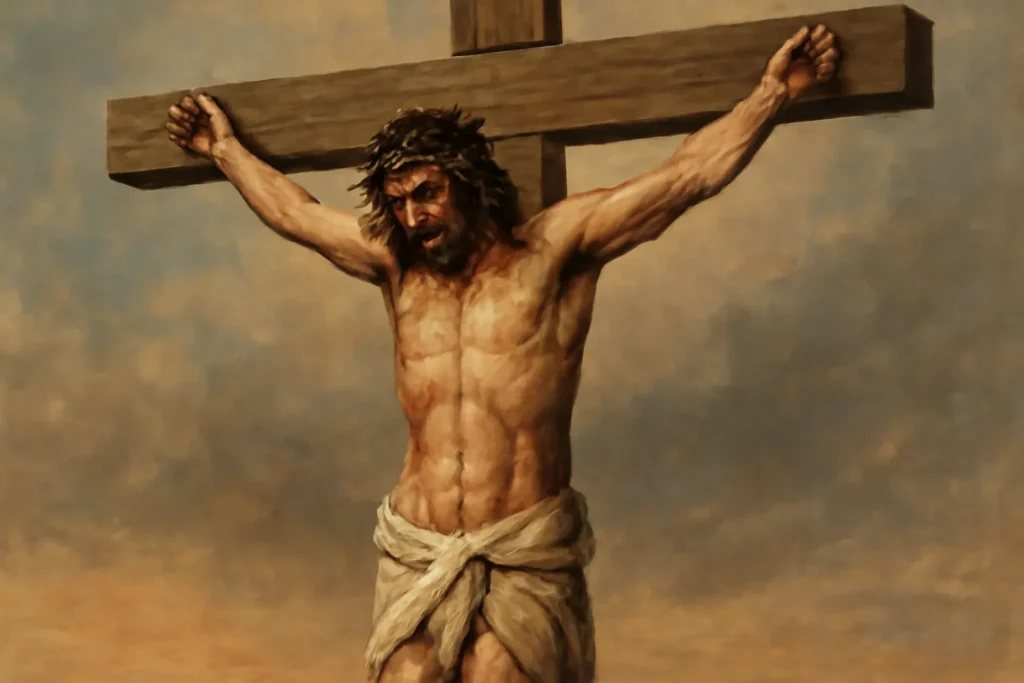
Peter quotes and echoes Isaiah to describe Jesus bearing sins in his body on the tree. The result is that believers are
healed and live for righteousness because of what Christ accomplished through his crucifixion. “Who his own self bare our sins in his own body on the tree, that we, being dead to sins, should live unto righteousness: by whose stripes ye were healed.”
2 Corinthians 5:21 — God Made Him Who Knew No Sin to Be Sin for Us
This verse captures the substitution at the heart of atonement: the sinless Jesus is treated as sin so that believers might
become the righteousness of God in him. The exchange is profound: Christ took the penalty; humanity received righteousness.
Galatians 3:13 — Redeemed from the Curse by Becoming a Curse for Us
The apostle highlights how Jesus’ death breaks the curse of the law by taking that curse on himself,
enabling believers to receive the promise of the Spirit through faith. “Christ hath redeemed us from the curse of the law, being made a curse for us.”
The Redemptive Work in the Letters: Forgiveness, Reconciliation, and Access to God
The apostolic writings develop the implications of Christ’s death beyond sin remission to include forgiveness, reconciliation, and new life in God. These passages articulate how the death of Jesus opens a new relationship
with God that is received by faith and lived out in obedience.
Ephesians 1:7 — Redemption Through His Blood
Paul writes that in Christ we have redemption through his blood, the forgiveness of sins, according to the riches of his grace. “In whom we have redemption through his blood, the forgiveness of sins, according to the riches of his grace.”
Colossians 1:14 — Redemption and Forgiveness in the Son
A closely parallel statement to Ephesians, Colossians emphasizes that forgiveness and redemption come through Christ. “In whom we have redemption through his blood, even the forgiveness of sins.”
Hebrews 9:26–28 — Once for All: Christ Offered Himself to Bear Sin
The author of Hebrews emphasizes the sufficiency and finality of Christ’s sacrifice: he appeared to put away sin by the sacrifice of
himself, and he will appear a second time for salvation without reference to sin for those who eagerly await him. “But now once in the end of the world hath he appeared to put away sin by the sacrifice of himself.”
And: “So Christ was once offered to bear the sins of many.”
John 1:29 — Behold the Lamb of God T aking Away the Sin of the World
John the Baptist declares Jesus as the Lamb who takes away sin. This title ties Jesus’ work to sacrificial language that spans the Bible. “Behold the Lamb of God, which taketh away the sin of the world.”
1 John 2:2 — Propitiation for Our Sins and the World
John expands the scope of atonement, declaring that Jesus is the propitiation for our sins—and not only for ours but for
the sins of the whole world. “And he is the propitiation for our sins: and not for ours only, but also for the sins of the whole world.”
Practical Implications: How These Passages Shape Faith and Life
The certainty that died for our sins is not merely an ancient doctrine to be acknowledged; it is intended to shape
how believers live today. Here are some practical takeaways that flow from these verses.
Gratitude and worship: A daily posture of gratitude arises from acknowledging that Jesus bore the penalty for sin on our behalf. Worship centers on the cross as the source of life.
Assurance of forgiveness: Because Christ’s sacrifice is sufficient, believers can rest in the forgiveness of sins
and live out a restored relationship with God.
Call to ethical living: The transformation that comes from forgiveness leads to living “for righteousness”
and pursuing justice, peace, and love in daily choices.
Hope for the world: The breadth of atonement—addressed in passages like 1 John 2:2—invites a missional impulse:
to carry the message of redemption to others, inviting them into the same reconciliation with God.
Resilience in suffering: Understanding that suffering was borne by another for our sake can give believers
courage in the face of hardship, knowing that God works through weakness to display his power.
Taken together, these passages form a cohesive narrative: Jesus’ death for our sins establishes a new covenant,
makes forgiveness possible, and invites humanity into a living relationship with God that continues to reshape communities,
ethics, and worship.
Verse-by-Verse Quick Reference: Variations on the Theme
For those who want a compact reference to the different ways the Bible speaks of Jesus’ death for sin,
here is a concise list that highlights the variety of language and emphasis across the biblical books. You will notice
repeated ideas, but with distinct angles—prophecy, typology, gospel proclamation, and apostolic teaching.
“Christ died for our sins” — a direct statement in 1 Corinthians 15:3, anchored in the gospel summary.
“He bore our sins in his body on the tree” — substitutionary language in 1 Peter 2:24.
“Died for us while we were sinners” — Romans 5:8 emphasizes grace extended to the undeserving.
“Redemption through his blood” — Ephesians 1:7 and Colossians 1:14 link atonement with the payment of a ransom.
“Atoning sacrifice” — Romans 3:25 and 1 John 2:2 describe how Christ’s death satisfies divine justice and addresses sin.
“Atonement for many” — Mark 10:45 and Hebrews 9:28 indicate the scope and sufficiency of Jesus’ death.
“Behold the Lamb of God” — John 1:29 uses sacrificial imagery to identify Jesus as the one who takes away sin.
“Made him to be sin for us” — 2 Corinthians 5:21 explains the cosmic exchange that secures righteousness for believers.
“Propitiation for our sins” — 1 John 2:2 and Romans 3:25 speak of propitiation—God’s appeasement through Christ’s sacrifice.
“Through his blood” — Galatians 3:13 and Hebrews 9:14 emphasize blood as the means by which forgiveness and cleansing come.
Frequently Asked Reflections
Why does the Bible describe Jesus’ death as a sacrifice?
The language of sacrifice connects Jesus’ death to a long biblical tradition where God’s righteousness and mercy meet.
The sacrifice of Jesus satisfies the demands of justice while extending grace, making a way for
sinners to be reconciled to God.
Is the death of Jesus universal in scope?
Several verses indicate that Christ's atoning work has universal reach in principle (for the world) while being received
individually by faith. Passages like 1 John 2:2 and John 3:16 suggest a universal scope, balanced by personal response.
If Jesus died for our sins, followers are invited into a life of gratitude, worship, and ethical action.
Love for God and neighbor, humility, service, and proclamation of the gospel become natural responses to a life shaped by the cross.
Conclusion: The Cross as the Center of Redemption and Salvation
Across the biblical canon, the death of Jesus is presented as the climactic act by which humanity’s broken relationship with
God is repaired. From the prophetic expectation in Isaiah to the apostolic testimony in the Epistles, the narrative
remains centered on the redeeming power of Jesus’ death for our sins.
This multifaceted message—substitutionary sacrifice, forgiveness by grace through faith, and new life in Christ—
invites believers to trust deeply in the gospel, live in light of its truth, and share the good news with others.
Whether you approach the Bible from a tradition that emphasizes substitution, covenant fulfillment, or gracious invitation,
the core claim remains consistent: through his death, Jesus has secured redemption, forgiveness, and
a restored relationship with God for all who put their trust in him.






Leave a Reply