Bible Verses About a Renewed Mind: Scriptures to Transform Your Thinking
Bible Verses About a Renewed Mind: Scriptures to Transform Your Thinking
Renewing the mind is a central biblical theme that connects belief, behavior, and a life aligned with God’s purposes. It is not only a momentary decision but a continual process of allowing truth to reshape how we think, what we value, and how we respond to life’s challenges. This article explores bible verses about a renewed mind, offering a broad spectrum of scriptures, practical insights, and thoughtful reflections to help you transform your thinking through Scripture, prayer, and daily disciplines.
Understanding the Concept: What Is a Renewed Mind?
A renewed mind refers to a mental posture that is consistently shaped by God’s truth rather than by old patterns, cultural pressure, or fear. It involves reorienting desires, convictions, and expectations toward what pleases God. When the Bible speaks about renewing the mind, it signals a move from patterned, worldly thinking to thinking in line with God’s will and His character. This transformation is not merely cosmetic; it affects motives, decisions, and the way we relate to others.
Several themes recur across the scriptural landscape on this topic. First, transformation is ongoing, not instantaneous; second, it is grounded in God’s revelation and empowered by the Holy Spirit; and third, it leads to practical living—ethics, hope, peace, and wisdom in daily life. The verses gathered below present a spectrum of angles on mental renewal: exhortations to renew, descriptions of the outcome, and concrete steps for engaging in the process.
Key Verses About a Renewed Mind
Below you’ll find a curated set of verses and paraphrased reflections that illuminate what it means to have a renewed mind. For each section, you’ll find the core message, a short paraphrase, and some practical takeaways you can apply today.
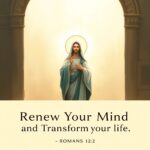
Romans 12:2 — Be transformed by the renewing of your mind
Verse in focus: “Do not be conformed to this world, but be transformed by the renewing of your mind, that you may prove what is that good and acceptable and perfect will of God.” (Romans 12:2, ESV)
What it means: This verse places the decision of renewal in the present tense. It challenges believers not to imitate the dominant culture but to undergo a continual interior change that reveals God’s will in daily life.
Don’t conform to present patterns that pull you away from God’s purposes. Awareness of cultural pressures is the first step toward renewal.
Be transformed is an intentional, ongoing process—like a metamorphosis that affects actions, choices, and motives.
Discern God’s will as the fruit of renewal—the mind that is aligned with truth will recognize and live out what is truly good, acceptable, and perfect to Him.
Practical takeaway: Start your day by asking God to renew your mind through Scripture and truth. When you encounter a decision, pause to consider whether your initial impulse aligns with God’s will or the world’s pattern. Create structures—habitual practices, reminders, and accountability—that support the ongoing renewal process.
Ephesians 4:23–24 — Put on the new self, being renewed in knowledge after the image of its creator
Verse in focus: “And be renewed in the spirit of your minds, and put on the new self, created after the likeness of God in true righteousness and holiness.” (Ephesians 4:23-24, ESV)
What it means: Renewal begins with the inner posture of the mind and culminates in a practical, outward transformation—living out righteousness and holiness as the new self.
Spirit-led renewal emphasizes dependence on the Holy Spirit to shift thinking toward God’s truth.
Knowledge and image connect renewal with knowing God and reflecting His character to the world.
Righteousness and holiness describe the lifestyle that follows renewed thinking—integrity in choices, purity of motives, and service in love.
Practical takeaway: Practice daily reminders to “put on” the new self. This might include choosing words that honor God, guarding conversations, and committing to acts of kindness that reflect your renewed perspective.
Colossians 3:9–10 — Do not lie to one another; you have put on the new self, which is being renewed in knowledge after the image of its creator
Verse in focus: “Do not lie to one another, seeing that you have put off the old self with its practices and have put on the new self, which is being renewed in knowledge after the image of its creator.” (Colossians 3:9-10, ESV)
What it means: Renewal involves integrity and continual growth in knowledge that mirrors God’s character. The mind is renewed as truth is embraced and applied, season by season.
Put off the old self means renouncing habits, beliefs, and scripts that conflict with God’s truth.
Put on the new self signals a deliberate, ongoing adoption of new patterns of thinking and behaving.
In knowledge ties renewal to revelation—what God has disclosed about Himself and His plan.
Practical takeaway: When old patterns recur, ask: “What truth from Scripture can recalibrate this moment? What new practice can replace the old habit?” Consider journaling a daily affirmation rooted in truth that combats recurring thoughts.
Philippians 4:8 — Think on these things
Verse in focus: “Finally, brothers, whatever is true, whatever is honorable, whatever is just, whatever is pure, whatever is lovely, whatever is commendable, if there is any excellence, if there is anything worthy of praise, think about these things.” (Philippians 4:8, ESV)
What it means: Renewing the mind includes a deliberate choosing of thoughts. Scripture invites believers to fill the mind with virtuous, truthful, noble, and praiseworthy ideas.
Thought selection becomes spiritual discipline—filtering inputs (media, conversations, influences) through a biblically aligned grid.
Mental diet shapes mood, decisions, and resilience—positive, truthful, and hopeful thinking fosters healthy living.
Peace and joy grow when thinking aligns with God’s truth, regardless of outward circumstances.
Practical takeaway: Create a “mind diet” list: the truths you will deliberately dwell on today. Pair each item with a brief prayer or gratitude practice to anchor thinking in truth.
2 Corinthians 10:5 — Take every thought captive
Verse in focus: “We destroy arguments and every lofty opinion raised against the knowledge of God, and take every thought captive to obey Christ.” (2 Corinthians 10:5, ESV)
What it means: Renewal involves active discernment—evaluating thoughts, beliefs, and patterns in light of Christ’s lordship. It is a spiritual discipline of captivity and obedience.
Capture thoughts—identify thoughts that pull you away from truth and replace them with Scripture-backed perspectives.
Obedience as outcome—renewal is not merely mental assent; it produces obedience to Christ in actions and choices.
Guardrails—set up mental guardrails (counsel, accountability, and Scripture memory) to help you keep thoughts aligned with Jesus.
Practical takeaway: Develop a quick, honest self-check each day: “What thought dominated me today, and how can I bring it under Christ now?” Use Scripture to reframe stubborn thoughts into truth.
Isaiah 26:3 — Perfect peace for a mind stayed on God
Verse in focus: “You keep him in perfect peace whose mind is stayed on you, because he trusts in you.” (Isaiah 26:3, ESV)
What it means: A renewed mind rests in God’s character—trust becomes a stabilizing factor in mental life, producing peace that transcends circumstance.
Centered attention on God reduces anxiety and increases steadiness in trials.
Your trust becomes a daily practice—placing weight on God’s promises and faithfulness.
Inner calm is a fruit of spiritual focus, not a fleeting emotion.
Practical takeaway: Create daily rhythms that anchor your mind on God—scripture decluttering, focused prayer, and brief moments of quiet, acknowledging God’s sovereignty.
Romans 8:5–6 — The mind set on the Spirit is life and peace
Verse in focus: “For those who live according to the flesh set their minds on the things of the flesh, but those who live according to the Spirit set their minds on the things of the Spirit. For to set the mind on the flesh is death, but to set the mind on the Spirit is life and peace.” (Romans 8:5–6, ESV)
What it means: Renewal is about allegiance—where the heart and mind lean determines the quality of life and inner peace. The Spirit’s influence redirects thinking toward life-affirming truths.
Two pathways: the flesh and the Spirit offer competing frames for thinking; choosing the Spirit brings vitality and peace.
Life and peace are outcomes of alignment with God’s Spirit—hope, resilience, and moral clarity.
Daily choice: renewal is a daily turning toward Spirit-led thoughts and God-anchored interpretations of events.
Practical takeaway: End your day with a brief reflection: “Where did I set my mind today—toward the Spirit or toward the flesh? How can I invite the Spirit’s perspective tomorrow?”
2 Timothy 1:7 — A sound mind, not fear
Verse in focus: “For God gave us a spirit not of fear but of power and love and self-control.” (2 Timothy 1:7, ESV)
What it means: Renewal includes cultivating a mindset empowered by courage, love, and disciplined thinking—protecting the mind from paralyzing fear and embracing God-given strength.
Power fuels bold, hopeful thinking and decisive action aligned with God’s purposes.
Love redirects thoughts toward others and the good of the community.
Self-control supports consistent thinking patterns—ferreting out lies and scripts that undermine truth.
Practical takeaway: Maintain a “truth-teller” routine: when fear-laden thoughts arise, counter them with Scripture promises and a prayer for increased courage and wisdom.
Titus 3:5 — Renewal through the Holy Spirit
Verse in focus: “He saved us, not because of works done by us in righteousness, but according to his own mercy, by the washing of regeneration and renewal of the Holy











Leave a Reply