Introduction: A Bible-inspired approach to fitness that grows strength and faith
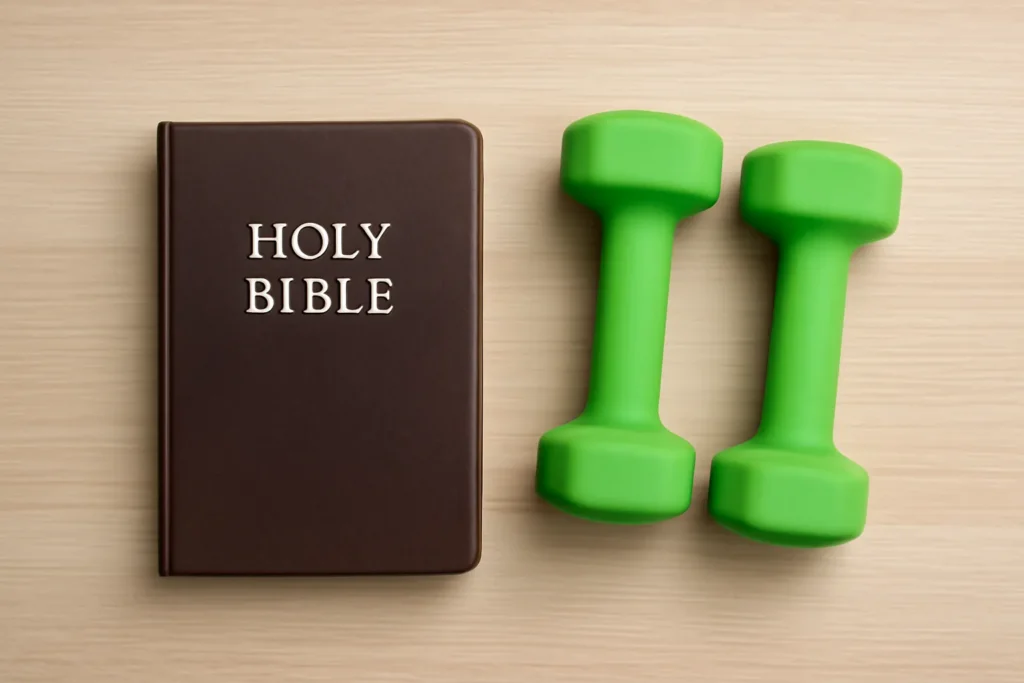
The idea behind a bible workout is simple: you can cultivate physical strength while deepening your spiritual life by tying each movement to a memory, lesson, or promise from Scripture. This is not just about pumping iron or chasing a perfect physique; it is about aligning body, mind, and spirit through deliberate movement and reflective practice. In this Scripture-inspired training, each exercise becomes a small station of worship, a moment to remember that discipline, endurance, and courage are gifts that come from God.
People who practice this style often report a deeper sense of purpose in their workouts, a steadier focus in daily life, and a calmer, more hopeful perspective when facing challenges. The goal of a comprehensive program—sometimes called a biblical fitness routine or a Bible-based training plan—is not to replace prayer, worship, or Scripture study, but to weave them into a practical routine. By naming physical effort after biblical figures, scenes, or parables, you invite both your muscles and your faith to grow together.
In this article, you’ll find a complete, beginner-friendly program built around 10 Bible-Inspired Exercises for Strength and Faith. Each exercise links a specific movement to a biblical theme, with clear instructions, safety notes, and reflective prompts. You’ll notice the language repeatedly uses variations on Bible workout, biblical fitness routine, Scripture-inspired exercise, and bible-based training—all of which refer to the same idea from slightly different angles to support your understanding and vocabulary.
Getting started: how to train with intention and safety
Before you begin the 10-exercise sequence, consider a few practical guidelines that apply to any good training plan, especially one with a spiritual dimension:
Warm up properly: 5–10 minutes of light cardio (marching, brisk walking, or a gentle jog) plus dynamic mobility work for hips, shoulders, and ankles.
Check your form: quality movement beats quantity. Start with bodyweight or light loads to learn the technique, then gradually increase resistance.
Progress gradually: if you’re new to exercise or returning after a break, begin with fewer sets and reps and build up over several weeks.
Hydrate and recover: drink water, get adequate sleep, and include rest days so muscles can repair and grow.
Mindful reflection: after each set or exercise, take a brief moment to reflect on a verse, story, or value that aligns with the motion you just performed.
The plan below organizes the routine into three layers: foundational movement patterns, the main 10 exercises, and optional progression tracks for growth. A weekly rhythm—such as three active days with one or two lighter days in between—helps you sustain momentum without burnout.
What you’ll gain: strength, endurance, and spiritual resilience
A well-rounded Bible workout strengthens not only your muscles and cardiovascular system but also your perseverance and faith. You may experience:
Physical strength and muscular endurance across major muscle groups, enabling you to handle daily tasks with more ease.
Improved mobility and posture, which often translate into better breathing, reduced back pain, and more confident movement.
Better mental focus and emotional balance, as training becomes a regular practice of showing up for yourself and honoring your commitments.
Spiritual grounding through brief devotional prompts that accompany each exercise, helping you see your body as a temple in need of care and worship.
Some people call this approach a Scripture-inspired training because it blends the cadence of a workout routine with the cadence of prayer, meditation, or reflection. The aim is not to replace your church or study routines but to complement them with a practical path that invites courage, hope, and humility into movement.
10 Bible-Inspired Exercises for Strength and Faith
The following exercises are designed to be accessible to all levels and adaptable to your space and equipment. Each entry includes:
Recommended equipment (if any)
How to perform with proper form
Key benefits
A brief spiritual reflection prompt tied to a biblical theme
1) David’s Sling Squats
Goal: develop lower-body strength, hip mobility, and mental focus. The imagery of David facing Goliath is a powerful reminder that courage begins in the legs—where our foundation lies.
Equipment: none or light dumbbells (optional).
Stand with feet shoulder-width apart, toes pointing slightly outward.
Brace your core, keep your chest up, and lower into a deep squat until your thighs are at least parallel to the floor. Think of gathering energy in your legs as if you’re preparing to launch a stone from a sling.
Push through your heels to rise back to the starting position, fully extending the hips and knees.
Perform 3–4 sets of 10–15 repetitions. If you are new to squats, start with 2 sets of 8–10 and progress gradually.
Reflection: 1 Samuel 17 highlights faith in the face of fear. Consider how courage begins with small, deliberate choices today—like rooting your stance and moving with intention. Trust the process, step by step, and allow your strength to be partnered with faith.
2) Moses’ Staff Deadlifts
Goal: teach hinge mechanics, posterior-chain strength, and discipline in form.
Equipment: a barbell or a pair of heavy dumbbells, or a kettlebell if available.
Stand with feet hip-width apart, knees slightly bent. Hinge at the hips while keeping your back flat and your gaze forward.
Grip the weight securely, lift by driving the hips forward and standing tall, keeping the barbell close to your legs.
Lower the weight with control, maintaining a neutral spine, until you feel a gentle stretch in the hamstrings.
Complete 3–4 sets of 6–10 repetitions with a moderate load, focusing on form over speed.
Reflection: The story of Moses includes confident leadership and reliance on God’s guidance. Exodus reminds us that leadership and strength grow when we steward our bodies with responsible care. This movement invites you to practice integrity in movement—steady and safe, even when the weight asks for more.
3) Noah’s Ark Farmer’s Walk
Goal: cultivate grip strength, core stability, and coordinated breath with steady, purposeful steps.
Equipment: two kettlebells or dumbbells of equal weight.
Stand tall, shoulders back, core engaged.
Grip the handles tightly and walk for 30–60 seconds, or cover a distance you choose, keeping a steady pace.
Relax your shoulders, breathe evenly, and avoid twisting or leaning excessively to one side.
Perform 3–4 rounds with 60–90 seconds of rest between rounds.
Reflection: In Genesis, Noah’s obedience preserved life through a long, patient task. The Ark required endurance and steady effort for many days. Let this exercise remind you that steady, consistent work builds strength over time, and your faithful practice matters more than short bursts of effort.
4) Daniel’s Lions’ Den Planks
Goal: build core stability and resilience under pressure, a physical parallel to steadfast faith in challenging circumstances.
Equipment: none; optional: a mat for comfort.
Begin in a forearm plank with elbows under shoulders and feet extended behind you.
Hold for 30–45 seconds, then transition to a side plank on each side for 20–30 seconds.
Return to a traditional plank and add a knee-to-elbow hip dip for 8–12 reps per side if you’re comfortable.
Repeat for 3–4 rounds, with 20–40 seconds of rest between rounds.
Reflection: Daniel’s courage under threat is a powerful spiritual mirror. In moments of struggle, a strong core supports your posture, breathing, and composure. Let the body’s stillness reflect inner steadiness that comes from faith and trust.
5) Esther’s Brave Step-Ups
Goal: improve unilateral leg strength, balance, and mental resolve to act bravely on behalf of others.
Equipment: a sturdy bench, box, or step; optional dumbbells held at your sides.
Place one foot on the elevated surface and press through the heel to lift your body onto the platform.
Fully extend the hip and knee at the top, then slowly lower back down with control.
Alternate legs with each repetition to complete 10–12 per leg for 3–4 sets.
To progress, add light dumbbells or increase the height of the step gradually.
Reflection: Esther’s story is a testament to courage in dangerous times. When you step up, you honor the risk taken by those who stand for others. Let this exercise be a reminder that bravery often looks like consistent, deliberate action day after day.
6) Samson’s Battle Rope Thunder
Goal: develop upper-body strength, coordination, and explosive power, while cultivating a sense of dynamic motion and energy.
Equipment: battle ropes (if you have access; if not, substitute with dumbbell or resistance-band waves).
Assume a athletic stance, holding the rope ends with both hands.
Perform alternating waves for 20–30 seconds, maintaining a strong core and smooth breathing.
Rest 30–40 seconds and repeat for 6–8 rounds, adjusting intensity as needed.
Keep your shoulders relaxed and avoid overstraining the neck.
Reflection: Judges 16 reveals Samson’s strength as a gift of God. This exercise invites you to acknowledge the gifts you’ve been given and to use them responsibly, with humility and gratitude, rather than pride.
7) Ruth’s Loyalty Lunges
Goal: build lower-body endurance, hip flexor strength, and a sense of commitment and loyalty through movement.
Equipment: optional dumbbells for added resistance.
Step forward into a lunge, keeping the front knee aligned with the ankle and the back knee hovering just above the floor.
Push back to the starting position and switch legs, performing 12–14 lunges per leg for 3–4 sets.
To increase difficulty, perform walking lunges for a longer distance or hold light dumbbells at your sides.
Reflection: Ruth’s unwavering loyalty model begins with a heart committed to others. As you lunge forward, consider how faith moves you to action for the benefit of those you care about, and how your choices today shape tomorrow’s outcomes.
8) Jesus’ Carpenter Push-Ups
Goal: cultivate upper-body strength, shoulder stability, and a posture of service and humility.
Equipment: a flat floor or push-up stand; optional elevated surface for incline push-ups.
Assume a plank position with hands under the shoulders and body in a straight line.
Lower your chest toward the floor while keeping elbows close to your sides (or adjust to incline push-ups if needed).
Extend the arms to press away from the floor, returning to the starting position.
Complete 3–4 sets of 8–12 repetitions. If needed, perform knee push-ups as a regression.
Reflection: The carpenter of Nazareth represents service, craft, and humility. Jesus’ life was a model of steady workmanship and love in action. Consider how your training becomes a form of devotion—showing up, doing the work, and serving others through the strength you gain.
9) Epistle Sit-Ups
Goal: strengthen the core and celebrate the power of the mind as you meditate on Scripture and letters from the Apostle Paul.
Equipment: a mat for comfort; optional small weight or medicine ball.
Lie on your back with knees bent and feet flat on the floor. Place your hands behind your head or cross them over your chest.
Engage your core and lift your shoulders off the floor, exhaling as you rise.
Lower with control and repeat for 12–15 repetitions. For variety, perform a set of bicycle crunches or V-ups as a progression.
Complete 3–4 sets with 30–60 seconds of rest between sets.
Reflection: Paul’s letters encouraged endurance, hope, and grace under pressure. As you perform sit-ups, reflect on the idea that disciplined practice strengthens not only your body but your capacity to endure life’s trials with grace and faith. Philippians 4:13 can accompany your mindset: “I can do all things through Christ who strengthens me.”
10) Joshua’s Jericho Hill Sprints
Goal: develop speed, conditioning, and a resolve to persevere until walls come down—both physically and spiritually.
Equipment: a flat surface; incline (hill) if available; stopwatch or timer.
Find a gentle incline or a flat surface with repeatable sprint intervals.
Perform 6–8 sprints, each lasting 15–20 seconds, with 60–90 seconds rest between sprints.
Maintain a light, quick turnover and focus on controlled breathing during the sprint and full recovery during the rest.
As you progress, you can increase the number of sprints or extend the duration per sprint gradually.
Reflection: The fall of Jericho narrates a mystery of obedience and perseverance. When the people obeyed, the walls seemed to crumble with a shout. Let your sprints be a reminder that perseverance, obedience to a plan, and consistent effort often lead to breakthroughs you cannot achieve through bursts of effort alone.
Note on naming and variations: You’ll notice that this catalog uses several variations of the same core idea—“Bible workout,” “biblical fitness routine,” “Scripture-inspired training,” and “Bible-based fitness program.” These phrases help people find the style they’re seeking and reflect a broader approach in which fitness and faith are intertwined. If you prefer a different theme or want to emphasize a particular biblical story (e.g., Elijah’s still, small voice or Peter walking on water), you can adapt the same structure to fit that symbol or lesson.
Progression, adaptations, and how to customize your Bible workout
The beauty of this approach is its flexibility. You can tailor the routine to fit your goals, equipment, and level of fitness. Here are a few practical ways to customize:
Beginner level: Use lighter loads, fewer reps, and longer rest periods. Focus on mastering form, breathing, and connection to the devotional prompts.
Intermediate level: Add 1–2 additional sets per exercise, increase the pace of work-to-rest ratios, or incorporate short intervals of higher intensity (e.g., tempo sets like 2 seconds down, 1 second up).
Advanced level: Introduce supersets (two exercises back-to-back with minimal rest), implement tempo variations (for example, slow eccentrics on squats or deadlifts), or perform the 10-exercise sequence as a circuit for conditioning benefits.
Equipment substitutes: If you don’t have a bench, use a sturdy chair; if you don’t have battle ropes, use resistance bands or dumbbell waves; if you don’t have a barbell, use a pair of dumbbells or a kettlebell for the major movements.
For a deeper spiritual layer, consider aligning your weekly readings with the exercises you’re practicing. For example:
Pair David’s Sling Squats with passages about courage and choosing to stand firm in the face of fear (for example, 1 Samuel 17 or Psalm 27).
Match Moses’ Staff Deadlifts with themes of leadership, guidance, and reliance on God in difficult times (Exodus 14).
Connect Joshua’s Jericho Hill Sprints with perseverance and obedience, especially when the path ahead seems uncertain (Joshua 6).
Keeping a simple journal can help merge the physical and spiritual elements. Note the date, the exercise completed, any prayerful thoughts, verses you reflected on, and a small note about what you observed in your body and spirit after the workout.
Closing thoughts: making the Bible workout a lifelong practice
The practice described here is not a one-time challenge; it’s an invitation to a sustainable rhythm of life. A bible workout can become a daily or weekly anchor that helps you stay physically healthy and spiritually connected. By naming each movement with a biblical theme, you give your body a story to carry into daily life—one that reminds you that discipline is a form of care, and care is a form of worship.
If you’re leading others in this approach, remember to create space for questions, reflection, and community. Some people benefit from a partner to keep accountability, while others prefer solitude for contemplative prayer during cooldowns. The core idea remains: you can pursue strength and faith at the same time, with grace and intention.
As you embark on this journey, may you discover that physical fitness and spiritual fitness are not separate tracks but two streams flowing from the same wellspring. May your Scripture-inspired training bring you closer to the Creator, strengthen your body for service, and shape a heart that endures with hope.







Leave a Reply