The biblical marriage vows found in the King James Version (KJV) of the Bible are more than ceremonial words. They are a declaration of a sacred covenant before God and a public commitment to live out a lifelong partnership grounded in love, fidelity, and mutual service. When couples seek to honor the biblical vision, they often look to the language of the KJV for its poetic cadence and its emphasis on covenant fidelity—a solemn promise that binds spouses not merely to one another but to God, to their families, and to their communities.
This article offers an informative overview of biblical marriage vows as they can be understood in the KJV, explores the scriptural foundations, discusses how to translate sacred promises into modern vows, and provides sample vows that echo the language and themes of the King James Bible. Whether you are planning a traditional religious ceremony, seeking to adapt Scripture for a non-denominational setting, or simply wishing to study the conception of vows in biblical marriage, you will find guidance here. The vocabulary below uses variations of the phrase “biblical marriage vows kjv” to reflect the semantic breadth of this topic, including KJV marriage vows, King James Bible vows, and scriptural wedding vows in the KJV.
Foundations in the King James Version
The KJV Bible presents marriage as a divinely established covenant. In Genesis, the first couple is described as becoming “one flesh” when a man leaves his father and mother and cleaves unto his wife (Genesis 2:24, KJV). This foundational image of unity and exclusivity remains central to the way vows are framed in biblical contexts. Across the New Testament, the call to love, honor, and serve one another within marriage is enlarged through Christ’s relationship to the Church.
In the language of the KJV, the vows of a godly marriage are braided from several strands:
Fidelity and unity: the commitment to remain united, to cleave, and to honor the bond until death.
Loving leadership and respectful partnership: the call for husbands to love their wives as Christ loved the church, and for wives to respect their husbands within a framework of mutual submission under God.
Mutual service and sacrifice: the willingness to lay down one’s life for the other, and to prioritize the spouse’s well-being and spiritual growth.
Enduring love under trial: the patience, kindness, and forgiveness that scripture cultivates within enduring relationships.
Key verses for biblical vows: foundations in the KJV
The following verses are often cited when couples craft or recite vows inspired by the King James Bible. They are not a single “vow text,” but a constellation of scriptural themes that inform the content, tone, and intent of biblical marriage vows kjv.
Selected passages and their themes
Genesis 2:24 — “Therefore shall a man leave his father and his mother, and shall cleave unto his wife: and they shall be one flesh.” Theme: lifelong unity and exclusive bond.
Matthew 19:6 — “Wherefore they are no more twain, but one flesh. What therefore God hath joined together, let not man put asunder.” Theme: divine joining and protection of the union.
Ephesians 5:25-33 — “Husbands, love your wives, even as Christ loved the church, and gave himself for it.” Theme: sacrificial love, leadership with humility, and profound mutual respect.
Colossians 3:14 — “And above all these things put on charity, which is the bond of perfectness.” Theme: charity or love as the binding force in marriage.
1 Corinthians 13:4-8 — A description of love’s patient, kind, enduring nature. Theme: the character of true love that undergirds vows.
1 Peter 3:7 — “Likewise, ye husbands, dwell with them according to knowledge, giving honour unto the wife.” Theme: considerate, honoring partnership in marriage.
1 Corinthians 7:3-5 — “Let the husband render unto the wife due benevolence...the wife unto the husband.” Theme: mutual affection and physical faithfulness within marriage.
Hebrews 13:4 — “Marriage is honourable in all, and the bed undefiled.” Theme: the sacredness of marriage before God and community.
These verses do not offer a fixed litany, but they provide a scriptural vocabulary for constructing vows that reflect the KJV’s cadence and theology. In practice, couples often weave phrases derived from these passages into vows that sound like biblical language while still speaking personally and sincerely to their relationship.
Core themes of biblical vows in the KJV
When scholars and officiants speak of biblical marriage vows kjv, they frequently point to several enduring themes that recur across scripture. Understanding these themes can help couples craft vows that are both biblically grounded and pastorally meaningful.
Covenant commitment: a vow that the relationship is entered into before God and recognized by the community as a binding covenant, not a temporary agreement.
Fidelity and exclusivity: a lifelong promise of faithfulness, reflecting the Genesis ideal of “one flesh.”
Self-giving love: following the pattern of Christ’s love, which is described as sacrificial, unselfish, and seeking the good of the beloved.
Mutual respect and gracious leadership: the call for husbands to love with humility and for wives to honor and support, within the context of partnership and shared spiritual goals.
Spiritual companionship: the vow to grow together in faith, prayer, and obedience to God’s will.
Perseverance through trials: recognizing that enduring love is tested by hardship and sustained by grace and forgiveness.
It is important to acknowledge that modern readers approach these themes with sensitivity to cultural context. The KJV language conveys reverence and formality, but the principles—love, faithfulness, and mutual edification—remain timeless.
Structure and language: how to craft vows from KJV themes
If you wish to prepare biblical vows in the spirit of the KJV, you can adopt a structured approach that mirrors classic scriptural confession while remaining personal and relevant to your life. A typical structure might include:
Declaration before God: a statement of intent to enter the marriage under God’s guidance and blessing.
Promises to the spouse: specific commitments drawn from scripture—fidelity, love, service, protection, encouragement in spiritual growth.
Commitment to the covenant: a pledge to honor the marriage as a lifelong covenant, “till death us do part.”
Intercession and blessing: a prayer or benediction asking God to equip the couple for the journey ahead and to bless their union.
When writing your vows, consider the following psalms-like cadence of KJV-style language: formal pronouns (thou, thee, thy), elevated verbs (cleave, covenanted, becometh), and parallel phrases that emphasize mutuality and divine direction.
Guidelines for wording
Keep the vows personal and authentic, even as you echo scriptural images.
Avoid legalistic phrases that feel hollow; aim for promises you can realistically fulfill with God’s help.
Balance the roles described in scripture with contemporary understandings of mutual partnership.
Include a brief reference to God, prayer, or spiritual growth to anchor the vows in faith.
Examples of vows in KJV-inspired language
The following sample vows are designed to evoke the cadence and moral tone of biblical vows kjv while remaining practical for modern ceremonies. Each example uses variations of the requested language family: KJV-style, King James Bible-inspired, and scriptural wedding vows.
Traditional KJV-inspired vow (two-voice format)
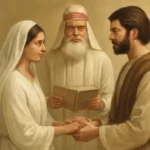
Groom or Groom-to-be: I, [Name], do take thee, [Name], to be my wedded wife/husband, to have and to hold from this day forward, for better, for worse, for richer, for poorer, in sickness and in health, to love, to serve, and to cherish, till death us do part, according to God’s holy ordinance; and thereto I pledge thee my faith and my covenant before God and these witnesses.
Bride or Bride-to-be: I, [Name], do take thee, [Name], to be my wedded husband/wife, to be loyal, to be patient, to be kind, and to forgive, as Christ forgave the Church, to live as one flesh, and to walk with thee in faith, hope, and charity, from this day forward, till death us do part.
Concise KJV-style vow
I, [Name], do covenant before God and these witnesses to cleave unto thee, to love and to cherish thee, in sickness and in health, until we are joined in death; and I do so promise with all my heart, by God’s grace, to be faithful unto thee.
Husband’s vow (KJV cadence)
I, [Name], take thee, [Name], to be my wedded wife; to love thee as Christ loved the church, and gave himself for it; to dwell with thee with understanding; to honor thee, and to be faithful unto thee, so long as we both shall live.
Wife’s vow (KJV cadence)
I, [Name], take thee, [Name], to be my wedded husband; to be thy companion and helper, to respect thee, to grow in godliness with thee, and to love thee with all my heart, from this day forward, in the fullness of God’s grace.
For families that desire a slightly briefer but still Scripturally flavored expression, consider a two-part pledge that emphasizes unity and faith:
Part I: “I will cleave unto thee, and to thee alone I will be joined, as one flesh, by God’s design.”
Part II: “I will love thee with patience, kindness, and forgiveness; I will seek thy good and the good of our home, until God calls us home.”
Practical considerations for modern ceremonies
While it is helpful to root scriptural wedding vows in the KJV tradition, practical realities of contemporary life should guide how you present them. Here are considerations that couples often weigh when adapting biblical vows kjv for real-world ceremonies.
Legal and cultural context: Some regions require specific wording for legal vows. You can combine a legally mandated oath with a separate, scripture-inspired vows segment.
Inclusivity and interpretation: If one or both spouses come from different religious backgrounds, you can frame the vows around shared values such as love, fidelity, and mutual respect, while quoting Scripture in a non-dogmatic way or using it as a personal blessing.
Language and delivery: The KJV cadence can be beautiful but challenging to recite. Consider weaving shorter, paraphrased phrases that capture the spirit of the passage while preserving the formal tone.
Public witness and community: In many traditions, vows are exchanged in the presence of family and church members. The vows should be clear, memorable, and dignified for the gathered witnesses.
Rings and symbols: The biblical concept of covenant may be paired with ring symbolism or other tokens as public signs of the vow.
Pastoral guidance: If you are part of a church or faith community, seek counsel from a pastor or pastorally minded officiant to align your vows with doctrine and pastoral care.
When crafting or selecting vows, you might explicitly reference the one flesh principle (Genesis 2:24) and the Christ-centered model of love (Ephesians 5:25-33). This helps anchor your promises in biblical narrative while keeping your ceremony inclusive and meaningful for guests.
Questions and answers about biblical vows in the KJV
Q: Are these vows appropriate for non-religious settings?
Yes, with sensitivity. You can present the vows as a declaration of personal commitment grounded in shared values such as loyalty, kindness, and mutual respect. If desired, you can separate the spiritual elements from the ceremonial promises to suit a secular setting while preserving the integrity of the promises.
Q: Should I quote exact KJV verses in my vows?
You may quote short phrases or echo the cadence of the KJV. However, long verbatim quotations can feel heavy in a modern ceremony. Short, carefully chosen phrases—such as “cleave unto thee,” “one flesh,” or “love your wife, even as Christ loved the church”—can be integrated naturally.
Q: How can I honor the spirit of biblical vows in a same-sex marriage?
The core biblical values—love, fidelity, mutual respect, and sacrifice—are not limited to any particular orientation. In many communities, couples celebrating same-sex marriages draw on these same scriptural themes to articulate their commitments while respecting local beliefs and church doctrine. When in doubt, seek pastoral guidance and use language that resonates with your faith tradition and conscience.
Q: How long should vows be?
Traditional vows in the KJV tradition tend toward formality and may be longer, but modern audiences often prefer brevity. A practical range is 60–150 words per person, depending on whether you include a blessing, a brief prayer, or a personal testimony. The most important thing is clarity and sincerity.
The concept of biblical vows in the KJV combines timeless truths with the sacred language of Scripture. The core promises—fidelity, love, mutual service, and reverent devotion before God—are not merely antiquated words but living commitments that guide couples through the seasons of marriage. By grounding vows in the biblical ideal of covenant, couples join together not only to share a home but to pursue holiness, support one another’s spiritual growth, and reflect Christ’s love in everyday life.
Whether you choose formal, King James Bible-inspired language or a contemporary paraphrase, the essence remains the same: a vow to cleave unto one another, to love with patient kindness, and to walk together in faithfulness as long as you both shall live. If you are preparing for a wedding, consider consulting your faith community, prayerfully studying the verses above, and crafting vows that honor both your personal story and the sacred scripture that has guided countless marriages across generations.
May your union be blessed with strength, grace, and steadfast love, and may your biblical vows kjv serve as a beacon of hope and fidelity for your family and for all who witness your covenant before God.








Leave a Reply