Capital Bible Seminary Maryland: Programs and Admissions
Capital Bible Seminary Maryland: Programs and Admissions
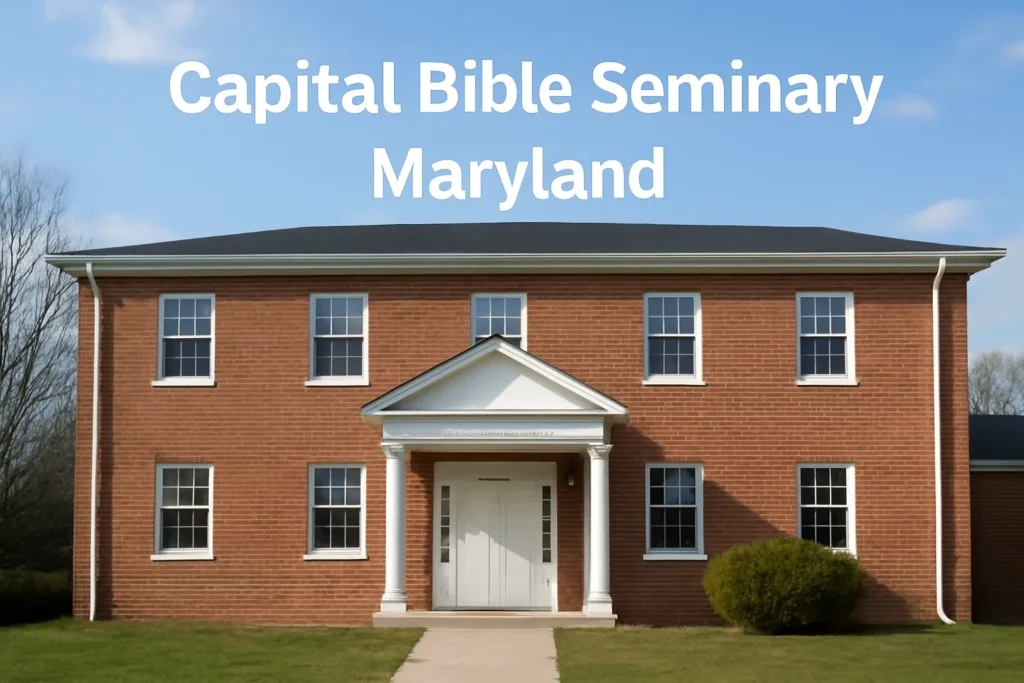
Capital Bible Seminary Maryland offers a range of theological education programs designed to prepare students for ministry, scholarship, and service. This article provides an in-depth overview of Capital Bible Seminary Maryland, focusing on its programs, admissions, and related student resources. Whether you are exploring a full graduate degree, a professional certificate, or non-degree courses for personal growth, this guide outlines what prospective students can expect from the Maryland campus of Capital Bible Seminary and how to navigate the application process.
Overview and Mission of the Capital Bible Seminary in Maryland
The Maryland campus of Capital Bible Seminary operates with a mission to equip leaders for faithful ministry, robust biblical interpretation, and compassionate service. The seminary emphasizes a balance of biblical exegesis, theological reflection, and practical ministry skills. As a regional institution serving Maryland and the broader metropolitan area around the national capital, Capital Bible Seminary Maryland aims to provide accessible education that integrates faith with intellectual rigor.
Students at Capital Bible Seminary Maryland benefit from a community that values mentorship, spiritual formation, and a curricula aligned with both traditional biblical studies and contemporary ministry contexts. The campus often highlights opportunities for local church partnership, urban and rural ministry experiences, and internships that connect classroom learning with real-world service. For those who live outside the area or who have scheduling constraints, the Maryland campus also offers flexible formats designed to meet diverse needs while maintaining rigorous academic standards.
In describing the scope of capital bible seminary maryland, it is important to recognize the institutional emphasis on preparing graduates for pastoral leadership, missions, education, counseling, and academic research. This focus translates into a sequence of courses and degree options that encourage students to pursue clarity of calling, ethical leadership, and a lifelong commitment to scholarly inquiry and spiritual growth.
Accreditation, Affiliation, and Quality Assurance
Quality assurance is a central concern for any prospective student evaluating Capital Bible Seminary Maryland. The seminary typically seeks accreditation that validates its programs, ensures competent faculty, and upholds standards of academic integrity. While the exact accrediting bodies can vary over time, many Bible seminaries seek recognition from national or regional theological associations and, where applicable, from wider accrediting agencies that supervise graduate education.
In the Maryland context, Capital Bible Seminary may maintain relationships with denominations or faith communities that help shape its programmatic emphases while remaining open to a diverse student body. For readers seeking a precise status, it is wise to consult the seminary’s official website or contact the admissions office to confirm current accreditation and affiliations. Understanding accreditation is essential for students who plan to pursue licensure, credentialing, or transfer to other institutions later in their academic career.
Programs Offered at the Maryland Campus
The Capital Bible Seminary Maryland campus offers a spectrum of programs designed to meet different educational goals. Below is a structured overview of typical degree options, certificates, and non-degree opportunities. For clarity, the different tracks are presented in terms of typical duration, credit expectations, and intended outcomes.
Degree Programs (Graduate and Postgraduate)
Most Bible seminaries in Maryland feature graduate-level degree paths that prepare students for pastoral ministry, biblical scholarship, church leadership, and allied vocations. The Maryland campus of Capital Bible Seminary commonly offers:
Master of Divinity (MDiv) — The leading professional degree for those pursuing ordained ministry. Typical duration ranges from 3 to 5 years depending on previous study and whether courses are taken full-time or part-time. The curriculum emphasizes biblical exegesis, theology, pastoral care, preaching, and leadership formation.
Master of Arts in Biblical Studies (MABS) — A flexible option for students interested in advanced biblical interpretation, language study (such as Hebrew and Greek), and scholarly inquiry without a mandate to enter ordination tracks. This degree is well-suited for educators, researchers, or ministers who want a strong scholarly foundation.
Master of Theology (ThM) — A research-intensive degree intended for those who plan to pursue doctoral studies or senior academic roles. The ThM often emphasizes original research, advanced seminar work, and a substantial thesis or project component.
Master of Theological Studies (MTS) — A flexible, academically focused degree that allows students to tailor coursework toward specific interests (e.g., biblical languages, systematic theology, or church history) without the professional ordination requirement.
Certificates and Non-Degree Programs
For individuals who seek targeted training without enrolling in a full degree program, Capital Bible Seminary in Maryland often provides:
Professional Certificates in areas such as Youth Ministry, Counseling in Faith-Based Settings, or Christian Education. These certificates may be completed in a shorter timeframe and can enhance ministry skills or introduce new areas of practice.
Non-degree courses and continuing education opportunities designed for pastors, lay leaders, and volunteers who want to grow their knowledge without committing to a degree program.
Online certificates and online non-degree courses that provide flexibility for remote learners or working ministers seeking continuing education credits.
Online and Hybrid Formats
To widen access and accommodate busy schedules, the Maryland campus of Capital Bible Seminary often offers online or hybrid formats. These options may include:
Fully online degree options with asynchronous or synchronous learning components, designed to serve students who live outside the region or who work full-time.
Hybrid programs that blend on-campus seminars with online coursework, allowing for periodic intensives and ongoing virtual collaboration.
Remote mentoring, digital libraries, and online discussion forums that foster a sense of community even when students are geographically dispersed.
Academic Tracks and Specializations
Within the broader degree programs, students at Capital Bible Seminary Maryland can often specialize in several tracks, including:
Pastoral Ministry and Church Leadership
Biblical Languages (including introductory and advanced study in Hebrew and Greek)
Christian Education and Discipleship Formation
Missional Theology and Evangelism
Counseling in Faith Communities and Pastoral Care
Historical Theology and Church History
When evaluating the Capital Bible Seminary Maryland degree options, prospective students should consider factors such as credit requirements (semester hours vs. quarter hours), the possibility of transfer credits from other institutions, and the alignment of the degree with vocational goals such as ordination, classroom teaching, or scholarly research.
Curriculum and Areas of Study
The curriculum at the Maryland campus of Capital Bible Seminary is designed to balance rigorous academic work with practical ministry training. Core courses typically cover biblical interpretation, systematic theology, ethics, and ministry practice, while electives allow students to pursue specific interests. The following outline highlights common academic emphases:
Biblical Exegesis and Hermeneutics — Advanced methodology for studying Scripture in its historical context and application to contemporary ministry.
Systematic Theology and Historical Theology — Theological frameworks that help students articulate a coherent faith tradition and engage with contemporary issues.
Pastoral Counseling and Mental Health in Faith Communities — Approaches to providing ethical, compassionate care within a church or ministry setting.
Church History and Denominational Context — Understanding the development of Christian thought and practice across centuries and cultures.
Preaching and Communication — Skills for delivering compelling sermons, teaching classes, and communicating the gospel effectively.
Ethics and Ministry Formation — Integrating personal integrity, community ethics, and professional responsibility into ministry work.
In addition to core requirements, students often have opportunities to engage in field education, internships, and ministry practicums. These experiences provide hands-on training in real-world settings, enabling students to apply classroom concepts to church leadership, youth ministries, missions, or education programs.
Admissions Overview: Who Can Apply and What They Need
Admissions policies at Capital Bible Seminary Maryland are designed to welcome a diverse array of applicants—from recent graduates preparing for ministry to practicing ministers seeking advanced credentials. The Maryland campus emphasizes both spiritual preparation and intellectual readiness. While specific requirements can vary by program level, the following outlines typical eligibility and document expectations for most pathways.
Who Should Apply
Individuals seeking ordination or pastoral leadership roles in local churches or para-church organizations.
Students pursuing advanced biblical scholarship, church education, or missional leadership careers.
Lay leaders and ministry staff looking for professional development and credentialing.
International students seeking a U.S.-based theological education (subject to visa requirements and program formats).
General Admission Requirements
Application form with a non-refundable fee (as specified by the admissions office).
Official transcripts from all post-secondary institutions attended.
Statement of purpose describing calling, goals, and fit with Capital Bible Seminary Maryland.
Resume or curriculum vitae highlighting relevant ministry or academic experience.
Letters of recommendation (typically 2–3) from pastors, faculty, or ministry supervisors who can attest to character, leadership, and readiness for graduate study.
Writing sample or sample of scholarly work (often required for graduate programs like MTS, ThM, or MABS).
Interview (in-person or virtual) may be part of the process for certain programs or tracks.
Language Proficiency for International Applicants
For international students, the Maryland campus often requires evidence of English language proficiency if the applicant’s native language is not English. Acceptable tests may include TOEFL, IELTS, or other standardized measures recognized by the institution. Some veteran ministers or applicants with substantial English-language ministry experience may discuss exemptions or accommodations through the admissions office.
Background Checks and Ethical Standards
Many programs at Capital Bible Seminary Maryland require disclosure of any legal or disciplinary issues that could affect ministry opportunities or safety in field placements. A background check may be part of the process for students who plan to engage in internships, church-based placements, or counseling practica.
Application Process and Key Deadlines
The admissions timeline for the Maryland campus is structured to help applicants prepare a strong package and to facilitate timely enrollment. The steps below outline a typical process, though exact dates and forms may change from year to year:
Research programs and identify the degree track or certificate that best aligns with your calling and career goals. Review accreditation status, faculty areas of expertise, and potential mentors.
Submit the application with all required documents. Ensure that transcripts arrive in a timely fashion and that references are submitted by the designated deadlines.
Take language proficiency tests (if applicable) and arrange for score reporting to the admissions office.
Attend an admission interview if requested by the department or program staff. This interview may assess fit, motivation, and readiness for graduate-level study.
Receive admission decision and review any conditional requirements (such as bridging courses, theology placement testing, or additional documents).
Secure funding and complete enrollment steps, including housing applications (if applicable) and orientation registrations.
Typical Deadlines
Fall term applications may have deadlines in late winter to early spring; early applications often receive priority consideration for scholarships or assistantships.
Spring term and summer term applications may have separate deadlines, with shorter processing timelines.
Because the schedule for the Maryland campus can change, it is essential to verify current deadlines on the official Capital Bible Seminary Maryland site or by contacting the admissions office. For prospective students who are balancing work, family, or church responsibilities, the availability of online or hybrid formats can be a decisive factor in choosing the right term and track.
Financial Aid, Tuition, and Scholarships
Understanding the financial aspects of attending Capital Bible Seminary Maryland is crucial for many students. Tuition and fees vary by program, format (online, hybrid, or on-campus), and residency status. While the exact figures fluctuate, the following overview highlights common funding avenues and cost considerations:
Tuition and fees vary by program and delivery mode. On-campus programs may have different per-credit-hour rates compared to online offerings.
Scholarships and grants may be available based on academic achievement, leadership potential, church partnership, or need. Some scholarships are designated for specific tracks, such as pastoral leadership or biblical language studies.
Loans (federal or private) may be available for graduate students in accordance with institutional policies and eligibility criteria.
Work opportunities on campus, including graduate teaching assistants or administrative internships, can help offset costs and provide professional experience.
Church sponsorship and denomination sponsorship are common pathways for seminary students, where sponsoring churches or denominations cover part or all of tuition in exchange for service commitments or ministerial placement after graduation.
Prospective learners should inquire about their eligibility for specific scholarships and the process to apply for financial aid at the Maryland campus. The admissions or financial aid office can provide tailored guidance, including timelines for submitting aid applications, required documentation, and eligibility criteria.
Campus Life, Resources, and Student Support
Even though the primary focus at Capital Bible Seminary Maryland is academic preparation for ministry and scholarship, student life and support services play a significant role in shaping the overall experience. The Maryland campus typically offers a range of resources to support spiritual growth, academic success, and practical ministry training.
Library and research resources with access to biblical languages databases, theological journals, and biblical commentaries.
Spiritual formation programs such as chapel, devotional groups, and mentorship with faculty and clergy.
Counseling services and wellness resources to support student mental health and balance.
Career services including resume reviews, interview preparation, and guidance on ministry placements.
Academic advising and mentorship to help students navigate degree requirements, track selection, and transition to post-graduate opportunities.
For those enrolled in the Maryland campus program, purposeful engagement beyond the classroom can include internships at nearby churches, non-profit organizations, and mission networks. The ability to connect with local pastors and ministry leaders is often a valued aspect of the Capital Bible Seminary Maryland experience, enabling practical learning that complements rigorous coursework.
Admissions Pathways: Transfer, Non-Degree, and Special Considerations
Capital Bible Seminary Maryland recognizes that students arrive with different levels of prior study and varying career goals. The institution commonly supports several admission pathways beyond traditional first-time degree admission:
Transfer admissions for students who have completed study at another accredited institution and wish to transfer credits toward an on-campus or online program at Capital Bible Seminary Maryland.
Non-degree or continuing education pathways for personal enrichment, professional development, or exploration without immediate degree enrollment.
Non-traditional and mature students who bring ministry experience or previous work in related fields and seek credit for prior learning where applicable.
Prospective students exploring these routes should communicate with the admissions team to learn about credit transfer policies, articulation agreements, and the documentation required to facilitate smooth credit evaluation. The Maryland campus often emphasizes flexible options to honor prior coursework and ministry credentials while aligning with program standards.
How to Apply: A Practical Step-by-Step Guide
Applying to Capital Bible Seminary Maryland involves several coordinated steps. The following practical guide is designed to help applicants prepare a complete and competitive application. Always verify current requirements on the official site of Capital Bible Seminary Maryland before submitting materials.
Identify your target program (MDiv, MABS, ThM, MTS, certificates, or non-degree options) and review prerequisites.
Gather supporting documents including official transcripts, letters of recommendation, resume, statement of purpose, and writing sample if required.
Submit the online application through the seminary’s admissions portal, paying attention to program-specific prompts and optional components.
Arrange for letters of recommendation to be submitted by your references by the specified deadlines.
Submit language proficiency scores (if applicable) and ensure they are sent to the correct program code.
Prepare for interviews (if invited) by reflecting on your ministry goals, theological commitments, and how the program aligns with your calling.
Review admission decision and respond to any conditional requirements, such as bridging coursework or prerequisite tests.
Apply for financial aid and scholarships, including submitting the FAFSA if eligible and meeting institutional deadlines.
Finalize enrollment by submitting deposits, signing the programmatic agreement, and completing housing or orientation registrations if applicable.
Tips for a Strong Application
Highlight ministry experience and community involvement in your resume and statement of purpose.
Seek strong recommendations from mentors who can discuss leadership, character, and suitability for graduate-level ministry education.
Use the writing sample to demonstrate critical thinking, clarity of expression, and your ability to engage theological topics.
What Sets Capital Bible Seminary Maryland Apart
While many seminaries offer theological training, the Maryland campus of Capital Bible Seminary distinguishes itself through a combination of factors that appeal to a broad spectrum of students. The following aspects often contribute to a distinctive experience:
Location and context — Proximity to major urban centers, churches, and faith communities provides rich opportunities for internships, guest lectures, and ministry partnerships.
Small class sizes and faculty mentorship — A conducive environment for personalized feedback, in-depth discussion, and close collaboration with professors who bring both academic credentials and practical ministry experience.
Ecumenical and practical emphasis — While rooted in a particular tradition or partnerships, the Maryland campus often welcomes diverse perspectives and emphasizes actionable skills for church leadership and missional life.
Flexible formats — Acknowledging the needs of working students and church staff, the options for online, hybrid, and on-campus study support ongoing education while balancing commitments.
When comparing Capital Bible Seminary Maryland to other institutions, consider how each program integrates rigorous scholarship with pastoral formation, and how the denominational or interdenominational context shapes the opportunities for ministry and research.
Frequently Asked Questions (FAQs)
Is Capital Bible Seminary Maryland accredited?
The Maryland campus pursues accreditation appropriate for its programs and offerings. Prospective students should verify the current status with the admissions or registrar’s office, as accreditation can influence transfer credit acceptance, licensure pathways, and eligibility for certain scholarships.
Can I study entirely online at Capital Bible Seminary Maryland?
Yes, depending on the program, Capital Bible Seminary Maryland may offer fully online or hybrid formats to accommodate remote learners and working ministers. Prospective students should confirm format availability for their chosen track.
What financial aid options exist at Capital Bible Seminary Maryland?
Financial aid may include scholarships, grants, loans, and church sponsorships. Students should contact the financial aid office for program-specific funding opportunities, application procedures, and eligibility requirements.
Are international applicants welcome at Capital Bible Seminary Maryland?
International applicants are welcome if they meet the program requirements and visa guidelines. English language proficiency is typically required, and the admissions team can provide guidance on visa processes (e.g., I-20) and documentation needed for enrollment.
What is the typical duration for the Master of Divinity program at Capital Bible Seminary Maryland?
Program length for the MDiv often depends on the student’s prior coursework and enrollment status (full-time vs. part-time). A common range is approximately 3–5 years, but exact timelines vary by track and credit requirements.
Semantic Variants and Cross-Linking Opportunities
To support readers and search engines, this article uses variations of the institution name and related terms. Across various sections, phrases like Capital Bible Seminary in Maryland, the Maryland campus of Capital Bible Seminary, and Capital Bible Seminary Maryland appear to capture different semantic angles while referring to the same institution. When writing or optimizing content about the seminary in Maryland, it is helpful to emphasize:
The programs offered (degrees, certificates, non-degree options)
The admissions process and requirements
The location and the opportunities it provides for ministry partnerships
Connections to online learning options and hybrid formats
Using proportional repetition of these terms in a natural, informative manner helps readers understand the institution’s offerings while maintaining clarity about the Maryland campus’s unique position in the landscape of theological education.











Leave a Reply