Christian Arranged Marriage: Traditions, Consent, and Modern Views
Christian Arranged Marriage: Traditions, Consent, and Modern Views
The topic of Christian arranged marriage spans centuries and crosses many cultural textures. In its broadest sense, it describes a process in which families, communities, and sometimes church authorities play a central role in identifying a suitable partner for a person who is entering the life of marriage. This article explores traditions, consent, and modern views surrounding this practice, while clarifying the distinction between arranged marriage, engagement, and betrothal within Christian contexts. It also acknowledges the diversity of expression across denominations, regions, and contemporary secular societies, where the emphasis may shift toward voluntary consent and mutual agency within a faith-informed framework.
At its core, a Christian arranged marriage is one in which certain adults—often parents, extended family, or church mentors—help identify a potential partner who shares similar faith commitments, values, and life goals. It does not necessarily imply coercion or a denial of personal choice; many communities insist on free and informed consent by the couple, even when the initial matchmaking is community-driven. In some Christian traditions, the word betrothal has historical weight, signaling a formal, binding intention to marry that is later consummated in the sacramental wedding. Across many contemporary settings, however, the process has become more fluid, with couples meeting through introductions, shared work, or church-sponsored events, and with the ultimate decision resting on mutual agreement and readiness.
Traditions and practices across Christian denominations
Christian communities differ markedly in how they approach marriage arrangements. The spectrum includes ancient and medieval patterns preserved in some Orthodox and Catholic contexts, as well as more informal, community-based practices common in various Protestant and Pentecostal circles. What remains consistent is a concern for aligning the spiritual, moral, and practical dimensions of life before marriage.
Catholic and Orthodox lines: betrothal, discernment, and sacramental framing
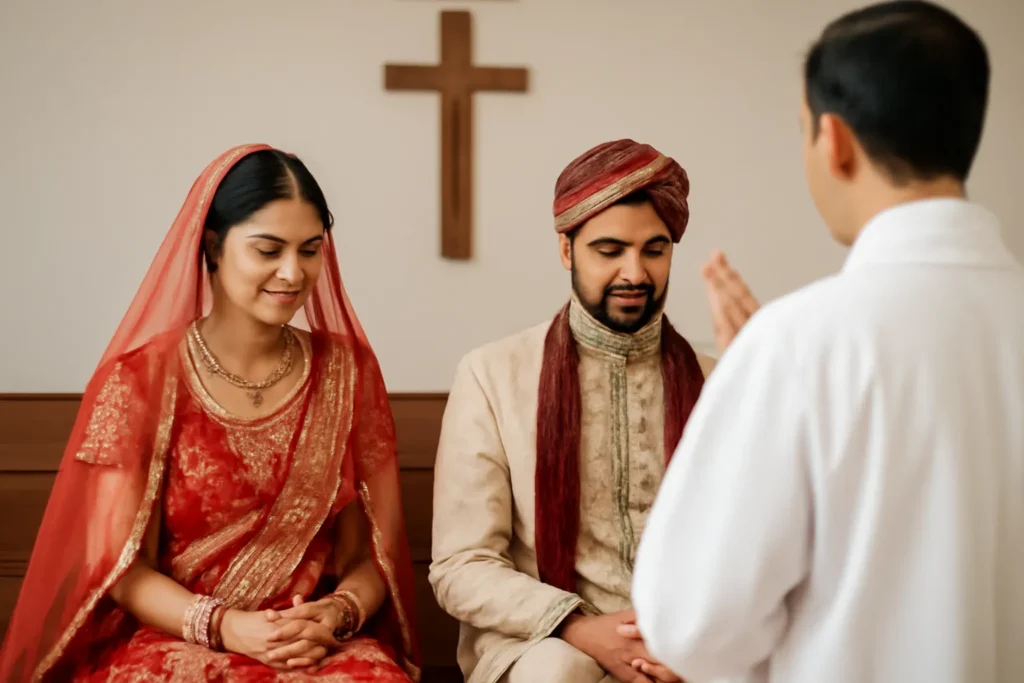
In historically rooted Catholic and Orthodox communities, marriage has been viewed as a sacrament (in Catholicism) or a holy covenant (in Orthodox theology). Within some of these traditions, betrothal (a formal commitment) can be distinct from the marriage ceremony, yet it signals serious intent and often involves a period of discernment guided by a priest or bishop. Family involvement remains important, but the couple’s consent is essential. In practice, arrangements might include church-approved introductions, pre-marital counseling, and explicit endorsements from clergy. The aim is to ensure that the union is spiritually harmonious, morally sound, and socially compatible, with the couple growing together in their vocation and faith.
Structured pre-marital preparation led by clergy or lay counselors
Explicit consent documented in the presence of a witness or priest
Rituals that acknowledge both families’ roles and the couple’s freedom to choose
Protestant and evangelical approaches: courting, consent, and covenant promises
In many Protestant and evangelical communities, arranged introductions may be facilitated by families or church networks, but the emphasis is often on conscious choice by the couple and a shared commitment to biblical principles and marital vocation. In these settings, courtship may be a formal stage with oversight by mentors, pastors, or elders, followed by a period of dating with explicit boundaries and clear expectations. Proponents argue that this approach preserves personal agency while leveraging the wisdom of community and faith-informed standards.
Mentor-led discernment and spiritual guidance
Clear boundaries and accountability within the dating phase
Emphasis on shared doctrine, mission, and family life
Anabaptist, Evangelical, and independent Christian communities: family systems and mutual consent
In Anabaptist-influenced circles (such as Mennonite traditions) and other independent Christian communities, arranged engagement often centers on family consensus and community endorsement, with a strong emphasis on freedom of choice for the couple and mutual consent as non-negotiable. The process may include a period of communal meetings, pastoral guidance, and risk-managed steps toward engagement. These communities frequently emphasize gentle, respectful match-making that honors the couple’s autonomy as they discern their future together.
Community-based introductions with careful alignment on values
Pre-marital counseling that centers on communication, conflict resolution, and faith identity
Formal consent processes that protect the dignity and agency of both partners
Diaspora and minority Christian communities: cultural adaptation and local context
In diaspora contexts—such as South Asian, East African, Filipino, or Latin American Christian communities—arranged marriages may blend local cultural expectations with Christian faith commitments. Here, church leaders may play a crucial role in ensuring the arrangement aligns with Christian ethics and the couple’s agency within a culturally diverse environment. The result can be a hybrid practice that respects ancestral customs while upholding modern standards of consent and mutual respect.
Church-led introductions that honor both faith and cultural heritage
Mandatory or recommended pre-marital counseling, sometimes in multiple languages
Rites or blessings that integrate family, church, and personal vows
The role of consent: navigating agency, pressure, and faith
Consent is a central ethical pillar in any discussion of arranged marriages within Christian contexts. The modern consensus across many denominations is that a marital union must be entered into freely by both people involved. Mutual consent is not merely a performance of agreement; it is an active, ongoing process that involves honest conversations about expectations, boundaries, family obligations, finances, faith practices, career goals, and children. Historical patterns of parental pressure or social convenience have faced sharper critique in contemporary Christian ethics, where the dignity and agency of the individuals are prioritized.
Key dimensions of consent in Christian matched marriages
Informed choice: The couple understands what they are agreeing to, including the nature of the arrangement, the responsibilities, and the timeline toward marriage.
Voluntary agreement: No coercion, manipulation, or guilt-based pressure from family or church authorities.
Ongoing consent: Consent is not a one-time event but a process that continues through engagement, premarital counseling, and the early years of marriage.
Legitimate oversight: Clergy or mentors provide guidance without overriding the couple’s freedom to decide.
The scriptural perspectives on consent often emphasize human freedom in the bonds of covenant. Passages that celebrate voluntary surrender to God, mutual respect between spouses, and the unity of two persons in Christ can be interpreted in ways that support a partner’s right to discernment and choice. While different traditions quote different verses, the practical upshot in most churches today is clear: consent, respect, and mutual responsibility should undergird any Christian arranged process.
The engagement and betrothal journey: steps, rituals, and timelines
The path from initial introductions to the wedding day can follow several parallel routes, depending on tradition, law, and community norms. Below is a synthesized outline of typical stages in many Christian arranged-marriage contexts:
Introducing the families: Initial meetings where parents or elders present prospective matches, explaining faith commitments and life goals.
Discernment and counsel: A period of prayerful consideration, often accompanied by premarital counseling, spiritual direction, and practical discussions about finances, lifestyles, and children.
Mutual consent: The couple affirms their willingness to pursue marriage and to participate in the proposed plan.
Betrothal or formal engagement: In some traditions, a formal pledge that binds the couple to marry at a specified time, usually witnessed by family and a clergy member.
Pre-marital preparation: Counseling sessions focused on communication, conflict resolution, sexual ethics, parenting, and spiritual disciplines.
Church blessing or wedding preparation: A final period of sacred preparation that culminates in the wedding ceremony.
In practices where a betrothal is observed, it often marks a distinct stage with the public acknowledgment of the couple’s intention to wed. In other settings, engagement serves as a practical and symbolic phase without legal or sacramental weight, allowing the couple to continue dating with a shared sense of purpose under church guidance. Regardless of terminology, the emphasis is on preparing for a lifelong covenant characterized by devotion, fidelity, and mutual service.
Rituals and ceremonies: how faith shapes the wedding journey
Across Christian traditions, rites and rituals around arranged marriages are infused with theological meaning. For many, the wedding itself is a sacramental or covenantal act that binds two people not only to each other but to God and community. The rituals may include:
Blessing prayers spoken by clergy for the couple’s home, family, and future children.
Scripture readings chosen to reflect partnership, sacrifice, and mutual edification.
Significant vows that articulate commitments to faith, family, and service.
Ritual acts such as the lighting of a unity candle, exchange of rings, or a priest-led blessing of the marriage.
Participation by families and sometimes godparents or mentors who stand with the couple as witnesses to the union.
In certain denominations, there exists a specific betrothal ceremony that precedes the wedding and is recognized by the church as a formal step in the marriage process. In others, the engagement or “household recognition” may be integrated into the wedding liturgy itself. Regardless of the exact form, the theological core remains: marriage is a vocation in which two persons are called to love one another as part of their service to God, the church, and a broader community.
Modern views: benefits, critiques, and evolving standards
As societies evolve, so do the expectations around Christian arranged marriages. The conversation now often centers on balancing historical practices with individual agency, gender equality, and ethical safeguards against coercion or exploitation. Here are some of the key themes shaping contemporary discussions:
Strong alignment on values, faith, and life goals.
Supportive family networks that can assist with integration, parenting, and spiritual growth.
Structured pathways for premarital counseling and conflict resolution.
A sense of community endorsement that can strengthen commitment and resilience in marriage.
Common concerns and critiques
Risk of pressure or coercion undermining genuine consent.
Possibility of limited personal autonomy, particularly for young people or those from vulnerable groups.
Potential for reinforcing social hierarchies or cultural expectations that clash with individual identity and desire.
Challenges in pluralistic societies where a couple may hold different religious or secular worldviews.
A growing portion of Christian communities emphasizes mutual respect, informed consent, and ongoing dialogue as essential elements of any arranged process. In this frame, arranged introductions are welcomed as helpful but are anchored in a firm commitment to the couple’s freedom to choose and to pursue a marriage characterized by trust, respect, and shared spiritual formation.
Regional and denominational variations: a snapshot
The practice of Christian arranged marriage is not monolithic. Regional norms, cultural backgrounds, and denominational identities shape how families approach match-making, dating, and the wedding process. A few illustrative patterns:
Eastern Orthodox communities sometimes maintain a strong emphasis on a formal betrothal and a ceremonial unity before the nuptial blessing, with guidance offered by priests to both families.
Catholic contexts historically featured arranged arrangements in many cultures, but contemporary Catholic practice tends to foreground discernment, consent, and sacramental readiness with the couple’s personal assent at the heart of marriage validity.
Mediterranean, Middle Eastern, and South Asian Christian groups may integrate traditional family rituals with church rites, creating a blended approach that honors heritage while staying within Christian ethical norms.
Mainline Protestant and Evangelical communities often prioritize shared beliefs and life mission, using a guided process to support couples who choose to trust the church’s blessing and counsel.
Practical guidance for those considering a Christian arranged marriage
If you are exploring this path, or helping someone who is, consider the following practical guidelines to safeguard dignity, agency, and spiritual integrity:
Clarify your own non-negotiables about faith, family life, career, and personal boundaries before entering any match-making process.
Engage in premarital counseling with a qualified counselor or clergy member who respects your autonomy and supports healthy communication.
Ensure explicit, ongoing consent at each stage and provide space for both partners to pause or redefine commitments if needed.
Involve trusted mentors, but preserve pair agency—mentors should guide, not dictate, the couple’s ultimate decision.
Keep transparency with families while protecting the couple’s privacy, ensuring that expectations are stated clearly and respectfully.
Discuss practical realities such as finances, housing, education, career plans, and parenting expectations to avoid later conflicts.
Respect the local laws and civil requirements relevant to marriage in your country or region.
Prioritize the couple’s spiritual and emotional health—marriage is a vocational path that requires ongoing discernment, forgiveness, and shared spiritual growth.
Myths and truths about Christian arranged marriages
Several common myths persist about arranged marriages in Christian contexts. Addressing them helps communities pursue healthier, more equitable practices:
Myth: Arranged marriages are always forced. Truth: In responsible communities, consent is essential and non-coercive; arranged introductions coexist with personal choice.
Myth: Arranged marriages erase love. Truth: Many couples report growing love through shared faith, mutual respect, and collaborative decision-making.
Myth: Only conservative or traditional communities practice this. Truth: A wide spectrum exists, including mainstream, liberal, and diverse diaspora contexts that adapt the model to contemporary values.
Myth: Arranged marriages undermine gender equality. Truth: When done with explicit consent and mutual responsibility, these practices can operate within egalitarian dynamics and shared decision-making.
Ethical considerations and safeguarding in contemporary practice
Ethical safeguarding means actively preventing coercion, ensuring transparency, and honoring the dignity of every participant. Christian communities increasingly apply safeguarding principles that include:
Voluntary consent reaffirmed at every step of the process
Clear boundaries around dating and premarital activities
Education on healthy relationships and emotional maturity
Oversight by trustworthy clergy and lay leaders who model respectful, faith-centered guidance
Case studies: toward a nuanced understanding
While it is impossible to summarize every scenario, several regional and denominational case studies illuminate how Christian arranged marriages function in real life:
South Asian Christian communities may preserve strong family involvement while ensuring that both parties have ample opportunity to evaluate compatibility and faith alignment before a formal commitment.
Filipino and Southeast Asian churches often integrate local customs with Catholic or Protestant ceremony formats, balancing kinship expectations with modern consent norms.
Eastern European Christian traditions frequently emphasize community blessing and the role of godparents, with careful attention to the couple’s own preferences.
North American diaspora churches tend to highlight premarital education, consent, and flexible structures to accommodate pluralistic lifestyles while maintaining faith commitments.
Frequently asked questions
Below are a few common questions people ask when they encounter Christian arranged marriage as a concept:
Is arranged marriage compatible with Christian freedom? Yes, when consent, dignity, and spiritual companionship are central and when the process honors the couple’s autonomy.
What happens if one partner changes their mind? The process should allow for reconsideration and a graceful withdrawal without blame, with pastoral care and counseling available.
What role do pastors or priests play? Clergy typically provide discernment, ensure alignment with faith commitments, and offer spiritual guidance, but they should not dictate personal decisions.
How do families balance tradition with modern expectations? By maintaining open dialogue, flexible practices, and a shared commitment to the well-being of the couple.
A thoughtful end: embracing a faith-informed, consent-centered path
Christian arranged marriages, when understood through the lenses of consent, mutual respect, and active spiritual formation, can offer a meaningful path for couples who wish to join lives under shared faith commitments. They can provide a framework in which families support one another, clergy shepherds guide with wisdom, and the couple’s bond grows through prayer, communication, and service. It is essential, however, to reaffirm that the couple’s freedom to choose, the avoidance of coercion, and the ongoing nurture of trust are non-negotiable features of any arrangement. The goal is a lifelong covenant that honors God, sustains a loving household, and contributes to the flourishing of a faith community.
In sum, the subject of Christian arranged marriage is multifaceted and evolving. When conducted with clear consent, mutual respect, and a shared faith perspective, it can be a meaningful pathway to a devoted life together. As with any form of arranged partnership in a religious frame, the ongoing questions of companionship, spiritual growth, and care for one’s future family remain central. By centering the dignity and voice of the individuals involved, Christian communities can navigate tradition and modernity in ways that honor both heritage and human flourishing.









Leave a Reply