Church Welcome Address: How to Craft a Warm, Inclusive Welcome
Church Welcome Address: How to Craft a Warm, Inclusive Welcome
Crafting a church welcome address is about more than politeness; it is the first warm handshake a visitor receives and the opening moment of belonging for everyone gathered. A well-designed welcome message, opening remarks, or welcoming speech can set a tone of genuine hospitality, align expectations, and invite people into a shared experience of worship and community. This article offers a thorough guide to composing a warm, inclusive welcome for church services, meeting the needs of diverse congregations while remaining faithful to the church’s mission and values. You’ll find practical steps, language tips, sample lines, and checklists that help a church manage the delicate balance between hospitality, information, and reverence.
A church welcome address is more than a courteous greeting. It serves several important purposes:
First impressions: The opening moments can shape how visitors perceive the church and whether they feel invited to return.
Bridge to worship: The welcome should smoothly connect the congregation to the act of worship, easing people into the sacred space and the service flow.
Clarity and orientation: Clear information about what to expect helps visitors participate confidently—where to find restrooms, what to do with children, and how to navigate the service.
Intent and tone: The welcome communicates the church’s values—authenticity, hospitality, and care for the vulnerable—and sets a tone of belonging for all attendees.
Inclusivity and accessibility: An effective welcome addresses diverse backgrounds, languages, abilities, and comfort levels, inviting everyone to belong without pressure or judgment.
When people describe a church as welcoming, they often refer to both the content and the way it is delivered. The church service welcome is a brief, purposeful moment that honors the past, invites the present, and points toward the faith community’s mission. It should feel genuine, practical, and gracious—never perfunctory or scripted to the point of soundless repetition.
Key elements of a warm welcome address
To craft a compelling welcome message for church that resonates with a broad audience, consider these core elements:
Intention and aim
Begin by naming your purpose. Common aims include making guests feel seen, sharing essential information, and inviting everyone into a shared worship experience. A clear intention helps the rest of the address stay focused and authentic.
Tone and language
The tone should be conversational yet respectful, inviting but not casual to the point of irreverence. Use inclusive language that avoids assumptions about readers’ beliefs, backgrounds, or experiences. Avoid insider jargon or church-specific terms that may alienate new visitors. Strike a balance between warmth and reverence, acknowledging the sacredness of worship while maintaining accessibility for newcomers.
Structure and flow
A well-structured welcome typically follows a predictable arc: greeting, acknowledgment, connection to worship, practical information, and a gentle transition into the service. A clear roadmap helps attendees know what to expect and where to participate.
Inclusivity and accessibility
Consider every dimension of accessibility: physical access, linguistic diversity, hearing and vision needs, and cultural sensitivities. Provide interpreters, large-print materials, quiet spaces, and visually accessible signage when possible. Invite people who are new or visiting to engage at their comfort level—no pressure, no intimidation.
Connection to mission and community
Use the welcome to connect attendees to the church’s mission and ongoing life. Highlight opportunities to serve, learn, or connect in small groups, classes, or outreach programs. This transforms the moment from mere courtesy into a doorway to ongoing belonging.
Structuring your welcome address
Below is a practical framework you can adapt. The sequence is designed to be adaptable to different church traditions, service lengths, and audiences.
Opening greeting: A warm, genuine greeting that acknowledges both first-time visitors and long-time members.
Acknowledgment: A brief recognition of the sacred space, the presence of the Holy, or the sense of community in the room. This anchors the moment in worship.
Connection to the service: A sentence or two that ties the welcome to the theme of the service or sermon series.
Practical information: Directions for kids, childcare, restrooms, emergency procedures, and how to participate (singing, standing, etc.).
Encouragement to participate: Invite guests to fill out welcome cards, join a connect group, or attend a newcomer reception if offered.
Closing transition: A smooth invitation to return attention to the worship program and to the next element of the service (announcements, music, or scripture).
In practice, you might expand some steps or combine others depending on your context. Here are examples of how to implement this framework, with language that can be adapted to church welcome address variations.
Start with a sincere, inclusive greeting that invites everyone in. For example:
“Welcome to everyone gathering with us today. Whether you are visiting for the first time, returning after a season away, or joining us from another faith or culture, you are a valued part of our faith family.”
Then acknowledge the space and presence:
“We pause for a moment to recognize this sacred space and the shared desire to seek, learn, and grow together in grace.”
Connection to the service
Link the welcome to the theme of the service or a current sermon series. For example:
“Today’s message invites us to consider how hospitality becomes a practice of faith in daily life, not just within these walls. May our time together deepen our sense of belonging and open our hearts to the needs of our neighbors.”
Practical information
Share information that helps visitors participate with ease. Include language about accessible options, children’s ministry, and where to find assistance if needed:
“If you are visiting with children, our building houses a staffed nursery and a supervised children’s program during this service. If you need directions, restrooms, or a quiet space, the welcome desk near the entrance can assist you. We also offer an assistive listening device and large-print hymns—just let us know your needs.”
Encouragement to participate
Invite engagement in a low-pressure way:
“If you’d like to learn more about our church, we invite you to fill out a short connect card at the back of the sanctuary or visit the welcome desk after the service. We’d love to hear your story and help you find a place to belong.”
“Let us now turn our hearts toward worship, letting the music and scriptures shape our reflections. May this time be a blessing to all, in the name of Christ.”
Examples and template lines
Crafting your own church welcome address often helps to create templates that fit multiple occasions. Below are variations you can mix and match. Use them as opening, middle, or closing lines depending on the service context and audience.
Opening lines for different contexts
General welcome: “Welcome, friends—whether you are visiting for the first time or you’ve walked these doors a hundred times, we are glad you are here.”
Family-focused: “If you’re here with children, teens, or young adults, you belong. This family is bound by shared curiosity about faith, care for one another, and a desire to serve.”
Guest-centered: “If you are new, know that you are seen, you are welcomed, and you are invited to explore how you might grow with us in faith.”
Seasonal: “As we enter this season of renewal, we welcome you with hearts ready to listen, to forgive, and to walk this path together.”
Interfaith or diverse backgrounds: “We come from many backgrounds and beliefs, united by a common desire to seek truth, show love, and support one another.”
Closing lines to invite ongoing engagement
“If you’d like to learn more about our programs, please visit the info desk after the service.”
“We would be honored to have you join a small group or volunteer team—your gifts matter to this community.”
“Thank you for spending this time with us today. May you leave feeling seen, encouraged, and connected.”
“Please consider sharing your good-news stories with us; your experiences help us grow as a community.”
Inclusive language and diverse audiences
One of the most critical components of a compelling welcome is the use of inclusive language. It communicates that the church welcomes everyone—regardless of age, race, gender identity, sexual orientation, ability, socioeconomic status, or language. Here are practical guidelines:
Avoid assumptions about attendees’ beliefs or practices. Use universal terms like “people of faith,” “seekers,” “neighbors,” or “our community” rather than assuming a shared tradition.
Offer options for participation that do not demand a single mode of engagement. For example, provide both spoken responses and silent reflection opportunities.
Honor diverse family structures and living situations. Use phrases like “families, couples, individuals, and households” to include varied configurations.
Acknowledge linguistic diversity. If your congregation includes many languages, offer a brief note about translation services or translated materials.
Be mindful of pronouns and identity language. If appropriate, use gender-inclusive terms and offer a moment to acknowledge the living presence of all people in the room.
Accessibility is another pillar. Consider the following:
Provide ASL interpretation or captioning if needed; announce this availability clearly.
Offer large-print programs and braille resources for printed materials.
Ensure the space is navigable for people with mobility challenges and that hearing loops or assistive listening devices are available.
Prepare materials in simple, direct language to assist visitors who may be exploring faith for the first time.
Delivery tips for a compelling welcome
The content is essential, but delivery makes a powerful difference. Here are practical tips to ensure your welcome address lands with warmth and clarity:
Practice timing: Aim for 1–3 minutes for a standard service; longer services may require 4–5 minutes. Avoid overrunning, which can test the patience of visitors.
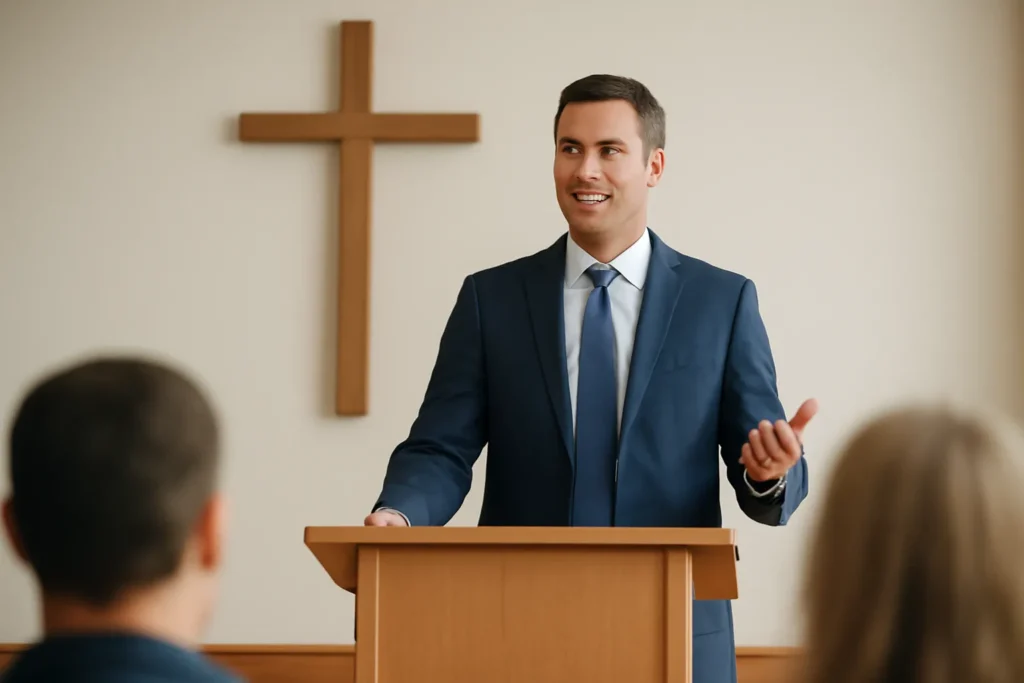
Be present: Maintain eye contact with the congregation, especially with first-time visitors. A relaxed posture and natural smile convey sincerity.
Mind your pace: Speak slowly enough to be understood by non-native speakers and those in the back of the room.
Use natural pauses: Short pauses give listeners time to absorb information and reflect on the message.
Avoid jargon and insider phrasesn—if you must use them, briefly explain.
Practice inclusive delivery: Use phrases that invite participation and avoid singling out any group or individual in a way that could feel exclusive.
Engage with warmth: Your voice should carry empathy and welcome, not stiffness or formality for its own sake.
Coordinate with the service team: Sync your message with the announcements, music, and scripture readings so the service feels cohesive.
Common mistakes to avoid
Even well-intentioned welcomes can go off track if certain pitfalls aren’t avoided. Here are frequent missteps and how to prevent them:
Overloading with information: Don’t cram too many details. Prioritize the essentials and offer follow-up opportunities (cards, desk, or online resources).
Inauthentic tone: Avoid scripted or robotic delivery that can feel hollow. Practicing with real voices and including personal anecdotes can help.
Assumptions about visitors: Don’t assume everyone shares the same beliefs or experiences. Use language that is welcoming to spiritual explorers as well as long-time members.
Neglecting accessibility: If accessibility options exist, mention them explicitly. Never assume everyone can hear or see clearly without support.
Long or repetitive remarks: A concise message is often more impactful than a lengthy, meandering one.
Special occasions and variations
Different services or seasons call for tailored approaches to the welcome address variations. Consider adaptations for.
Seasonal services: Advent, Christmas, Lent, Easter—tie the welcome to the season’s themes of hope, renewal, or repentance.
Special guest speakers: Acknowledge guest clergy or visiting scholars with a short introduction and a gracious invitation to return.
Memorial or healing services: The welcome may emphasize comfort, community, and shared remembrance.
Newcomer receptions: If you host a dedicated newcomers’ reception, outline the next steps, including opportunities to learn more about the church’s ministries.
Multi-site or multilingual services: Provide translations or simultaneous interpretation, and recognize the diverse community of speakers and listeners.
Crafting a concise, long-form, and adaptable welcome
Some contexts require a succinct welcome, others a more expansive opening. Here are two template approaches you can adapt:
Concise welcome (2–3 minutes)
This version emphasizes warmth, essential information, and an invitation to participate:
“Welcome to everyone joining us today. If you’re visiting, we’re glad you’re here, and we’d love to hear your story. This space is a place of belonging, where all are invited to explore faith, learn, and serve together. For families with children, our nursery and kids’ programs are available, and volunteers at the back can guide you. If you’d like to connect further, please stop by the welcome desk after the service. May this time of worship enrich and energize you, as we seek to live out our shared commitments to compassion, justice, and grace.”
For a longer service or a congregation that values depth and connection, you can expand with a personal story, a brief invitation to participate in specific ministries, and a reflection tied to the sermon theme:
“Good morning, and welcome to each one of you who is here today—new faces and familiar ones alike. If you’re visiting, you’re stepping into a community that treasures hospitality, listening, and honest conversation. I remember a time when a simple hello from a stranger changed the course of my week; I hope today’s welcome might be one of those small moments that opens a door to belonging. Our children’s program runs during the service, and our ushers at the back are ready to assist with seating or accessibility needs. This week’s scripture invites us to practice mercy in tangible ways—to feed the hungry, clothe the weary, and welcome the stranger. If you’re exploring faith, you're in good company—this is a space where questions are welcome and every voice matters. We invite you to consider how you might participate—perhaps by joining a small group, volunteering, or simply sharing your story with a friend in the pews. Thank you for being here, and may our time together nourish our spirits and strengthen our shared mission.”
Appendix: a practical checklist for crafting your church welcome address
Clarify purpose: Write a single-sentence aim for the welcome (e.g., to make visitors feel seen and to connect them to the life of the church).
Identify audience needs: List potential guest questions (Where is the nursery? How do I get involved? Are there prayer opportunities?).
Choose language intentionally: Use inclusive terms, avoid insider jargon, and practice pronouncing common names if you expect guests from diverse backgrounds.
Plan structure: Draft a short outline with approx. time allocations for greeting, acknowledgment, information, and transition.
Incorporate accessibility options: Confirm the availability of interpreters, large-print materials, and accessible seating in the draft.
Prepare variations: Create a few lines for different seasons or service formats (family service, bilingual service, contemplative service).
Test and revise: Read the draft aloud with a time check; ask a diverse group for feedback on tone and clarity.
Coordinate with teams: Share the final version with worship leaders, AV staff, and hospitality teams to ensure alignment.
Deliver with care: Practice delivery, maintain warmth, and be prepared to adapt if crowd dynamics require a shift.
Sample complete welcome addresses (short and long forms)
To help you begin, here are two ready-to-use samples you can adapt. The short form fits a standard service, while the long form provides a richer, more reflective opening for special occasions.
Sample short welcome
“Good morning, and welcome to our church family. If you’re visiting, we are glad you’re here, and you are invited to explore how faith, hope, and love can shape your week. Our kids’ programs are available, and helpers at the back can guide you. Please fill out a welcome card if you’d like to connect, and know that you are welcome to participate in prayer, song, and reflection as you feel led. May our time together be a blessing.”
Sample long welcome
“Welcome to this sacred space, where people from many walks of life come to listen, learn, and love one another. Whether you come with questions, doubts, or a heart full of faith, you belong here. We’re glad you found us. If you’re new, please stop by the welcome desk after the service—we’d love to hear your story and tell you about how you can get involved in small groups, service opportunities, and faith education. This morning’s message invites us to practice hospitality beyond the doors of this church, to welcome strangers as neighbors and to embody mercy in daily life. We honor your presence and your questions, and we pray that today’s worship draws you closer to the heart of God and to a community where you feel seen, valued, and at home.”
Closing thoughts
A thoughtful church welcome address is an invitation to participate in a shared journey. It is not merely a formality but a strategic moment to extend hospitality, articulate a clear path for involvement, and honor the dignity of every person who steps into the space. By balancing intention, tone, structure, accessibility, and authentic care, you can craft a warm, inclusive welcome that helps newcomers feel at home from the first words, while also strengthening bonds within the congregation for long-term growth and service.
Remember these guiding principles as you craft, revise, and deliver your welcome:
Clarity about what to expect and how to participate.
Hospitality that makes everyone comfortable starting from the doorway.
Accessibility in language, format, and physical space.
Authenticity and humility in speech and tone.
Connection to mission and concrete next steps for involvement.
With these elements in place, your church welcome address can become a meaningful doorway into a life of faith, service, and community. If you’d like, you can share details about your church tradition, service length, and audience demographics, and I can tailor a customized welcome script that fits your context while preserving the core principles described here.











Leave a Reply