Ecclesiastes 3:1-8 KJV teaches that life contains different seasons, and each season has a fitting time under God’s authority. The passage does not promise that every experience will feel pleasant or that every difficult season will end quickly. Instead, it recognizes the changing patterns of human life and invites you to see them with patience, wisdom, and trust.
The familiar opening says, in essence, that everything has an appointed season and that every activity under heaven has its proper time. The verses that follow describe life through a series of contrasting pairs: birth and death, planting and uprooting, weeping and laughing, mourning and dancing, silence and speech, war and peace. These contrasts cover ordinary work, deep emotions, relationships, loss, conflict, and restoration.
What Ecclesiastes 3:1-8 KJV says about life’s seasons
Ecclesiastes 3:1 introduces the central idea: human life is not random in every respect. People experience change, but change exists within a world that God sees fully. The phrase “under heaven” points to earthly life as people actually experience it, including work, grief, celebration, uncertainty, and death.
The passage then uses fourteen paired statements. Each pair places two opposite activities side by side. The effect is not to give a complete schedule for every person’s life. Rather, the pairs show that human existence includes contrasting times and responsibilities, and that wisdom involves recognizing what a particular moment calls for.
Some seasons are active, while others require restraint. At one time, a person may need to speak clearly; at another, silence may be more appropriate. There may be a time to gather and a time to release, a time to hold close and a time to step back. The text acknowledges that maturity includes knowing the difference.
Central idea: Ecclesiastes 3:1-8 is about the changing seasons of earthly life, not a command to accept every event passively or an excuse for harmful behavior.
How the fourteen contrasts are grouped
The list in Ecclesiastes 3:1-8 moves through many areas of life. Reading the pairs together helps show the passage’s broad scope rather than treating each line as an isolated saying.
Life and death: There is a time associated with birth and a time associated with dying, marking the boundaries of human life.
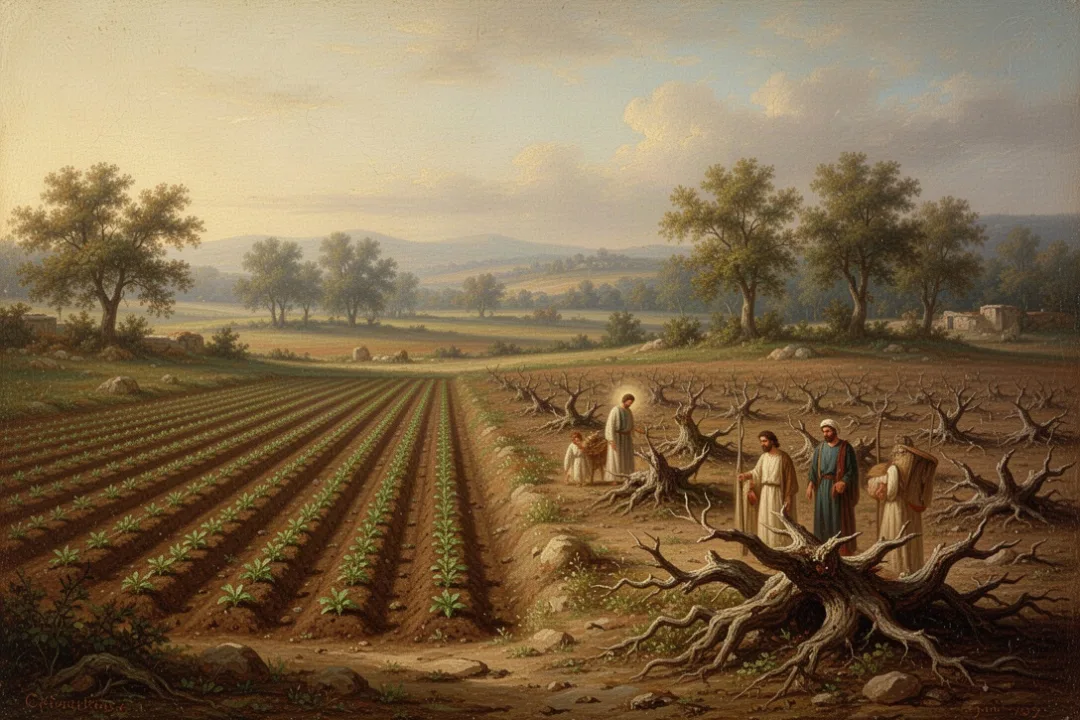
Planting and uprooting: Agricultural images describe beginning, cultivating, removing, and changing what has been established.
Destruction and healing: Some circumstances involve breaking down, while others call for repair and restoration.
Grief and joy: Weeping, laughing, mourning, and dancing represent the honest range of human emotion.
Separation and closeness: The passage recognizes times to embrace and times to refrain from embracing.
Gain and loss: People sometimes acquire, preserve, discard, search for, or surrender possessions and opportunities.
Silence and speech: Wise living requires both communicating and knowing when restraint is better.
Affection, hostility, conflict, and peace: The final contrasts address relationships and the difficult reality of social conflict.
These pairs are not all moral equivalents. The text does not suggest that cruelty is as good as compassion or that war is as desirable as peace. It observes that such realities occur in the world and that different circumstances demand different responses.
That distinction matters. A “time to kill,” for example, should not be used to defend personal violence or wrongdoing. Ecclesiastes describes the conditions of life in a fallen world; it does not erase the Bible’s broader teaching about justice, mercy, self-control, and the value of human life.
What “a time to every purpose” means in the KJV
The KJV wording uses “purpose” in the sense of an activity, matter, or undertaking. It does not necessarily mean that every human plan has divine approval. The idea is that there is an appropriate time for different kinds of action within the changing circumstances of life.
For example, planting and harvesting belong to different stages of agricultural work. Grieving and celebrating are both real responses, but they are not suitable in exactly the same setting. Speaking truth may be necessary in one situation, while listening quietly may be wiser in another.
The passage therefore offers more than a statement that “everything happens for a reason.” That popular phrase can become too simple. Ecclesiastes is more honest: some seasons are painful, confusing, or apparently unjust. The writer does not pretend that human beings understand all of God’s purposes.
The emphasis is on God’s perspective and human limitations. People live through events one at a time. God sees the whole of time, while people often understand only a small part of what is happening. That difference should produce humility rather than overconfidence.
What the passage teaches about joy and sorrow
Ecclesiastes 3:1-8 gives sorrow a legitimate place in life. There is a time to weep and a time to mourn. These statements reject the idea that faith requires you to appear cheerful at all times. Grief is not automatically a sign of weak faith, and sadness does not mean that hope has disappeared.
At the same time, the passage also makes room for laughter and dancing. Joy is not presented as shallow or spiritually suspect. Celebration can be a fitting response to restoration, friendship, provision, marriage, worship, or a long-awaited answer to difficulty.
The wisdom lies in responding honestly to the season you are actually in. Trying to force celebration during fresh grief can be insensitive. Refusing every form of joy because life has included pain can also keep you from receiving good gifts. Healthy faith makes room for both lament and gladness.
Ecclesiastes 3:1-8 reminds you that a changing season does not mean God has lost control.
This does not mean that every emotion should control every decision. Feelings provide important information, but wise choices also require prayer, counsel, moral judgment, and attention to facts. A season of anger, for instance, may be real without making every angry action acceptable.
How planting, building, and healing describe change
The early pairs use images of work and construction. Planting suggests beginning something with the expectation that it may grow. Uprooting suggests removal, relocation, or the end of something that once occupied a particular place. Building establishes, while breaking down removes what no longer stands or should no longer remain.
These images apply to many experiences:
Starting a new job may be a season of planting, while leaving an old position may be a season of uprooting.
Learning a skill, developing a friendship, or raising a child may require years of steady cultivation.
Ending a destructive habit or unhealthy relationship may involve painful but necessary removal.
Repairing trust after conflict may be a time of healing and rebuilding.
Moving to a new community may require releasing familiar routines before establishing new ones.
The passage does not say that every loss is automatically beneficial. Uprooting can be painful, and breaking down can feel frightening. Yet change can also clear space for something healthier. Wisdom asks what should be preserved, what should be repaired, and what should be released.
Healing deserves special attention. Healing may be physical, emotional, relational, or spiritual, and it often takes longer than people expect. A season of healing is not wasted time. It may involve rest, medical care, honest conversation, repentance, counseling, forgiveness, or gradual rebuilding of trust.
How the relationship pairs apply to ordinary decisions
Several lines concern closeness, distance, keeping, releasing, searching, and losing. Together, they recognize that relationships and possessions change. Not every connection is meant to remain exactly as it began, and not everything you lose should be pursued indefinitely.
There can be a time to embrace, meaning to offer welcome, affection, comfort, or solidarity. There can also be a time to refrain from embracing, perhaps because boundaries are needed or because another person needs space. Love does not always look like physical closeness or constant availability.
The passage also describes times to keep and cast away. This can refer to possessions, commitments, habits, or ideas. Keeping something may show loyalty and care; releasing it may show discernment. Holding on is not always faithful, and letting go is not always defeat.
Likewise, searching and losing belong to the realities of life. Sometimes you should make a serious effort to recover what matters. At other times, continued searching becomes an attempt to control what cannot be restored. Discernment helps you distinguish perseverance from unhealthy fixation.
Why silence and speech both have a proper time
Ecclesiastes includes a time to keep silence and a time to speak. This short contrast has practical significance in families, workplaces, churches, friendships, and public life. Words can clarify, encourage, correct, protect, or wound. Silence can create space for listening, but it can also conceal fear or permit injustice.
Speaking at the right time requires more than having an opinion. You may need accurate information, a responsible motive, and a willingness to accept the consequences of what you say. The best words are not always the fastest words. Sometimes a careful delay prevents a needless argument or allows you to understand the situation more fully.
Silence is also not automatically wise. If someone is being harmed, a trusted person may need to speak up. If you have caused damage, avoiding the conversation may protect your comfort rather than promote peace. The passage calls for timely wisdom, not permanent quietness.
Before speaking, ask whether your words are true, necessary, and suited to the moment. Before remaining silent, ask whether silence would be patient restraint or an irresponsible refusal to act. Prayer and counsel can help when the right response is unclear.
How to read “a time to kill” and “a time of war” responsibly
Readers often find the references to killing and war difficult. Ecclesiastes is describing a world in which death, violence, conflict, and political upheaval exist. It is not presenting a simple endorsement of them. The verse must be read alongside the Bible’s wider concern for justice, mercy, peace, protection of the vulnerable, and accountability for wrongdoing.
The wording does not give individuals permission to kill whenever they feel justified. Personal revenge, hatred, and uncontrolled aggression cannot be excused by citing this passage. Nor does the mention of war mean that every war is righteous or unavoidable.
Similarly, “a time to hate” should not be reduced to permission for personal contempt. In biblical language, hatred can refer to strong rejection of evil or opposition to what destroys people. That does not remove the call to love neighbors, show mercy, forgive where appropriate, and seek peace.
Reading safeguard: Treat the paired statements as observations about life’s realities and seasons, not as blanket moral permission for every action named in the passage.
What Ecclesiastes 3:1-8 does not mean
This passage is often misunderstood when it is separated from the rest of Ecclesiastes and from the wider biblical message. Its purpose is not to make people passive, careless, or fatalistic.
It does not mean that your choices are irrelevant. Ecclesiastes repeatedly addresses wisdom, work, responsibility, and the consequences of human behavior.
It does not mean that suffering should never be resisted. Seeking justice, safety, treatment, reconciliation, or protection can be appropriate.
It does not mean that every event is morally good. The passage includes painful realities without calling all of them righteous.
It does not mean you can predict God’s timetable. Recognizing seasons is different from claiming certainty about exactly when a season will change.
It does not mean that planning is pointless. You can make wise plans while remaining humble about what you cannot control.
It does not require emotional denial. Weeping and mourning have a legitimate place alongside laughter and celebration.
Fatalism says that your decisions do not matter because everything is fixed. Ecclesiastes presents a different picture. God remains sovereign, but people still work, choose, speak, love, grieve, build, and respond. The right response to God’s authority is not apathy; it is humble and responsible action.
Practical ways to apply the passage today
You can use Ecclesiastes 3:1-8 as a framework for reflection when circumstances change. The goal is not to label every event instantly or force a spiritual explanation onto pain. Instead, consider what this season requires from you.
Name the season honestly. Ask whether you are experiencing grief, transition, growth, conflict, rest, repair, or release.
Identify the responsibility of the moment. A season of healing may require rest and support, while a season of decision may require courage and action.
Separate what you can control from what you cannot. You may not control another person’s response, but you can control your honesty, boundaries, effort, and conduct.
Seek wise counsel. Trusted spiritual leaders, mature friends, family members, or qualified professionals can help you interpret circumstances more carefully.
Allow appropriate emotion. Do not rush grief, and do not reject joy when good things arrive.
Review the season without condemning yourself. Ask what you learned, what needs repair, and what you may need to release.
Remain open to change. A season that feels permanent may still develop in ways you cannot yet see.
These practices can help you respond rather than react. They also prevent a common misuse of the passage: assigning a grand explanation to another person’s suffering without listening to that person’s actual experience.
Common mistakes when interpreting Ecclesiastes 3:1-8
Several reading habits can obscure the message. Avoiding them makes the passage more useful and more faithful to its setting.
Using one pair as a slogan: A single line should be interpreted in connection with all the pairs and the larger book.
Confusing description with approval: The passage mentions war and killing without declaring every instance morally acceptable.
Promising quick change: “There is a season” does not tell you how long your current season will last.
Giving simplistic comfort: Telling a grieving person to accept the season may sound dismissive if it ignores pain and practical needs.
Ignoring action: Trust in God does not remove the need to seek help, establish boundaries, make amends, or pursue justice.
Assuming all change is punishment: Uprooting or loss can occur for many reasons and should not automatically be treated as divine condemnation.
Assuming every delay is failure: A quiet or restorative season may be doing work that is not immediately visible.
A careful reading leaves room for mystery. Ecclesiastes does not provide a formula that explains every event. It gives language for the tension between God’s ordering of time and the limited perspective of human beings.
How the passage connects with the rest of Ecclesiastes
Ecclesiastes 3:1-8 is part of a larger reflection on life “under the sun.” The writer examines work, pleasure, wealth, wisdom, injustice, aging, and death. Again and again, the book shows that human achievements cannot provide complete control or permanent security.
That context keeps the passage from becoming a sentimental message about life’s natural cycles. The writer is not merely saying that change is beautiful. He is confronting the limits of human understanding and the frustration people feel when events do not fit their plans.
Later in chapter 3, the writer reflects on God’s work across time and on humanity’s inability to grasp the whole of it. The point is not that life is meaningless in every sense. Rather, earthly life cannot be mastered through human effort alone. Reverence, humility, and gratitude are more reliable than the illusion of total control.
This perspective also explains why the passage can be comforting without being simplistic. It acknowledges death, loss, conflict, and grief, yet it does not reduce life to those things. The seasons change, and people are called to live faithfully within the season they have been given.
Questions to ask when your season changes
When you face a major transition, the following questions can turn the passage into a thoughtful practice rather than a phrase you repeat without reflection:
What has ended, and what is beginning?
What grief or joy needs to be acknowledged honestly?
Is this a time to speak, listen, wait, or seek help?
What should be repaired, and what should be released?
Are my current actions guided by wisdom or by fear?
Which responsibilities belong to me, and which do not?
What kind of support would help me live faithfully in this season?
How can I remain compassionate toward people whose seasons differ from mine?
These questions do not produce instant answers, but they encourage attention. They can also help you avoid comparing your life with someone else’s. One person may be building while another is recovering; one may be celebrating while another is mourning. The same outward event can affect people differently.
Ecclesiastes 3:1-8 KJV ultimately offers a realistic vision of human life. There will be beginnings and endings, gain and loss, speech and silence, grief and joy. You may not understand every season while you are living through it, but you can meet it with honesty, wise action, compassion, and trust in the God who is not limited by time.
Frequently asked questions
Is Ecclesiastes 3:1-8 saying that God causes everything that happens?
The passage affirms God’s authority over time and recognizes an order beyond human control, but it does not explain every event as a direct act of God. It describes both joyful and painful realities without calling all of them morally good. Other biblical teachings about human choices, evil, responsibility, and suffering should be considered when interpreting these verses.
What does “a time to every purpose under heaven” mean?
In the KJV, “purpose” refers broadly to an activity, matter, or undertaking. The phrase means that different actions and experiences have fitting times within earthly life. It does not mean every personal plan is approved by God or that people can accurately predict the exact timing of future events.
How should Christians apply these verses during grief?
The passage gives grief an honest place by recognizing times to weep and mourn. It does not require you to hide sadness or hurry through loss. You can acknowledge pain, seek support, pray, and receive appropriate care while remaining open to future moments of comfort and joy.
Does “a time to kill” justify violence?
No. That phrase describes the reality of death and conflict in the world; it is not a personal license for revenge or aggression. It must be read with broader biblical teachings about the value of life, justice, mercy, self-control, protection of others, and the pursuit of peace whenever possible.









Leave a Reply