Introduction: Why the Topic of False Prophets Matters in Scripture
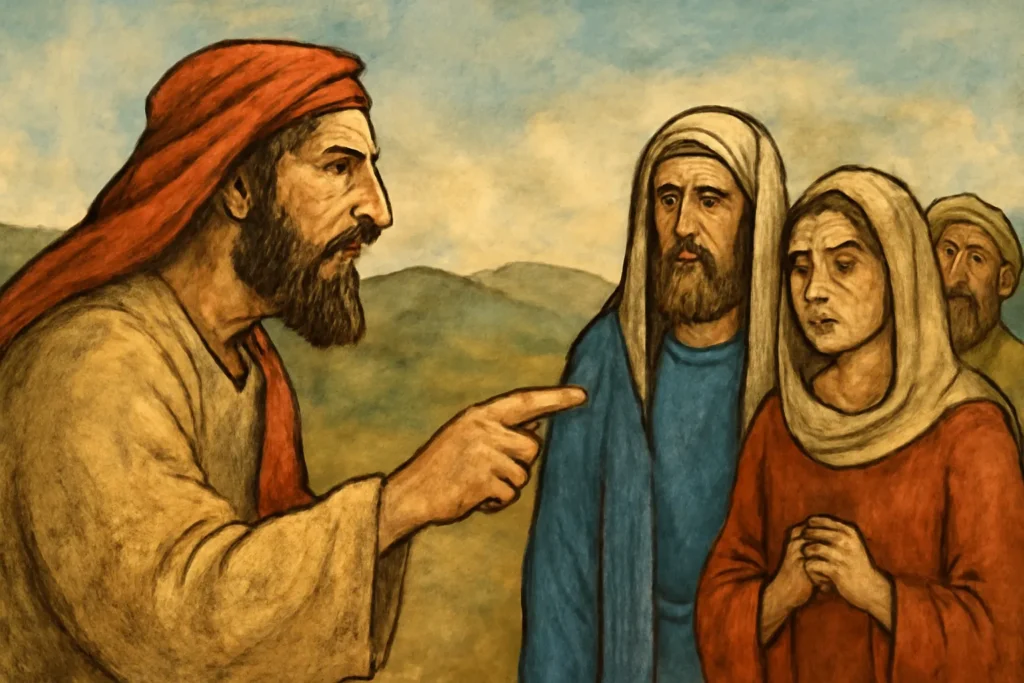
Throughout the Bible, the figures described as false prophets are not merely outdated historical curiosities. They represent a category of deception that can distort faith, mislead communities, and erode trust in God’s word. The phrase false prophets appears in multiple books and testifies to a universal human problem: the temptation to bend truth to fit personal gain, power, or a preferred narrative. This article surveys the biblical material on false prophets, clarifies how deception is identified in Scripture, and offers practical ways to exercise discernment in today’s spiritual landscape.
By examining the Bible’s own approach to prophets, messages, and fruits, readers can develop a robust framework for distinguishing genuine revelation from manipulation. The aim here is not to trigger fear, but to equip readers with careful habits—habits that respect the authority of Scripture while remaining attentive to the ways deception can creep into teaching, preaching, and prophecy.
What Does the Bible Mean by False Prophets?
The Bible uses several related terms—false prophet, prophet who speaks deceptive prophecy, lying spirits, and perverted visions—to describe those who claim revelation from God but deliver messages that contradict God’s character or his revealed will.
A key distinction in Scripture is between the person who is merely mistaken and the one who intentionally deceives. The false-prophet is often characterized by certain patterns: a message that diverges from biblical truth, a focus on personal gain or popularity, and a life whose conduct bears unfruitful outcomes. Recognizing these patterns helps believers avoid being carried away by rhetoric, charisma, or novelty.
Another important distinction is between a true prophet—someone who accurately communicates God’s will and whose life aligns with God’s standards—and a false prophet, whose signs, wonders, or predictions do not bear the expected alignment with God’s revealed character. The Bible’s standard for truth-telling is anchored in Scripture, tested against the teachings of Jesus, and validated by the moral and spiritual fruit produced by the ministry.
Old Testament Foundations: Illustrations of Deception
The Old Testament provides rich and concrete examples that show how false prophets operate and how their deceit is confronted by God’s people. These stories offer timeless lessons about discernment and obedience to God’s word.
One of the most frequently cited cases of a deceptive prophet is Balaam, a figure who appears to exercise prophetic authority but whose motives are compromised by material gain and a wavering allegiance. Balaam’s interactions with Balak demonstrate a troubling tension: he speaks blessings when God intends a blessing, yet his heart is drawn toward lucrative outcomes and personal reputation. The biblical narrative shows that even when a prophet’s words seem favorable, the underlying allegiance matters.
The pattern to notice here is prophetic messaging without inner transformation. When a supposed messenger of God is driven by self-interest, the risk is that the audience will hear an outwardly impressive message while the ethical and spiritual core remains untested. In studying Balaam, readers learn to weigh not only the content of a prophecy but also the motives, loyalties, and life patterns of the speaker.
Prophets of Baal and Other Counterfeit Voices
The Mount Carmel episode (1 Kings 18) presents a dramatic contrast between the true God and the counterfeit “voice” of those who promote a rival agenda. The confrontation with the prophets of Baal exposes a ritualized, performative form of deception—spectacular displays that lack alignment with the God who is ultimately worshiped and obeyed. This narrative underscores a central criterion for identifying false prophets: true spiritual authority is confirmed by obedience, consistency with God’s revealed will, and the absence of coercive or manipulative tactics.
In another sense, the biblical depiction of counterfeit voices emphasizes the danger of sensationalism and crowd-pleasing rhetoric. The deceptive voice often appeals to emotion or curiosity rather than calling people to repentance and trust in God’s word. The lesson is not simply to reject sensational claims, but to demand a coherent, scripturally grounded account of God’s character and purposes.
New Testament Warnings: Jesus, Apostles, and the Community of Faith
The New Testament continues the theme with direct warnings and practical guidance for recognizing false prophets in a new era of Christian life. Jesus, the apostles, and later church leaders provide a robust template for discernment that remains relevant for readers today.
Jesus’ Warnings About Deceptive Teachers
Jesus offers pointed cautions about those who would mislead the flock. He speaks of dangerous influences that come under the guise of spiritual authority, urging vigilance among believers. The Sermon on the Mount and various teaching passages underscore the need to test every message against the authority of Scripture and the reality of transformed character. The phrase watch out for false apostles captures the sense that deception can be subtle, wearing the cloak of religiosity while carrying a different internal motive.
The Bible’s instruction to test the spirits (1 John 4:1) is a practical, ongoing method for discernment. Believers are invited to evaluate prophetic claims not by charisma or novelty alone but by their conformity to biblical doctrine, the consistency of the message with Christ, and the ethical fruit of the ministry. The apostolic letters emphasize that sound doctrine and holy lives go hand in hand.
Prophetic Warnings in Revelation and the End Times
In prophetic literature, especially in Revelation, the presence of counterfeit voices is described with imagery and exhortation. The community is urged to remain faithful, to resist the lure of seductive predictions that promise safety or sovereignty apart from God’s plan, and to hold fast to the testimony of Jesus. The broader point is that end-time discernment requires a solid grounding in Scripture, a humble posture before God, and accountability within the faith community.
Criteria for Identifying False Prophecy: Core Indicators
When evaluating false prophets in Scripture or in contemporary contexts, several criteria recur. Although no single sign is definitive on its own, a combination of indicators creates a reliable framework for discernment.
Scriptural alignment: Does the message accord with the essential teachings of Scripture? Any prophecy that contradicts the core gospel or the nature of God as revealed in Scripture should be treated with caution.
Fruit and character: What is the moral and spiritual fruit of the ministry? Prolonged patterns of pride, exploitation, or harm signal a red flag, whereas humility, repentance, and love bear witness to genuine calling.
Call to repentance and obedience: Does the speaker invite people toward repentance, trust in Christ, and obedience to God’s commandments, or do they promote self-serving agendas?
Testimony of the community: Is the teaching confirmed by the broader community of faith? Do credible teachers and churches affirm or challenge the message?
Consistency over time: Does the teaching endure under scrutiny, or does it shift with popularity or trends? Consistent, faithful instruction tends to outlast novelty.
Transparency and accountability: Is the speaker willing to be examined, corrected, and held to ethical standards, or do they avoid accountability?
Non-coercive method: Genuine revelation does not manipulate fear, shame, or coercive tactics to secure obedience. Any approach that employs fear appeals or name-calling should be scrutinized.
How to Test Prophetic Claims: A Practical, Grounded Approach
For readers who want to apply biblical discernment in daily life, a structured approach can help distinguish orthodoxy from deception without resorting to suspicion or cynicism.
Compare with Scripture: Begin by comparing the claim to a wide range of biblical texts. Is the claim consistent with the overarching message of the Bible, including the person and work of Jesus Christ?
Examine the source: Consider the source’s history, reputation, and lived faith. Are there documented patterns of integrity or repeated red flags?
Evaluate the message’s fruit: Analyze the outcomes of the ministry or teaching. Do people mature in faith, love, and righteousness? Or do they become agitated, divided, or dependent on the speaker?
Seek corroboration: Look for confirmation from trusted spiritual leaders, mentors, and a diverse range of believers who test the claim against scripture.
Assess motives: Prayerfully consider whether the motive seems to honor God and serve others, or whether it appears driven by power, control, or self-promotion.
Watch for problematic patterns: Repeated signs—focusing on money, fame, sensational signs, or the sidestepping of accountability—should prompt caution rather than credulity.
Practical Exercises: Discernment in a Modern Context
Readers can engage in concrete practices to grow in discernment while staying anchored in Scripture. The following activities are designed to be accessible for individuals, families, and congregations alike.
Study groups: Host a regular study focused on biblical prophecies, testing techniques, and examples of deception. Use risk-free exercises, such as evaluating hypothetical messages against a set of scriptural criteria.
Scripture memorization: Commit key verses to memory—especially those about truth, discernment, and testing the spirits—so that judgment is informed by the Word rather than by mood or charisma alone.
Accountability structures: Establish a trusted circle of peers or mentors who can evaluate prophecies and claims in a respectful, constructive manner.
Lifelong humility: Cultivate a posture of humility, recognizing that believers can be deceived and that discernment is a community discipline, not a solitary achievement.
Cautions: Common Misconceptions About False Prophets
It is easy to mislabel someone as a false prophet without careful consideration. Several common misconceptions can cloud judgment.
Every unusual claim is deceit: Not every new or startling message is false. God can reveal new facets of truth without violating the integrity of Scripture.
Charisma equals truth: A powerful speaker with moving rhetoric is not automatically trustworthy. The reliability of a message rests on its alignment with God’s Word and fruit of the Spirit.
Silencing disagreement: The goal of discernment is not to silence critique but to welcome rigorous testing within a safe, respectful community.
One-off mistakes: A single misstep does not automatically condemn a ministry, but repeated, unrepentant patterns should raise concern.
Dealing with Modern Deception: How to Apply These Principles
In today’s spiritual landscape, the temptation to follow false prophets can be amplified by social media, sensational headlines, and charismatic personalities. The biblical framework offers practical steps to guard the flock while preserving a spirit of grace and truth.
Discernment should be practiced with charity—treating others with respect while holding fast to truth. Courage is required to challenge ideas, especially when they come from trusted sources. The combination of truth-telling and gentleness helps keep conversations productive rather than adversarial.
Community Accountability
The Bible consistently elevates the role of the community in discerning truth. A healthy church or ministry environment fosters mutual accountability, open evaluation, and shared responsibility for protecting the flock from deception. This communal approach is essential in resisting the lure of solitary prophets who operate outside the bounds of accountability.
Scripture as the Anchor
Ultimately, the standard by which all voices are weighed remains the Scriptures. A robust theology of discernment treats the Bible as the final authority, the lens through which all prophetic claims are examined, and the measure by which all spiritual experiences are interpreted.
Frequently Cited Bible Passages About False Prophets
Readers may wish to consult specific verses that illustrate the biblical approach to deception and discernment. The following references are commonly cited in discussions about false prophets and related topics.
Matthew 7:15– A warning to beware of false prophets who come in sheep’s clothing but are inwardly ravenous wolves.
1 John 4:1– Believers are told to test the spirits to see whether they are from God, because many false prophets have gone out into the world.
2 Peter 2– A rigorous critique of false teachers and their destructive influence.
Deuteronomy 13 and 18– Old Testament guidelines for testing prophetic claims and distinguishing genuine prophecy from a misleading sign or dream.
Jeremiah 23– A strong rebuke of deceptive prophets who speak from their own imagination rather than God’s word.
1 Thessalonians 5:20-21– A call to test everything and hold fast to what is good.
Conclusion: Living with Discernment and Faithfulness
The Bible’s treatment of false prophets is not a blueprint for paranoia but a guide for faithful living in a world full of competing voices. By grounding discernment in Scripture, evaluating the fruits of ministry, and insisting on accountability within the faith community, readers can protect themselves from deception while remaining open to the genuine work of God in their lives.
In closing, the broader message of Scripture on this topic can be summarized with a few practical convictions: truth matters, grace matters, and community matters. When these commitments are kept in balance, believers are equipped to identify false prophets, avoid deception, and remain steadfast in the faith—always oriented toward Christ, and always guided by the Word.







Leave a Reply