Family Bible: How to Choose, Read, and Preserve It
Family Bible: How to Choose, Read, and Preserve It
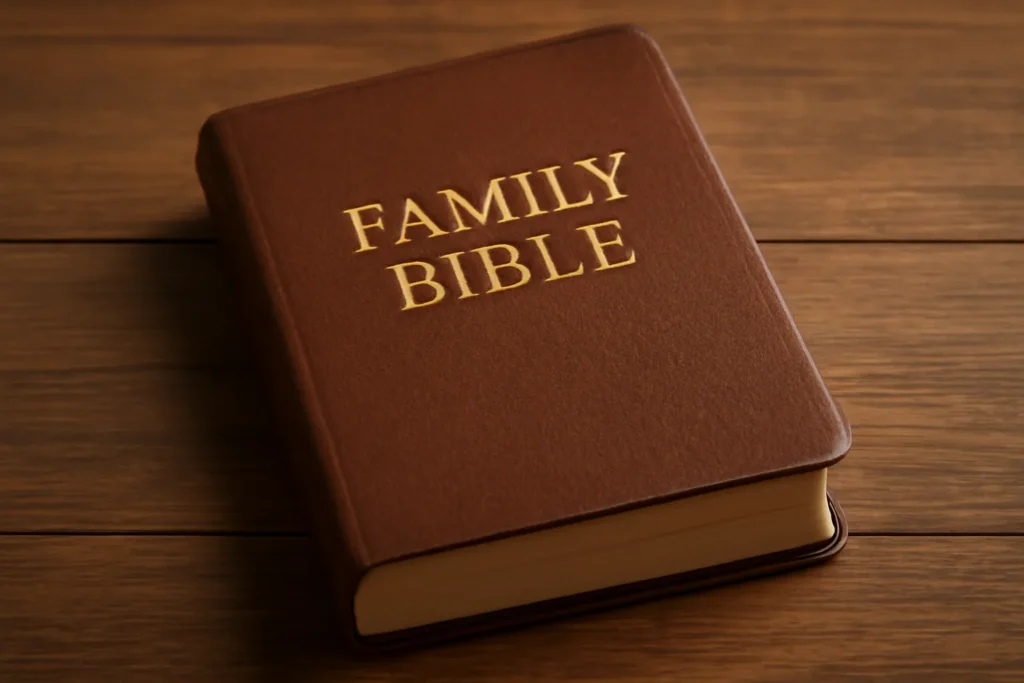
A family Bible is more than a book. It is a vessel for faith, memory, and shared identity that can travel from generation to generation. When cared for, it becomes a gateway to daily prayer, meaningful conversations, and a living record of a family’s spiritual journey. Whether you are starting a new tradition or caring for a cherished heirloom, understanding how to choose, read, and preserve a Bible that serves a household is a practical and meaningful undertaking. In this article, we explore practical guidance for selecting the right copy, using it in daily life, and safeguarding its pages for the future.
For many families, the family Bible is more than a devotional tool. It is a tangible link to ancestors, a guide for childhood learning, and a repository of milestones—baptisms, confirmations, marriages, and migrations. The household Bible can become a shared ritual: a weekly or daily reading, a time for questions, a space for gratitude, and a quiet moment of prayer that gathers everyone in the same room. When treated as a family project rather than a solitary possession, the scriptural book invites conversation, fosters literacy, and reinforces values such as stewardship, gratitude, compassion, and resilience.
Beyond spiritual nourishment, a well-used family scripture or ancestral Bible can serve as a practical resource for documenting family history. The margins and blank pages often become a living archive—dates of birth, marriage, milestones in the family story, and even notes about family members’ favorite verses. The act of reading together can also help children build familiarity with the language of scripture, develop critical thinking, and cultivate a habit of study that can last a lifetime. For this reason, choosing a copy that fits your family’s needs—with attention to readability, durability, and capacity for recording—can be one of the best investments you make as a family.
Choosing the Right Family Bible
The process of selecting a family Bible (or its variant forms, such as a home Bible or a domestic Bible) should balance personal preference with practical considerations. Here are the most important factors to consider.
Types of Family Bibles
Family record Bible: A Bible with dedicated pages or sections for recording genealogical information, life events, and family milestones. These are excellent for building a family archive in real time.
Study Bible: A Bible that includes helpful notes, maps, timelines, and cross-references. This type supports guided reading, topical study, and a richer understanding of context.
Devotional Bible: Emphasizes daily devotionals, reflections, and practical applications. It can be well suited for families seeking a routine of bedside or breakfast-table reading.
Pocket or personal-size Bible: Compact and portable. Useful for individuals who carry a copy for personal study or travel, though it may have fewer space for family records.
Large-family or ceremonial edition: Some families choose oversized editions with wide margins and durable bindings for long-term use and display during gatherings.
In addition to these categories, you will hear references to a household Bible or a home Bible. While these terms are often used interchangeably, your choice may hinge on whether you want a record-keeping feature, the nature of your study, or the design and durability of the binding. A domestic Bible can also denote a family-focused edition that prioritizes accessibility and readability for all ages in the home.
Key Features to Look For
Quality binding and durable paper: A sturdy binding (preferably sewn rather than glued) and thick, acid-free paper help preserve the book over decades.
Readable type: Large print or a comfortable font size reduces eye strain for readers young and old. Consider line spacing and margins.
Reading aids: Cross-references, footnotes, concordance, maps, and introductions to each book can enrich family study sessions.
Record pages or blank space for family entries: Dates, names, and short notes about life events can turn the Bible into a personal chronicle.
Durable materials: A protective dust jacket (when appropriate) and a lasting cover (leather, imitation leather, or cloth) help protect the book in daily use and during travel.
Typography and layout: Clear chapter headings, a readable layout, and generous margins foster ease of reading aloud in family settings.
Supplemental materials: Some editions include devotionals, articles on family life, or introductions to each book that can guide discussion.
Translations and Language Considerations
Choosing a translation is a personal decision shaped by familiarity, reading level, and doctrinal comfort. Each translation choice has trade-offs between fidelity to the original languages, readability, and interpretive notes. Common options include:
Word-for-word translations (e.g., English Standard Version, New American Standard Bible): Good for close study and a literal sense of the text.
Thought-for-thought translations (e.g., New International Version, New Living Translation): Often easier for family reading and devotionals, especially for younger readers.
Formal-equivalence with readable language (e.g., New Revised Standard Version): Balances accuracy and readability with scholarly notes in many editions.
Paraphrase or devotional renderings (e.g., The Message): Useful for memory and storytelling, though not ideal for precise study.
When choosing, consider the age range of readers in your home, whether you value historical language or contemporary phrasing, and whether you want accompanying study notes. If you have a long family heritage, you might even own multiple versions of the Bible and use them in rotation to highlight differences in translation and emphasis.
Durability, Size, and Price
Size and price are practical realities. A smaller home Bible can be convenient for travel or bedside use, but may lack space for notes. A larger edition with margins and record pages can become an important family artifact, but may be heavier to handle and store. Consider these questions:
Will you primarily read aloud as a family, or will individuals read independently and share insights? If the latter, a readable, mid-size edition may work best.
Do you want space for annotations, family records, and parental guidance notes in the margins?
Will the edition be used by multiple generations? If yes, durability and long-term legibility are essential factors.
Are you buying new, secondhand, or heirloom? If it is a secondhand copy, check for clean pages, legible text, and any signs of moisture or damage.
Getting Started: Reading, Studying, and Family Engagement
Once you have chosen a family Bible or alternative variant, the next step is to create a family reading rhythm that feels natural and respectful. The goal is to transform the Bible from a shelf ornament into a living participant in family life.
Setting Up a Reading Space
Create a calm, well-lit area where family members can gather safely and comfortably. A circular seating arrangement can facilitate conversation and ensure everyone can see the text clearly.
Keep a soft, clean surface for the book, plus a few writing tools for notes or record entries.
Establish consistent times—whether mornings, evenings, or after meals—so reading becomes a reliable habit rather than an occasional event.
Involving Children and Different Ages
Assign age-appropriate roles: younger children can listen and point to passages, older children can read aloud or summarize verses in their own words, and teenagers can lead short discussions.
Use creative activities aligned with the text: drawing a scene, writing a brief reflection, or memorizing a verse together can deepen engagement.
Respect each learner’s pace and encourage questions. A family Bible is an invitation to curiosity, not a test of memory.
Notetaking, Journaling, and Margins
Margins in a dedicated family Bible can become a treasure trove of family memory. Consider:
Different families will approach their Bible-reading differently depending on spiritual tradition, age, and goals. Here are a few strategies to consider.
Personal Devotion vs Family Devotions
Personal devotion: individuals can select a passage that speaks to them, write a brief reflection, and keep a personal journal. This protects personal privacy and fosters a sense of spiritual autonomy.
Family devotions: a shared portion of Scripture is read aloud, followed by discussion, prayers, and a closing blessing. This strengthens family bonds and provides a predictable routine.
Narrative Reading vs Topical Study
Narrative reading (reading in order) helps readers understand the overall storyline, characters, and progression of biblical events.
Topical study focuses on themes (grace, faith, justice, forgiveness) and may involve cross-references, concordances, and related passages across different books.
Using Cross-References, Maps, and Helps
Many editions include tools that make exploration easier:
Cross-references link related passages, enabling a broader understanding of themes and events.
Maps and timelines provide geographical and historical context, which enhances comprehension—especially when discussing the journeys of the Israelites, the spread of early Christianity, or Paul’s missionary routes.
Introduction notes to each book set the stage for what readers should know about authorship, audience, and historical background.
A family Bible can become a living archive when you intentionally document family history within its pages. This practice preserves more than verses; it preserves memory.
What to Record
Birth and baptism dates for family members, with place and names of witnesses or church affiliations when available.
Marriages, confirmations, and ordinations with dates and locations, as well as hymns or favorite verses associated with those events.
Migration and settlement notes: places of residence, occupations, and meaningful community ties.
Mileposts in faith: moments of spiritual renewal, prayer requests, answered prayers, and significant sermons or teachings that shaped family life.
Favorite verses and prayers with the names of family members who recommended them.
Suggested Layouts for Family Record Pages
Illuminated margins: create decorative margins for different generations, marking milestones with dates and short notes.
Dedicated record pages: reserve a few blank pages at the back or between sections to journal milestones, add family trees, or paste small keepsakes (photos, ticket stubs, pressed flowers).
Family tree inserts: mount or glue a simple family tree into the Bible, with annotations about where certain verses became meaningful for each generation.
Space Preservation and Avoiding Damage
Handle the Bible with clean hands and avoid leaving moisture or food residue on the pages.
Store the Bible flat or upright on a shelf with stable humidity and away from direct sunlight to prevent fading and warping.
Avoid excessive handling of delicate pages. Use tissue or a soft cloth to support fragile leaves when turning.
Care and Preservation of a Physical Bible
Preserving a family Bible requires careful handling, appropriate storage, and periodic maintenance. This ensures the book remains readable and intact for future generations.
Handling, Cleaning, and Daily Care
Wash hands before handling to prevent oils and dirt from transferring to pages.
Use a clean, dry cloth to wipe the cover; avoid cleaning agents that could degrade the binding or finish.
Open the book gently and support the spine while turning pages to prevent cracking.
Storage Environment
Maintain a stable temperature and humidity. Ideal conditions are around 60-70°F (15-21°C) with relative humidity near 40-50% for long-term preservation.
Avoid basements and attics where temperature and humidity fluctuate dramatically and where pests may be present.
Store upright on a shelf with similar-sized volumes to prevent warping. If space is tight, place in a protective box or archival sleeve.
Repairs and Professional Care
If the family Bible has suffered damage such as loose pages, broken spine, or staining, consider seeking a professional conservator who specializes in book restoration. Small repairs, such as reattaching a loose page or reinforcing a brittle spine, can prevent further harm without diminishing the book’s value. When considering repairs, balance the cost with the sentimental and historical value of the copy. In many cases, preserving the text and your ability to use it matters more than restoring every cosmetic imperfection.
In the digital age, creating copies of the household Bible or family scripture can offer practical backups and broaden access for family members who live far away. Consider:
Scanning high-resolution images of each page (front and back) to preserve text and marginal notes.
Organizing digital files with a consistent naming convention (Book, Chapter, Verse, Page, Date, Family Member’s Name).
Storing backups in multiple formats (PDFs for readability, high-resolution TIFFs for archival quality) and in at least two locations (local and cloud storage).
Creating a simple digital index of verses most often read, family records, and selected notes to facilitate quick lookup for future generations.
Beyond practical steps, caring for a family Bible carries ethical and spiritual responsibilities. The way a household uses the text can reflect broader beliefs about interpretation, inclusion, and tradition.
Respect for Text, Context, and Community
Acknowledge that the Bible was written in historical contexts different from our own. When discussing passages, separate timeless principles from culturally specific practices to avoid misinterpretation.
Encourage questions and exploration. A family Bible should invite dialogue, not dogmatic certainty. When questions arise, approach them with curiosity and a commitment to learning together.
Honor diverse perspectives within the family. Different generations may emphasize different aspects of faith. Create space for varied insights while maintaining shared reverence for the text.
Practical Tips for Long-Term Use
To keep your family Bible viable across decades, incorporate these practical habits into your routine:
Set a predictable cadence for reading and reflection (e.g., three times a week). Consistency matters more than length.
Rotate responsibilities: assign different family members to lead the reading or discussion. This fosters ownership and engagement.
Keep a dedicated “record” page or notebook alongside the Bible for extended notes, prayers, and life event entries that are not restricted to the margins.
Review and update the family record periodically (e.g., annually) to add new entries and reflect on how certain passages have shaped the family’s journey.
Preserve the emotional tone of the household by creating safe, respectful spaces for discussion, even when opinions differ.
Frequently Asked Questions
Can we start a family Bible project even if some members are not religious? Yes. A family Bible can be a cultural and historical artifact as well as a spiritual text. You can focus on storytelling, family history, art, and the moral lessons that resonate across beliefs.
What if the pages are tattered or the ink is fading? Prioritize readability. If the text becomes unreadable, consider digitizing the pages and keeping the physical copy for memory while using a replacement copy for daily use.
How can we include extended family members who aren’t living nearby? Create a shared digital space—photos of pages, scanned verses, and notes. Schedule virtual family reading sessions or printouts for those who prefer paper copies.
Is it okay to customize a family Bible with notes and records? It is perfectly acceptable and often encouraged, especially in a family-friendly edition designed for annotations. Just be mindful not to obscure the sacred text with excessive markings.
Should we preserve multiple copies of the Bible? If possible, yes. A primary household Bible for daily use and a secondary copy as a backup or heirloom can protect against loss while facilitating sharing with future generations.
Conclusion: A Living Family Tradition
In the end, the goal of selecting, reading, and preserving a family Bible or its variants—whether called a household Bible, a home Bible, or an ancestral Bible—is to nurture a living tradition rather than maintain a static artifact. The right copy should invite the family to gather, read, reflect, and record. It should accommodate readers of all ages and backgrounds, offer sturdy protection for decades, and provide space to capture the unique story of your family’s faith journey. By choosing thoughtfully, reading with intention, and preserving with care, you can ensure that your sacred book remains an active participant in the family’s life—today, tomorrow, and for generations to come.
Whether you are starting a new tradition or stewarding a cherished heirloom, embrace the journey as a collaborative practice. A thoughtful family Bible can become a daily friend, a shared teacher, and a cherished heirloom—a legend of faith, instruction, and memory that endures beyond any single generation.








Leave a Reply