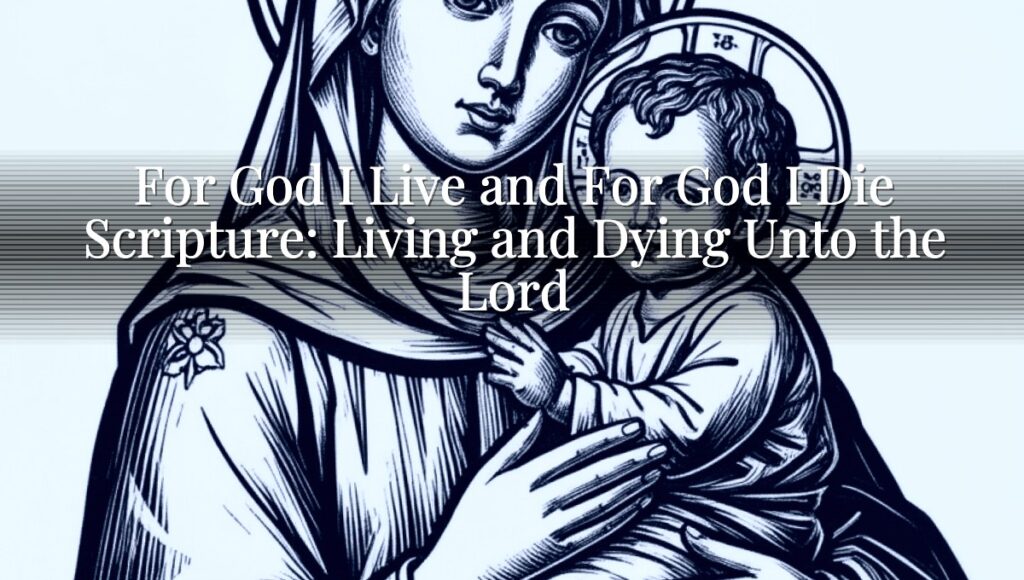
For God I Live and For God I Die Scripture: Living and Dying Unto the Lord
Quick Answer: The for god i live and for god i die scripture calls believers to live wholly for the Lord and to view death as belonging to Him. Romans 14:8 teaches that whether you live or die, you are the Lord’s. The Psalms and John 12:24 add comfort and purpose: His lovingkindness is better than life, and death can be a seed that brings forth fruit.
Christians often learn to speak bravely about faith, but daily life tests those words—deadlines, illness, fear, grief, and uncertainty. Yet the message of the for god i live and for god i die scripture is not just for the end of life; it is for every ordinary moment. Romans 14:8 reminds us that our identity belongs to the Lord in both directions: when we live and when we die. The Psalms deepen this hope by showing why the heart can praise—the Lord’s lovingkindness is better than life, and the death of His saints is precious. And Jesus teaches that even death can be purposeful, like a seed that falls and brings forth fruit. Together, these truths steady the soul and reshape how we face pain, perseverance, and tomorrow.
At a Glance — Verses in This Article
Romans 14:8
Psalms 116:15
Psalms 63:3
John 12:24
Bible Verses
Romans 14:8 (King James Version)
“For whether we live, we live unto the Lord; and whether we die, we die unto the Lord: whether we live therefore, or die, we are the Lord’s.”
This verse anchors the whole theme by teaching that whether we live or die, we belong to the Lord.
Psalms 116:15 (King James Version)
“Precious in the sight of the LORD is the death of his saints.”
It comforts grieving hearts by declaring that the Lord considers the death of His saints precious.
“Because thy lovingkindness is better than life, my lips shall praise thee.”
It strengthens worship by affirming that God’s lovingkindness is better than life, giving courage to endure.
John 12:24 (King James Version)
“Verily, verily, I say unto you, Except a corn of wheat fall into the ground and die, it abideth alone: but if it die, it bringeth forth much fruit.”
Jesus compares death to a seed that must die to produce fruit, showing how sacrifice can bring God-honoring results.
1) When life is uncertain, belong to the Lord either way
One of the hardest parts of faith is realizing that control is limited. We plan, we work, we pray—but we cannot guarantee length of days. In those moments, Romans 14:8 provides a firm foundation. The verse doesn’t deny that life includes real experiences; instead, it reframes them around the Lord’s ownership. Whether we live, we live unto the Lord; and whether we die, we die unto the Lord—that is both identity and direction.
Belonging to the Lord changes how we interpret ordinary decisions. If our life is “unto the Lord,” then our time is not just measured by productivity, popularity, or comfort. It is measured by faithfulness. You can work with integrity. You can spend money wisely. You can love others steadily. And when you feel vulnerable, you can still trust the One who holds your days.
Belonging to the Lord also changes how we interpret the end of life. Death is no longer the final enemy that steals meaning; it becomes the moment a saint “dies unto the Lord.” That does not make grief shallow, but it does make grief honest and hope-filled. The same God who receives our living receives our dying.
So if fear rises—because of illness reports, aging parents, or your own fragile body—return to the simple truth: the Lord is not waiting to abandon you. He has already claimed you. Your life is not directionless; it is “unto the Lord,” even when the road gets steep.
2) The Lord values His saints’ deaths—so hope can breathe
Grief can be heavy because it makes us feel alone. Yet Psalms 116:15 addresses the heart’s loneliness with a divine perspective: Precious in the sight of the LORD is the death of his saints. This is not poetic exaggeration; it is a theological comfort. The Lord sees beyond the moment and honors what belongs to Him.
When you lose someone you love, the questions can multiply. Why did it happen? Why now? Will we ever be whole again? The Psalm does not answer every “why,” but it anchors the “who.” Your loved one did not vanish into emptiness. In the Lord’s sight, their death is precious—meaning it is noticed, valued, and held in reverence.
This truth helps believers avoid two extremes. On one extreme, we might try to silence grief as if sadness is a lack of faith. On the other extreme, we might let grief grow into despair, believing the Lord is indifferent. Psalms 116:15 pulls us back to balanced hope: grief is real, but God is present and God is good.
For those facing death themselves, this verse can steady trembling courage. You are not merely “dying”; you are dying in the sight of the LORD. Hope isn’t pretending; it’s trusting that God’s valuation is deeper than human loss.
3) Love that is better than life turns fear into praise
Sometimes the battle is not whether we know the doctrine—we do—but whether we can feel it when the night stretches long. Psalms 63:3 speaks directly to that struggle: Because thy lovingkindness is better than life, my lips shall praise thee. The Psalmist does not say that life is painless. He says the Lord’s lovingkindness outclasses life itself.
This is crucial for living out “unto the Lord” when emotions disagree with theology. If God’s lovingkindness is better than life, then we can praise even when life feels limited. Praise becomes less about circumstances and more about character.
Practically, lovingkindness means God’s steadfast, tender goodness. It means He doesn’t simply tolerate you; He treats you with mercy that renews. When suffering threatens to reduce your faith to survival mode, remember this: the Lord’s lovingkindness is not a bonus you only receive on good days. It is the better reality that calls forth worship.
That is how praise becomes a weapon against fear. It reminds your soul that God is not diminished by your weakness. And it keeps your perspective from shrinking.
If you are wondering how to “live for God” on days when you feel small, begin here: choose praise grounded in God’s lovingkindness. Your lips may need training, but your God is already faithful and better than life.
4) Death can bear fruit—sacrifice is not wasted
Jesus’ words in John 12:24 confront one of the deepest human instincts: to treat death as pure loss. In His teaching, death is not the end of meaning; it can be the beginning of fruitfulness. He said, Except a corn of wheat fall into the ground and die, it abideth alone: but if it die, it bringeth forth much fruit.
This imagery speaks to both the personal and the communal dimensions of faith. Individually, believers often wonder whether their prayers, endurance, and quiet obedience “matter.” Jesus’ seed principle says that life poured out for God is not wasted, even if it looks small or hidden. Sometimes what appears to “abide alone” is actually blocked from producing fruit until it passes through death-like surrender.
Communally, the church understands this through generations of faithfulness: some have endured persecution, others have served faithfully at the cost of convenience, and many have sacrificed comfort to bless others. Their “dying” moments may not always be literal, but they are real—giving up self, forgiving, bearing hardship, and staying faithful.
And for those facing literal death, the same principle points to God’s purpose. Our loss does not cancel God’s work. In Christ, death does not sever meaning; it can become a seed that God uses.
So when you cling to the truth of Romans 14:8, and you trust the comfort of Psalms 116:15 and the worship fuel of Psalms 63:3, you can also stand with Jesus’ seed lesson. Surrender to God is never the end of the story—it can be the path to fruit.
Daily ways to live “unto the Lord” and face death with hope
Living “unto the Lord” is not only for rare moments; it is shaped by small, consistent choices. Start by practicing the Romans 14:8 mindset: when decisions come, ask, “Is this living unto the Lord?” For example, choose integrity in private, offer kindness when you could be silent, and set boundaries that protect your spiritual life. When fear tries to dominate your thoughts, speak Romans 14:8 back to yourself as identity.
Second, anchor your heart in worship by returning to Psalms 63:3. When you feel discouraged, name God’s lovingkindness as “better than life.” That could mean thanking Him specifically for one mercy you can recognize today. If you struggle to feel praise, begin with a prayer of obedience: “Lord, teach my lips to praise.”
Third, prepare gently for grief and uncertainty by letting Psalms 116:15 shape your perspective. If someone you love is suffering or you are walking through loss, don’t deny pain—bring it to the Lord. And remember: the Lord values their death in His sight. This helps you grieve without falling into hopelessness.
Fourth, practice surrender using Jesus’ seed lesson from John 12:24. Ask, “Where is God asking me to die to self so fruit can grow?” That may mean forgiving someone you want to punish, serving when you won’t be recognized, or continuing to pray even when results look delayed. When you surrender, God can grow fruit.
Frequently Asked Questions
What does the scripture about living and dying unto the Lord mean for everyday believers?
It means your whole life belongs to God, not only your church hours. You can make choices as an “unto the Lord” person—working, loving, and suffering with accountability to Him. When death comes, the same Lord who receives your life receives your death, so hope remains.
How can I face fear of death using the live for God and die for God scripture theme?
Start with Romans 14:8 to remember your identity: you are the Lord’s in life and in death. Then bring comfort from Psalms 116:15, knowing God values the death of His saints. Finally, keep worship active through Psalms 63:3—His lovingkindness is better than life.
Where does the idea that death can bring fruit come from in Scripture?
Jesus teaches it directly in John 12:24 through the seed imagery. A corn of wheat must die to bring forth much fruit. For believers, this points to God’s purpose in sacrifice and surrender—what looks like loss can become meaningful fruit under His hand.
How should believers grieve while still holding to biblical hope about death belonging to God?
Grief is real, but it is not hopeless. Psalms 116:15 assures you that the Lord sees the death of His saints as precious. Keep your sorrow honest before God, while refusing despair—because God remains faithful, and your loved one is held in His sight.
A Short Prayer
Lord, teach us to live as people who belong to You—whether the days are long or the end is near. Strengthen our hearts with the truth that we die unto the Lord and that our hope is not fragile. When grief comes, comfort us with Your precious care. When fear rises, let Your lovingkindness be better than life in our minds and on our lips. Use our surrender to bring forth fruit for Your glory. In Jesus’ name, amen.
Key Takeaway: Because we belong to the Lord in life and death, we can worship through fear and trust that God uses surrender to produce fruit.