God and miracles today: faith, discernment, and hope
God and miracles today: faith, discernment, and hope
Yes, many Christians believe God still performs miracles today, including answers to prayer, unexpected healing, protection, provision, and other events that seem to exceed ordinary explanation. Christianity does not teach that every unusual event is a miracle, however, so faith and careful discernment belong together.
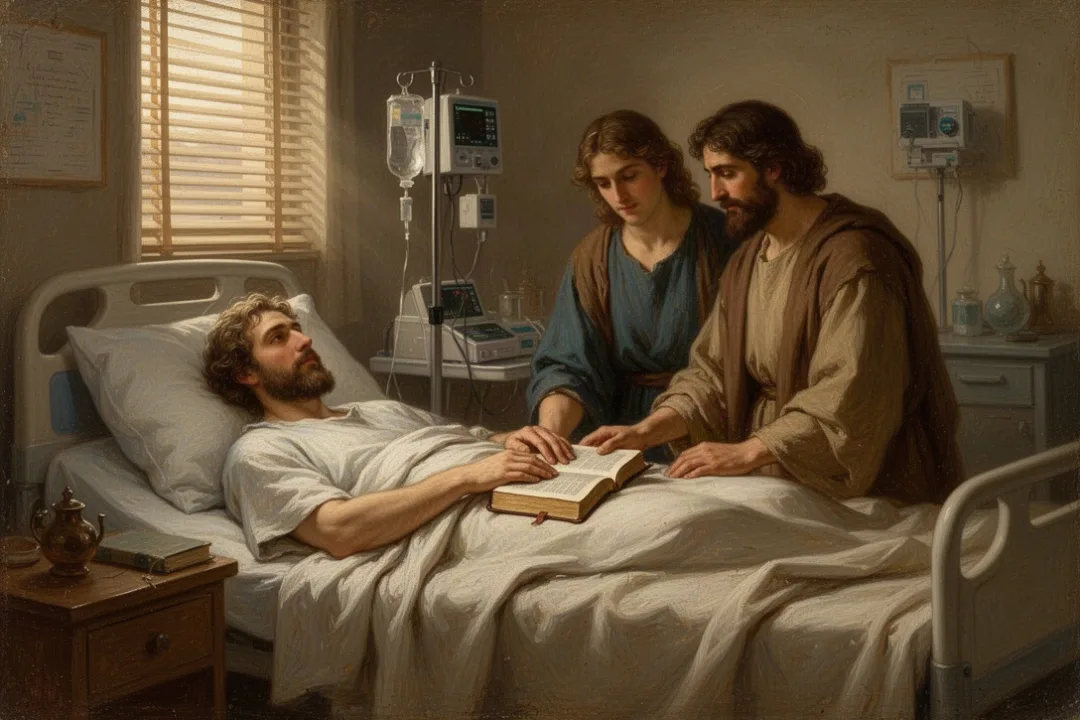
A miracle is commonly understood as an extraordinary act of God that serves a meaningful purpose rather than merely creating amazement. Some believers experience a sudden recovery, an unlikely rescue, or timely provision as direct evidence of God’s care. Others remain uncertain about what happened while still seeing prayer, community, and hope as central parts of faith.
The word miracle can describe different things depending on a person’s tradition and experience. In everyday conversation, people may call any fortunate event a miracle. In Christian theology, the term usually refers to an event in which God acts in an unusual or extraordinary way, often revealing his character, answering prayer, strengthening faith, or helping people in need.
Miracles are not presented in the Bible as displays of power without purpose. The signs associated with Jesus point people toward his identity and mission, while the extraordinary works described in Acts support the growth and witness of the early Christian community. The Gospel of John, for example, presents Jesus’ signs as pointing beyond the events themselves to who he is and what he came to do.
Christians differ on how frequently miracles occur and how they should be recognized. Some churches expect healing, prophecy, deliverance, and other spiritual gifts as regular possibilities. Other churches emphasize that God can act miraculously but caution against treating spectacular experiences as the normal measure of spiritual life.
Those differences do not necessarily divide Christians over the central belief that God is free to act in creation. They often concern how people interpret experiences and which claims deserve confidence. A person can believe in present-day miracles while also asking careful questions about medical evidence, testimony, motives, and results.
A useful distinction: Christians may believe God is involved in an event without claiming that every detail can be explained or verified as a miracle. Humility protects faith from both cynicism and exaggeration.
How God’s miracles may appear in ordinary life
When people talk about God and miracles today, they often have dramatic healing or supernatural intervention in mind. Those events may be part of a person’s testimony, but Christian belief also recognizes less spectacular forms of providence. God’s care may be perceived through people, circumstances, wisdom, endurance, or opportunities that arrive at a crucial moment.
Providence and miracle are related but not identical ideas. Providence refers broadly to God’s sustaining and guiding care through the ordinary patterns of life. A miracle is usually described as an extraordinary interruption or sign. Both ideas can encourage gratitude, but using the word miracle for every positive outcome can make the term too vague to be useful.
People may describe the following experiences as answers to prayer or possible miracles:
A serious medical condition improves in a way doctors did not expect, especially when the change is documented and remains unexplained.
A person receives needed help through an unexpected relationship, donation, job, or practical opportunity.
Someone escapes serious harm in circumstances that appeared highly dangerous.
A destructive pattern ends through repentance, support, treatment, and a profound change in character.
A grieving or frightened person receives unusual strength and peace while the difficult situation continues.
A community finds reconciliation after conflict that seemed impossible to resolve.
Not every example carries the same kind of evidence. A medical recovery may be examined through records and follow-up care. A sense of peace is real and meaningful to the person experiencing it, but it is not evidence in the same way. Personal significance and public verification should not be confused.
Christian faith also leaves room for God to work through ordinary means. A physician’s skill, a counselor’s care, a friend’s presence, or a church’s practical support need not be treated as alternatives to divine action. Many believers see these people and resources as ways God provides help rather than as evidence that a miracle did not occur.
Why a miracle does not always mean an easy life
A common misunderstanding is that belief in miracles promises protection from every illness, loss, or disappointment. The Bible does not make that promise. Faithful people in Scripture experience persecution, grief, disability, poverty, imprisonment, and death, and the New Testament presents suffering as a reality Christians must face rather than a sign that every prayer has failed.
Some Christians interpret an unexpected recovery as miraculous, while others pray faithfully and do not see the outcome they hoped for. Both people may continue to trust God. Answered prayer is not measured only by the result a person requests, and a lack of visible intervention is not proof of weak faith or divine indifference.
What the Bible says about miracles and prayer
The Bible contains many accounts of miracles, including healings, provision, deliverance, nature being subject to God’s command, and resurrection. These accounts are part of the Bible’s larger story about God’s authority, compassion, covenant, and redemption. They are not simply a collection of impressive supernatural episodes.
Jesus’ miracles consistently connect power with compassion and purpose. The Gospel accounts describe him responding to sickness, hunger, grief, exclusion, and spiritual oppression. His actions show concern for people’s bodies and circumstances, while also directing attention to forgiveness, faith, the kingdom of God, and restored relationships.
The early church also prays for healing and boldness. Acts describes believers asking God to work through them, and several New Testament letters refer to spiritual gifts, prayer, and care for the sick. At the same time, the New Testament does not describe every Christian as possessing the same gift or every illness as being healed immediately.
Prayer is therefore not a technique for controlling God. It is a relationship of trust, petition, confession, thanksgiving, and surrender. Christians may ask specifically for healing or intervention while recognizing that God’s wisdom cannot be reduced to a formula. The prayer “if it is your will” is not necessarily unbelief; it can express trust in God’s knowledge and goodness.
Biblical teaching also warns against demanding signs for selfish reasons or testing God. In the accounts of Jesus’ temptation and his encounters with people seeking signs, the desire for proof can become a way of avoiding trust and obedience. A claimed miracle should not be used to pressure vulnerable people into giving money, following a leader, or abandoning sound judgment.
Several biblical passages offer principles for evaluating spiritual claims. Deuteronomy 13 warns Israel not to follow a sign if it leads people away from faithfulness to God. First John 4 urges believers to test spiritual influences rather than accepting every claim. First Thessalonians 5 encourages Christians to examine what they hear while holding on to what is good.
Prayer and practical care belong together: Asking God for healing does not require rejecting doctors, medication, therapy, emergency treatment, or wise safety measures. Seeking appropriate care can be an expression of responsibility and gratitude.
How to discern claims about miracles today
Extraordinary claims deserve more than instant acceptance or instant dismissal. A careful Christian response asks what actually happened, what evidence exists, how the claim affects people, and whether the message surrounding it reflects the character of Christ. Discernment is not the enemy of faith; it can protect truth, compassion, and vulnerable people.
Begin by separating observation from interpretation. “The person improved” is an observation. “God healed the person miraculously” is an interpretation. The interpretation may be reasonable, but the two statements are not identical. This distinction allows you to respect someone’s testimony without claiming certainty the available evidence cannot support.
When evaluating a healing claim, consider questions such as:
What was the original diagnosis, and was it confirmed by qualified medical professionals?
Are there medical records before and after the reported healing?
Was the condition temporary, fluctuating, misdiagnosed, or known to improve naturally?
Did the improvement last over time, or was the claim made immediately after an emotional event?
Has anyone independent of the ministry or organization reviewed the evidence?
Does the person still receive appropriate medical follow-up?
These questions do not attempt to explain away God. They help distinguish a genuine mystery from incomplete information, mistaken diagnosis, exaggeration, or deliberate deception. A claim can remain personally powerful even when it cannot be proven publicly.
Pay attention to the character and conduct of the messenger. Does the person welcome questions, admit uncertainty, and give credit to God rather than to personal power? Or do they promise guaranteed results, shame people who remain sick, sell special access to healing, or treat donations as evidence of faith?
Healthy Christian discernment also considers the outcome. A claimed miracle that produces humility, compassion, honesty, and service is different from one that produces fear, celebrity worship, financial exploitation, or control. A dramatic event does not automatically validate every teaching connected to it.
Be especially cautious with statements that blame sick people for not believing enough. The Bible includes faithful people who suffer and does not support a simple equation between health and spiritual worth. Illness is not proof of moral failure, and healing is not proof that the healed person was more deserving than others.
Social media can intensify confusion. Short videos often remove medical context, show only the most dramatic moment, and encourage rapid sharing before facts are checked. If a story matters, seek the full testimony, independent confirmation, and a clear account of what happened before drawing a firm conclusion.
Why some people believe and others remain skeptical
People assess miracles through different kinds of evidence. A person who has prayed beside a loved one during a remarkable recovery may regard that experience as compelling. Another person may accept the recovery but remain uncertain whether it was supernatural. Both responses can involve honest reflection rather than simple faith or unbelief.
Personal testimony has real value, especially when it describes how an event changed someone’s life. Testimony is not the same as controlled scientific evidence, though. It can communicate what a person saw and experienced, while other forms of investigation are needed to establish whether an event has no adequate natural explanation.
Science and belief in miracles are not automatically opposites. Science studies repeatable patterns and natural processes. A miracle, by definition, would be unusual and not readily repeatable under controlled conditions. Scientific tools can document what happened and rule out some explanations, but they cannot by themselves determine the ultimate meaning of every event.
At the same time, a gap in current knowledge is not automatically proof of divine action. “No explanation yet” and “a miracle occurred” are different conclusions. A responsible believer can say, “I see this as God’s work, while recognizing that I cannot demonstrate every part of that interpretation.”
Skepticism can also arise from real harm. Some people have been told to stop medication, blamed for ongoing illness, or pressured to give money in exchange for prayer. Their caution may be a response to manipulation rather than hostility toward God. Churches and ministries should respond with honesty, pastoral care, and accountability.
Christian hope does not depend entirely on collecting miracle stories. It rests on God’s character and on the central Christian claims about Jesus’ life, death, and resurrection. Individual experiences may strengthen faith, but they should not become a substitute for Scripture, wise community, ethical conduct, or care for people who are suffering.
How to respond when you are praying for a miracle
If you are asking God for healing, rescue, reconciliation, or provision, you can pray with both honest urgency and open-handed trust. You do not need to hide fear, anger, confusion, or disappointment. The Psalms repeatedly show people bringing painful questions to God, and Jesus’ prayers in the Gospels include anguish as well as confidence.
Specific prayer can help you name what you need without pretending to control the outcome. Ask for the desired intervention, wisdom for the next decision, strength for the present day, and help from people who can offer practical support. Invite trusted believers to pray with you, but avoid anyone who insists that their method guarantees a result.
Practical steps may include:
Seek appropriate medical, legal, financial, or professional help for the problem involved.
Tell trusted people what kind of support you need instead of carrying the situation alone.
Keep a simple record of symptoms, treatments, changes, prayers, and significant events.
Allow room for gradual improvement and ordinary means of help rather than expecting only a dramatic moment.
Ask whether a teaching or ministry is using your fear, illness, or desperation to gain money or control.
Continue caring for your spiritual life through prayer, Scripture, worship, rest, and honest community.
If the outcome is not what you hoped for, you are not required to manufacture a positive explanation. Grief and disappointment can coexist with faith. A mature Christian community should make room for lament, treatment, unanswered questions, and ongoing care rather than forcing a quick testimony of triumph.
If an unexpected recovery or provision does occur, respond with gratitude and careful honesty. Share what you know without adding details you cannot verify. Give appropriate credit to medical professionals, family, friends, and other helpers while explaining why you personally see God’s hand in the event.
For many Christians, the deepest miracle is not an escape from every difficulty but the transformation of a life: forgiveness replacing resentment, courage replacing despair, or a divided community learning to love again. That does not make physical healing unimportant. It recognizes that God’s work may involve both changed circumstances and changed people.
What a balanced faith in miracles looks like
A balanced Christian view holds several convictions together. God can act extraordinarily today. Not every extraordinary claim is reliable. Prayer matters even when the answer is not visible. Medical and practical care remain valuable. People who are sick or suffering deserve compassion rather than blame.
This approach avoids two opposite errors. One error denies the possibility of any divine intervention because miracles seem difficult to verify. The other accepts every dramatic claim without examination. Faith can be expectant without being gullible, and skeptical inquiry can be careful without becoming cynical.
Miracles, when they occur, do not place God under human control. They invite gratitude, humility, and deeper attention to what is good and true. The appropriate response is not to chase spectacular experiences but to remain faithful in ordinary responsibilities, care for neighbors, seek wisdom, and recognize that God’s presence is not limited to dramatic events.
Whether you have experienced something you call a miracle or are still waiting for one, you can bring the question honestly to God. Christian hope allows room for wonder, evidence, uncertainty, grief, and trust. It does not require pretending that every mystery has been solved.
Frequently asked questions
Does God still perform miracles today?
Many Christians believe God still performs miracles, while recognizing that claims should be evaluated carefully. Present-day miracles may include healing, protection, provision, or profound transformation. Christian traditions differ about how frequently these occur and how they should be identified. Believing miracles are possible does not require treating every unusual event or testimony as proven supernatural intervention.
Why are some people healed after prayer while others are not?
Christianity does not offer a simple explanation for every unanswered prayer. Christians may believe God sometimes heals directly, works through treatment and caregivers, or gives strength without removing the illness. A person’s lack of healing is not reliable evidence of weak faith, hidden sin, or lesser worth. Compassionate support should continue regardless of the outcome.
How can I tell whether a miracle claim is genuine?
Separate what was observed from the interpretation placed on it. Look for reliable medical or independent evidence, lasting results, honest admission of uncertainty, and a lack of financial pressure or manipulation. Be cautious when leaders promise guaranteed outcomes, discourage professional care, or blame people who remain sick. Good discernment protects both truth and vulnerable people.
Should Christians pray for miracles instead of seeking medical treatment?
Christians can pray for healing while also seeking qualified medical care, counseling, emergency assistance, or other appropriate help. Many believers understand these forms of care as ways God provides help rather than as competitors to faith. Refusing necessary treatment is not required by Christian belief, and no ministry should pressure you to abandon responsible care.









Leave a Reply