📅 Approximate 13th-15th century BCE, during the Egyptian enslavement of Israel · 📜 Jochebed’s name in Hebrew (Yokheved) means 'God is glory' or 'Yahweh is glorious', reflecting her faith in God's divine plan.
JochebedMosesMotherhoodFaithCourage
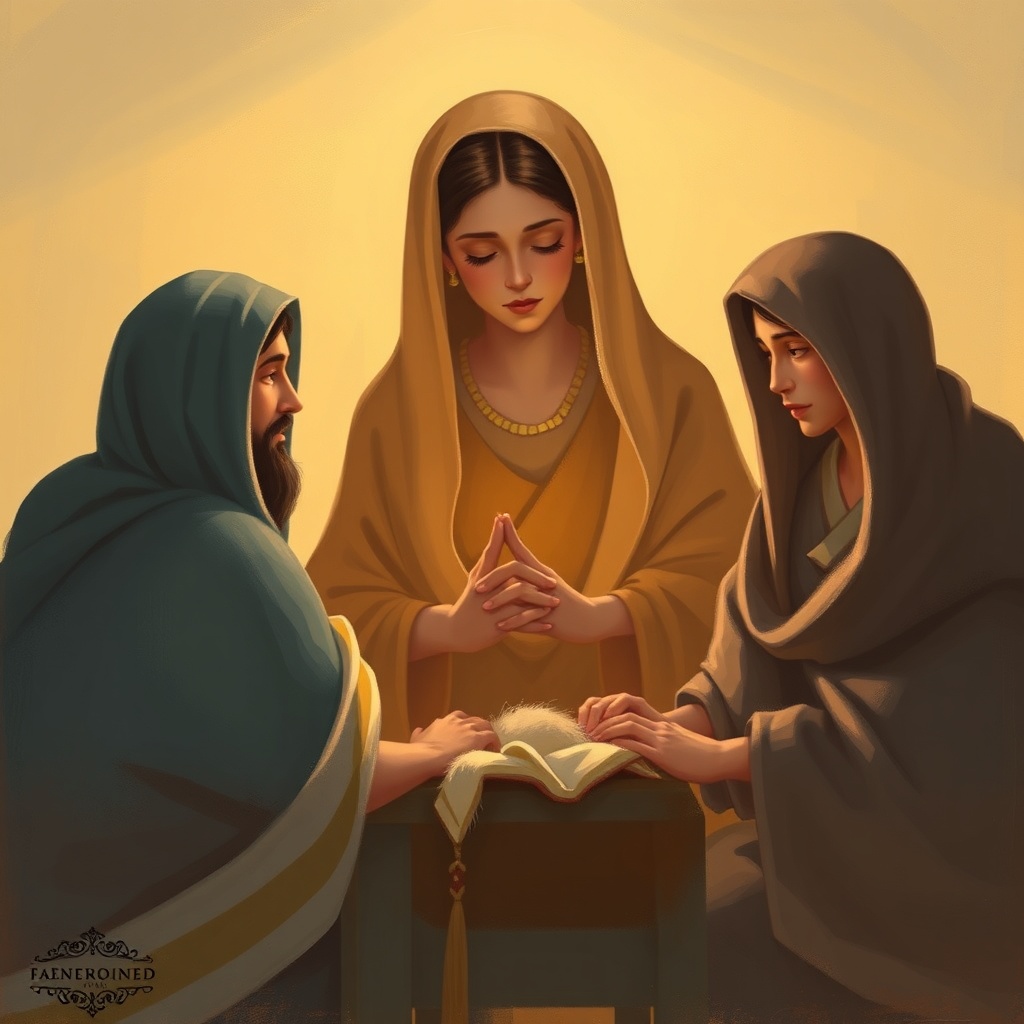
The woman conceived and bore a son; and when she saw him that he was a fine child, she hid him three months. When she could hide him no longer, she took for him a basket made of bulrushes and daubed it with a bitumen and pitch. She put the child in it and placed it among the reeds by the riverbank. His sister stood at a distance to see what would happen to him. Exodus 2:2-4— Exodus 2:2-4
Jochebed was a Levite woman living in Egypt during a time of severe oppression for the Israelites. Faced with Pharaoh's decree to kill all male Hebrew infants, she demonstrated remarkable faith and courage. In desperation, she concealed her son Moses until she could no longer hide him, then devised a plan to save him by placing him in a basket on the Nile River. Her faith was rewarded as Pharaoh’s daughter discovered and adopted Moses, securing his survival. Jochebed’s courageous act set the stage for the liberation of Israel. Her story exemplifies maternal devotion, faith in God's protection, and bravery amidst danger, highlighting her vital role in salvation history as the mother who preserved the future deliverer of Israel.
🏛️ Cultural & Historical Context
Living in Egypt during the time when Israelites were enslaved, Jochebed's role as a woman was primarily domestic, yet her actions showcase early signs of leadership and faith. Women in that era were often confined to household roles but could influence history through acts of bravery and faith. Her story reflects a cultural landscape where motherhood and faith interwove, inspiring future generations. Despite societal limitations, her courage highlights the potential for women to be key agents in divine plans. The act of hiding a child and risking her life demonstrates the profound influence women could have within their families and communities, even in patriarchal settings.
👨👩👧 Family Connections
Wife of Amram, mother of Moses, Aaron, and Miriam, with familial ties to the Levite tribe and the Israelite community in Egypt
Jochebed’s story underscores themes of divine providence, faith in God's protection, and maternal courage. Her actions exemplify how faith can guide women to participate actively in God's salvation plan, preserving life in the face of danger. She foreshadows the nurturing and protective qualities attributed to faith communities and women’s role in salvation history. Her story points to God's sovereignty, showing that divine purposes are fulfilled through the courageous acts of individuals. Jochebed’s faith and sacrifice highlight the theme that divine deliverance often begins with small, faithful acts by humble servants, playing a crucial role in God's redemptive plan for Israel and humanity.
📖 Lessons for Today
📖 Lesson 1
Having faith in God's plan can empower us to face difficult situations with courage. Small acts of obedience and trust can have profound long-term implications.
Jochebed’s unwavering faith and maternal dedication parallel the faith and bravery of women like Hannah, who prayed for Samuel's birth, and Mary, the mother of Jesus. Unlike other biblical women who played roles in prophecy or kingship, Jochebed’s influence was direct in safeguarding life. Her story contrasts with women in patriarchal contexts by highlighting her active role in divine salvation through her courageous actions. Together with these women, Jochebed exemplifies the vital role women have played historically in God's redemptive work.
📜 Scripture References
Reference
Exodus 2:1-10
Exodus 6:20
❓ Frequently Asked Questions
Who was Jochebed in the Bible?
Jochebed was the mother of Moses, Aaron, and Miriam, a Levite woman who saved her son from Pharaoh's edict by placing him in a basket on the Nile (Exodus 2).
What is the significance of Jochebed’s actions?
Her faith and bravery preserved the life of Moses, who would lead Israel out of Egypt, making her a key figure in salvation history.
How does Jochebed inspire women today?
Her story encourages women to trust in God's plan, demonstrate courage, and take proactive steps in protecting and nurturing life amid challenges.
✨ Did You Know?
Linguistically, the name Jochebed may be linked to ancient names meaning 'Yahweh is glory,' emphasizing her faith in God’s divine power. Archaeological evidence from Egypt and ancient Near Eastern texts suggests that women like Jochebed played crucial roles beyond domestic life, often acting as guardians of their children's futures through acts of daring faith.







Leave a Reply