New Testament stories for preschoolers: gentle Bible lessons
New Testament stories for preschoolers: gentle Bible lessons
“Which Bible story can I share with my preschooler tonight?” If you want something short, gentle, and easy for a young child to understand, the New Testament offers many memorable stories about Jesus, kindness, trust, forgiveness, and God’s care. The best choices use simple language, focus on one clear idea, and leave room for a child’s questions.
Preschoolers usually learn through repetition, movement, pictures, and familiar experiences. A story does not need every detail to be meaningful. You can tell a short, faithful version, connect it to something your child knows, and invite a simple response such as, “How did Jesus help?” or “Who could you show kindness to today?”
Helpful starting point: Choose one main truth for each story. For example, “Jesus cares when people are afraid” is easier for a preschooler to remember than a long explanation of every event and lesson.
What makes a New Testament story suitable for preschoolers?
A preschool-friendly Bible story has a clear beginning, a small number of characters, and an outcome a young child can follow. Stories with a repeated phrase, a visible action, or a familiar problem often work especially well. A child may not understand every theological idea, but they can understand that someone was hungry, afraid, lost, lonely, or in need of help.
Look for stories that let you emphasize God’s love and care without making promises the passage does not make. You can say, “Jesus teaches us to care for people,” rather than suggesting that a child will never experience sadness or difficulty. Honest, reassuring language helps children build trust.
Age appropriateness also means thinking about emotional intensity. Some New Testament passages include crowds, storms, illness, death, betrayal, or violence. These stories may be important, but a preschool retelling should use careful wording, avoid graphic details, and respect the child’s reactions. It is acceptable to wait until the child is older or to tell only the part that fits the child’s needs.
Keep the main idea concrete: Jesus welcomes children, helps people, or teaches us to love our neighbors.
Use a short retelling: A few minutes is often enough for a preschool Bible time.
Repeat key words: Words such as “help,” “love,” “trust,” and “welcome” are easy to remember.
Let the child participate: Use gestures, simple questions, toy figures, or a song.
Allow questions: Curiosity is part of learning, not a distraction from it.
Jesus welcomes children and shows their value
In Mark 10:13-16, people bring children to Jesus, but the disciples try to keep them away. Jesus responds by welcoming the children and telling his followers not to stop them. He blesses them and uses their place in God’s kingdom to teach the adults.
This is one of the most direct New Testament stories for preschoolers because children see themselves in it. You can tell it with a few simple details: children came close, the disciples tried to make them wait, Jesus said they should come, and he showed them love. The central message is Jesus welcomes children; it is not that children must behave in a particular way to earn his attention.
After the story, invite your child to imagine being there. Ask, “How do you think the children felt when Jesus welcomed them?” You might also talk about ways your family can make other people feel welcome at church, at home, or on the playground.
Jesus calms the storm when the disciples are afraid
Mark 4:35-41, Matthew 8:23-27, and Luke 8:22-25 describe Jesus and his disciples in a boat during a dangerous storm. The disciples are frightened, while Jesus is asleep. They wake him, and he calms the wind and waves. The disciples are amazed by his authority.
For preschoolers, the story can focus on fear, prayer, and Jesus’ presence. Use a blue blanket or a piece of paper to make waves, and let the child gently shake it before becoming still. You can say, “The disciples were scared. They called for Jesus, and Jesus helped them.” This keeps the retelling understandable without turning it into a promise that every frightening situation will instantly disappear.
A useful follow-up is to name ordinary fears: a loud noise, a dark room, a first day somewhere new, or a thunderstorm. Explain that children can tell a trusted adult and pray when they are afraid. The lesson is not that a child should never feel fear; it is that fear can be shared and met with care.
Gentle wording: Say, “Jesus was with the disciples in the storm,” rather than suggesting that people who feel afraid have weak faith. Preschoolers need permission to name their feelings.
Jesus feeds a large crowd with a small lunch
The feeding of the five thousand appears in all four Gospels: Matthew 14:13-21, Mark 6:30-44, Luke 9:10-17, and John 6:1-15. A large crowd follows Jesus, and the people need food. A child has five loaves and two fish, and Jesus gives thanks before the food is shared with the crowd.
The story gives preschoolers several accessible ideas: Jesus notices people’s needs, small gifts can be shared, and a community can care for one another. You do not need to emphasize the size of the crowd or explain every detail of the miracle. Tell the story with toy food, play dishes, or drawings of baskets, and let your child act out the sharing.
Ask questions that connect the story to everyday life: “What food could we share?” “How can we help someone who is hungry?” “How did the child’s lunch help?” Be careful not to imply that giving always produces a miraculous result. The practical lesson is that generosity matters, and caring adults should help meet real needs.
Jesus tells the story of the Good Samaritan
In Luke 10:25-37, Jesus tells a story about a traveler who is attacked and left injured. Several people pass by, but a Samaritan stops, treats the traveler’s wounds, takes him to a place of safety, and pays for his care. Jesus uses the story to explain what it means to love one’s neighbor.
The story teaches compassion across social boundaries, but some details require care with young children. Preschoolers do not need a frightening description of the attack. You can say that a traveler was hurt and needed help. Focus on the Samaritan noticing, stopping, getting help, and making sure the injured person was cared for.
It is also helpful to explain that children should not approach dangerous situations alone. A preschooler can show kindness by telling a trusted adult, getting a teacher, offering a comforting word, or sharing with someone who is left out. Loving a neighbor does not mean ignoring safety rules.
Jesus searches for the lost sheep
In Luke 15:3-7, Jesus tells about a shepherd who has one hundred sheep and notices that one is missing. He leaves the ninety-nine in a safe place, searches for the lost sheep, and rejoices when he finds it. The story is often called the parable of the lost sheep.
Preschoolers understand losing a favorite toy or becoming separated from a caregiver, so the story offers a familiar emotional connection. Emphasize that every person matters. The shepherd does not say that one sheep is unimportant because most of the flock is safe.
Use a stuffed animal for a simple search game. Hide it somewhere safe and let your child look for it, then celebrate its return. Afterward, explain that the story is about God’s care for people and the joy of bringing someone back into the community. Avoid making the child feel responsible for rescuing everyone; the point is loving attention, not pressure.
The lost son comes home and is welcomed
Luke 15:11-32 tells about a younger son who leaves home, wastes his inheritance, becomes poor, and decides to return. His father sees him coming, welcomes him, and celebrates his return. The older brother feels upset, and the father explains that the family is rejoicing because someone who was lost has come home.
For preschoolers, the story can be shortened to its emotional center: someone made poor choices, realized he needed help, returned home, and was met with welcome. The story presents forgiveness and restoration, but it does not require you to gloss over harm or erase healthy boundaries.
Use examples a preschooler can grasp, such as saying unkind words, refusing to share, or making a mess and then admitting it. Explain that saying sorry is important, and forgiveness can help repair a relationship. At the same time, children should tell a trusted adult if someone has hurt or frightened them. Forgiveness never means keeping abuse secret or returning to an unsafe situation.
Jesus meets Zacchaeus and changes his choices
Luke 19:1-10 introduces Zacchaeus, a tax collector who is disliked by many people. He climbs a tree to see Jesus, and Jesus chooses to visit his home. Zacchaeus responds by promising to give to the poor and repay people he has cheated.
The story works well for preschoolers because of its vivid tree and clear change in behavior. You can say that Zacchaeus had treated people unfairly, but meeting Jesus helped him understand that he needed to make things right. The key lesson is not simply that Jesus noticed someone in a tree; it is that love can lead to honest repair.
Act out the story with a chair, stuffed animals, or paper leaves. Ask, “What did Zacchaeus do after he understood that his choices hurt people?” Then connect the answer to age-appropriate actions: returning a toy, telling the truth, helping clean up, or apologizing sincerely. Keep the focus on restoration rather than shame.
Jesus turns water into wine at a wedding
John 2:1-11 describes Jesus’ first sign at a wedding in Cana. When the hosts run out of wine, Jesus’ mother tells him about the problem. Jesus instructs the servants, and water is changed into wine. The story reveals his glory to his disciples.
This story can be difficult for preschoolers if the discussion centers on adult celebrations or the nature of wine. It can still be told briefly, with emphasis on Jesus helping at a wedding and the importance of caring for guests. Explain that a wedding is a special celebration where families and friends gather.
Do not make the story a lesson that Jesus will provide every requested item. Instead, talk about noticing when a host needs help and cooperating with others. Children can set the table, welcome a guest, or help solve a small problem with an adult.
Jesus teaches through the story of the mustard seed
In Matthew 13:31-32 and Mark 4:30-32, Jesus compares God’s kingdom to a mustard seed. It begins very small and grows into a larger plant. The image helps listeners think about how something that seems tiny can become significant.
Preschoolers can understand growth through a seed, a plant, or a new skill. Show a seed and a grown plant, or let the child draw several stages of growth. Explain that small acts of love can matter: a kind word, a shared snack, a welcoming smile, or help with a simple task.
Keep the lesson grounded. The story does not mean every small effort will become famous or enormous. It encourages patience and trust that growth often happens gradually. A preschooler may need to hear the story many times before connecting it with daily behavior.
Jesus washes the disciples’ feet
John 13:1-17 describes Jesus washing his disciples’ feet before his death. In that culture, washing feet was a low-status task connected with hospitality. Jesus uses the action to teach his followers to serve one another humbly.
For young children, the scene can be told without reproducing every detail. Explain that Jesus did a job people usually expected a servant to do, and he showed that loving leadership includes serving. A child can understand this through actions such as helping put away toys, bringing a cup of water, or comforting a sibling.
You can create a safe sensory activity by washing toy feet in a basin, but never pressure a child to participate in water play or touch. The activity is optional; the central idea is not the ritual itself but choosing helpful, respectful service.
Jesus rises from the dead: telling the Easter story gently
The resurrection accounts appear in Matthew 28, Mark 16, Luke 24, and John 20. They describe women and other followers finding Jesus’ tomb open and learning that he was alive. The accounts differ in details, but all point to the central Christian belief that Jesus rose from the dead.
Preschoolers may ask direct questions about death, bodies, or where Jesus went. Use honest, simple language that reflects your family’s beliefs. You can say that Jesus died, his friends were very sad, and then they discovered that God had raised him to life. Avoid graphic descriptions of crucifixion and do not use fear to force a response.
A child may need reassurance that ordinary sadness is not the same as the Easter story and that questions are welcome. Read a resurrection account in an age-appropriate children’s Bible, use flowers or an empty paper tomb as visual aids, and focus on the Christian message of hope after grief. If a child has recently experienced a death, allow space for sorrow rather than rushing to cheerful language.
How to tell New Testament stories in a preschool-friendly way
A good retelling is faithful to the passage while using words a young child knows. Begin with the setting, introduce only the characters needed, describe the problem, and end with the central action or teaching. You can say, “Jesus saw a man who could not walk, and Jesus helped him,” instead of adding several details that do not serve the main idea.
Use a consistent rhythm so children know what to expect. Begin with “The Bible tells us…” or a similar phrase, tell the story, ask one or two questions, and finish with a short prayer or action. Repetition helps children participate rather than merely listen.
Choose one passage and one main truth. Decide what you want the child to remember before you begin.
Retell the action in plain language. Use short sentences and familiar words.
Add one concrete prop. A blanket, toy animal, paper boat, seed, or basket can make the story memorable.
Invite a response. Ask the child to act, draw, point, repeat a phrase, or name a feeling.
Connect the story to one daily action. Suggest sharing, welcoming, telling the truth, or asking for help.
End before attention fades. A child who wants to hear it again has had a successful experience.
Questions should not feel like a test. Instead of asking for a precise fact, try questions such as, “What do you notice?” “How did that person feel?” or “What kind thing could we do?” If your child answers unexpectedly, listen before correcting. Their response may reveal an emotion or concern that deserves attention.
Common mistakes when sharing Bible stories with preschoolers
Even a well-loved story can become confusing if it is presented as a lecture or used mainly to control behavior. Preschoolers are still learning how stories, pretend play, and real life relate to one another. They need clear boundaries between a Bible event, a make-believe activity, and a personal promise.
Trying to include every detail: Long explanations can hide the central message. Select only the details your child needs.
Using fear as the main motivation: Threats about punishment may create anxiety instead of trust and understanding.
Blaming a child for adult problems: Do not suggest that illness, sadness, poverty, or tragedy happened because someone lacked faith or behaved badly.
Promising instant solutions: Stories about miracles do not guarantee that every prayer will receive the requested outcome.
Ignoring difficult emotions: Let children say that a storm, death, or separation sounds scary or sad.
Forcing participation: A child may listen quietly, move away, or ask to stop. Offer another time or a gentler activity.
Confusing kindness with unsafe behavior: Teach children to involve trusted adults when someone is injured, missing, or in danger.
Turning every story into a behavior chart: Bible time can shape character, but it should not become a constant performance review.
For difficult stories: Read the passage yourself first, decide which details are appropriate, and prepare a calm answer for likely questions. You can tell a child, “That is a good question. I need a moment to think about how to explain it.”
Simple activities that help preschoolers remember the stories
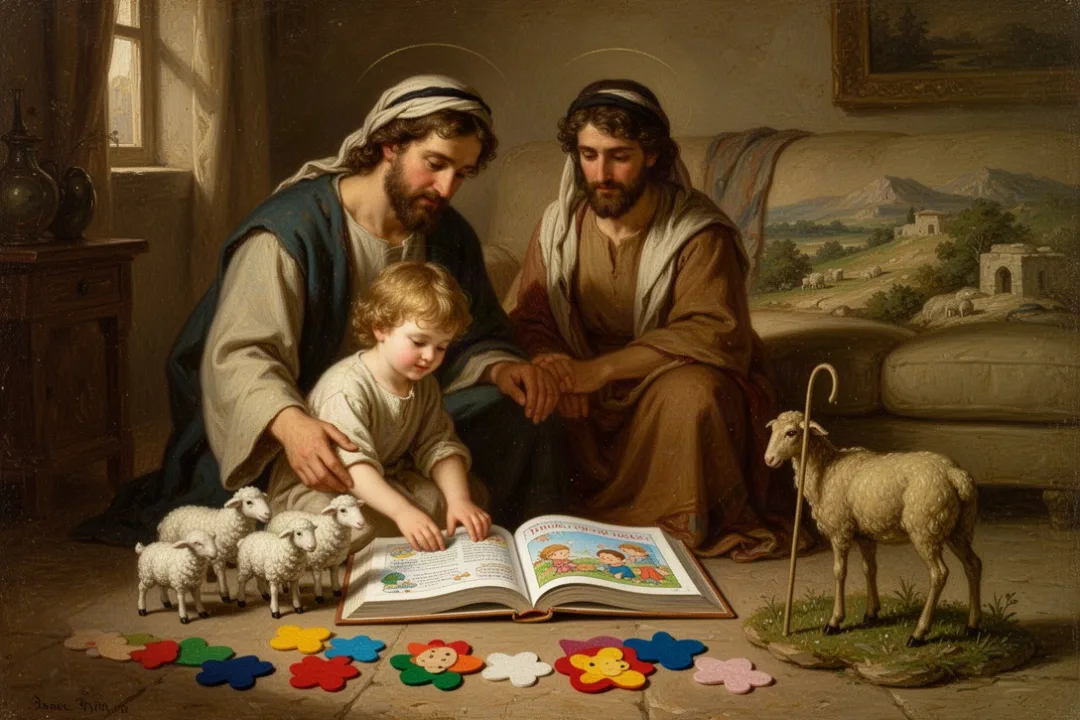
Hands-on activities work best when they reinforce the story rather than distract from it. After telling about the lost sheep, hide a toy sheep in an easy-to-find place. After the feeding miracle, let your child arrange toy food in baskets. After the storm, rock a paper boat and then hold it still.
Art can help a child express an idea without requiring advanced reading or writing. A child might draw a welcoming crowd, make a paper tree for Zacchaeus, plant a seed, or create a picture of people sharing food. Do not judge the picture by how accurately it represents the Bible story; ask the child to explain what is happening.
Songs and repeated phrases are useful, but the words should be understandable and consistent with the story. A short prayer can name the lesson: “God, thank you for caring for us. Help us care for people who need help.” Avoid turning prayer into a way to guarantee a particular result.
Choosing a children’s Bible and planning a short routine
When selecting a children’s Bible, compare the retelling with the actual New Testament passage. Look for language that is clear, respectful, and emotionally appropriate. Illustrations should help children understand the setting without making frightening scenes more intense than necessary.
A children’s Bible is a helpful tool, but it is not the only option. You can tell the story from memory, read a short passage aloud, use a picture book from a trusted publisher, or listen to an age-appropriate audio version. If a book adds dialogue or details, treat those additions as storytelling rather than exact quotations from Scripture.
A simple weekly routine might include a story, one question, one action, and a brief prayer. Keep the same basic structure while changing the story and activity. Predictability helps a preschooler feel secure and makes it easier for caregivers to share the responsibility.
Let the child revisit favorite stories. Repetition is not wasted time; it helps children notice new details as their language and emotional understanding develop. A child who repeatedly asks for Jesus calming the storm may be processing fear, learning the sequence of events, or simply enjoying the rhythm of the story.
Questions to ask after a New Testament story
One thoughtful question is usually more useful than a long quiz. Ask about the people, their feelings, the problem, and the way help was offered. Then give the child time to answer in words, gestures, or play.
Who needed help in the story?
What did Jesus notice?
How do you think that person felt?
What kind choice did someone make?
What could we do if we saw someone feeling left out?
Is there anything in the story that felt confusing or scary?
Preschoolers often answer with details adults consider minor, such as the boat, the tree, or the food. Those details are valuable entry points. You can follow the child’s interest and gently return to the main idea: “Yes, Zacchaeus climbed high in the tree. Jesus also noticed him and treated him with care.”
The goal is not to make a preschooler explain Christian doctrine perfectly. It is to help the child encounter Scripture through trust, wonder, compassion, and honest conversation. A short story shared consistently and warmly can become a lasting part of family life.
Frequently asked questions
How long should a New Testament story be for a preschooler?
Aim for about three to seven minutes, depending on the child’s attention and familiarity with the story. A short retelling with one main idea is usually more effective than reading a lengthy passage. If the child wants more, add a song, prop, or question rather than rushing through several stories at once.
Which New Testament stories are best for a child who is easily frightened?
Begin with stories such as Jesus welcoming children, Jesus feeding a crowd, Zacchaeus meeting Jesus, or the lost sheep. Introduce storms, illness, death, or conflict more carefully. Preview those passages, use gentle language, and stop if the child becomes distressed. There is no need to cover every story at the same age.
Should preschoolers memorize Bible verses?
Memorization can be enjoyable, but it should remain brief and optional. A short phrase connected to the story may be easier than a full verse. Explain the meaning in your own words, and avoid turning memorization into a measure of faith or obedience. Singing, gestures, and repeated storytelling can teach Scripture just as effectively for some children.
How can I explain miracles without confusing my preschooler?
Describe what the Gospel story says happened, using simple and honest language. You might say, “The Bible tells us that Jesus did something only God could do.” Avoid promising that every problem will be solved in the same way. Welcome questions and acknowledge that adults also have questions about how miracles happen.





Leave a Reply