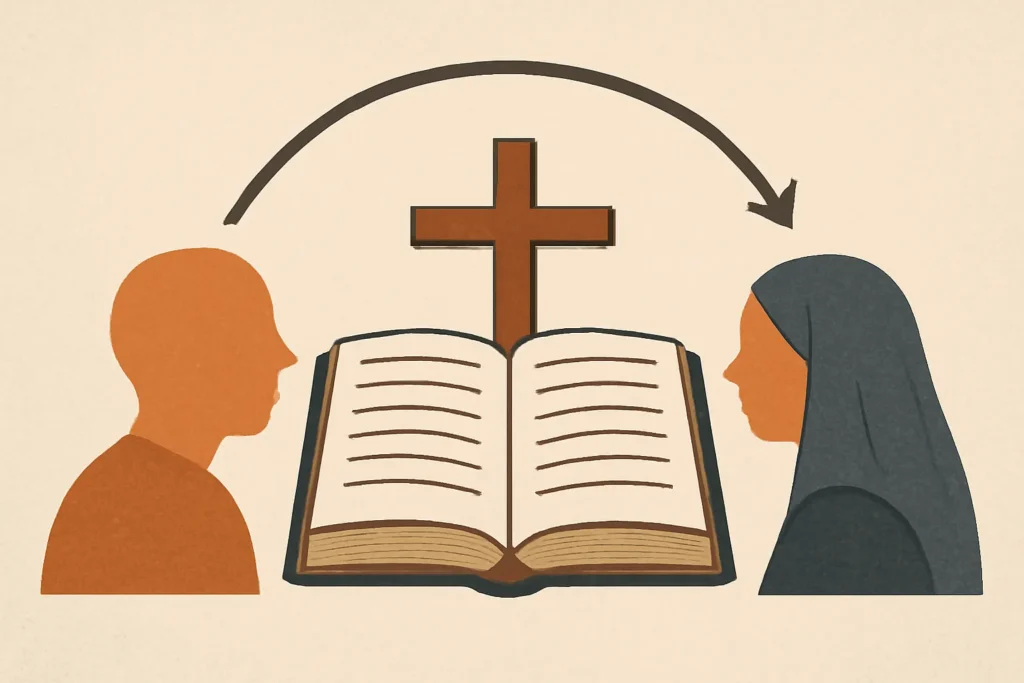
Replacement theology, also known as supersessionism, refers to a family of theological claims about the relationship between the Christian Church and the people of Israel. At its core, it describes a vision in which the Church has permanently inherited or succeeded the spiritual, ceremonial, or covenantal status once attributed to Israel. In simple terms, this line of thought posits that the new covenant established by Jesus effectively replaces or fulfills the old covenant with Israel, such that God’s promises to Israel are no longer requiring a separate fulfillment for the Jewish people. Over time, scholars and theologians have preferred a spectrum of formulations—ranging from a robust, wholesale replacement to a more nuanced, partial, or conditional fulfillment. When you encounter the phrase replacement theology, you are looking at a collective term that captures a specific stance on covenantal continuity, ethnico-religious identity, and the interpretation of biblical promises.
For clarity, this article uses a few variants of the label to stress semantic breadth while noting substantive differences among positions. In its strongestForm, replacement theology asserts that all promises originally given to Israel now reside in the Church. In its more tempered variant, sometimes called partial supersessionism or fulfillment theology, the Church is seen as the heir to most, but not all, of those promises, with certain covenantal blessings continuing to have a distinct Jewish dimension. Other frameworks describe a two-covenant understanding, in which the old and new covenants continue side by side, or a two-people theology that posits two separate but overlapping people of God. Throughout this article, you will encounter these terms as distinct but related ways of articulating how Christian readers interpret biblical covenants and the status of Israel.
Historical development: traceable roots and transformations
The story of replacement theology is not a single, uniform chapter but a long arc that travels from early Christian debates to modern ecumenical dialogue. In antiquity, several church Fathers framed the relationship between the Church and Israel in ways that teachers today would recognize as supersessionist, even if they did not formulate it with modern terminology. Early Christian interpreters often viewed the Church as spiritually circumcised and as the continuation or fulfillment of God’s redemptive plan. In some strands, this carried the implicit claim that the Jewish people bore responsibility for their rejection of Jesus as Messiah, which carried a consequential tone for how the Church read its own mission.
As centuries passed, the dominant medieval and Reformation-era theologies widely assumed that the Church had inherited the promises God made to Abraham, Isaac, and Jacob. In many traditional interpretations, the eschatological hopes of Israel—land, nationhood, temple-centered worship, and national blessing—were reinterpreted through a Christian lens where the Church stands as the true people of God. This shift did not always erase Jewish identity or religious life, but it did reframing of what it meant for God to keep covenants with Israel. The result was a pervasive conviction among many Christian communities that the “old” covenant with national Israel had given way to the “new” covenant with the Church.
The modern period, especially following the Jewish Enlightenment and the traumatic experiences of European antisemitism, brought intensifying critique and reformulation. In the 19th and 20th centuries, a number of theologians began to distinguish more carefully between the theological claims embedded in biblical exegesis and the moral consequences of teaching about Jews and Judaism. The Second Vatican Council’s Nostra Aetate (1965) and subsequent Catholic and Protestant dialogues contributed to a move away from wholesale replacement toward language that preserves a continuing Jewish relevance and a more nuanced ecclesiology. In many Protestant traditions, post-Holocaust reflection and scholarly work on biblical covenants led to renewed attention to the biblical categories of “people of God” and “covenant” in ways that resist simplistic anti-Jewish readings.
Today, most theologians recognize that replacement theology is not monolithic. There are legitimate debates about what exactly the Church inherits, how biblical promises should be understood in light of Christ, and what it means for the status of the Jewish people within God’s overall plan. Some Christian communities maintain a robustly supersessionist outlook, while others insist on a careful distinction between the old and new covenants and insist that Israel’s elect status and particular promises retain a meaningful, ongoing shape in Scripture and in the Church’s life.
Variants and related concepts: mapping semantic breadth
To avoid conflating distinct positions, it helps to name a few related ideas that scholars often associate with the broader family of replacement-theology arguments.
Classical supersessionism: the traditional view that the Church has replaced Israel in all covenantal relationships and promises.
Partial supersessionism or fulfillment theology: the Church inherits most of the promises but retains some explicit Jewish dimensions; not all promises are fully transferred.
Two-covenant theology (or two-people theology): the idea that God has two parallel covenants—one with Israel and one with the Church—that do not cancel each other out.
Two-people or covenantal continuity models: emphasis on the continuity of God’s people across the testaments, allowing for a faithful interpretive space where both Israel and the Church are related to God’s primary promises.
Fulfillment interpretation of biblical prophecy: the claim that Old Testament prophecies about Israel’s future are fulfilled in Christ and the Church, often interpreted in a way that makes Israel’s national identity less central to eschatology.
Covenant theology and supersessionism: a frame that places the new covenant in continuity with the old, yet the determination of who belongs to God’s people can be read differently depending on the theologian’s hermeneutic.
The distinction between these variants matters for how Christians read key biblical texts, how they understand the relationship between church and synagogue, and how they imagine mission in a diverse, plural world. Some writers insist that the term replacement theology should be reserved for wholesale claims about Israel’s permanent obsolescence, while others use it more broadly to describe any interpretation that minimizes or redefines Israel’s ongoing covenantal status. The semantic gray areas can be important for readers who want to think clearly about the implications of their own theological premises.
Key biblical texts and interpretive approaches
The conversation around replacement theology is deeply rooted in scriptural interpretation. There are several biblical passages that critics and supporters alike cite when arguing about the status of Israel and the Church.
Romans 9–11: This is one of the most debated chapters. Critics of replacement theology often argue that Paul’s imagery of branches being grafted into the olive tree suggests that Israel remains a distinct and ongoing people of God. Supporters of supersessionist readings might emphasize Paul’s statements about God’s mercy on all Israel or view the hardening of Israel as a temporary measure for the sake of Gentile inclusion.
Galatians 3–4: Paul’s argument about the inheritance of faith through "the promise" and the distinction between law and promise is frequently invoked in the discussion of whether Gentiles join a spiritual Israel or replace the natural branches of Israel.
Ephesians 2:11–22: The imagery of one new humanity and the breaking down of walls between Jew and Gentile is cited by some to defend a more inclusive ecclesiology that resists strict replacement narratives.
Jeremiah 31:31–34 and Hebrews 8: Old Covenant language and prophesied shifts toward a new covenant interpretation often appear in debates about whether Israel’s national promises are forever superseded or reconfigured in Christ.
1 Peter 2:9 and related texts about believers as a royal priesthood sometimes get read as supporting a universal or ecclesial identity that transcends ethnic lines, which can either challenge or reinforce supersessionist readings depending on emphasis.
Readers must appreciate that biblical interpretation is not a monologue. The same verses can be parsed in ways that make Israel’s ongoing vocation or the Church’s universal mission more or less central to the theological framework. Context matters: historical setting, literary genre, covenantal language, and the interpretive tradition one inherits all shape how a passage is used to support a given claim about replacement or continuity.
Theological implications: what it means for God’s people
The choice to affirm or critique replacement theology has wide-ranging consequences for how Christians conceive of God’s promises, what it means to be part of the people of God, and how the Church should relate to Judaism today.
Ecclesiology and identity: Replacement theology tends to recast the Church as the primary or sole embodiment of God’s people, whereas critiques of this view emphasize a shared or ongoing covenantal identity between Israel and the Church, with roles that are distinct but not adversarial.
Biblical hermeneutics: Different frameworks of interpreting the Bible—historical-grammatical, covenantal, or typological—lead to different conclusions about continuity, fulfillment, and the priority of particular covenants.
Mission and evangelism: If the Church is seen as replacing Israel in God’s plan, mission might be framed primarily as inviting Gentiles into a Church-centered inheritance. If, instead, Israel is understood to retain a special place within God’s purposes, mission may be oriented toward reconciliation between Christians and Jews, mutual blessing, and the renewal of the biblical land and people narratives.
Ethics and interfaith relations: Replacement theology has historically correlated with periods of antisemitism or contempt for Jewish identity within Christian communities. Critics argue that reframing the Church as the sole inheritor can dehumanize or delegitimize Jewish religious life. Contemporary theologians stress the importance of charitable hermeneutics, careful exegesis, and explicit condemnation of antisemitism while maintaining a robust Christ-centered Christology.
Prophetic interpretation and eschatology: Different readings influence how one understands end-time prophecy, the status of nations, and the destiny of Israel. Some eschatologies anticipate a future national restoration for Israel; others interpret biblical prophecy in more spiritual or universal terms. The method of reading prophetic material interacts with the broader question of whether the Church is the bearer of the covenantal promises to Israel or whether those promises are reconfigured within a new covenantal framework.
Believe, belong, and interpret: biblical basis and hermeneutical options
When theologians debate replacement theology, they are engaging with two core questions: what counts as God’s covenant people, and what counts as fulfilled promise. Some argue for a strong sense of continuity: God does not abandon the Jewish people; rather, the Church participates in God’s promises by faith in Christ, and Israel continues to have a distinct, prophetic vocation that intersects with the Church’s mission. Others hold that the new covenant represents a substantive redefinition of God’s people, with the Church as the true heir and with national Israel’s civil and ceremonial statutes no longer binding in the same sense. Neither position is uniformly accepted, and within each tradition there are diverse nuances.
In this family of views, the Church-Messianic fulfillment theme dominates, but it is coupled with a reverence for Israel’s historical and eschatological role. Proponents often highlight:
The insistence that God’s gift and calling are irrevocable (Romans 11:29) in a way that preserves a Jewish identity within God’s broader people.
A reading of the new covenant as a transformation of heart rather than the erasure of national or ethnic identity.
Continuity of moral and liturgical motifs that link the Church to Israel's ritual and ethical streams, while reinterpreting their meaning in Christ.
Approaches that critique or resist wholesale replacement
Critics emphasize the ethical and historical costs of supersessionist readings. Key features of these approaches include:
The claim that such readings have, at times, facilitated antisemitic attitudes or policies in Christian history, making them morally indefensible in contemporary ecumenical contexts.
A stress on the Jewish roots of Christian faith as evidenced by the apostolic witness and early Church life, not simply as a historical anecdote to be superseded.
A caution against reducing Israel to a mere symbol of the Church’s spiritual status; instead, maintaining a robust sense of the distinctiveness and dignity of Jewish identity.
Contemporary perspectives and pastoral implications
In the modern era, theologians, pastors, and educators increasingly seek to articulate a theologically responsible and pastorally sensitive stance on replacement theology. The aim is to uphold a rigorous reading of Scripture while avoiding rhetoric that marginalizes Jewish people or erodes trust in interfaith relationships. The shift often involves explicit language about responsible hermeneutics, historical awareness, and ethical responsibility in how biblical covenants are presented to congregations and to wider society.
Many church communities now pursue a number of practical measures for constructive dialogue and mutual learning. For example, some adopt joint study programs with Jewish communities that focus on biblical covenants, shared ethical concerns, and the history of Christian-Jewish relations. Others emphasize teaching that respects the ongoing significance of Israel in biblical prophecy and Christian faith, while reaffirming the central role of Christ as the ultimate revelation of God’s plan. In all these efforts, the guiding aim is a balanced, historically informed, and theologically coherent portrayal of how the Church relates to Israel without erasing Jewish identity or history.
Terminology and how to discuss the issue carefully
Because the term “replacement theology” can carry heavy normative charges, many scholars and pastors prefer more precise language to describe a given stance. When you encounter a discussion, you might hear about:
Supersessionism as a shorthand for a family of claims about the Church replacing Israel in God’s plan.
Two-covenant interpretations that speak of parallel covenants for two distinct groups of God’s people.
Continuity-based approaches that emphasize shared identity across Testaments and a redefined but ongoing place for Israel within God’s redemptive plan.
Fulfillment theology describing how Old Testament promises are fulfilled in Jesus and the Church, with varying degrees of emphasis on national Israel.
Clarity in language matters because theological terminology often shapes how communities imagine salvation history, religious identity, and mutual respect. When discussing the topic in a classroom, a sermon, or an interfaith forum, it can be helpful to spell out:
Which biblical texts are being read, and what hermeneutic underwrites that reading.
What is meant by “inheritance,” “covenant,” and “people of God” in the given framework.
How the position affects attitudes toward Jewish communities, biblical Israel, and the ongoing life of the Church.
Implications for interfaith dialogue and education
The question of whether and how Israel remains a covenantal people in Christian thought bears directly on interfaith dialogue. A robust approach to replacement theology—whether one accepts or critiques it—usually recognizes several ethical commitments:
Historically informed dialogue: engaging with the ways Christians have interpreted biblical covenants across ages, including the misuses that have caused harm to Jewish communities.
Respect for Jewish interpretation: acknowledging the legitimate and distinct ways Jewish scholars read the Hebrew Bible and the significance of Israel’s national and religious memory.
Careful hermeneutics: avoiding over-reliance on a single interpretive path and being mindful of how one’s theological framework shapes moral judgments about real people and historical events.
Pastoral sensitivity: recognizing that church members may have family histories or cultural ties that influence their reception of these topics, and addressing those realities with compassion and clarity.
Conclusion without using a labeled heading
In reflecting on replacement theology definition and its various formulations, readers encounter a landscape of interpretive options. Some communities affirm a strong continuity between Israel and the Church, seeing the Church as the faithful continuation of God’s covenant people with a reinterpreted framework in light of Christ. Others insist upon a more cautious or even critical posture toward supersessionist readings, arguing that the Jewish people retain a canonical and prophetic place within God’s redemptive plan that should be honored and preserved within Christian teaching and practice. A growing body of theology seeks to articulate a balance: recognizing that the Church’s identity is formed by Christ, while resisting the impulse to erase Israel’s unique spiritual and historical standing. This balanced approach aims to foster mutual respect, ethical accountability, and a shared vocation to witness to God’s purposes in a plural and evolving world.
For students, pastors, and lay readers alike, the study of replacement theology and its alternatives offers a practical test case in how to read Scripture with humility, how to honor historical memory, and how to live with integrity in communities that include followers of Judaism and Christianity side by side. The goal is not merely to decide which side is right but to cultivate a nuanced understanding of how God’s covenants relate to human history and how faith communities can pursue reconciliation, truth-telling, and love in a shared human family.










Leave a Reply