Run in such a way as to get the prize: What it means
Run in such a way as to get the prize: What it means
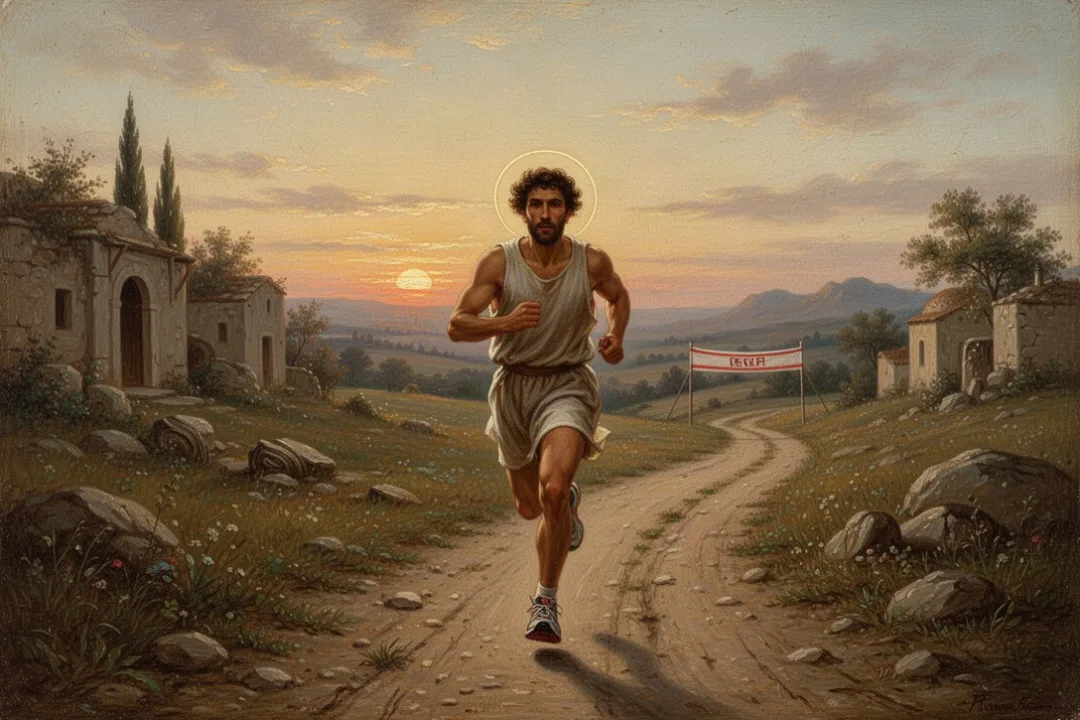
Have you ever started something with real conviction, only to lose focus when the work became difficult? The phrase “run in such a way as to get the prize” speaks directly to that experience. It comes from Paul’s teaching in 1 Corinthians 9:24, where he uses a footrace as a picture of Christian life and service.
Paul’s point is not that Christians must defeat one another or earn God’s love through effort. He is urging believers to live with purpose, discipline, and perseverance. A runner trains because the finish line matters. In the same way, Christians are called to keep their faith at the center of their choices, especially when comfort, distraction, or discouragement pulls them away.
The central idea: Run your life of faith with wholehearted commitment, keeping your eyes on God’s calling and the eternal reward he promises—not on competing with other people.
Where “run in such a way as to get the prize” appears in the Bible
The phrase comes from 1 Corinthians 9:24. Paul is writing to the church in Corinth, a city familiar with athletic contests and public competitions. He asks readers to consider a race in which many runners participate but only one receives the official prize. He then applies that image to the way Christians should live.
Paul continues the comparison by describing athletes who practice self-control in order to receive a temporary crown. The athletic prize of his day would eventually fade, but the reward connected with faithful Christian service has lasting value. Paul explains that he does not live aimlessly or treat his spiritual life as an unfocused struggle.
In the following verse, he changes the image from running to boxing. His concern is not simply movement or activity; it is directed effort. He wants his work to count. He also speaks about disciplining his body so that, after proclaiming the message to others, he would not disqualify himself. That statement shows the seriousness with which he viewed his own calling.
The surrounding passage matters because the phrase can be misunderstood when separated from its context. Paul is not teaching that salvation is a trophy awarded to the strongest person. He is describing a life shaped by faithful obedience, in which a believer responds seriously to God’s grace and remains committed to the mission entrusted to them.
What Paul means by running for the prize
To “run” in this passage means to live actively and intentionally as a follower of Christ. It includes the choices you make, the habits you build, the way you serve others, and the way you respond when your faith is tested. Christian commitment is not meant to be passive or accidental.
The “prize” points to the lasting reward of faithful devotion. Paul does not describe it as a medal that proves one believer is more valuable than another. Rather, it represents the goal toward which Christian life is directed: honoring Christ, completing the work God gives you, and sharing in the life God promises.
Paul’s image contains both encouragement and warning. The encouragement is that your effort in faith has meaning, even when it is unseen by other people. The warning is that religious language, public activity, or an impressive beginning does not replace consistent faithfulness.
Running “in such a way” suggests that the manner of your life matters. It is possible to be busy without being spiritually focused. It is possible to speak about faith while neglecting humility, integrity, love, or endurance. Paul calls for a life whose direction matches its stated goal.
Why the athletic image was effective for Paul’s audience
Paul’s readers would have understood the commitment required by athletic competition. A serious runner does not arrive at the starting line and improvise everything. Training involves repeated practice, limits, recovery, and a willingness to delay immediate comfort for a future result.
That picture helped Paul explain the demands of discipleship. Christians need spiritual habits that strengthen their ability to follow God. Prayer, Scripture, worship, service, confession, generosity, and fellowship are not ways to impress God. They are practices that help believers remain attentive and faithful.
The image also emphasizes the difference between temporary recognition and lasting value. Athletic honors, public approval, career success, and material possessions do not last forever. Paul directs attention toward a reward that cannot be reduced to applause, status, or possessions.
His use of a race should not be read as a command to live in constant anxiety. A healthy athlete trains with a goal, but training also has rhythm and wisdom. The Christian life requires commitment, yet it also includes rest, community, repentance, and dependence on God.
How grace and effort fit together
Some readers hesitate over this passage because it sounds as though people must work hard enough to earn salvation. The broader teaching of the New Testament does not present salvation as a payment for human achievement. Salvation is repeatedly described as a gift received through faith, not a prize purchased by personal performance.
Paul’s athletic metaphor addresses faithful living after receiving God’s grace. Effort does not persuade God to become merciful. Instead, grace creates a new relationship and a new direction. A believer works because God has already acted, not because human work can force God to act.
This distinction protects the Christian life from two opposite mistakes. The first is legalism, the belief that religious performance earns acceptance. The second is apathy, the belief that grace makes obedience unnecessary. Paul rejects both ideas by presenting grace as the source of a committed life.
You can therefore pursue spiritual maturity without measuring your worth by your performance. When you fail, repentance and renewed trust remain available. When you succeed, humility is appropriate because your strength, opportunities, and calling ultimately come from God.
Keep the balance: You do not run to make God love you. You run because God has given you grace, a calling, and a direction worthy of your full commitment.
What disciplined Christian living looks like in daily life
Discipline in the Christian life is not harsh self-punishment. It is the deliberate arrangement of your life around what you believe matters most. It helps you say yes to God’s purposes when immediate desires, distractions, or fear compete for your attention.
For one person, discipline may mean setting aside regular time for prayer before checking a phone or beginning work. For another, it may involve breaking a destructive habit, becoming more truthful in relationships, or making room to serve someone who needs help.
Discipline also includes learning to direct your attention. A runner cannot watch every nearby person and remain focused on the course. Likewise, constant comparison can make you lose sight of your own responsibilities. God may give someone else a different assignment, pace, or season than the one he gives you.
Practical discipline often includes these areas:
Attention: Make space for prayer, Scripture, and quiet reflection so that faith is not pushed aside by constant noise.
Character: Practice honesty, patience, purity, humility, and kindness in ordinary decisions.
Relationships: Forgive where possible, seek reconciliation, and treat people as more important than your reputation.
Service: Use your time and abilities to help others rather than treating faith as a private possession.
Endurance: Continue doing what is right when results are slow or recognition does not come.
These practices do not all look the same for every believer. The goal is not to copy another person’s routine. The goal is to develop a faithful pattern that keeps your life pointed toward Christ.
How to keep moving when the Christian life feels difficult
Every meaningful race includes difficult sections. In the same way, following Christ can involve grief, uncertainty, temptation, conflict, disappointment, or long seasons in which progress feels invisible. The command to run does not deny those realities.
Endurance begins with remembering your ultimate direction. Feelings change, circumstances change, and other people may change their opinions of you. God’s promises provide a steadier foundation than any of those temporary conditions.
It also helps to distinguish between a hard season and a wrong direction. Difficulty alone does not prove that you have missed God’s will. At other times, persistent guilt, compromised character, or wise counsel may reveal that you need to change course. Faithful endurance is not stubbornly continuing in sin or foolishness.
Support from other Christians matters as well. A runner may compete individually, but preparation is often supported by coaches, teammates, and a community. Believers need encouragement, correction, prayer, and practical help from people who share their commitment to Christ.
When you feel spiritually tired, consider taking a smaller faithful step rather than abandoning the course. Read a short passage, pray honestly, attend worship, ask someone for help, or complete the responsibility directly in front of you. Perseverance is often expressed through ordinary next steps.
Common mistakes when applying this phrase
The phrase can inspire commitment, but it can also be used in unhealthy ways. These common mistakes distort Paul’s meaning and can turn a helpful metaphor into a source of pride or fear.
Turning faith into a competition: The Christian life is not a contest to prove that you are better than other believers. Comparing spiritual achievements can produce pride, jealousy, or discouragement.
Trying to earn God’s acceptance: Discipline is a response to grace, not a payment for salvation. Your value does not rise and fall with your daily performance.
Confusing busyness with faithfulness: A crowded schedule can still lack love, wisdom, and obedience. Activity matters only when it serves a godly purpose.
Ignoring rest and human limits: Exhaustion is not automatically evidence of devotion. Responsible stewardship includes sleep, boundaries, Sabbath-like rest, and care for your health.
Focusing only on the finish line: The goal matters, but so does the way you treat people along the course. Patience, compassion, and integrity are part of faithful progress.
Giving up after failure: A fall does not have to become the end of your race. Confession, forgiveness, wise help, and a changed pattern can restore your direction.
Assuming everyone has the same pace: Spiritual growth varies across seasons and people. Avoid judging someone whose responsibilities, suffering, or opportunities differ from yours.
How to apply the message to work, family, and decisions
“Run in such a way as to get the prize” can shape more than private religious habits. It can influence how you work, parent, lead, spend money, handle conflict, and make plans. The question becomes: What kind of faithfulness does this situation require?
At work, the phrase may call you to perform your responsibilities honestly even when shortcuts would bring quicker recognition. It may also remind you not to make professional success your identity. You can pursue excellence while refusing to sacrifice your integrity or your relationships.
In family life, purposeful faith may mean keeping promises, listening before reacting, apologizing when you are wrong, and showing patience during repetitive tasks. These actions may seem small, but they reveal whether your faith is being practiced in ordinary circumstances.
In decision-making, consider the direction a choice will create. Ask whether it strengthens your character, serves others, and helps you remain faithful to your responsibilities. A decision that produces immediate comfort may still move you away from the goal you claim to value.
When you face several good opportunities, you may need to choose rather than attempt everything. Paul’s image supports focused commitment. A runner who keeps changing courses cannot finish well. Prayerful limits can help you give your best attention to the responsibilities God has actually placed before you.
Questions that help you run with purpose
Self-examination can keep your faith from becoming vague. These questions are not meant to create constant self-criticism. They help you notice whether your daily direction matches your stated priorities.
What is the goal guiding my present choices? Am I pursuing God’s purposes, or mainly approval, comfort, money, or control?
What habits are strengthening my faith? Which practices help me pray, tell the truth, love others, and resist temptation?
Where am I losing focus? Is comparison, entertainment, resentment, fear, or an unhealthy relationship consuming attention that belongs elsewhere?
What responsibility requires endurance right now? What faithful action can I take even if no one notices it?
Where do I need help? Could a pastor, mature friend, counselor, or church community provide wisdom and accountability?
Am I relying on grace? Am I serving from grateful trust, or trying to prove that I deserve acceptance?
Honest answers may lead to practical change. You might need to remove a distraction, restore a neglected habit, ask forgiveness, seek counsel, or release an ambition that has taken control of your heart.
What the prize means for believers today
The prize in Paul’s teaching is ultimately connected with life with God and the lasting value of faithful service. Scripture uses several images for this future hope, including imperishable crowns and rewards. These images should encourage confidence in God’s justice rather than fuel unhealthy competition.
God sees faithfulness that other people miss. A quiet act of care, an honest decision, a prayer offered in weakness, or a refusal to return harm for harm may receive little public recognition. Yet such actions can be part of the purposeful race Paul describes.
The prize also gives perspective when earthly rewards disappoint. A promotion can disappear, a reputation can change, and a project can fail despite your best effort. Faith does not guarantee visible success, but it assures you that obedience and love are never meaningless before God.
This hope does not make present life less important. It makes present choices more meaningful. Because the future matters, the way you live today matters. Your conduct becomes an expression of what you believe is truly lasting.
A simple pattern for living with focused faith
You can put Paul’s teaching into practice through a repeated pattern: receive grace, identify your direction, train wisely, endure faithfully, and finish with humility. Each part protects the others.
Receive grace before attempting to prove yourself. Your relationship with God begins with his mercy, not your record. Identify your direction by bringing your priorities under the authority of Christ. Decide what faithfulness requires in your present season.
Train wisely through habits that make obedience more natural and distraction less powerful. Do not choose practices merely because they look impressive. Choose practices that cultivate love, truth, self-control, and service.
Endure faithfully when progress is slow. Ask for help instead of hiding weakness. Correct your course when needed, and remember that repentance is not failure of the race; it is a return to the right direction.
Finally, finish with humility. Do not treat perseverance as a reason to look down on people who struggle. The goal is not to build a reputation as an exceptional Christian. It is to remain faithful to Christ and to bless others along the way.
Purposeful faith is not frantic striving. It is steady obedience shaped by grace and directed toward what lasts.
To run in such a way as to get the prize means giving your life a clear spiritual direction. It means refusing aimlessness without embracing pride, practicing discipline without trying to purchase God’s favor, and continuing through difficulty with hope.
Your race may not look like anyone else’s. The pace may change, the terrain may become difficult, and some seasons may require recovery before forward movement. Still, the calling remains: keep your eyes on Christ, practice faithful obedience, accept help from the community of believers, and let the promise of lasting life with God shape the way you run today.
Frequently asked questions
Does “run in such a way as to get the prize” mean only one Christian will be saved?
No. Paul uses the race as a metaphor for focused commitment, not to teach that believers must defeat one another for salvation. The surrounding message emphasizes disciplined faith and faithful service. Salvation is God’s gift, while the race image urges Christians to live with purpose, perseverance, and integrity rather than drifting through their faith.
What is the prize Paul is talking about?
The prize represents the lasting reward associated with faithful devotion to Christ. It includes the hope of eternal life, God’s approval, and the enduring value of work done in obedience and love. Paul contrasts this with athletic honors and other earthly rewards, which are temporary and cannot provide lasting security.
How can I apply this verse if I feel spiritually exhausted?
Start with an honest assessment rather than demanding more effort from yourself. Rest, pray plainly, and speak with a trusted Christian or pastor. Focus on one faithful next step, such as attending worship, asking forgiveness, or returning to a manageable spiritual practice. Perseverance sometimes means receiving care before continuing to serve.
Is discipline in Christianity the same as trying to be perfect?
No. Christian discipline means arranging your life around faithful obedience, not achieving flawless performance. It includes repentance when you fail, dependence on grace, and willingness to grow over time. Perfectionism focuses on proving your worth; spiritual discipline focuses on becoming more faithful, loving, truthful, and attentive to God.












Leave a Reply