The plan for salvation: what Christians believe and do
The plan for salvation: what Christians believe and do
For many Christians, the plan for salvation is God’s work of rescuing people from sin and bringing them into restored relationship with him through Jesus Christ. The response described in the New Testament is to hear the gospel, trust in Jesus, turn from sin, openly identify with him, and continue growing in faith.
Christians do not all describe every detail in the same way, but they generally agree that salvation begins with God’s grace, is centered on Jesus’ death and resurrection, and cannot be earned by good deeds. The sections below explain the shared biblical framework while identifying places where Christian traditions use different language.
The word salvation means deliverance. In Christian teaching, it includes rescue from the guilt and power of sin, reconciliation with God, and the hope of eternal life. It is not merely an escape from punishment; it is a restored relationship with the God who created and loves humanity.
The phrase plan for salvation is a teaching expression rather than a single quotation from the Bible. Churches use it to organize the central message of Scripture: humanity is separated from God by sin, God provides reconciliation through Jesus, and people are called to respond with faith.
At the center: Christians believe salvation is made possible by God’s grace, accomplished through Jesus Christ, and received through a sincere response of faith rather than purchased through human effort.
Some churches present salvation as a set of clear steps. Others emphasize salvation as a lifelong process involving conversion, baptism, participation in the church, moral transformation, and perseverance. These descriptions can differ in emphasis while still affirming the central role of Christ.
The biblical story behind salvation
The plan of salvation makes more sense when viewed as a story rather than as a list of religious requirements. The Bible presents God as the source of life, humans as made for relationship with him, sin as a rupture in that relationship, and Jesus as the one through whom restoration is offered.
Creation and humanity’s purpose
Genesis 1–2 describes God creating the world and making human beings in his image. This gives every person inherent dignity and value. Humanity’s purpose includes knowing God, reflecting his character, caring for creation, and living in faithful relationship with him.
Salvation is therefore not about becoming worthy of existence. It is about being restored to the relationship and purpose for which people were created. Christian hope ultimately includes the renewal of creation, not only the rescue of individual souls.
Sin and separation from God
In Christian theology, sin includes actions, attitudes, desires, and patterns that reject God’s will. It is more than breaking a list of rules. Sin turns people away from love of God and neighbor and distorts the good purposes for which human beings were made.
Genesis 3 portrays humanity’s first rebellion against God and its consequences: shame, fear, conflict, suffering, and separation. Later biblical passages, including Romans 3, teach that all people are affected by sin. This means no one can claim salvation based on personal morality or religious achievement.
Sin also has a social and inward dimension. It harms families, communities, and vulnerable people, while shaping the desires and habits of the person who commits it. The plan of salvation addresses both forgiveness for sin and the gradual transformation of the sinner.
God’s promises and the need for redemption
Throughout the Old Testament, God’s relationship with Israel includes promises, covenant, sacrifice, prophetic warnings, and calls to return. The sacrificial system taught that sin has serious consequences and that reconciliation requires God’s provision. It did not provide a complete or final answer by itself.
The prophets also looked forward to God’s deeper work: forgiveness, a renewed heart, justice, and a covenant relationship written within people rather than merely placed before them. Christians understand these promises as pointing toward Jesus and the new covenant associated with him.
The plan for salvation in seven steps
Different churches arrange the message differently, but the following sequence gives a clear framework. The steps overlap rather than functioning like a mechanical checklist.
Recognize the problem of sin. Every person needs God’s mercy because sin damages the relationship with him.
Understand God’s grace. God offers reconciliation as a gift, not as wages earned through achievement.
Look to Jesus Christ. His life, death, and resurrection stand at the center of the Christian gospel.
Respond with faith. Faith means trusting Jesus, relying on him, and accepting the truth of the gospel.
Turn toward God. Repentance involves a changed direction, honest sorrow over sin, and a willingness to follow God.
Identify with Christ. Baptism and public confession express allegiance to Jesus, though churches differ about their precise role in salvation.
Continue as a disciple. Christian life includes worship, prayer, obedience, service, fellowship, and ongoing growth.
This sequence should not be treated as a formula that controls God. It is a practical way to understand the movement from recognizing need to receiving grace and living as a follower of Christ.
Why grace comes before human effort
Grace is God’s undeserved favor and generous action toward people. Christian salvation begins with what God does, not with a person’s ability to perform enough good works. Ephesians 2:8–10 connects salvation with grace through faith and then explains that good works are the result of God’s renewed work in believers.
This distinction matters because people often confuse the fruit of salvation with the basis of salvation. Prayer, generosity, moral conduct, and service are important expressions of Christian faith. They do not give a person leverage over God or turn salvation into a reward for exceptional behavior.
Grace does not mean that sin is unimportant. It means God provides forgiveness and restoration that people cannot create for themselves. Romans 5 presents God’s love as reaching sinners through Christ, rather than waiting for them to become worthy first.
Grace and responsibility belong together: salvation is not earned by good works, but genuine faith is expected to produce a changed life marked by love, humility, justice, and obedience.
Why Jesus is central to the plan of salvation
Christianity does not present salvation as a general principle that can be separated from Jesus. Christians believe Jesus is the Son of God and the promised Messiah who reveals God’s character, announces God’s kingdom, and brings reconciliation between God and humanity.
Jesus’ life and teaching
The Gospels describe Jesus welcoming outsiders, confronting hypocrisy, healing the sick, forgiving sins, and calling people to love God and their neighbors. His teaching reveals both the seriousness of sin and the generosity of God’s mercy.
Jesus also calls people to follow him rather than merely agree with religious ideas. The invitation involves trust, loyalty, and a new way of life. His command to love one another, recorded in John 13, shows that Christian discipleship is meant to become visible in relationships.
Jesus’ death on the cross
Christians understand Jesus’ death in several connected ways. He suffers the consequences of sin, gives himself on behalf of others, demonstrates God’s love, defeats the powers of evil, and opens the way to reconciliation. No single short explanation exhausts the meaning the New Testament gives to the cross.
First Corinthians 15 identifies Jesus’ death for sins and his resurrection as central elements of the gospel. Isaiah 53 is commonly read by Christians as a prophetic picture of a servant who suffers for others, while the Gospel accounts connect Jesus’ crucifixion with the forgiveness and covenant promises of God.
Jesus’ resurrection
The resurrection is not an optional addition to the Christian message. Christians believe God raised Jesus bodily from the dead, vindicating him and showing that death does not have the final word. According to 1 Corinthians 15, the resurrection is essential to Christian faith and to the future hope of believers.
Through the resurrection, Christians understand Jesus to be alive and active, not only a teacher from the past. Salvation therefore includes a living relationship with Christ and the hope that those who belong to him will share in resurrection life.
What faith means in the plan for salvation
In ordinary conversation, faith can mean a vague hope or an opinion held without evidence. In the New Testament, faith in Jesus means trust, reliance, and personal commitment. It involves believing the gospel and placing your hope in Christ rather than in your moral record.
Faith is not simply agreeing that Jesus existed. James 2 warns that intellectual belief without active obedience is incomplete. At the same time, Christian faith is not confidence in your own ability to live perfectly. It is dependence on Jesus, including dependence on his mercy when you fail.
A trusting response may include:
Believing that Jesus is Lord and that God raised him from the dead, as expressed in Romans 10.
Trusting Christ’s death and resurrection as the basis of forgiveness and reconciliation.
Confessing Jesus openly rather than keeping faith as a private theory.
Relying on God’s promise when feelings, circumstances, or personal performance are unstable.
Faith can begin with a simple appeal for mercy, but it is not meant to remain shallow. As a person learns Scripture, prays, joins Christian community, and practices obedience, trust in Christ can become more informed and mature.
What repentance changes
Repentance means turning toward God and away from sin. It includes recognizing wrongdoing, agreeing with God about its seriousness, receiving forgiveness, and changing direction. Repentance is not merely feeling embarrassed after being caught.
Second Corinthians 7 distinguishes godly sorrow from destructive regret by describing sorrow that leads to changed conduct. The story of Zacchaeus in Luke 19 gives a concrete example: after encountering Jesus, he commits to repairing harm and dealing honestly with what he has taken.
Repentance does not require you to become flawless before approaching God. If perfection were a precondition, no one could begin. It does require honesty and willingness to surrender patterns that conflict with love for God and neighbor.
For some sins, repentance includes practical steps such as:
Confessing wrongdoing to God and, when appropriate, to someone harmed.
Ending access to situations that repeatedly encourage the behavior.
Making restitution where it is possible and wise.
Seeking pastoral, professional, or community support for entrenched patterns.
Accepting accountability instead of relying only on private promises.
Repentance should not be confused with remaining in an abusive situation or accepting manipulation from someone who claims to speak for God. Wisdom, safety, and appropriate help matter. Forgiveness does not remove the need for boundaries or lawful protection.
How baptism and confession fit into salvation
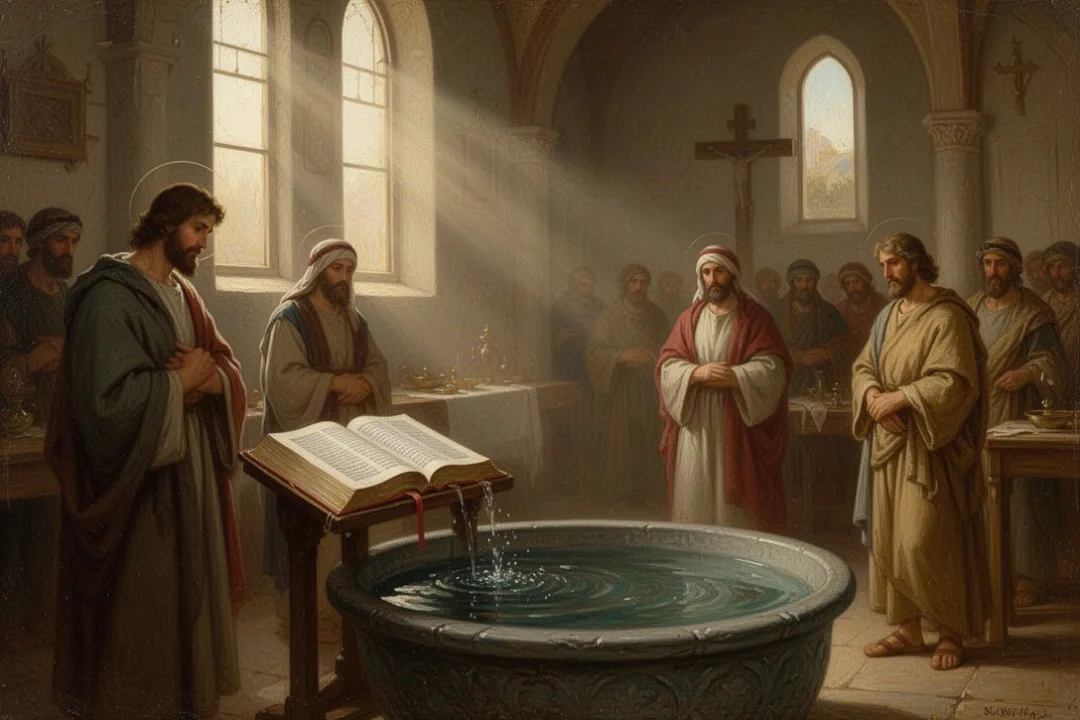
Jesus commands his followers to make disciples and baptize them in the name of the Father, Son, and Holy Spirit in Matthew 28:19. Baptism is therefore a significant Christian act of obedience and a public sign of belonging to Christ.
Romans 6 connects baptism with identification with Jesus’ death and resurrection. It portrays the baptized believer as leaving an old way of life and entering a new one. Many churches also see baptism as incorporation into the visible church and the Christian community.
Churches disagree about the exact role of baptism. Some Protestant churches describe it primarily as an outward sign of inward faith. Catholic, Orthodox, Anglican, Lutheran, and other traditions generally give baptism a sacramental role in which God’s grace is communicated through the rite. Churches also differ on infant baptism and believer’s baptism.
These differences should not hide the shared point: baptism is not meant to be an empty performance. It is a serious expression of faith, allegiance, and participation in the community of Christ. A person considering baptism can speak with a trusted local pastor or priest about that church’s teaching and practice.
Confession also has more than one form. Romans 10 associates verbal confession of Jesus as Lord with faith, while 1 John 1 encourages believers to confess sins to God. Some Christian traditions practice confession with a priest or pastor, and others emphasize direct confession to God alongside support from other believers.
Can good works earn salvation?
The short Christian answer is no, if “earn” means purchasing God’s forgiveness or making God obligated to save you. The New Testament repeatedly presents salvation as a gift of grace. Titus 3:5 describes salvation as grounded in God’s mercy rather than human righteousness.
Yet the New Testament also rejects the idea that faith can remain entirely disconnected from life. Jesus teaches that love for God and neighbor fulfills the heart of God’s commands. James 2 uses practical care for people in need to show why faith that never acts is empty.
A helpful distinction is:
Good works are not the price of salvation. You do not accumulate enough charitable acts to cancel sin.
Good works are a response to salvation. Gratitude, love, and the work of the Holy Spirit should shape the believer’s conduct.
Good works provide evidence of faith. They do not make a person perfect, but they show that faith is becoming active.
Christian traditions explain the relationship between faith, works, justification, and sanctification in different ways. A careful reading of the New Testament should preserve both truths: people are saved by God’s grace, and those who receive grace are called to live faithfully.
What happens after a person responds to the gospel
Salvation is described in several time frames. A person may be justified or forgiven through faith, is being sanctified as God changes character and conduct, and looks forward to final salvation when God completes the work. These terms help explain why conversion can be decisive while Christian growth remains lifelong.
Forgiveness and reconciliation
Through Christ, believers receive forgiveness and are reconciled to God. Romans 5 describes this reconciliation as peace with God through Jesus. This does not mean that believers never experience guilt, grief, or consequences. It means their standing before God is no longer based on hiding sin or proving personal worth.
New identity and new desires
Second Corinthians 5 describes those who are in Christ as part of a new creation. Christian identity is no longer defined only by past failures, social status, achievements, or other people’s judgments. The believer is called to live from a new relationship with God.
The work of the Holy Spirit
Christians believe the Holy Spirit lives and works within believers, bringing conviction, comfort, guidance, spiritual gifts, and power for holy living. Galatians 5 describes the Spirit’s fruit through qualities such as love, joy, peace, patience, kindness, goodness, faithfulness, gentleness, and self-control.
Spiritual growth is usually gradual. A person may still struggle with temptation, fear, anger, or selfishness after becoming a Christian. Growth involves returning to God, receiving correction, practicing obedience, and relying on grace rather than treating failure as proof that change is impossible.
How to respond to the plan for salvation
If you want to respond to the Christian gospel, you do not need impressive language. You can speak honestly to God, acknowledging your sin, trusting in Jesus, asking for forgiveness, and expressing your desire to follow him. A spoken prayer does not function as a magic formula; its meaning comes from sincere faith.
A simple response might include these elements:
Admit your need. Acknowledge that you have sinned and cannot repair your relationship with God by your own record.
Trust Jesus. Rely on his death and resurrection as God’s provision for forgiveness and reconciliation.
Turn toward God. Ask for help in leaving sinful patterns and learning a new way to live.
Confess your faith. Speak with a trusted Christian leader and, when ready, identify publicly with Christ.
Join a healthy church. Learn Scripture, worship with other believers, receive pastoral care, and practice love and service.
A trustworthy church should direct attention to Jesus rather than to a leader’s personality, demand for money, or promises of guaranteed prosperity. It should handle Scripture responsibly, protect vulnerable people, welcome honest questions, and take repentance, justice, and care for neighbors seriously.
How Christians can have assurance of salvation
Many believers wonder whether they are truly saved, especially after serious failure. First John was written in part to help Christians examine their faith, while Romans 8 emphasizes God’s love and the Spirit’s witness. Assurance does not mean feeling confident every moment; it rests on God’s character and promise in Christ.
Assurance can grow through several practices:
Remembering that salvation rests on God’s grace, not a flawless emotional experience.
Returning to the gospel when shame or fear becomes overwhelming.
Looking for the gradual fruit of faith, such as growing love, repentance, humility, and concern for others.
Remaining connected to mature Christian community and wise pastoral care.
Confessing sin honestly instead of hiding it or treating failure as hopelessness.
Assurance should not be used to excuse deliberate harm or persistent refusal to change. At the same time, fear should not be used by religious leaders to control people. Christian confidence combines humble self-examination with trust in God’s mercy.
How Christian traditions explain salvation differently
Most historic Christian traditions affirm that salvation comes through Jesus Christ and depends on God’s grace. They differ in how they describe justification, sacraments, baptism, human freedom, election, and the possibility of falling away.
Many evangelical and Baptist churches emphasize a personal conversion, justification by faith, assurance based on God’s promise, and believer’s baptism. Reformed churches often stress God’s sovereign grace and election, while still calling people to repent and believe. Wesleyan and Methodist traditions commonly emphasize grace that enables a genuine human response and a life of holiness.
Catholic and Orthodox churches describe salvation as life in Christ that begins through grace and is nourished through faith, the sacraments, repentance, worship, and love. They generally speak of salvation as both a present reality and a lifelong participation in God’s transforming work.
These labels can conceal significant internal variety. When comparing churches, ask what they teach about Jesus, grace, Scripture, baptism, communion, forgiveness, discipleship, and the treatment of people who are vulnerable or who disagree.
Common misunderstandings about the plan for salvation
“I must improve myself before God will accept me.”
Christianity teaches the opposite order. God’s grace meets people in their need, and relationship with God becomes the foundation for transformation. You should not wait until you feel worthy before seeking him.
“Saying the right words guarantees salvation.”
A prayer can express genuine faith, but repeated words without trust or repentance do not create a relationship with God. The focus is not on a perfect formula but on turning to Christ sincerely.
“A saved person never struggles again.”
Christian discipleship involves real change, but temptation and failure do not disappear instantly. Believers are called to repent and grow, not to pretend they have no weaknesses.
“Salvation is only about going to heaven.”
Eternal life is part of Christian hope, but salvation also concerns life with God now: forgiveness, reconciliation, holiness, love of neighbor, justice, worship, and participation in the community of faith. Christian hope includes resurrection and God’s renewal of creation.
“God’s forgiveness removes every earthly consequence.”
Forgiveness restores relationship with God, but harm may still require restitution, counseling, legal accountability, or continued boundaries. Grace never makes abuse, exploitation, or dishonesty acceptable.
The central message remains clear: humanity needs rescue from sin, and Christians believe God provides that rescue through Jesus Christ. Grace invites a response of faith and repentance, while the life that follows is shaped by worship, community, obedience, service, and hope.
Frequently asked questions
Is the plan for salvation the same in every Christian church?
The central message is broadly shared: salvation comes from God’s grace through Jesus Christ. Churches differ about baptism, sacraments, free will, election, justification, and whether salvation can be lost. Because of these differences, the clearest next step is to ask a local church how it explains grace, faith, repentance, baptism, and Christian growth.
Do I need to say a specific prayer to be saved?
Christianity does not teach that a particular set of words has magical power. A sincere response involves turning to God, trusting Jesus Christ, acknowledging sin, and asking for forgiveness. A prayer can express that response, but faith is shown through an ongoing relationship with Christ rather than through reciting a formula once.
What if I keep committing the same sin after becoming a Christian?
Repeated failure calls for honest repentance and practical help, not hopelessness. Confess the sin, seek accountability, remove avoidable opportunities for temptation, and ask mature Christians or qualified professionals for support. If someone else is being harmed, prioritize their safety and accept appropriate consequences. Growth can be gradual, but repentance should remain genuine.
Can someone be saved without being baptized?
Christian traditions answer this differently. All major traditions treat baptism as important, but they disagree about whether it is the means through which grace is given, a sign of faith, or both. A person who trusts Christ should not dismiss baptism; they should learn the teaching of a sound local church and pursue baptism in a responsible, informed way.









Leave a Reply