That statement comes directly from the way Jesus speaks about God in the New Testament. Jesus prays to the Father, obeys the Father, teaches people to trust the Father, and identifies the Father as the one who sent him. At the same time, historic Christian belief holds that Jesus is not a separate deity or merely a human messenger: he shares the one divine being with the Father and the Holy Spirit.
The phrase appears in Christian discussions because the Bible presents Jesus as both the Son who relates to God and the one who is given divine titles, authority, and honor. Paul refers to “the God and Father of our Lord Jesus Christ” in passages such as 2 Corinthians 1:3 and Ephesians 1:3. These references emphasize Jesus’ relationship with the Father rather than suggesting that Christians worship two competing gods.
Jesus’ human life also included genuine dependence, prayer, suffering, and obedience. He experienced the conditions of human existence while remaining central to Christian faith as the incarnate Son. The New Testament therefore uses relational language that must be read alongside passages about Jesus’ divine identity.
Different Christian traditions explain these teachings through the doctrine of the Trinity. In that understanding, the Father, Son, and Holy Spirit are distinct persons, but there is only one God. The Father is not the Son, the Son is not the Spirit, and the Spirit is not the Father; nevertheless, each fully shares the one divine nature.
The central distinction: “The Father is the God of Jesus” describes the relationship between the Father and the Son, while “Jesus is God” describes the Son’s divine identity within the one God of Christian belief.
How Scripture identifies the God of Jesus Christ
Several themes work together in the biblical account. Reading only one group of verses can make the subject seem simpler than it is, while reading the passages together shows why Christians have discussed it carefully for centuries.
Jesus calls God “Father.” His prayers and teachings consistently direct attention to the Father as the source and sender of his mission.
Jesus distinguishes himself from the Father. He speaks of being sent, receiving authority, and returning to the Father, showing a real personal relationship rather than a changeable role played by one person.
Jesus shares divine status. The New Testament attributes divine works, honor, authority, and names to him in ways that go beyond the role of an ordinary prophet.
The Holy Spirit is included in God’s work. The Spirit acts personally and participates in creation, revelation, sanctification, and the life of the church.
Christians still confess one God. Biblical monotheism remains intact; the Father, Son, and Spirit are not three independent gods.
This pattern explains why the phrase “God of Jesus Christ” should not be used as though it settles the entire question by itself. It identifies the Father, but it does not erase the New Testament’s claims about the Son or the Spirit.
Why Jesus prays to the Father
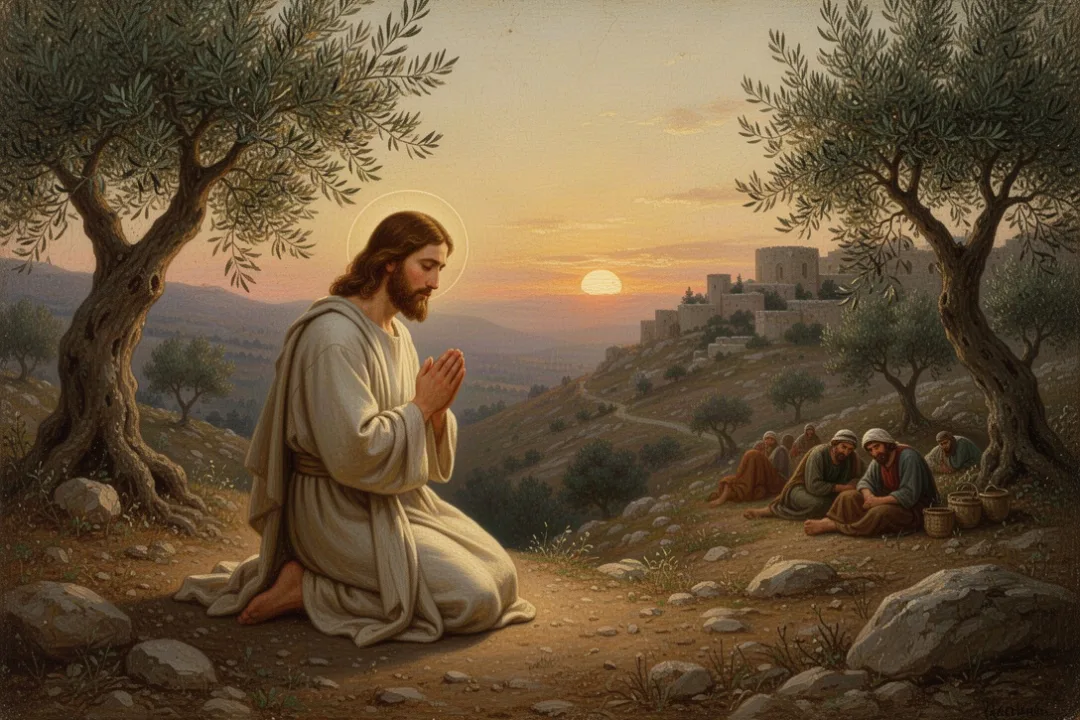
Jesus’ prayers are among the clearest reasons people ask who his God is. In the Gospels, he prays before major moments, gives thanks, grieves, asks for strength, and teaches his followers how to pray. His prayer in Gethsemane, described in Matthew 26, Mark 14, and Luke 22, shows him submitting his human will to the Father’s will while facing death.
For Christians, this does not mean Jesus is pretending to be human. The incarnation means that the eternal Son truly entered human life. His prayer expresses both his relationship with the Father and his authentic human experience of dependence and suffering.
John’s Gospel also describes the Son as being sent by the Father. The language of sending does not imply that the Son is a created being in traditional Christian interpretation. Instead, it describes the Son’s mission in history: the Father sends the Son to reveal God and accomplish salvation.
Jesus’ prayer life also provides a model for Christian prayer. Believers address God as Father because of their relationship to Christ, not because they have earned the right through moral achievement. Prayer becomes an act of trust, obedience, and participation in the relationship Jesus makes possible.
What Jesus means when he calls the Father “the only true God”
John 17 records Jesus praying to the Father and describing him as the only true God. Some readers understand this as proof that the Father alone is divine. Trinitarian Christians read the prayer within the whole New Testament and understand it as a confession of monotheism: the Father is the true God, not one deity among many, while the Son shares the divine identity.
The same Gospel contains statements about the Son’s unique relationship with the Father, his role in creation, and his authority to give life and judge. John 1 presents the Word as existing with God and having the divine nature before becoming flesh. John 20 describes Thomas addressing the risen Jesus with a title of divine significance. These passages are part of the reason Christian theology does not reduce Jesus to only a teacher or prophet.
The wording of John 17 also reflects Jesus’ mission as the one who reveals the Father. He is not directing his followers toward an unknown or different deity. He is showing them the Father whom he knows and makes known.
How the Father and Jesus relate without being the same person
Christian teaching uses the word person to describe the Father and Son as distinct centers of relationship, not as separate human individuals with separate gods. The Father loves the Son, sends the Son, speaks to the Son, and glorifies the Son. The Son loves the Father, obeys the Father, reveals the Father, and returns to the Father.
If the Father and Son were the same person, these relationships would become difficult to understand. Yet if they were unrelated beings, Christian monotheism would be abandoned. The doctrine of the Trinity attempts to hold together both sides of the biblical witness: real distinction between Father and Son, and one divine being.
This does not mean the Father is “more God” than the Son. The Son’s submission in his earthly mission refers to his role and work, not to a lesser divine nature. Many Christian theologians distinguish between the Son’s eternal identity and his incarnate mission so that obedience is not confused with inferiority.
What the Trinity says about the God of Jesus Christ
The Trinity is not the claim that one person is three persons or that three gods are somehow combined into one. Its basic claim is that God is one in being and three in persons: Father, Son, and Holy Spirit.
The doctrine developed as Christians sought to express all the biblical evidence faithfully. Scripture teaches that God is one, that the Father is God, that the Son is associated with divine identity and authority, and that the Holy Spirit acts in ways belonging to God. The formal language of later creeds is not a Bible verse, but it was created to protect these combined convictions.
Trinitarian theology also distinguishes between equality of divine nature and order of personal relation. The Father is the source and sender in the biblical story; the Son is sent and becomes human; the Spirit proceeds and applies God’s work. These descriptions concern relationship and mission, not three levels of deity.
The Father: the God whom Jesus addresses, obeys, and reveals.
The Son: Jesus Christ, eternally related to the Father and incarnate for human salvation.
The Holy Spirit: God’s personal presence and power, active in creation, revelation, and the church.
The one God: the single divine reality shared by Father, Son, and Spirit.
A useful safeguard: Avoid saying that the Father is the “real God” and Jesus is only secondary. That language conflicts with the historic Christian confession that the Son fully shares the divine nature.
What Jesus reveals about the Father
Jesus does more than mention the Father’s name. He presents the Father as the source of creation, the giver of life, the judge of all, and the one who seeks human restoration. His teaching portrays God as holy and righteous, but also merciful toward those who turn to him.
In the parable commonly called the prodigal son in Luke 15, Jesus portrays the father as eager to receive a repentant child. The story is not a complete definition of God, but it shows how Jesus wants people to understand divine mercy. The Father is not indifferent to human failure; he acts to restore relationship.
Jesus also connects the Father’s character with care for the vulnerable and with love for enemies. In Matthew 5, he teaches that God gives ordinary gifts of life and weather to people who are both good and evil, then calls his followers to reflect that generous character. His teaching does not make God permissive about wrongdoing. It presents divine goodness as active, patient, and morally serious.
According to John 14, Jesus makes the Father known because he uniquely shares the Father’s life. Seeing Jesus’ actions does not mean seeing a different god from the Father. It means encountering the Father’s character through the Son’s words, compassion, holiness, authority, and self-giving love.
How Jesus’ death and resurrection relate to the Father
The New Testament presents Jesus’ death as an act carried out in obedience to the Father and for the sake of humanity. The Father sends the Son; the Son willingly gives himself; and the Spirit is active in the broader work of God. These are not competing plans but one saving purpose carried out through distinct divine persons.
Christians disagree about how to explain the meaning of the cross in detail. Some emphasize substitution, others victory over sin and death, reconciliation, moral transformation, or a combination of these themes. They share the conviction that Jesus’ death is not an accident outside God’s purpose and that the resurrection is God’s vindication of Jesus.
Acts repeatedly describes God raising Jesus from the dead. This language preserves the distinction between the Father and the Son: the Father raises the Son. At the same time, other New Testament passages attribute resurrection life to Jesus’ own authority and to the action of the Spirit. The combined picture is a unified work of the triune God.
The resurrection also confirms Jesus’ identity. He is not merely a deceased religious teacher remembered by his followers. Christian proclamation treats him as the living Lord whose authority comes from God and whose relationship with the Father continues beyond death.
How other biblical descriptions of God fit together
The phrase “God of Jesus Christ” is especially prominent in the New Testament, but it rests on the Old Testament’s confession that there is one Creator and Lord. Jesus and the apostles do not present the Father as a new deity who replaces Israel’s God. They identify the Father with the God of Abraham, Isaac, and Jacob.
Jesus quotes and affirms Israel’s central confession of one God in Mark 12. He prays using the language of Israel’s Scriptures, celebrates Jewish feasts, and interprets the law and prophets as part of the story reaching fulfillment in him. His relationship with the Father therefore belongs within the biblical history of God’s covenant with Israel.
The New Testament also applies Old Testament language about the Lord to Jesus in significant passages. Philippians 2 describes Jesus receiving universal homage after humbling himself, echoing themes found in Isaiah. Romans 10 connects confession of Jesus as Lord with salvation while drawing on Israel’s Scriptures. These connections explain why early Christians could worship Jesus without viewing themselves as abandoning monotheism.
How major Christian perspectives differ
Most Catholic, Eastern Orthodox, and Protestant churches affirm the Trinity and therefore teach that the Father is the God of Jesus while Jesus is fully divine. They may differ in language, worship practices, and theological emphasis, but they share the basic confession of one God in three persons.
Some groups that identify as Christian reject the Trinity. They may teach that the Father alone is the supreme God and that Jesus is a created or subordinate heavenly being, or they may describe Jesus primarily as a uniquely empowered human Messiah. Other groups use “Father,” “Son,” and “Spirit” as different manifestations of one divine person rather than distinct persons.
These positions differ over several questions:
Whether Jesus existed eternally or began to exist.
Whether Jesus possesses the same divine nature as the Father.
Whether the Father and Son are distinct persons or different appearances of one person.
How Jesus’ human knowledge, weakness, and obedience relate to his divinity.
What it means for Christians to worship Jesus while affirming one God.
When comparing teachings, check the group’s actual definitions rather than relying on labels. A community may use the words “Father,” “Son,” or “God” in ways that differ from historic Trinitarian usage.
What this belief means for Christian prayer
Christian prayer is commonly offered to the Father, through the Son, in the Holy Spirit. This pattern appears in different forms throughout the New Testament. It does not prevent Christians from praying directly to Jesus or addressing the Holy Spirit. Instead, it expresses the belief that access to the Father comes through Christ and is made possible by the Spirit.
The Lord’s Prayer in Matthew 6 begins by addressing God as Father. Jesus teaches dependence on God for daily needs, forgiveness, moral protection, and the coming of God’s kingdom. The prayer is not a formula that removes personal expression; it provides a pattern centered on trust and obedience.
Prayer to the Father also guards against treating God as an impersonal force. Christians are invited into a relationship with the God who knows, loves, judges, forgives, and acts. Through Jesus, they approach the Father with confidence while still recognizing divine holiness.
Common misunderstandings about the God of Jesus Christ
“Jesus has a God, so Jesus cannot be divine.”
This conclusion follows only if divinity and relationship to the Father are treated as opposites. Trinitarian Christianity says they are not opposites. As the incarnate Son, Jesus truly relates to the Father as a human being and as the Son; his prayer and obedience do not cancel his divine identity.
“The Father and Jesus are simply the same person.”
This view has difficulty accounting for the Gospel scenes in which the Father sends, speaks to, loves, and glorifies the Son. The Christian doctrine of the Trinity maintains that Father and Son are distinct persons while remaining one God.
“The Trinity teaches three gods.”
That is not what the doctrine claims. Three gods would be tritheism, not Trinitarian monotheism. The Trinity states that the one divine being exists eternally as Father, Son, and Holy Spirit.
“Jesus’ human life was only an appearance.”
The New Testament presents Jesus as genuinely human. He becomes tired, suffers, prays, bleeds, dies, and rises bodily. Historic Christianity rejects the idea that his humanity was a disguise or illusion.
How to study the subject carefully
If you are examining the question for the first time, read passages in groups instead of building a conclusion on one isolated phrase. Pay attention to who is speaking, whether the passage describes Jesus before or after the incarnation, and whether it addresses his divine identity, human experience, or saving mission.
Begin with Jesus’ prayers and teachings. Read selected passages in Matthew, Mark, Luke, and John to see how he speaks about the Father.
Examine passages about Jesus’ identity. Consider John 1, John 8, John 10, John 20, Philippians 2, Colossians 1, and Hebrews 1.
Study the Holy Spirit’s role. Acts and 1 Corinthians describe the Spirit as active and personal rather than merely an impersonal energy.
Compare the passages together. Ask how each text contributes to the themes of one God, distinct persons, incarnation, prayer, and worship.
Check historical definitions. Learn how terms such as nature, person, incarnation, and Trinity are being used before comparing different beliefs.
A careful reading should preserve both truths that the New Testament places side by side: Jesus worships and obeys the Father, and Jesus receives the honor and authority associated with God. The phrase “the God of Jesus Christ” points especially to the Father, but its full meaning emerges only within the broader Christian confession of the Father, Son, and Holy Spirit.
Frequently asked questions
Is God the Father the God of Jesus Christ?
Yes. Jesus consistently speaks of God as his Father and prays to him. The New Testament also uses the wording “the God and Father of our Lord Jesus Christ.” In historic Christianity, this does not mean the Father is a different god from Jesus. It describes the Father-Son relationship within the one God confessed as Father, Son, and Holy Spirit.
Does Jesus being subordinate to the Father mean he is not God?
Historic Christian theology distinguishes Jesus’ role in his earthly mission from his divine nature. As the incarnate Son, Jesus obeys, prays to, and is sent by the Father. Christians who affirm the Trinity believe this submission reflects relational order and genuine humanity, not a lesser level of divinity or a created status.
Did Jesus worship the same God as the Jewish people?
Yes. Jesus identified the Father with the God revealed in Israel’s Scriptures. He prayed using those Scriptures, affirmed that God is one, and treated Israel’s covenant history as the setting for his mission. Christianity claims continuity with that monotheistic faith while also teaching that Jesus shares in the divine identity.
Can Christians pray to Jesus if the Father is his God?
Yes. The New Testament includes prayers and worship directed to Jesus, while also presenting prayer to the Father through the Son and in the Holy Spirit. Christians who accept the Trinity understand this as honoring the one God, not dividing worship among separate deities. Traditions differ in prayer language, but direct devotion to Jesus is widespread.







Leave a Reply