Overview: 10 fun facts about Mary, mother of Jesus
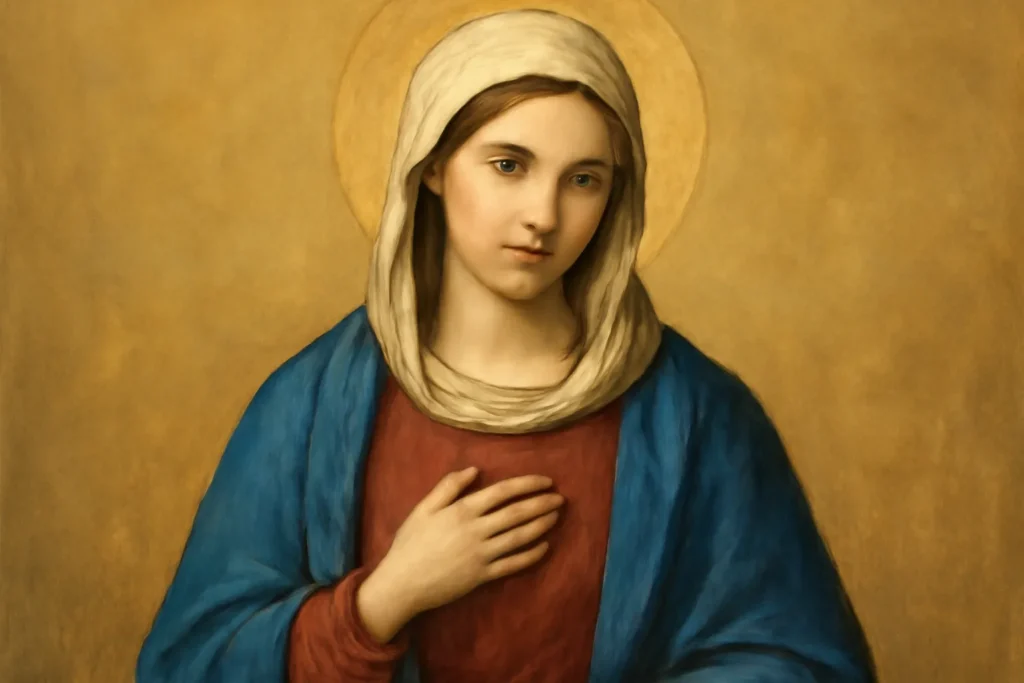
Mary, mother of Jesus—often simply called Mary or the Blessed Virgin—appears in Christian tradition across
many forms: as a historical figure, a symbol of faith and obedience, and a focal point for art, music, and
devotion. Even people who do not share a specific religious belief may know her as a powerful model of humility,
courage, and maternal care. In this article, we present ten fun facts about Mary, mother of Jesus in a way
that highlights both biblical sources and the broad cultural and theological significance she has carried through the ages.
To give this guide broader semantic breadth, you will see variations like ten delightful facts about Mary, Mary,
mother of Jesus: ten pieces of insight, and ten interesting details about Mary in Christian tradition.
Each entry aims to be informative rather than simply sensational, offering context, scriptural anchors, and
historical notes you can follow up on.
Fact 1: The name and early origins of Mary
The name Mary (often rendered as Mary in English, and historically from the Hebrew Miryam)
carries layers of meaning and cultural history. In its roots, Miryam appears in the Hebrew Bible-era onomastic
lists and in later Greco-Roman usage as Maria or Maria in the New Testament texts.
In biblical narratives, Mary comes from the region of Galilee, specifically the town of Nazareth,
which was a small, rural community in first-century Palestine. The choice of Nazareth as Mary's home place has
carried symbolic weight in Christian tradition, marking her as a person of humble beginnings who would be thrust into
world-changing events. The juxtaposition of Nazareth’s anonymity with the extraordinary role she would play is one of
the most striking tensions in the Mary stories.
There is a blend of historical and traditional understandings about Mary’s descent. The Gospels recount Jesus’ Davidic lineage
and, by extension, situate Mary within a broader Jewish family context. In Luke the genealogical line is traced through
Joseph, linking Jesus to David and Abram, which has led scholars to discuss how Mary’s own line
might fit into that heritage. Some later Christian traditions propose that Mary herself came from a Davidic line via her mother
or extended family. While the biblical text does not provide a definitive, line-by-line picture of Mary’s childhood, the weight
of Davidic ancestry and the setting of Nazareth together shape how Mary is read in Christian memory.
Mary’s given name signals importance in both Jewish and Christian traditions, and its various cultural renderings have helped
her story travel across languages and continents.
Her home town of Nazareth highlights a contrast between the modesty of her upbringing and the grandeur of the events she would witness.
The idea of a Davidic connection appears in interpretations of her background, even as the Gospel texts themselves center on Jesus’ own Davidic line.
In short, this first fact—about the name, birthplace, and family context—sets the stage for the way later accounts
portray Mary as a figure of humility who nonetheless plays a pivotal role in a story of shared destiny and divine purpose.
Why this matters
Understanding Mary’s name and origin helps readers appreciate the narrative strategy behind her portrayal: a humble maiden
who becomes the vessel for profound theological claims about God’s action in history. The resonance of her identity
across traditions—whether celebrated as the Theotokos (God-bearer) or revered in other ways—depends in part on
these foundations: a real locale, a familial line, and a name carrying cultural weight.
Fact 2: The Annunciation—Gabriel’s visit and Mary’s fiat
One of the most well-known moments in Mary’s story is the Annunciation, when the archangel Gabriel appears to her
with the surprising news that she will conceive and bear a son, even though she is a virgin. The account is found in
the Gospel of Luke (Luke 1:26–38), and it becomes a defining turning point not only for Mary but for Christian belief
about the incarnation.
In the moment of encounter, Gabriel speaks a message of blessing and purpose: “Hail, favored one! The Lord is with you.”
Mary’s initial response is one of grace-filled humility rather than fear: she is startled, yet she responds with a posture
of openness. The most famous line in this passage is Mary’s own fiat—her consent: “Behold, I am the servant of the Lord;
let it be to me according to your word.”
This fiat is often celebrated as a model of trust and obedience under extraordinary pressure. The encounter
also emphasizes the role of divine initiative in human history: God’s plan intersects with Mary’s free choice, yielding
what many theologians describe as a unique moment in salvation history.
Gabriel’s greeting signals not just an ordinary message but a heavenly commissioning with cosmic consequences.
Mary’s response demonstrates not only trust but also a willingness to participate in God’s plan, even when the path is unclear.
The term Annunciation has become a standard way to refer to this pivotal moment when heaven speaks to earth.
The Annunciation does not just reveal a miracle; it reveals a relational dynamic: God’s intention to work through a human
life. The reverberations of this moment reach into later Christian devotion, including Marian prayers and feasts that focus
on listening to God and saying “yes” in daily life as well as in extraordinary moments.
Variations in interpretation
Across Christian traditions, the Annunciation is remembered with different theological emphases. Catholic and Orthodox
churches highlight Mary’s assent and her role in the hypostatic union—the union of divine and human natures in Jesus.
Protestant readings often stress the trust and obedience demonstrated by Mary as a model of faith. Regardless of the lens,
the Annunciation remains a central story about encounter, consent, and the birth of a new kind of possibility in
human history.
Fact 3: The virgin birth and the mystery of the Holy Spirit
The encounter described in Luke leads to one of Christianity’s most enduring mysteries: the Virgin birth of Jesus.
The Gospel writers emphasize that Jesus was conceived by the Holy Spirit and born of the Virgin Mary. This belief
anchors the claim of Jesus’ divine origin while maintaining the reality of his full humanity.
The concept of the Virgin birth has shaped crucial doctrinal questions, including those about
the nature of Christ, the meaning of incarnation, and the way salvation operates in human history. Different Christian
traditions have offered nuanced interpretations:
Catholic and Orthodox teachings often center the dogma of the virgin birth as part of the larger
mystery of the incarnation and emphasize Mary’s role within the divine plan.
Protestant perspectives may focus more on belief in Jesus’ divine Sonship and the miraculous nature of conception
while holding to the central claim that Jesus is both fully divine and fully human.
Beyond doctrinal positions, the Virgin birth has inspired centuries of poetry, art, and music, illustrating how a single
belief can shape culture in profound ways. The story invites readers and worshippers to wonder at what is possible when God
acts in human history, often in ways that defy ordinary expectations.
The language of the miracle
The Gospel writers use language that invites contemplation rather than mere explanation. Phrases like “conceived by the Holy Spirit”
point to a theological truth that is not just about a physical act but about a divine initiative that redefines what it means
for God to be present in the world. This linguistic approach has helped believers interpret the event as a foundational moment
for Christian faith—one that continues to be explored in liturgy, preaching, and personal reflection.
Fact 4: Mary’s visit to Elizabeth and the Magnificat
While Mary is often associated with the Nativity narratives, another key moment is her visit to Elizabeth, her relative who
is pregnant with John the Baptist. The meeting, described in Luke 1, is where Mary pronounces the Magnificat,
her song of praise.
The encounter between Mary and Elizabeth becomes a moment of shared joy and prophetic revelation. When Elizabeth greets Mary,
the unborn John responds in the womb, and Mary responds in a way that has resonated through poetry and worship for generations.
“My soul magnifies the Lord, and my spirit rejoices in God my Savior.” (The Magnificat)
The Magnificat is a long, rich prayer that highlights several themes:
Humility before God and the bearing of God’s favor to the humble.
Reversal of social expectations, with the mighty brought down and the poor exalted.
Mercy and steadfast love for those who fear God and avoid arrogance.
The Magnificat has become a key text in Christian liturgy, particularly in Advent and Vespers services, where its
language of praise, hope, and justice continues to resonate with believers preparing for a season of waiting and renewal.
Why the Elizabeth interaction matters
The meeting emphasizes community and kinship in Mary’s story. It shows that Mary’s calling unfolds in relationship with
others who recognize God’s work in accord with justice and mercy. The Magnificat, with its bold proclamation of reversal,
has shaped many theological reflections on social ethics and the dignity of the marginalized.
Fact 5: Mary at Cana—the first public sign and Mary’s intercession
One of the more human and relatable scenes in Mary’s gospel appearances occurs at the wedding at Cana in Galilee.
When the hosts run out of wine, Mary notices the problem and brings it to Jesus. She says to the servants, “They have no wine.”
Jesus responds with a phrase that scholars discuss for years, and yet he ultimately performs the miracle that becomes both
a sign and a moment of grace.
The event at Cana is often cited as an example of Mary’s role as an intercessor and a motherly figure who brings human need
before her son. It also introduces the first public sign of Jesus’ powerful activity, revealing his glory and prompting the
disciples to believe in him.
Mary’s intercession invites a response from Jesus that demonstrates the power of humble advocacy on behalf of others.
The miracle at Cana is the first of Jesus’ signs, setting a pattern for how the Gospel of John presents Jesus’ public ministry.
This episode has inspired many works of art and music that depict Mary at the wedding, guiding viewers to attend closely to the moment of transformation.
The Cana narrative is a bridge between Mary’s quiet privacy and her active presence in Jesus’ life and mission. It invites readers
to think about how intercession and concern for practical needs can become a conduit for grace in everyday life.
What this teaches about faith in action
The Cana story emphasizes practical faith: God answers not only prayers for salvation but also requests for daily needs.
It invites people to trust that small, ordinary moments—like a wedding feast—can become occasions for divine action when people
open themselves to God’s purposes.
Fact 6: Mary at the cross and Mary as mother of the Church
In the Gospel narrative, Mary is present at the foot of the cross, sharing in the sorrow of Jesus’ crucifixion. John’s Gospel
records Jesus’ command to the beloved disciple to take Mary into his house, a brief yet powerful moment that has carried
rich meaning for the Christian church.
Mary’s presence at the crucifixion is often read as a symbol of maternal care and steadfast faith under trial. Later Christian
tradition extended her motherhood beyond the immediate family to the Church itself, developing the title of Mother of the Church.
Mary at the cross is a figure of faithful presence even in suffering, offering a model of steadfast devotion.
The biblical gesture of Jesus entrusting Mary to the beloved disciple is interpreted by many as a symbolic act of
Mary’s ongoing maternal care for the early Christian community.
The designation Mother of the Church emerges in later theology as a way to acknowledge Mary’s role in guiding and interceding for believers everywhere.
The cross scene has inspired generations of Christian devotion, including Marian prayers and artworks that emphasize consolation,
compassion, and trust in God’s salvific plan. It also helps explain why Mary remains a central figure in liturgical life and
spiritual practice across many Christian traditions.
Mary and the church’s mission
Many theologians see Mary’s motherhood as a model for the church’s mission: to nurture faith, to care for the vulnerable,
and to bear witness to God’s mercy. The image of Mary at the cross has been a source of comfort to believers who face
hardship, reminding them that divine love remains present even in times of pain.
A defining moment in early Christian theology was the affirmation that Mary is the Theotokos, literally
“God-bearer,” or more colloquially translated as Mother of God. This title was ratified in the Council of Ephesus in 431 CE.
It was proposed to safeguard the doctrine of Jesus Christ as both fully divine and fully human, rather than reducing one
of those natures to a mere symbol.
The decision to acknowledge Mary as Theotokos was not simply a linguistic or honorary label; it was a concrete theological
statement about the nature of Christ. If Jesus is truly God and truly human, then Mary, as his mother, bears a title that
acknowledges her role in the incarnation without implying a contradiction in the divine nature.
Theotokos is a term used across Orthodox and Catholic traditions and has profound implications for Christology.
This title has shaped Marian devotion, liturgy, and art, inviting believers to reflect on the mystery of God becoming human.
Different Christian traditions discuss Mary’s role with different theological emphases, but the underlying claim about Jesus’
divine identity remains central to the use of this title.
The emergence of Theotokos as a recognized title contributed to Mary’s importance in church life, helping to anchor the
veneration of Mary within a framework that centers on the mystery of Christ and the gracious act of God in human history.
Fact 8: Mary’s perpetual virginity, Immaculate Conception, and related traditions
Over the centuries, Mary’s life has been reflected upon through various doctrinal lenses that address her perpetual virginity, her own immaculate conception, and related ideas.
Perpetual virginity is the belief that Mary remained a virgin before, during, and after the birth of Jesus.
Different Christian traditions have nuanced positions on this idea, and it has played a major role in Marian devotion and
ecclesial teaching. The Immaculate Conception is a separate doctrine that asserts Mary was conceived without
original sin, a doctrine formally defined by the Catholic Church in 1854. The Immaculate Conception speaks to Mary’s spiritual
purity and preparation for her unique role in salvation history.
These doctrines have been the subject of extensive theological reflection and ecclesial debate across centuries. For some readers,
they offer a lens to understand Mary’s sanctity; for others, they present a source of ongoing discussion about what is required to
participate in God’s work in the world.
Perpetual virginity is widely accepted in Catholic and Orthodox traditions, with varying emphasis in Protestant circles.
Immaculate Conception is an important Catholic doctrine, reflecting a particular theological framework about sin, grace, and Mary’s mission.
Many churches honor Mary through feast days, liturgical prayers, and devotional practices that center on her unique calling and purity.
Regardless of how one formally understands these doctrines, what remains central in public memory is Mary’s example of
faithfulness and her willingness to participate in God’s plan, even when the path was difficult or unclear.
Fact 9: The Assumption and Mary’s heavenly home
In Catholic theology, the Assumption refers to Mary being taken up body and soul into heaven at the end of her earthly life.
This belief is celebrated in the Feast of the Assumption and has an emphasis on the dignity of the human body as part of God’s
gracious plan for the entire person.
The Assumption is a doctrinal teaching that has inspired art, prayer, and liturgical practice for centuries. It is not universally
accepted in the same way across all Christian traditions; some churches emphasize a “dormition” or other understandings of Mary’s
end, while others do not doctrinally define the event. Nonetheless, the idea of Mary’s heavenly home has become a powerful symbol
of hope and eschatological expectation for many believers.
Assumption celebrations are common in Catholic and Orthodox churches, often with processions, Marian feasts, and pilgrimages.
Artistic representations frequently depict Mary in a heavenly light, surrounded by angels and light, symbolizing her entrance into
God’s presence.
The concept of Mary’s ascension into heaven is sometimes linked with broader Christian themes of resurrection and eternal life.
The Assumption invites contemplation of the final destiny of believers and the belief in the transformation that comes with
participating in God’s life. It highlights Mary not only as a mother figure but as a symbol of ultimate union with God.
Fact 10: Mary across faiths and cultures—a figure of reverence beyond Christian boundaries
Mary is not only central to Christian devotion; she holds a place in other religious traditions as well, including Islam. In
the Qur’an, Maryam is one of the most revered women, chosen and protected by God, and she is the mother of Jesus
(although Islamic theology presents Jesus as a prophet rather than a divine incarnation). The Qur’anic account emphasizes Mary’s
piety, chastity, and faithfulness, celebrating her as a model of steadfast devotion.
Outside the religious texts themselves, Mary’s presence in art, literature, music, and popular culture has made her a cross-cultural
icon. From medieval cathedrals to modern film and poetry, the figure of Mary has inspired generations to think about mercy, mercy
toward the vulnerable, and the quiet courage of a person who says yes to life’s call.
In Islam, Mary is respected as a pure and virtuous woman recognized for her righteousness.
In Orthodox and Catholic traditions, Marian feasts, icons, and pilgrimages shape a vivid devotional culture.
In Protestant circles, Mary’s central role is honored, though the emphasis on Marian devotion may vary; Mary is
frequently remembered for her obedience and faithfulness as a model for believers.
The global reach of Mary—the way her story travels across languages, continents, and belief systems—reflects a deep human
fascination with motherhood, courage, and the mystery of grace. The varied portrayals across cultures demonstrate how one life
story can be reframed in multiple meaningful ways, inviting readers to learn, reflect, and engage with a history that continues
to unfold in contemporary contexts.
Conclusion: The enduring resonance of ten facets about Mary, mother of Jesus
The ten facets of Mary, mother of Jesus presented here—ranging from linguistic origins and biblical moments to doctrinal
developments and cross-cultural significance—show that her story is not simply ancient history but a living thread in religious
imagination and everyday life. Whether you approach these ideas through a scholarly lens, a devotional lens, or a cultural
studies lens, there is something in Mary’s life that invites contemplation: a model of courage in the face of the unknown,
a willingness to participate in a larger plan, and a tenderness that has inspired countless artists, poets, and believers across
centuries.
If you are exploring ten interesting details about Mary or simply want to understand “Mary, mother of Jesus” in a broader sense,
this article offers a foundation for further reading. The woman behind these narratives remains a compelling figure precisely
because her life touches on universal questions: What does it mean to say yes to a call greater than oneself? How does one respond
with faith and courage when the path is unclear? And how can a mother’s love—real or symbolic—be a guiding force for a world in need?







Leave a Reply