Introduction: what an Activity Bible offers and why it matters
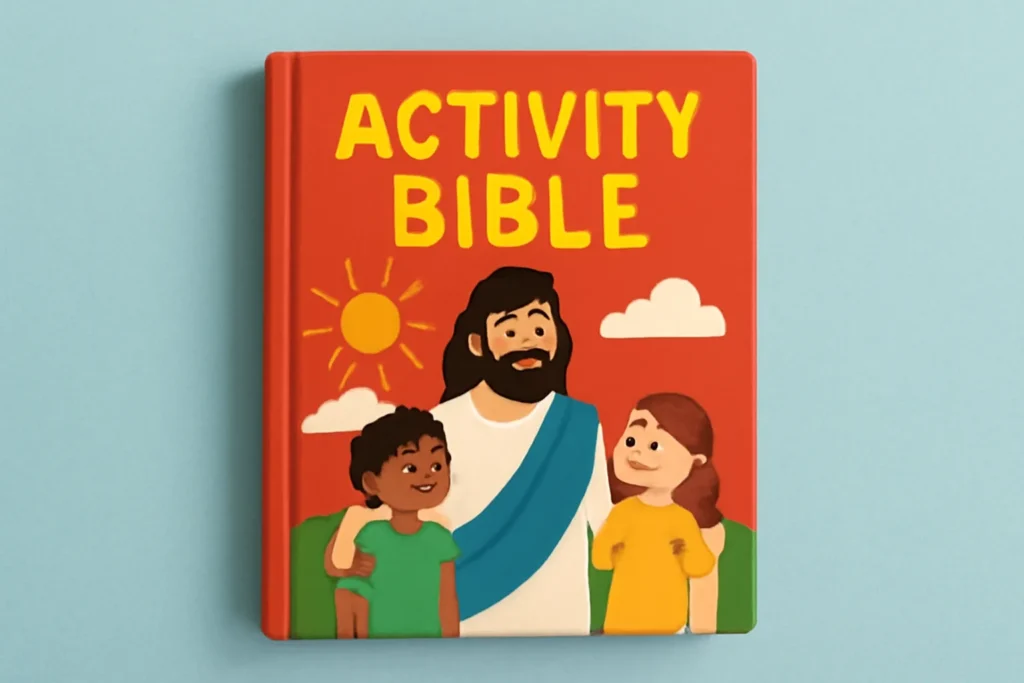
The Activity Bible is more than a collection of ideas; it is a structured, flexible framework that helps organizers, parents, teachers, and hobbyists design and execute creative activities with clarity and intention. When people search for the Activity Bible, they are often seeking a trusted resource that blends inspiration with practical steps, safety considerations, and scalable options. In this guide, we use activity bible as a concept and weave together variations like the Activity Bible guide, activity-bible, digital Activity Bible, and printable Activity Bible to cover the breadth of ways this idea can be delivered and used. The goal is to help you think systematically about creative engagement, while leaving room for spontaneity, curiosity, and personal expression.
Throughout this article—tocusing on the idea of an Ultimate Guide to Creative Activities—you will find practical layouts, thematic ideas, and stepwise instructions that you can adopt as-is or tailor to your context. Whether you are building a family activity book, curating classroom experiences, running after-school programs, or developing a personal hobby project, the concept of an Activity Bible can bring order to creativity and turn ideas into actionable plans.
The core purpose of the Activity Bible: what it seeks to achieve
At its heart, the Activity Bible aims to help people achieve four core goals:
Access and inclusion: provide activities that accommodate varying ages, abilities, and interests.
Engagement: present activities in ways that capture attention, sustain momentum, and encourage participation.
Learning outcomes: embed educational or developmental aims such as problem-solving, collaboration, fine motor skills, or scientific literacy.
Safety and practicality: outline materials, spaces, and timeframes so activities can be implemented smoothly and safely.
In this guide, we will repeatedly return to the idea that a well‑constructed activity bible is both a repository of ideas and a living toolkit. It is designed to be revisited, revised, and expanded as you try activities, observe results, and refine your approach. The phrases creative activities, hands-on learning, and experiential education recur because they capture the essence of what an Activity Bible seeks to cultivate: meaningful, tactile experiences that deepen understanding and joy.
What is included in a modern Activity Bible?
A comprehensive activity bible blends content, structure, and guidance. Here are the typical components you’ll encounter, whether you are using a printable Activity Bible or a digital Activity Bible:
Activity catalogs organized by themes, skill areas, or learning goals.
Step-by-step guides for each activity, including prep, execution, and cleanup tips.
Materials lists with alternatives to accommodate budget or accessibility needs.
Time estimates for planning, setup, and reflection, enabling pacing and scheduling.
Adaptation notes for different ages, abilities, and group sizes.
Safety guidelines to minimize risk and ensure a comfortable, supervised environment.
Assessment ideas and reflection prompts to document learning and engagement.
Seasonal and themed sections to align with holidays, school terms, or environmental cycles.
In addition to these core components, you will find creative prompts, cross‑curricular links, and optional extensions that invite deeper exploration. A well‑constructed Activity Bible also emphasizes accessibility, ensuring that activities are reachable for people with different mobility, sensory, or cognitive needs. The goal is to create a library that expands possibilities rather than constraining them.
Who can benefit from an Activity Bible?
The versatility of the Activity Bible makes it relevant for a wide audience. Here are some of the most common users and how they benefit:
Families seeking engaging, educational activities for weekends, school holidays, or rainy days.
Teachers and classroom aides who want ready-to-use, standards-aligned activities that promote active learning.
After-school program coordinators needing structured yet flexible activities that fit a multi-age group.
Libraries and community centers aiming to attract families and curious learners with approachable, imaginative programming.
Individuals pursuing personal growth, hobbyists, and creative practitioners who want a curated toolkit for self-directed projects.
Across these groups, the central advantage of the activity bible approach is an organized repository that reduces planning friction, increases consistency, and unlocks more time for meaningful engagement with participants. The concept can be scaled from tiny, 15-minute activities to multi-session projects that last weeks, depending on your context and objectives.
The core framework: a practical structure for the Activity Bible
To consistently deliver high‑quality creative activities, an Activity Bible benefits from a clear framework. Here is a practical structure you can adopt or adapt. It is designed to be flexible enough to fit different content areas while retaining a dependable workflow.
3.1 The planning phase
Before you start any activity, take a moment for planning. The planning phase ensures that you align with the goals, the audience, and the setting. Consider these steps:
By systematizing these decisions at the outset, you prevent last‑minute scrambling and set clear expectations for everyone involved. The planning phase is a cornerstone of the activity bible resource approach because it anchors activity design in practicality as well as imagination.
3.2 The activity design phase
The design phase translates goals into concrete, executable steps. It includes:
Creating a step-by-step protocol that participants can follow with minimal confusion
Incorporating differentiation to accommodate varying skill levels
Designing for accessibility (language, visuals, alternative materials)
Embedding feedback loops so participants can reflect and iterate
Integrating a mindful balance between structure and freedom for creativity
This phase often yields a cardstock of ideas: activity outlines, rubrics for success, and optional extensions that broaden or deepen the experience. A strong activity bible will present a range of designs—from quick wins to longer projects—so you can adapt to unexpected time constraints or participant energy levels.
3.3 Materials, safety, and logistics
Practical effectiveness depends on thoughtful materials planning and safety consciousness. Consider:
Substitutions for common materials in case of allergies, budget limits, or supply shortages
Clear safety guidelines and age-appropriate supervision requirements
Ways to maintain cleanliness and minimize mess, including cleanup checklists
Storage solutions for recurring activities and easy access to tools
In the context of the digital Activity Bible, this framework extends to online resources, video tutorials, and printable handouts. In print or hands-on editions, the materials list becomes a tactile map that guides participants through the physical aspects of the activity. The same framework can be adapted for remote or hybrid formats, with clear instructions, accessible media, and opportunities for asynchronous participation.
Categories of activities you’ll typically find in an Activity Bible
To support a broad range of interests and objectives, the activity bible resource often categorizes ideas into several powerful domains. Here are common categories you can expect to see, with examples of each:
Arts and crafts — painting, collage, weaving, clay modeling, origami, sculpture, fabric dyeing.
STEM and maker activities — simple machines, circuit basics, chemistry with safe household reagents, building challenges, coding prompts.
Storytelling and language arts — prompt cards, collaborative storytelling, character design, illustrated journals.
Music and movement — rhythm games, DIY instruments, simple choreography, sound mapping.
Mindfulness, reflection, and social-emotional learning — guided breathing, gratitude journals, reflective prompts, group circles.
Digital and media literacy — photo projects, video storytelling, simple animation, safe online collaboration.
Cooking and sensory play — safe no-heat recipes, texture exploration, aroma sets, edible science experiments.
Community and service‑oriented activities — collaborative murals, care packages, fundraising events, peer teaching sessions.
Each category can be tailored toward a theme, such as a season (autumn, spring), a topic (ecosystems, resilience), or a skill set (critical thinking, collaboration). When you curate an Activity Bible, you’ll often create sub‑collections that help users navigate quickly to the kinds of activities they need for a given moment.
The following outlines illustrate how the Activity Bible translates abstract ideas into tangible, doable experiences. They demonstrate the step-by-step nature of the guide while highlighting the flexibility of adaptations across settings.
4.1 Nature collage and field journal
Prepare a simple field kit: notebook, glue sticks, scissors, a small palette of watercolors, and a camera or smartphone for optional documentation.
Go on a short outdoor walk and collect safe items from nature (leaves, twigs, petals) while noting ideas in the field journal.
Create a nature collage page: arrange items on a page, sketch observations, and annotate with color notes and textures.
Conclude with a brief reflection: what did you notice about shapes, colors, and patterns?
Variations to adapt for younger children or limited outdoor access include using a nature collage kit indoors with safe faux items or printable nature cards that simulate the experience.
Gather clear cups, water, primary food coloring, and a set of measuring spoons.
Pour water into cups and add a drop of color to illustrate primary color mixing (red + blue = purple, etc.).
Encourage learners to predict outcomes, then mix two or three colors to discover secondary colors.
Document results with a quick chart and discuss color theory in simple terms.
Notes for inclusivity: provide labeled color cards for color‑blind participants and offer tactile color swatches or large-print visuals.
4.3 Story prompt cards: collaborative storytelling
Prepare a set of prompt cards with characters, settings, and dilemmas.
In small groups, players draw one card from each category to craft a short story outline.
Groups rotate to add a twist to each other’s stories, then everyone shares a mini‑presentation.
This activity emphasizes collaboration and verbal expression while keeping the structure flexible. You can transform it into a digital version with shared documents or a simple slide deck for remote participants.
4.4 DIY instrument and rhythm exploration
Provide simple materials: rubber bands, a cardboard tube, or empty tins, plus a rhythm chart.
Design a percussion instrument and explore different sounds by adjusting tension, length, or surface materials.
Play rhythm games that reinforce timing, pattern recognition, and listening skills.
Incorporate a reflective component: which sounds felt soft or sharp, and how did tempo influence mood?
How to use the Activity Bible in different settings
One of the strongest advantages of the Activity Bible concept is its adaptability. Here are strategies for applying this guide across common contexts:
At home and family environments
Develop a weekly activity schedule that balances creative tasks with rest and free play.
Use a family-friendly materials kit to reduce friction during activity time.
Encourage family members to contribute ideas to a shared family activity notebook.
In classrooms and formal education
Align activities with learning standards and incorporate formative assessment moments.
Differentiate activities to support diverse learners, offering scaffolds or extensions as needed.
Integrate reflection prompts that help students articulate what they learned and how they solved problems.
In community spaces and clubs
Use a rotating facilitator model to share responsibility and build leadership skills.
Design activities that require teamwork and empathy, strengthening social bonds within groups.
Offer a mixture of drop-in and structured sessions to accommodate varying participation levels.
Position the activity bible as a resource for family programming and lifelong learning.
Provide accessible formats (large print, audio descriptions, captioned videos) to welcome a broad audience.
Collaborate with local experts to create themed editions (e.g., local wildlife, local history, STEAM week).
Across settings, the creative activities principle remains the same: clarity, flexibility, and learner-centered design. The Activity Bible is a living document that grows with feedback, new ideas, and evolving needs.
Templates and practical tools you can borrow from the Activity Bible approach
To make implementation easier, you can adopt a few practical tools that frequently appear in strong activity bibles. Here are some that you might incorporate into your own version of the Activity Bible:
Activity cards with a concise title, objective, materials, steps, and extension ideas.
Lesson plans broken into opening, exploration, sharing, and closing segments.
Checklists for setup, execution, and cleanup to reduce planning cognitive load.
Differentiation schemas offering three or four pathways for varying ability levels.
Reflection rubrics or prompts that help capture participant learning, engagement, and feedback.
Seasonal calendars that suggest activities aligned with holidays, weather, or cultural moments.
Using these templates consistently helps you maintain a professional and approachable tone, even as you scale from simple crafts to more complex, multi-session projects. It also makes it easier to share your Activity Bible with teammates or collaborators, since the structure is familiar and repeatable.
Digital vs. print: choosing the right format for your Activity Bible
Today’s Activity Bible can live in multiple formats, each with its own advantages:
Digital Activity Bible — easy to search, update, and share; supports hyperlinks to resources, videos, and printable PDFs; ideal for remote learners or blended environments.
Printable Activity Bible — tangible, portable, and can be distributed in classrooms, libraries, or family settings; fosters hands-on interaction with printed materials.
Hybrid version — combines digital content with printed handouts, balancing accessibility and convenience.
Whichever format you choose, ensure that it remains user-friendly. Accessibility considerations should guide your decisions, including font sizes, color contrast, alt text for images, and simple navigation. An effective Activity Bible respects diverse users and helps minimize barriers to participation.
Common myths and realities about the Activity Bible
As with any framework for creativity, several myths can hinder its adoption or usefulness. Here are some common misconceptions and the realities behind them:
Myth: Creativity cannot be taught. Reality: Creativity can be nurtured through well-designed opportunities, prompts, and environments that encourage experimentation and risk-taking, while also providing structure and feedback.
Myth: There is only one right way to do an activity. Reality: A good Activity Bible offers multiple pathways, allowing differentiation and personal choice without sacrificing outcomes.
Myth: A perfect activity exists for every situation. Reality: The value lies in a flexibel, scalable framework that can be adapted to time, space, and participants, rather than a rigid script.
Myth: Messy activities are inefficient or chaotic. Reality: Messiness can be a powerful part of learning, especially when paired with reflection and safety planning.
How to start building your own Activity Bible
Now that you have a sense of the philosophy and structure, here are practical steps to begin creating your own Activity Bible:
Choose your audience and context: family, classroom, after‑school, library, or community program.
Define a few broad goals for your activities (e.g., promote collaboration, boost scientific thinking, enhance fine motor skills).
Draft a starter catalog of activities in a few broad categories, with quick outlines and materials lists.
Develop a standard step-by-step protocol for each activity, and add at least one extension idea for deeper exploration.
Design a simple assessment framework with reflection prompts or observation notes.
Test activities with a small group, collect feedback, and iterate on designs and language.
Choose your format: digital, printable, or hybrid; ensure accessibility features are built in.
Publish or share your Activity Bible with clear navigation, a search-friendly structure, and a short introduction explaining how to use it.
Remember that the Activity Bible is meant to be lived and revised. Schedule regular updates, invite participant feedback, and rotate content to stay engaging. A living resource remains relevant when it reflects the evolving needs and interests of its users.
Ultimately, the Activity Bible is about fostering a culture of discovery. It honors curiosity while providing a reliable scaffold so that creative impulses can flourish without becoming overwhelming. By offering clear instructions, thoughtful differentiation, and practical safety guidance, this guide transforms isolated ideas into coherent, repeatable experiences that participants can look forward to again and again. The activity bible resource approach aligns with best practices in experiential education, user-centered design, and collaborative learning, making it a powerful asset for anyone who wants to nurture imagination, inquiry, and hands‑on engagement.
Whether you call it the Activity Bible, the activity-bible, or the digital Activity Bible, the core purpose remains the same: to turn creative sparks into sustained learning journeys. Embrace the opportunity to build, refine, and share your own version. With thoughtful planning, flexible design, and a commitment to accessibility, your activity bible will not only catalog ideas—it will catalyze growth, connection, and lifelong curiosity.
As you embark on developing or using an Ultimate Guide to Creative Activities, keep these guiding principles in mind:
Center participants’ needs and preferences, inviting them to contribute ideas and feedback.
Balance structure with freedom, allowing exploration while maintaining safety and clarity.
Document outcomes and reflections to demonstrate impact and guide future improvements.
Build inclusivity into every activity, ensuring that everyone can participate meaningfully.
Iterate and refresh content; a dynamic Activity Bible remains fresh, relevant, and inspiring.
With these principles in hand, you can craft an Activity Bible that serves as a trusted, inspiring companion for years to come. Whether you are developing a personal project, a classroom program, or a community initiative, the practice of curating creative activities—documented with care, delivered with clarity, and designed for impact—will routinely yield richer engagement, deeper learning, and more joyful participation. This is the essence of the Activity Bible: a durable resource for turning imagination into action.









Leave a Reply