Overview: What makes a Christian Bible Word Search meaningful?
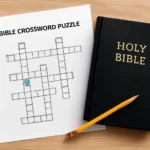
A Christian Bible Word Search is more than a simple pastime. It is a purposeful activity that blends
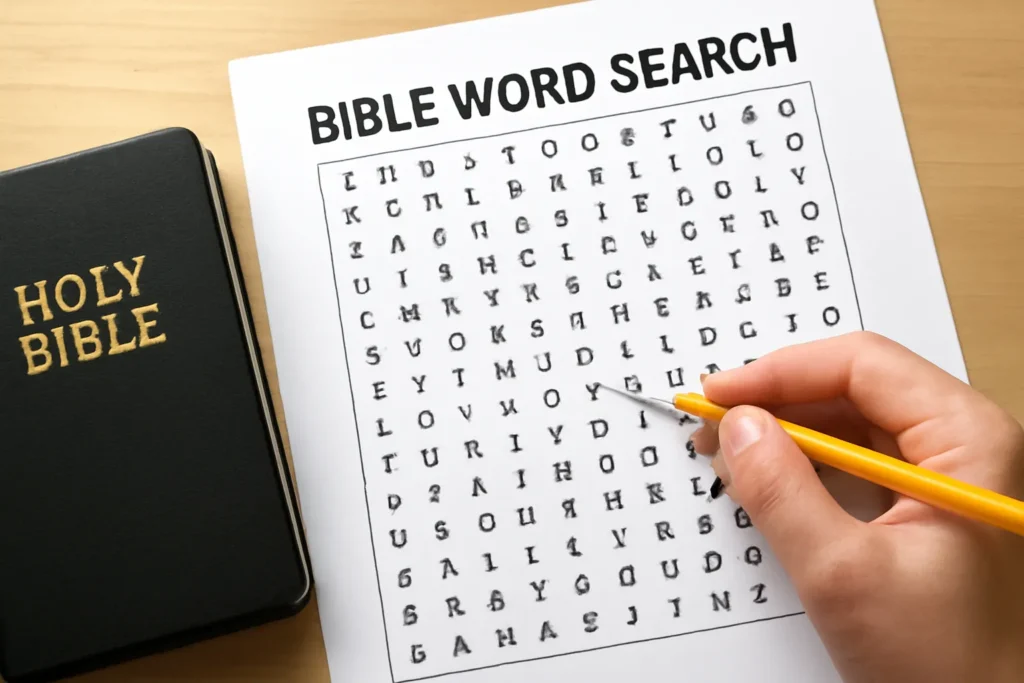
literacy, focus, and faith, guiding seekers of all ages toward familiar and meaningful scripture. In its simplest form, a word search hides a list of related words inside a grid of letters. Players search for those terms in any direction—forward, backward, diagonally—often uncovering a sense of achievement and a moment to reflect on biblical themes. When designed with purpose, Bible word search puzzles can become a free Bible study resource that reinforces memory, encourages devotional habits, and builds biblical literacy for families, classrooms, churches, and individual learners.
What is a word search, and how does it relate to faith-based learning?
A word search in a Christian context is a scripture-based word search or a biblical word puzzle where the target vocabulary is drawn from the Bible. Some people call it a Bible puzzle, while others might describe it as a faith-based word game. The core idea remains the same: scanning a grid to locate relevant terms, from names of biblical figures to key theological concepts. When used intentionally, these puzzles support:
Recognition of biblical vocabulary
Recall of biblical events, people, and places
Contextual reflection on scriptures tied to the word list
Engagement for readers of varying ages and learning styles
Accessible, free Bible study puzzles that can be shared widely
Why word search puzzles are advantageous for believers of all ages
The benefits of Christian word search activities extend beyond mere entertainment. Here are some of the most valuable outcomes:
Vocabulary building: Repetition of biblical terms helps learners become comfortable with scripture terminology.
Memory reinforcement: Recognizing and recalling names, places, and events strengthens memory related to biblical narratives.
Focus and concentration: The puzzle-solving process cultivates patience, attention to detail, and deliberate thinking—skills helpful in study and worship.
Day-by-day devotional rhythm: Short puzzles can anchor daily or weekly routines for individuals and families.
Age-appropriate engagement: From children to seniors, there are levels and themes designed for different maturity and comprehension levels.
Free Bible study puzzles for all ages: what makes this resource special
The phrase “Free Bible Study Puzzles for All Ages” captures a design philosophy: accessibility without cost, quality content, and broad applicability. In practice, free Christian word searches can be distributed in churches, Christian schools, homeschool groups, and community centers. They serve as warm-up activities for Sunday school, midweek programming, or family worship nights. They are also ideal for:
Church newsletters and bulletin inserts
Printable take-home study sheets
Digital classroom resources for remote learning
Faith-based camps and retreat activities
Quiet times for personal devotional language practice
Design principles for effective Christian word search puzzles
Creating a meaningful Christian Bible word search involves more than assembling random biblical terms. Effective puzzles balance challenge with accessibility and connect the words to biblical meaning. Consider these design principles:
Thematic coherence: Group words around a shared theme—names of God, miracles, parables, or books of the Bible.
Age-appropriate difficulty: For children, keep the grid readable and the word list manageable; for teens and adults, introduce longer words and diagonal placements.
Scriptural context: Include a short prompt, a memory verse, or a reflection question alongside the puzzle to deepen the study.
Accessibility and inclusivity: Use clear fonts, high contrast, and consider translations or simplified language for broader audiences.
Solutions and explanations: Provide answer keys and brief notes about the significance of each term to prevent frustration and enhance learning.
Key themes to explore in Christian word search collections
A diverse library of puzzle topics helps maintain engagement and reinforces different corners of scripture. Here are common word search themes you might encounter in Bible study word searches:
Persons and figures: Adam, Noah, Moses, David, Esther, Paul, Jesus, Mary, Peter, etc.
Biblical places: Eden, Jericho, Zion, Galilee, Bethlehem, Sinai, Damascus, Capernaum, etc.
Miracles and events: Creation, Flood, Exodus, Feeding of the 5,000, Resurrection, Pentecost, etc.
While a classic grid is the most recognizable format, you can diversify how you present a Bible word search puzzle for enhanced learning. Some variations include:
Thematic word searches: Each puzzle centers on a theme such as “Names of God” or “Authors of the New Testament.”
Verse-linked searches: Word lists are tied to a specific verse or passage, encouraging readers to locate terms in sequence or in context.
Puzzle sets: A weekly or monthly set containing several puzzles that progress in difficulty and topic breadth.
Printable and digital hybrids: Print-ready PDFs paired with interactive online versions for hybrid learning.
Acrostic and clue-based twists: Instead of a straightforward word search, clues point to words, and players locate them on a grid.
How to use Christian word searches in different settings
The flexibility of Bible word search activities makes them suitable for a wide range of environments. Here are practical usage ideas:
Family worship time: Start with a short reflection, then solve a gentle word search together.
Sunday school and catechism: Use them to introduce a new unit or reinforce memory work.
Youth group activities: Challenge participants with themed puzzles that align with study topics or seasonal events (Advent, Lent, etc.).
Church hospitality spaces: Place quick puzzles in welcome desks or coffee ministries as a gentle engagement tool.
Homeschool curricula: Integrate puzzles into Bible or language arts blocks to support cross-subject learning.
For teachers, parents, and group leaders: implementing a Christian word search program
Whether you are a parent teaching at home or a leader in a classroom, implementing free Bible study word searches can be straightforward and effective. Consider these steps:
Identify a target audience and set an appropriate difficulty level.
Choose a theme and assemble a curated list of related terms.
Design or select a grid with a readable font and clear letter spacing.
Provide a short devotional or reflection prompt that ties the words to scripture.
Offer an answer key and a brief explanation of why each word matters biblically.
Share across channels: print copies, email PDFs, or post interactive versions online.
Steps to create your own Christian Bible word search
If you want to customize puzzles for your community, here is a practical workflow to create a high-quality scripture word search:
Choose a theme (e.g., “Fruit of the Spirit” or “Patriarchs of Faith”).
Compile a list of 15–40 related terms appropriate for your audience.
Design a grid that accommodates all words with some extra letters for challenge.
Place the words within the grid in various directions and fill the remaining cells with random letters.
Create an answer key and a short devotional prompt that accompanies the puzzle.
Test the puzzle with a few learners to ensure it is engaging and solvable.
Accessibility considerations for Christian word search resources
In producing inclusive Bible word search activities, consider accessibility for readers with different abilities. Practical steps include:
Providing high-contrast color schemes or grayscale options for readability.
Offering large-print versions for those with visual impairments.
Providing translations or bilingual options to support language learners.
Including audio or narrated prompts for those who benefit from auditory support.
Ensuring that digital puzzle interfaces are keyboard-navigable and screen-reader friendly.
Several biblical categories you can explore in a fortune of word searches
A wealth of categories exists for Christian Bible word searches, enabling you to craft a comprehensive program that touches multiple facets of Scripture:
Old Testament themes: Creation, Covenant, Exodus, Kings, Prophets, Wisdom literature.
New Testament themes: Gospels, Epistles, Early Church, Parables, Miracles, Resurrection.
Biblical characters: Patriarchs, Judges, Apostles, Prophets, Kings, Queens, and ordinary believers who did extraordinary things.
Places and geography: Rivers, Mountains, Cities, Regions that tell the story of salvation history.
Liturgical seasons: Advent, Christmas, Lent, Eastertide, Pentecost, and seasons of praise.
Evidence of learning: how puzzles support Scripture memory
Studies of memory and learning show that repeated exposure to key terms in a meaningful context can improve recall. When you engage with a Bible memory puzzle, the process of spotting terms in a grid helps embed:
Word recognition tied to specific passages or stories
Contextual anchors that connect vocabulary to events
Controlled exposure to theological terms in a non-formal environment
A low-pressure way to review content before exams, sermons, or group discussions
Digital vs. printable: choosing the right format for your audience
The modern ecosystem offers multiple delivery modes for Bible study word searches. Each format has strengths, depending on the setting, access, and learning preferences:
Printable PDFs: Ideal for classroom handouts, family activity sheets, or retreat packs. They are easy to share, annotate, and display in group settings.
Online interactive grids: Suitable for remote learning, self-paced study, or classroom tech-enabled environments. Features may include auto-check, timers, and progress tracking.
Mobile-friendly versions: Great for on-the-go study and quick reflective breaks during travel or commutes.
Audio prompts and instructions: Helpful for auditory learners or learners with visual impairments.
Sample thematic ideas for free Bible word search collections
If you’re assembling a library of free Bible study puzzles, these thematic ideas can inspire engaging content:
Names and titles of God (e.g., Creator, Sovereign, Almighty, Emmanuel, Jehovah, Shepherd)
Miracles of Jesus (e.g., Water into Wine, Healing, Walking on Water, Resurrection)
Feasts and holy days (e.g., Passover, Pentecost, Tabernacles, Firstfruits)
Parables and teachings (e.g., Good Samaritan, Mustard Seed, Lost Coin, Golden Rule)
Heroes of faith (e.g., Abraham, Moses, Esther, Daniel, Ruth, Mary)
Church history and events (e.g., Pentecost, Council of Nicea, Missionary Journeys)
Quality assurance: making sure puzzles serve spiritual learning
Not all word searches serve learning equally. To ensure that a Christian word search collection meets educational and spiritual aims, consider:
Reviewing each term for biblical accuracy and relevance
Incorporating a brief devotional reflection with each puzzle
Ensuring cultural sensitivity and avoiding doctrinal disputes in the word lists
Providing explicit references or verses where feasible
Sample lesson plan incorporating a Bible word search
Here is a compact lesson plan to illustrate how a word search activity can anchor a short Bible study:
Opening prayer and a brief introduction to the theme: e.g., "Fruit of the Spirit."
Distribute a free printable word search with related terms (Love, Joy, Peace, Patience, Kindness, Goodness, Faithfulness, Gentleness, Self-control).
Give participants 8–12 minutes to locate the terms. Encourage cross-checking with the included verse references.
After completion, read or quote related verses (Galatians 5:22-23, for example) and discuss how these virtues can be practiced in daily life.
Conclude with a short prayer focusing on growth in character and faithfulness.
Variations: beyond the traditional grid
For educators and families seeking multimedia learning experiences, you can pair a standard Bible word search with other activities:
Word search journaling: After solving, participants write a paragraph reflecting on how a found term relates to their life.
Verse mapping: Connect each found word to a specific verse through a simple map or outline.
Creative responses: Create a short poem or drawing inspired by one of the terms or themes.
Group challenges: Teams compete to finish first while also presenting a quick devotional insight tied to the theme.
Safety and content integrity in free Bible word search resources
When sharing free Bible study puzzles, it’s important to curate content that respects diverse backgrounds and adheres to doctrinal clarity. Here are some safety considerations:
Vet sources for accuracy in biblical names, places, and events.
Avoid content that could misrepresent scripture or encourage harmful interpretations.
Clearly label the translation or version of the Bible used, especially for printable materials.
Respect copyright laws when distributing puzzles created by others; prefer openly licensed or self-made materials.
Conclusion: embracing a faith-filled, educational hobby
A well-crafted Christian Bible word search can be a joyful, educational, and spiritually enriching experience for people of every age. By offering free Bible study puzzles that are accessible, thematically varied, and thoughtfully designed, churches, schools, families, and individuals can cultivate a habit of scripture engagement. The practice supports memory, focus, and spiritual reflection while fostering community and shared discovery. Whether you call it a Bible puzzle, a scripture word search, or a Christian word search activity, the core aim remains the same: to draw people closer to God through meaningful, enjoyable, and accessible study that can be enjoyed by all ages.




Leave a Reply