Advent Preaching: Practical Sermon Preparation and Delivery
Advent preaching is more than a seasonal greeting or a ritual transition to Christmas. It is a disciplined practice of proclaiming good news in a season of waiting, guiding listeners toward the Christ who has come, who comes, and who will come again. In this article, we explore practical sermon preparation and effective delivery for Advent, offering a road map for pastors, preachers, and lay leaders who want their messages to be both biblically rooted and pastorally urgent. We will use variations of Advent preaching to broaden your semantic and theological reach, from liturgical planning to topical applications, from expository to narrative approaches, and from collective worship to family-friendly outreach.
1. The Purpose and Scope of Advent Preaching
Advent preaching has a distinctive theological compass and pastoral aim. It invites the church to meditate on the mystery of God becoming flesh, to wrestle with longing and hope, and to respond with faithful living. The scope of Advent sermons typically includes:
Expectant anticipation of Christ’s coming in the past (Bethlehem), present (the ongoing work of God), and future (consummation in glory).
Connection to the liturgical calendar and the memory of the prophets, the gospels, and the early church.
Practical guidance for living out faith in the ebb and flow of daily life during the Advent season.
Opportunities for congregational reflection, worship, and outreach, including preparation for Christmas Eve and Christmas Day.
In this sense, Advent preaching is a form of seasonal proclamation that blends exegesis with exhortation, memory with imagination, and tradition with relevance. By naming the longing of the heart and the promise of the gospel, the preacher helps the congregation learn to wait well and to live with hopeful purpose between the already and not yet.
2. Planning an Advent Sermon Series
A well-planned Advent series is more than a sequence of four sermons. It is a cohesive thematic arc that invites listeners into a sustained encounter with Scripture and the story of salvation.
Define a core theme for the entire season (for example, Hope, Peace, Joy, Love or a variant such as Expectation, Preparation, Celebration, Witness).
Decide on a structure that makes sense for your church context (four Sundays, midweek services, or a Christmas Eve emphasis).
Choose a biblical backbone that can be revisited across sermons (e.g., Isaiah 9:2-7, Luke 1-2, Romans 15, or Hebrews 1).
Develop applications that address everyday life—relationships, work, community service, personal disciplines, and spiritual formation.
Plan for inclusive language and accessibility for children, youth, and guests who may be unfamiliar with church traditions.
Variations of Advent preaching abound. Some pastors construct a tight four-part series focused on distinct themes (Hope, Peace, Joy, Love). Others favor a more narrative approach—following the biblical story of the Messiah through anticipation, arrival, and the witness of Christmas. Still others blend Advent with a special emphasis on mission and justice, inviting the congregation to live out the implications of the Incarnation in concrete ways. Regardless of approach, the aim is coherence, clarity, and pastoral tenderness.
3. Scripture Selection and Thematic Integration
Advent preaching thrives when the preacher moves confidently between prophetic expectation and gospel fulfillment. The scriptures chosen should illuminate the mystery of the season while offering a path to practical application.
3.1 Sourcing the Biblical Narrative
Prophecy and promise from Isaiah and the Old Testament that set the stage for the Advent narrative (light breaking into darkness, comfort for God’s people).
Gospels of the Nativity (Luke 1–2, Matthew 1–2) that recount the birth of Jesus and the surrounding events.
New Testament reflections on expectation, hope, and the return of Christ (Romans, Colossians, Hebrews, James).
Interweave readings from the Psalms or Wisdom literature to capture the human experience of longing and trust.
Integrate a central biblical thread in each sermon. This might be a single verse reframed in every message, a recurring image (light, life, and love), or a question that invites continued reflection (What are you hoping for this season? What are you prepared to offer? How will you respond to the gift of grace?).
4. Sermon Structure and Delivery Techniques
Effective Advent preaching balances structure with spontaneity, clarity with depth, and reverence with accessibility. A well-crafted sermon outline provides structure while leaving space for the Holy Spirit to work in the moment.
Big idea: A concise, memorable statement that captures the heart of the message (often phrased as a claim or question).
Scripture engagement: Readings that are audible, reverent, and resonant with the theme.
Context and illustration: Concrete images (manger scenes, light in the darkness, household rituals) that illuminate the text without domestication of the mystery.
Application: Direct steps or practices (prayer, service, generosity, hospitality) that point toward transformation.
Conclusion and invitation: A call to faith, service, or reflection, often tied to a liturgical moment (confession, creed, blessing).
Common forms in Advent preaching include:
Expository Advent sermons that unpack a chosen text in its original context while making present-day applications.
Narrative-driven messages that tell and reflect on biblical scenes and real-life stories to reveal theological truth.
Thematic sermons that develop a concept like hope or peace by layering multiple texts and testimonies.
Devotional briefings for midweek or family settings, designed to be read aloud or led by lay volunteers.
Prayerful meditations that invite silence, confession, and response within the worship gathering.
How a sermon is written often determines how well it is delivered. Advent preaching benefits from disciplined writing habits that produce clarity, accessibility, and spiritual depth.
5.1 Manuscript, outline, or hybrid approaches
Manuscript-heavy approach: Keeps rhetoric tight, reduces hedging, and is useful for formal occasions or on Christmas Eve.
Outline-driven approach: Provides structure while allowing more freedom in delivery; good for guest preachers or rotating preaching teams.
Hybrid approach: A compact outline with key quotes and transitions written out, plus bullet points for main illustrations and applications.
Tips for Advent writing:
Start from the pastoral question you want your listeners to answer by the end of the message.
Use repeatable phrases to reinforce themes (e.g., “In the light of Advent, we…”).
Incorporate seasonal imagery (candles, the stable, stars, caravans) to anchor the sermon in sensory memory.
Prefer concrete, actionable implications over abstract abstractions, especially for families and younger listeners.
6. Vocal and Communicative Practices for Advent Preaching
Delivery is as important as content. The way a sermon is spoken can illuminate or mute its truth. Advent preaching often benefits from a contemplative, compassionate, and hopeful delivery style.
6.1 Voice, pacing, and presence
Breath support and controlled tempo help convey solemnity and wonder, particularly when addressing the mystery of the Incarnation.
Varying cadence to emphasize key phrases (for example, punctuation by pauses rather than by rushing).
Vulnerability and authenticity: Let the congregation sense your earnest engagement with the text and its message.
Utilize visual and verbal imagery that aligns with Advent aesthetics (soft candlelight, silhouettes of the nativity, or stained glass textures).
Practical rehearsal practices:
Practice aloud with a timer to ensure your message fits within the allotted time.
Record a practice session to observe voice quality, pace, and clarity, then revise to maintain accessibility for varying listening environments (sanctuary, livestream, parking lot outreach).
Plan transitions between sections that invite reflection or response, avoiding abrupt changes that disrupt the contemplative mood of Advent.
7. Engaging the Congregation with Advent Imagery and Aesthetics
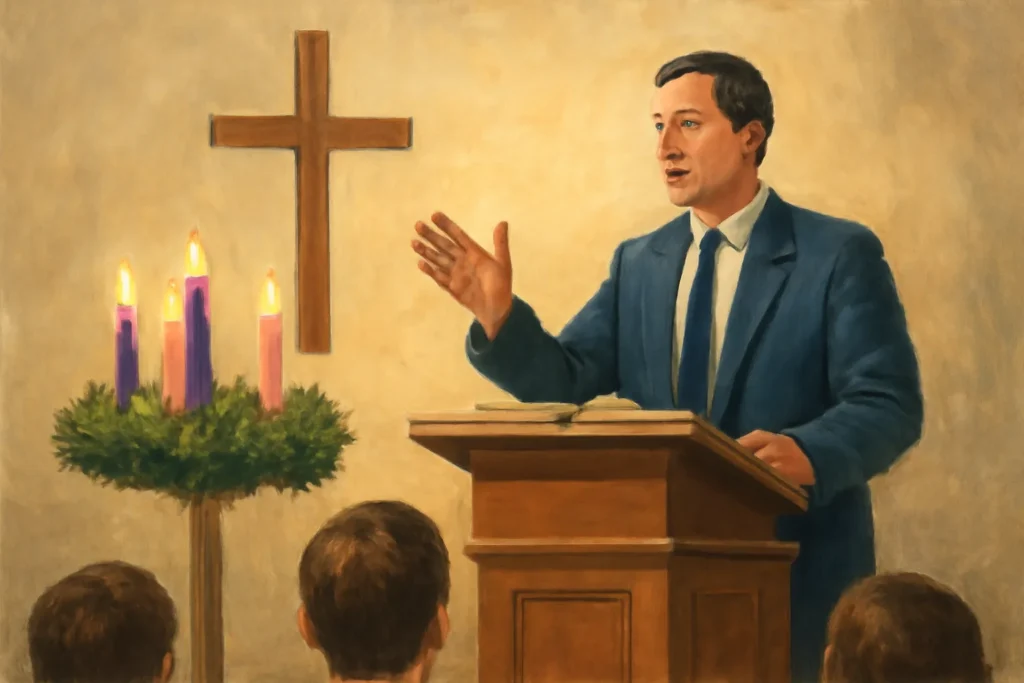
Advent is a visually and symbolically rich season. The aesthetic of the worship space—lighting, banners, icons, liturgical colors, and candles—sends powerful cues about the sermon’s themes.
Candle imagery: Each candle can illustrate a theme (hope, peace, joy, love) and be referenced in sermons as a framing device.
Scripture-centered visuals: Short readings or quotes displayed in the weeks leading up to Christmas can prime listening and reflection.
Ambient music and silence: Use purposeful pauses and reflective music to enhance contemplation between points.
Inclusive symbolism: Ensure imagery resonates across generations and cultural backgrounds, preserving the dignity of the season while making it accessible.
When designed thoughtfully, Advent imagery reinforces your preaching. It helps the message land with first-time guests and long-time members alike, encouraging a common sense of mystery, gratitude, and action.
8. Technology, Media, and Accessibility for Advent Messages
In a hybrid worship era, Advent sermons often reach audiences beyond the physical space. Thoughtful use of technology can extend the reach of your preaching while preserving reverence and clarity.
8.1 Practical media strategies
Slide design: Use clean typography, high-contrast colors, and concise bullets that echo sermon points without distracting from the spoken word.
Video and graphics: Short clips or imagery illustrating Advent scenes can illuminate Scripture and enrich understanding.
Accessibility: Provide captions for livestreams, offer ASL interpretation slots, and ensure that all media supports the message rather than obscures it.
Mobile and remote listening: Create downloadable notes or one-page devotionals that accompany the sermon for personal or family use.
Ethical and practical considerations include avoiding overproduction that delays the message or overshadows the text, and ensuring that media choices honor the sacred character of the Advent season.
9. Special Considerations for Advent with Children, Families, and Guests
Advent is a rich opportunity for family ministry and hospitality. Sermons can be crafted to be accessible to children while offering depth for adults, ensuring that the whole community can engage the season.
9.1 Family-friendly communication strategies
Plain language and concrete illustrations help ensure younger listeners comprehend key ideas.
Storytelling and parables anchor complex truths in memorable narratives.
Questions for reflection at the end of sermons invite families to discuss faith together.
Offer family devotion guides tied to the sermon, with simple activities for Advent evenings.
Guest listeners—whether new to church or exploring faith—benefit from clear signposts and a warm, invitational tone. Advent preaching should model hospitality in its wording, inviting questions, curiosity, and engagement beyond Sunday morning.
10. Common Pitfalls in Advent Preaching and How to Avoid Them
Even seasoned preachers can fall into patterns that dampen the impact of Advent messages. Here are frequent missteps and practical antidotes:
Over-sentimentalism without biblical grounding: Anchor emotion in Scripture, not just mood. Always tie sentiment to doctrinal truth and practical obedience.
Seasonal clichés that gloss over the mystery of the Incarnation: Seek fresh language and concrete images that illuminate timeless truths.
Lack of trajectory: Ensure each sermon points to a resolution or action; avoid standalone pieces without an arc that builds to Christmas or Epiphany.
Neglect of context: Interpret texts within their original context and in light of the Advent narrative. Contextual understanding strengthens proclamation.
Accessibility gaps: Make room for guests and children; explain unfamiliar terms and invite participation in the liturgical rhythm.
To prevent stagnation, plan a feedback loop with trusted listeners (staff, elders, or a listening group). Use their observations to refine clarity, pacing, and relevance for future Advent preaching cycles.
11. Sample Advent Sermon Series Outline
Below is a practical example of a four-part Advent series, designed to demonstrate how a coherent arc can be built across Sundays. The specific scriptures can be adapted to your tradition and lectionary.
Week 1 — Hope: Read Isaiah 40:1-11 and Luke 1:26-38. Big idea: The coming of the Messiah brings comfort and renewal to a weary world. Application: Where do you need God’s hope today? How can you be a bearer of hope to others?
Week 2 — Peace: Read Luke 2:1-14 and Philippians 4:4-9. Big idea: Christ’s birth redefines peace—shalom that reconciles people to God and to one another. Application: Identify relationships in need of restorative courage and forgiveness.
Week 3 — Joy: Read Luke 1:39-55 and John 15:11. Big idea: Joy in the Advent season is grounded not in circumstances but in God’s faithful presence. Application: How can you cultivate joy through gratitude and shared generosity?
Week 4 — Love: Read John 3:14-21 and 1 John 4:9-16. Big idea: The Incarnation reveals the depth of God’s love and invites believers to love others sacrificially. Application: In what ways will you demonstrate love in your community this Christmas?
Additionally, consider a midweek Advent service focused on devotion, prayer, and reflection, or a Christmas Eve service that culminates the series with a compelling gospel announcement.
12. Measuring the Effectiveness of Advent Preaching
Effectiveness in Advent preaching is about more than attendance or applause. It concerns whether the sermons help people encounter Christ, long for His coming, and live out their faith more faithfully. Useful measures include:
Congregational engagement: Are people asking questions, sharing testimonies, or requesting follow-up resources?
Spiritual formation indicators: Observable changes in prayer life, generosity, or service during Advent and beyond.
Hospitality and outreach: Increased welcome of guests, participation in Advent outreach, or family devotion usage at home.
Feedback from leadership: Constructive critiques from elders, staff, and lay leaders about clarity, depth, and pastoral care.
Remember that transformation in Advent is often gradual. A series can plant seeds that germinate over weeks and months, culminating in a renewed sense of mission and worship that extends into the new year.
13. Final Reflections on Advent Preaching
Advent preaching stands at a unique intersection of doctrinal clarity, pastoral tenderness, and liturgical beauty. It asks preachers to hold together mystery and message, longing and fulfillment, reflection and action. When done well, Advent sermons become moments of grace where people sense the nearness of God and are invited into joyful obedience. The practice requires discipline, creativity, and a generous heart toward those listening who may be wrestling with doubt, fatigue, or questions about faith.
In your own context, you can cultivate a habit of prepared spontaneity: study deeply, write purposefully, practice faithfully, and deliver with humility and hope. Let Advent be a season where you model how to wait well while actively living out the gospel in community. The result is not merely an annual message but a rhythm of proclamation that shapes identity, worship, and mission for the days ahead.
14. Appendix: Quick References for Advent Sermon Preparation







Leave a Reply