Advent Scripture Reading Plan: Daily Devotions for Christmas
Advent Scripture Reading Plan: Daily Devotions for Christmas
As the calendar turns toward Christmas, many families and individuals look for a dependable way to press pause from the busyness and invite the story of Advent into daily life. An Advent Scripture Reading Plan offers a structured path for daily devotions that centers Scripture, prayer, and reflection on the coming of Christ. This article provides a comprehensive guide to creating, using, and adapting an Advent reading plan for Christmas, with several variations to fit different preferences, ages, and traditions.
What Advent is and why a daily reading plan matters
Advent is the season of expecting the Messiah, a four-week period of preparation that culminates in the celebration of Christmas. It is both a time of longing and a time of joy, a space to slow down and listen for God’s voice amid the noise of the season. A carefully designed Advent Scripture Reading Plan helps believers move beyond hurried readings or seasonal clichés toward a meaningful encounter with God through Scripture.
Orientation: The plan orients the heart toward the biblical narrative — from prophecy to fulfillment — so readers see how the nativity stories connect to the larger biblical story.
Rhythm: A consistent routine provides predictability that supports focus, prayer, and contemplation rather than rushed, fragmented reading.
Reflection: Each day’s verses invite a question or prompt that invites personal application and communal sharing.
Community: Many plans offer family-friendly or group-friendly formats that keep you connected with others in your faith community.
Whether you prefer a thematic Advent plan, a prophecy-to-fulfillment plan, or a Gospel-centered plan, the goal remains the same: to dwell in God’s Word as the Christmas narrative unfolds.
Designing an advent Scripture reading plan
Creating an Advent Scripture Reading Plan that works for you involves a few practical decisions. Below are key design considerations to help you tailor a daily devotion plan for Christmas that fits your schedule, age group, and devotional preferences.
Duration: Most Advent plans run for four weeks, aligning with the four Sundays of Advent. Some families also use an extended version that adds a few days before December 1 or includes December 24–26 to bridge to Epiphany.
Length of daily readings: Choose readings that fit your time constraints. Options range from a single verse and reflection to 5–10 verses with a short meditation.
Reading sources: You can mix Old Testament prophecies, New Testament narratives, Psalms, and canticles (Magnificat, Benedictus, Nunc Dimittis) to create variety and depth.
Reflection format: Decide whether your daily pause will be a question, a prayer, a journaling prompt, or a short meditation. A consistent format helps you stay engaged.
Audience: Plan for individuals, couples, or families. If children are involved, include age-appropriate verses and activities (songs, coloring pages, memory verses).
Accessibility: Consider a plan that can be downloaded, printed, or accessed digitally. For group settings, provide a schedule and discussion prompts.
In addition to choosing content, you may want to pair readings with short prayers or reflections that help you apply the Scripture to everyday life. The following variations offer flexible templates you can adopt or adapt as your own Advent reading plan.
A thematic Advent scripture reading plan emphasizes the four themes traditionally associated with the season: hope, peace, joy, and love. Each week centers on one theme, with daily readings that illuminate that theme from different parts of Scripture—prophecy, gospel narratives, and psalms.
Week 1 — Hope: Read prophecies of the coming Messiah (Isaiah 7, 9; Micah 5) and the annunciation in Luke 1.
Week 2 — Peace: Focus on songs and responses to the arrival of Jesus (Luke 2:8–14; Isaiah 11:6–9).
Week 3 — Joy: Encounter narratives (Luke 2:15–20; Matthew 2:1–12) and the Magnificat (Luke 1:46–55).
Week 4 — Love: The Bethlehem nativity narratives and the instruction to love one another (John 3:16; 1 John 4:9–12).
With this approach, each day reinforces a concept readers can carry into Christmas and beyond. It also provides opportunities for family discussion and personal meditation on what each virtue means in daily life.
Prophecy-to-fulfillment plan
This variation traces Old Testament prophecies through their New Testament fulfillments. It makes explicit the continuity of God’s plan and helps readers see the arc from ancient promise to Christmas realization.
Day 1: Isaiah’s prophecy about a child who will reign (Isaiah 9:6–7) and Luke’s account of the birth narrative (Luke 2:1–20).
Day 2: Micah’s birthplace prophecy (Micah 5:2) paired with Matthew 2:1–6.
Day 3: The servant motif in Isaiah 42:1–7 linked with Jesus’ ministry in the Gospels (Matthew 11:2–6).
Day 4: The suffering servant imagery (Isaiah 53) read alongside Luke 23–24 as the story of redemption unfolds.
This plan helps readers connect the Advent season to the broader narrative of salvation and to understand why Christmas is not just a single day but a culmination of God’s redemptive work.
Gospel-centered plan
A Gospel-centered Advent plan foregrounds the nativity narratives and the infancy accounts. It highlights the announcements, the angelic responses, and the responses of Mary, Joseph, and others who encounter Jesus from birth onward.
Day 1: Luke 1:26–38 (Gabriel’s message to Mary) and Psalm 98:1–4.
Day 2: Luke 2:1–7 (birth of Jesus) and Micah 5:2.
Day 3: Luke 2:8–20 (shepherds hear the good news) and Isaiah 40:9–11.
Day 4: Matthew 2:1–12 (the visitors arrive) and John 1:1–14 (the Word becoming flesh).
This approach keeps the focus on the narrative of Jesus’ birth and the immediate in-breaking of God’s kingdom in the first Christmas story, while inviting reflections on what it means to follow Jesus now.
Character studies plan
In a character-focused Advent reading plan, each day highlights a different figure from the Nativity story or related accounts, inviting readers to imagine their perspective and apply their lessons to personal life.
Mary: obedience, faith, and courage (Luke 1:26–38; Luke 2:19).
Joseph: quiet trust and protective care (Matthew 1:18–24; Matthew 2:13–15).
Elizabeth and Zechariah: perseverance in waiting (Luke 1:5–25, 57–80).
Simeon and Anna: prophetic waiting and testimony (Luke 2:25–38).
Readers encounter different human responses to the divine event and can reflect on their own posture toward God’s invitation in this season.
Liturgical pattern plan
For liturgically minded readers, a plan that mirrors traditional prayers, canticles, and psalms can enrich worship during Advent. This plan weaves in biblical canticles like the Magnificat (Mary’s song) and the Benedictus (Zechariah’s prophecy), along with psalms and short prayers that align with the daily readings.
Day 1: Luke 1:26–38, Magnificat (Luke 1:46–55) or Psalm 85:8–13.
Day 2: Luke 2:1–7, Isaiah 9:2–7, or Psalm 72:1–4.
Day 3: Luke 2:8–14, Benedictus (Luke 1:68–79) or Psalm 96.
Day 4: Luke 2:15–20, Nunc Dimittis (Luke 2:29–32) or Psalm 122.
Adopting a liturgical rhythm can help participants feel connected to a long history of Advent worship while engaging with fresh daily meditations.
Family-friendly plan
For families with children, the Advent reading plan can include shorter passages, questions suitable for kids, and simple activities. Intergenerational engagement helps keep the season meaningful for all ages.
Short readings (one to three verses) with a simple reflection or prayer.
Discussion prompts such as “What does this tell us about God?” and “What can we do to share this truth with others?”
Hands-on activities: a simple craft, a small act of service, or a family-lighting invitation during the week.
Digital or multimodal plan
In the digital age, you can complement the written plan with audio versions, short videos, or devotional apps. A daily devotion plan for Christmas can be enriched with listening to Scripture being read, guided audio reflections, and a journaling prompt that you can type or voice-record.
Sample 4-week Advent reading schedule
The following is a practical, ready-to-use outline for a four-week Advent plan. It emphasizes a balance of prophetic anticipation, nativity narratives, and praise and prayer. You can customize readings to your tradition or time constraints. Each day includes a short verse reference and a reflection prompt.
Day 1 — Theme: Expectation. Read Isaiah 9:2, 6–7; Luke 1:26–33. Prompt: What are you hoping for this Advent season, and how does Scripture redefine that longing?
Day 2 — Theme: Promise. Read Isaiah 40:3–5; Luke 3:4–6. Prompt: Consider how God clears a path and makes straight a road for his people.
Day 3 — Theme: Announcement. Read Luke 1:26–38; Genesis 3:15 (the first promise). Prompt: How does God’s invitation to Mary speak to your willingness to trust him?
Day 4 — Theme: Light in darkness. Read Isaiah 42:6–7; John 1:4–9. Prompt: Where do you see darkness, and how can Christ’s light shine through you today?
Day 5 — Theme: Humility. Read Micah 5:2; Luke 2:1–5. Prompt: How does Jesus’ birth in a manger redefine greatness?
Day 6 — Theme: Peace proclaimed. Read Luke 2:8–14; Isaiah 11:1–10. Prompt: How can you be an instrument of peace in your home and community?
Day 7 — Theme: Shepherds’ wonder. Read Luke 2:8–20. Prompt: What divine gift are you most grateful for this season?
Day 8 — Theme: Magnificat. Read Luke 1:46–55; Psalm 62:5–8. Prompt: How can you praise God amid your current circumstances?
Day 9 — Theme: Fulfillment anticipated. Read Isaiah 7:14; Matthew 1:18–25. Prompt: How does the fulfillment of prophecy shape your trust in God?
Day 10 — Theme: Courage in obedience. Read Luke 1:39–45; Psalm 32:8–11. Prompt: What might obedience look like for you this week?
Day 11 — Theme: The journey. Read Matthew 1:18–25; Luke 2:4–7. Prompt: What does a faithful journey look like in your life today?
Day 12 — Theme: The angels’ song. Read Luke 2:8–14; Psalm 98. Prompt: How can you join the song of praise this season?
Day 13 — Theme: Gift and giver. Read John 1:9–14; Matthew 2:9–12. Prompt: What gift of God are you most grateful for, and how will you share it?
Day 14 — Theme: Worship with presence. Read Matthew 2:1–12; Psalm 72:11. Prompt: In what ways can you honor Jesus by your actions?
Day 15 — Theme: Joy in the journey. Read Luke 2:15–20; Philippians 4:4–7. Prompt: How does joy anchor you during a busy season?
Day 16 — Theme: Simeon and Christmas promise. Read Luke 2:25–35; Psalm 33:18–22. Prompt: What promises about Jesus sustain you today?
Day 17 — Theme: Anna’s witness. Read Luke 2:36–38; Psalm 37:4–7. Prompt: How can your life bear witness to what you believe about Christ?
Day 18 — Theme: Nativity focus. Read Luke 2:1–20; Isaiah 53:4–6. Prompt: How does this birth narrative speak to your own need for grace?
Day 19 — Theme: Family and care. Read Matthew 1:18–24; Colossians 3:12–17. Prompt: How can you show Christ’s love within your family today?
Day 20 — Theme: Light in our world. Read John 1:4–9; Isaiah 60:1–3. Prompt: Where can you bring light into someone else’s darkness?
Day 21 — Theme: Quiet expectation. Read Luke 2:15–19; Psalm 40:1–5. Prompt: What does patient waiting look like in your life?
Day 22 — Theme: Gifts to give. Read Matthew 2:1–12; James 1:17. Prompt: What gifts will you offer to others this Advent?
Day 23 — Theme: Joyful anticipation. Read Luke 1:67–79; Psalm 126:3. Prompt: How does anticipation become a posture of worship?
Day 24 — Theme: Christmas Eve Eve. Read Isaiah 35:1–10; Luke 2:1–20 (shortened). Prompt: Prepare your heart for the baby who changes everything.
Day 25 — Theme: Christmas Day. Read Luke 2:1–20; John 1:14. Prompt: Reflect on the mystery of the Word becoming flesh and dwelling among us.
Day 26 — Theme: Afterglow. Read Revelation 21:1–5; Psalm 96:11–13. Prompt: How does heaven’s reality shape your present life?
Day 27 — Theme: Emmanuel in daily life. Read Matthew 28:19–20; Colossians 3:15–17. Prompt: How will you carry the presence of Christ into your week?
Day 28 — Theme: Returning to wonder. Read Luke 2:25–35; Psalm 85:10–13. Prompt: End the season with a posture of wonder, gratitude, and renewed faith.
Tip: If you’re using this as a family plan, invite different family members to lead the day’s reading or to say the reflection prompt aloud. You can also place a small wooden stable scene or an Advent wreath near the reading area to visually anchor the season.
To get the most from your Advent reading plan, consider these practical tips that help keep the plan engaging and meaningful across weeks and years.
Set a routine: Choose a consistent time and place for your daily devotion. A quiet morning corner or a post-dinner chair can become your Advent sanctuary.
Journal your insights: Keep a simple journal or digital note where you write down verses that stand out, questions you have, and prayer requests that arise.
Involve others: Read with a partner or family, or join a small group discussion. Sharing insights often deepens understanding and accountability.
Make it accessible: If time is tight, read a single verse and the reflection prompt. If you have more time, add a few more verses or a companion psalm.
Use multiple senses: Listen to an audio reading, watch a short devotional video, or sing a verse or carol that connects with the day’s theme.
Adapt for children: Use kid-friendly translations, short readings, and creative activities (drawing the scene, acting out a verse, or making a card for someone in need).
Plan for milestones: Include special Advent readings on key days (e.g., the Feast of the Immaculate Conception, Christmas Eve, and Christmas Day) to heighten the sense of anticipation and celebration.
Incorporating prayer and reflection into your Advent reading plan
Prayer is the natural soil in which the seeds of Scripture germinate. A robust Advent.daily devotion plan invites you to pause after each reading to speak honestly with God, listen for his voice, and respond in faith. Here are some ways to weave prayer into your plan.
Prayer prompts: After each day’s verses, write or say a 1–3 sentence prayer that responds to the reading—adoration, confession, thanksgiving, and supplication are helpful categories.
Gratitude lists: End the day by listing three things you are grateful for in light of God’s gifts in the Christmas narrative.
Scripture-prayer pairing: Combine a verse with a short, personal prayer. For example, pair Isaiah 9:6 with a prayer for guidance, hope, and governance of your life by Christ.
Petition and intercession: Use the plan to intercede for others. Pray for family, friends, neighbors, and those in need during the Advent season.
Printable and digital resources to support your Advent plan
Many readers benefit from having a tangible or digital companion to their Advent Scripture Reading Plan. Here are some practical options to consider:
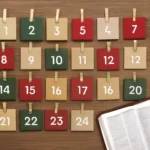
Printable PDFs: Create or download a one-page/monthly calendar with daily verses and prompts. This is handy for refrigerators, desks, or kitchen counters.
Phone apps and digital devotionals: Use Bible apps that offer Advent devotionals, daily verses, and guided reflections. A mobile version ensures access during travel or commutes.
Audio companion: Listen to a daily audio reading while commuting or exercising. Hearing the narrative can deepen understanding and memory.
Family kits: For families, assemble Advent kits with a simple reading booklet, a few verse cards, and a small activity for each day (one-per-day acts of service, a family prayer card, or a shared treat).
Combining print, audio, and digital formats can accommodate different learning styles and daily rhythms, making the plan accessible to a wider audience while preserving the heart of daily devotion and worship.
Conclusion: embracing Advent through a meaningful plan
Whether you opt for a thematic Advent plan, a prophecy-to-fulfillment plan, a Gospel-centered plan, or a family-friendly plan, an Advent Scripture Reading Plan invites you to slow down, listen, and respond to God’s invitation in Jesus. The four weeks of Advent are more than a countdown to Christmas; they are a space to marinate in the wonder of God’s love, to reflect on hope, peace, joy, and love, and to prepare your heart to welcome the Christ child with reverence and reverent celebration. May your journey through this Advent be rich with insight, transformation, and renewed faith as you carry the truth of Christmas into every day that follows.











Leave a Reply