American Missionaries in Hawaii: History, Impact, and Legacy
The story of American missionaries in Hawaii is a complex thread in the broader tapestry of Pacific history. Coming from the United States in the early 19th century, these Protestant workers arrived with a mission ethic, a belief in Western education and medicine, and a program for religious conversion. Over the decades, their work reshaped not only Hawaiian religion and schooling but also social norms, political developments, and the very fabric of Hawaiian society. This article surveys the arc of American missionary activity in Hawaii, the ways it fostered transformation, and the enduring questions raised about its legacy — especially as Hawaiʻi continues to negotiate its history of sovereignty, language, culture, and memory.
Origins and Arrival: The First Wave and Its Aims
Origins of the Missionary Venture
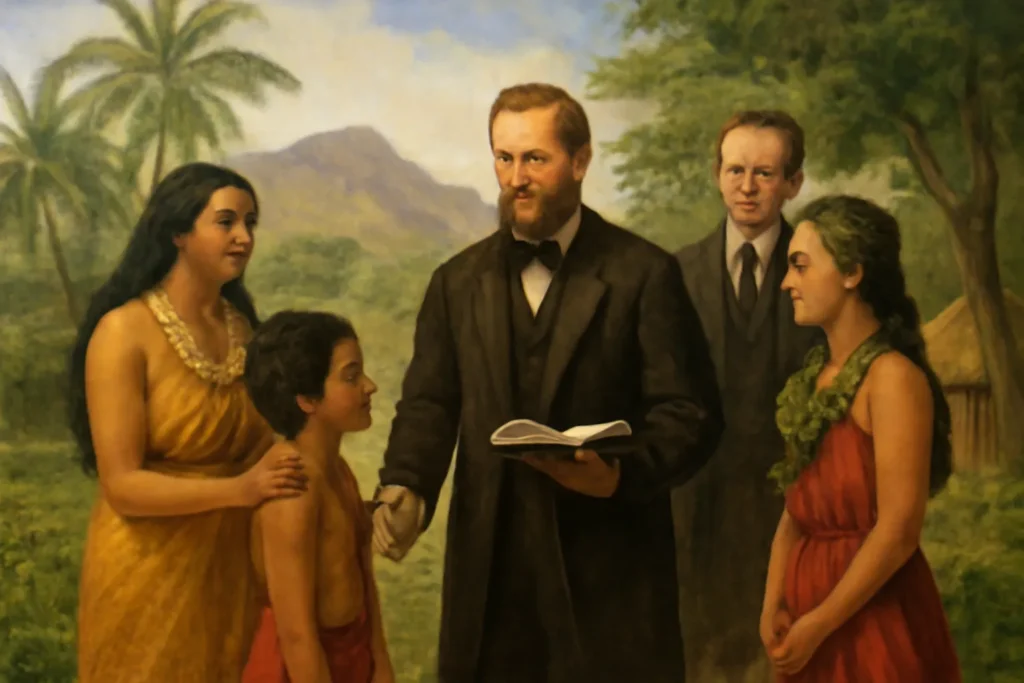
The story begins with the American Board of Commissioners for Foreign Missions (ABCFM), a leading 19th‑century Protestant missionary society in the United States. This organization sent the first groups of American missionaries to the Hawaiian Islands with the aim of evangelizing, teaching literacy, and creating schools and churches as the foundation for a Christian society. The enterprise was part of a larger pattern during the era: Western missionaries often positioned themselves as cultural intermediaries who could civilize and educate, while also spreading Christian worship and social norms.
Arrival in 1820 and the Founding Moment
The American missionary settlement in Hawaii began in 1820, when a company of missionaries associated with the ABCFM arrived in the islands, followed by others in the years that followed. This early cohort—among them notable figures such as Hiram Bingham I and his colleagues—made landfall at a moment when Hawaiian society was undergoing rapid change. Their goals went beyond individual conversion; they sought to build institutions that could translate literacy into civic capacity, create written materials in the Hawaiian language, and establish churches as centers of community life. In the process, they began to shape a space where education, religion, and governance began to mingle in new ways.
Education, Language, and Literacy: Building an Educational and Linguistic Foundation
Creating a Written Hawaiian Language
One of the most consequential legacies of the missionary presence in Hawaii was linguistic and educational. The American Protestant mission teams collaborated with Hawaiian speakers to develop a practical written form for the Hawaiian language, which until then existed primarily in oral form and in a rich tradition of oral storytelling. The effort to create and standardize a Hawaiian orthography enabled Bible translation, primers for schools, and a growing body of printed materials. In effect, the newcomers helped to anchor a literate public sphere in which Hawaiian readers could access religious texts, secular primers, and local newspapers.
A central project of the missionary era was the translation of religious texts into Hawaiian and the establishment of school systems. The Hawaiian Bible and a suite of primers and readers became foundational texts for schooling. Printing presses—introduced by the mission—enabled broader circulation of texts in the local language, increasing literacy rates and providing Hawaiians with accessible learning materials. Schools established by the American missionaries in Hawaii taught reading, writing, arithmetic, and basic science, while also providing religious instruction. The schools were often staffed by teacher‑missionaries or local Hawaiians trained by them, and they served both Hawaiian children and the children of American mission households.
The Churches as Educational Hubs
The mission network coalesced around a network of churches that functioned as community hubs and informal schools. The Kawaiahaʻo Church, sometimes called the “Church of Hawaiʻi,” became a central religious and civic landmark in Honolulu. As the gospel was preached, the church also served as a place where literacy was practiced and where civic gatherings could take place. Through these churches, education and faith were woven together in daily life, reinforcing a shared language of instruction and worship.
From Kapu to Covenant: Religious Change in Hawaiian Life
The arrival of American missionary work in Hawaii coincided with dramatic shifts in belief and practice. The introduction of Protestant Christianity reshaped traditional Hawaiian religion and ritual life. Missionaries and their Hawaiian converts promoted a Sabbath-based rhythm, a new ethical code, and a different calendar of sacred and secular activities. Over time, many Hawaiians integrated Christian practices with elements of their own cultural life, leading to a syncretic but distinctly altered religious landscape.
Community Life, Gender Roles, and Social Norms
The religious and educational projects of the missionary era also influenced gender roles, family life, and social expectations. Mission schools often emphasized literacy for girls and boys alike, and churches provided spaces where families could learn together and participate in worship and communal decision‑making. At the same time, the period saw the introduction of Western dress codes, dietary habits, and health practices, along with a new professional class of teachers, pastors, and lay leaders who became influential in Hawaiian society.
Economic and Political Dimensions: The Missionary Establishment and the Politics of Hawaii
Wealth, Land, and the Rise of a Missionary‑Linked Elite
As the American missionary project matured, families connected to these enterprises accumulated land, built schools, and developed commercial connections. This created a class of educated Hawaiians and American residents who were deeply involved in economic development, legal affairs, and political life. The intertwining of religious authority with economic power helped to shape a political economy in which Western‑style institutions sat alongside indigenous governance structures.
Legal Reforms and the Mahele: Shifting Ownership and Sovereignty
The mid‑to‑late 19th century brought sweeping changes to land tenure and governance. The Great Mahele (the major land division) opened Hawaiians to private landownership and, in practice, created new avenues for foreign and native investors to acquire land. Missionary families and their descendants often became early landholders or influential partners in business ventures that spanned sugar, shipping, and finance. These shifts helped rewire the Hawaiian economy and altered the balance of political power, contributing to the emergent conflicts over sovereignty that would intensify in the late 19th century.
Monarchy, Reform, and the Overthrow: Missionaries in Politics
The political landscape of Hawaiʻi in the late 19th century was deeply affected by the presence and influence of Western educated elites, including those tied to the missionary movement. Some members of missionary families and their allies played pivotal roles in political reform movements and in the events that culminated in the overthrow of Queen Liliʻuokalani in 1893. The Provisional Government and the subsequent push for annexation to the United States—completed in 1898—showcased a complex intersection of native politics, American business interests, and missionary‑linked communities. These episodes remain central to debates about sovereignty, national memory, and the legacy of Western religious and educational institutions in Hawaiʻi.
Religious Institutions, Education, and Social Infrastructure: Lasting Legacies
Institutions That Endure
Some of the most enduring legacies of the American missionary effort in Hawaii are institutional. Notable examples include:
Punahou School, founded in 1841 as a missionary‑sponsored institution to educate the children of Hawaiʻi and the missionaries’ families, which later evolved into a major private school for diverse student populations.
Kawaiahaʻo Church, established by missionaries and serving for decades as a spiritual and cultural center.
Hawaiian Mission Children’s Society, an organization founded by families connected to the mission, which helped sustain networks of readers, donors, and alumni across generations.
Print culture and Hawaiian literature, including primers, readers, and religious texts that circulated widely and shaped literacy in the islands.
Education as a Social Project
The missionary schools created a new social infrastructure that bridged families, churches, and civic life. Through schooling, Hawaiians gained access to literacy and numeracy, which enabled participation in administrative life, church leadership, and later political discourse. In many communities, schools functioned as the primary site where Western knowledge and Hawaiian knowledge intersected, creating a bilingual or multilingual public sphere that persists in various forms to the present day.
Legacy and Contemporary Perspectives: Reframing the Story
Positive Impacts: Education, Health, and Cultural Exchange
Supporters of the missionary era emphasize the educational gains that came with Western schooling, the introduction of Western medicine and hygiene practices, and the preservation of literacy in the Hawaiian language through translation and print. They note that many Hawaiians benefited from access to schooling, tools for self‑improvement, and a written language that could document history, law, and religion. The mission period also created enduring institutions—churches, schools, and charitable activities—that continued to shape civic life long after the missionaries departed.
Critiques and Contested Legacies: Sovereignty, Land, and Cultural Disruption
Critics of the missionary era highlight the more troubling aspects of this history. The arrival of foreign religious and educational systems coincided with shifts in land tenure, political power, and cultural authority that undermined traditional Hawaiian governance and sovereignty. The alliance between Western‑educated elites and commercial interests contributed, over time, to the displacement of native authority and the loss of some control over Hawaiian lands and resources. The eventual overthrow of the Hawaiian monarchy and the push for annexation are central to debates about how memory is shaped in the archipelago today. In this light, the legacy of American missionaries in Hawaii is not simply a narrative of cultural enrichment but also a contested history of unequal power, cultural change, and wounded sovereignty.
Language, Culture, and Revival: A Continuing Conversation
In contemporary Hawaiʻi, the conversation about the missionary era intersects with broader efforts to revitalize the Hawaiian language and restore cultural practices that faced suppression during the colonial period. Language revival movements, cultural programs, and educational policies now arise out of a long historical memory that includes the missionary era. Communities, scholars, and policymakers grapple with how to honor indigenous streams of knowledge while acknowledging the role that missionaries played in introducing literacy and print culture.
Throughout this history, scholars and writers use a variety of phrases to discuss the same core phenomenon. Some commonly used terms include:
American missionaries in Hawaii (emphasizing individuals and networks from the United States who conducted religious and educational work on the islands).
U.S. missionaries in the Sandwich Islands (reflecting early naming conventions and the period’s nautical vocabulary).
Hawaiian mission field (a broader descriptor that situates mission activity within a geographic and social space).
American Protestant missions in Hawaii (highlighting denominational identity and religious purpose).
Missionary education and church networks in Hawaiʻi (connecting schooling, religious life, and community organization).
The history of American missionaries in Hawaii is a multifaceted narrative about how religion, education, language, and politics intersected in a place with deep indigenous roots and complex pre‑existing governance. It is a story with both notable accomplishments and serious questions about sovereignty, cultural preservation, and historical memory. By examining the era’s institutions—schools that trained generations of Hawaiians, churches that served as centers of community life, and print culture that enabled modern literacy—we gain insight into how Hawaiʻi emerged in the modern world. At the same time, it is essential to acknowledge the profound disruptions and transitions that accompanied this contact, including debates about land, power, and self‑determination that continue to influence Hawaiʻi’s political and cultural landscape today.
As Hawaiʻi continues to reflect on its history, the legacy of the American missionary era remains a vital, sometimes contested, part of the island nation’s past. Understanding that legacy requires listening to diverse voices—descendants of both Hawaiian communities and missionary families, archivists, historians, educators, and policy makers—so that the full spectrum of experiences can inform how Hawaiʻi teaches its own history and honors its people.
Selected Chronology and Institutions (At a Glance)
Arrival of the first wave of American missionaries in Hawaii under the ABCFM in the 1820s, beginning a sustained effort to evangelize, educate, and build institutions.
Establishment of church networks, including the Kawaiahaʻo Church, which became a spiritual and social center in Honolulu.
Founding of educational institutions such as Punahou School, designed to educate the children of missionaries and local Hawaiians alike, and to advance literacy and Western knowledge.
Translation and printing programs that produced Hawaiian language texts, including biblical translations, primers, and other instructional materials, enabling widespread literacy.
Economic and political shifts that accompanied land reforms (the Great Mahele) and the emergence of a Western‑educated elite that played prominent roles in government and business.
Political upheavals culminating in the 1893 overthrow of the Hawaiian monarchy, followed by annexation to the United States in 1898, which reshaped sovereignty and governance in Hawaiʻi.
The history of American missionaries in Hawaii thus offers a window into a pivotal era when religion, education, language, and power intersected in ways that altered the course of Hawaiian society. Framed by both achievement and critique, this history continues to resonate in contemporary debates about language revival, education policy, historical memory, and the ongoing quest for self‑determination in Hawaiʻi.








Leave a Reply