Angel with Man: Meaning, Symbolism, and Interpretations
Angel with Man: Meaning, Symbolism, and Interpretations
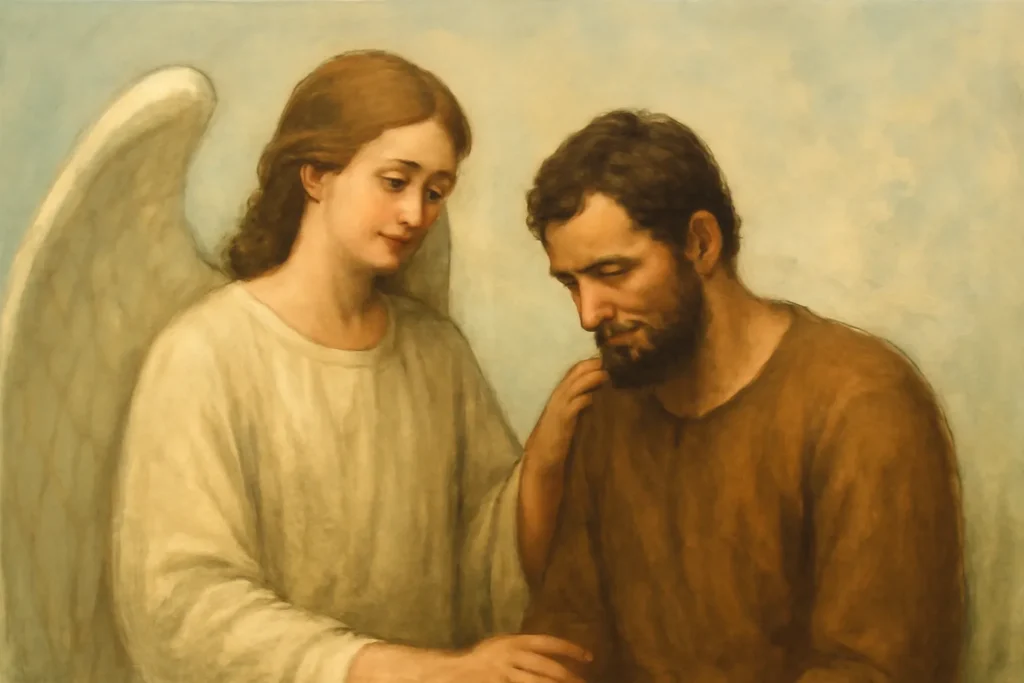
Across cultures and eras, the image of an angel with man or a divine messenger alongside a mortal has intrigued artists, theologians, dreamers, and storytellers. This motif—whether described in scripture, depicted in paintings, or imagined in modern fiction—conveys more than a simple meeting between two beings. It carries layers of meaning, symbolism, and interpretation that speak to how humans conceive the sacred, the unknown, and the potential for change within the self. In this article, we explore the meaning, symbolism, and interpretations of the emblematic pairing of an angel with a man, using a range of contexts—from religious traditions to psychology, art, and contemporary media.
When the celestial visitor appears in proximity to a human, the encounter typically signals more than personal contact. The angel with human motif often marks a turning point—an event that alters the course of a life, a decision, or a worldview. The following dimensions are commonly identified in discussions of this motif:
Divine communication. One of the most enduring readings is that the angel serves as a conduit of truth, guidance, or revelation. The message is not random; it is purposeful, often aimed at redirecting a person toward a higher calling or a deeper understanding of their situation.
Protection and guardianship. A recurring role for the angel is that of a guardian or protector. In stories and parables, the presence of the celestial being can shield the human from danger or moral peril, offering a sense of safety amid uncertainty.
Guidance and mentorship. Beyond warnings or assurances, the angel can function as a teacher—providing insight, clarifying choices, and helping the human navigate a difficult path. This is often less about control and more about awakening latent wisdom.
Transformation and call to purpose. Encountering a celestial presence can catalyze a transformation in the human life: a reoriented vocation, renewed faith, or a radical shift in priorities. In literature and film, the moment of contact frequently precedes a quest or a heroic journey.
Crossing thresholds and liminal space. The meeting tends to occur at a boundary—between dream and waking life, between danger and safety, between the ordinary and the sacred. The angel with man motif thus embodies a bridge between two realms.
Judgment and testing. In some narratives, the celestial figure administers a trial or inquiry, inviting the human to demonstrate virtue, courage, or humility under pressure.
In all these readings, the angel with human pairing is less about the biology of a being and more about the moral and spiritual psychology of the person who encounters the divine. The encounter invites introspection: what does the mortal really believe? what is their capacity for change? and what commitments will they make in response to a transcendent nudge?
Symbolism in Art and Literature
Artistic and literary works have long used the angel beside a man to anchor complex themes. The symbolism is multilayered, with cultural assumptions coloring both the portrayal of the angel and the human recipient. Here are major strands of symbolism to consider.
Iconography in Christian and Jewish Traditions
In Christian iconography, the angel with man frequently appears as a herald bearing a message of momentous consequence. The figure of the angelic messenger is inseparable from famous episodes—such as the annunciation narratives in which a heavenly envoy announces miraculous births or divine will. The aesthetic choices—wings, radiance, and a calm, authoritative demeanor—emphasize the difference in status between the mortal and the immortal, while the human participant is shown at a threshold moment of decision or revelation. This dynamic communicates the idea that divine intent can become personal, specific, and timely for a single life.
In Jewish tradition, while the specifics of angelic encounters differ, the motif still signals contact with a higher order that tests, guides, or clarifies. In some narratives, the angels appear to anchor moral clarity, reaffirm covenantal obligations, or awaken a recipient to responsibility. The symbolism of a celestial mediator and human interlocutor thus remains a way to depict how sacred law or cosmic order intersects ordinary life.
Contemporary and Secular Reworkings
In modern literature and cinema, the angel with man pairing is often reimagined to suit secular or pluralistic sensibilities. These works may emphasize metaphorical or psychological readings—seeing the angel as an embodiment of inner conscience, a guide within a crisis, or a representation of hope during despair. The mortal protagonist is then asked to interpret the message, not as doctrinal instruction but as a prompt for personal growth, the re-evaluation of values, or acts of compassion in a troubled world.
In visual arts, artists may explore the tension between the transcendent and the terrestrial. A painting or sculpture might place an angelic figure near a human within a contemporary setting—an office, a street, or a living room—to suggest that the divine can enter everyday moments. In such contexts, the symbolism often emphasizes reconciliation between heaven and earth, urging viewers to recognize sacred potential within ordinary life.
Cultural and Historical Contexts
Understanding the angel-with-man motif requires attention to the cultural and historical textures in which it appears. While the theme is widely distributed, its emphasis shifts depending on religious beliefs, social norms, and historical moments.
Ancient Near Eastern and Mediterranean Traditions
In ancient Mesopotamia and neighboring cultures, celestial beings appear as intermediaries who communicate with humans on behalf of the gods. While the explicit pairing of an angel and a man as a narrative device is more characteristic of later Abrahamic traditions, the underlying idea of a divine messenger entering human space has deep roots. The symbolism of contact with a transcendent agent as both a privilege and a responsibility emerges in these contexts, foreshadowing later motifs in Jewish and Christian art and literature.
Judaism, Christianity, and Islam
Across the three Abrahamic faiths, the core function of the celestial messenger remains recognizable: to convey revelation, to confirm covenants, and to assist human beings in fulfilling a divine plan. In each tradition, the angel with man encounter is a threshold crossing—an invitation to choose humility, obedience, and compassion. The exact form of the encounter—the tone of the messenger, the urgency of the message, and the human response—varies, but the archetypal function persists: a bridge from the sacred to the personal, a moment that invites the mortal to respond with faith, courage, or ethical action.
Folklore and European Literature
In European folklore and later Romantic and Gothic literature, the angelic figure frequently stands in for the moral conscience or the guardian presence in moments of peril. The angel with man dynamic in these mediums often doubles as a test of character: will the human heed the warning, accept the gift, or reject the impossible possibility that the encounter represents?
Dream analysis has long treated encounters with celestial beings as rich material for exploring inner life. The angel with man motif translates readily into psychological terms, especially within Jungian and psychoanalytic frameworks.
Archetype and the Self. In Jungian psychology, the angel can function as an archetype—an external symbol that points toward the higher self or the process of individuation. The mortal recipient may experience a realization of inner potential, with the celestial guide representing guidance from the psyche toward wholeness.
Anima/Animus and the Sacred Other. The encounter can personify the inner feminine (anima) or inner masculine (animus) as a guiding force that challenges the ego and invites integration of opposed aspects of the self.
Numinous experience. The presence of a transcendent figure in a dream can evoke awe, fear, or a sense of meaning that reorganizes the dreamer’s priorities upon awakening. The dream thus becomes a rehearsal for real-life choices.
Guidance versus projection. A critical interpretive question is whether the message in the dream reflects external influences or internal needs—yet the subjective impact remains transformative regardless of its origin.
In the psychology of symbols, the idea of a celestial envoy near a mortal represents a dramatic invitation to pay attention to aspects of life that might otherwise be neglected: ethics, purpose, and the direction of one’s path. The motif becomes a tool for self-reflection as much as for spiritual interpretation.
Modern Representations in Film, Television, and Literature
In contemporary media, the angel-with-man pairing persists, often reframed to reflect current concerns about faith, doubt, and human agency. TV series, novels, and cinematic narratives use the motif to examine how a person handles extraordinary knowledge, dangerous choices, and moments of vulnerability.
Guardian angel narratives—stories in which a benevolent celestial being walks beside a person, offering counsel without taking away agency. The human protagonist remains responsible for actions, even as the guiding presence provides clarity and protection.
Angels as ethical mirrors—in some works, the celestial figure serves as a mirror that exposes the character’s blind spots—pride, fear, selfishness—so that the hero may confront weaknesses and mature.
Metaphysical guardianship—the angel may symbolize a larger force of life’s mystery, suggesting that meaning emerges when the ordinary world intersects with something cosmic but approachable.
Hybrid mythic figures—in contemporary fantasy, the line between angel, spirit, or otherworldly guide blurs. The divine messenger becomes a shapeshifter of narrative function, delivering prophecies, warnings, or humorous companionship.
Readers and viewers are invited to interpret these modern portraits through personal experience: does the encounter imply real spiritual possibility, or is it a literary device that elevates a moment of decision? Either way, the angel with man theme remains a compelling way to explore responsibility, compassion, and courage in the face of uncertainty.
Interpreting Personal Encounters: A Practical Framework
For individuals who sense that they have encountered something akin to an angel with man moment—whether in dreams, meditation, or a real-life event—these steps can help in thoughtful interpretation without rigid dogma:
Record the experience. Write down what happened, who was involved, the setting, and your emotional and physical reactions. Details matter; they can reveal the texture of meaning later.
Identify the message or lesson. Ask what the encounter is trying to teach—courage, humility, forgiveness, or a call to action for yourself or others.
Check the timing. Consider whether the moment arises at a juncture of decision or risk. The motif often appears when a choice with moral weight is imminent.
Evaluate your response. Reflect on how you acted or plan to act after the encounter. The moral dimension matters as much as the sensory experience.
Consider cultural and personal lens. Be mindful of your beliefs, background, and expectations. Interpretations can vary widely; a respectful, curious stance helps avoid over-claiming certainty.
Seek guidance if needed. If the experience feels overwhelming, discussing it with trusted friends, mentors, or spiritual advisors can provide support and perspective.
In practice, the advice above encourages a balanced approach: acknowledge the emotional power of the encounter while remaining grounded in ethics and personal responsibility. The angel-with-man motif may be a prompt to act with compassion, to repair a relationship, or to pursue a more meaningful vocation.
To fully appreciate the breadth of the angel with man motif, it helps to see its variations. Different cultures and authors emphasize distinct aspects of the relationship between the celestial being and the human.
Angel as guide and teacher. The celestial figure not only speaks but also demonstrates how to walk a particular path, modeling virtue in concrete actions.
Angel as witness. The presence of an angel might be less about a direct message and more about bearing witness to a moral struggle, thereby validating the human’s feelings and choices.
Angel as challenger. Some narratives present the angel as a test-taker, pressing the human to prove their integrity or resilience under pressure.
Angel as ally in danger. In perilous moments, the celestial envoy becomes a lifeline, yet never removes the human’s responsibility to endure or improvise.
Angel as symbol of hope. Even when no literal instruction is given, the figure can symbolize hope, faith, or the possibility of transformation through adversity.
The recurring pattern emphasizes that the angel with man is a dynamic trope rather than a static symbol. It adapts to the concerns and questions of the audience—whether those concerns are about moral decision-making, the existence of the sacred, or the ways in which the self can grow when confronted with the extraordinary.
Beyond narrative function, the angel-with-man motif raises philosophical questions about free will, moral responsibility, and the existence or accessibility of transcendent knowledge. Several themes commonly surface in debates and reflections:
Agency versus guidance. Does the presence of a divine messenger diminish human agency, or does it illuminate and expand it? A central tension is whether guidance is coercive or invitational.
The problem of certainty. If a celestial envoy communicates, what level of certainty does that confer on the recipient’s choices? Philosophers and theologians debate whether revelation guarantees moral clarity or introduces new ambiguities.
Ethics of response. Encounter ethics asks: what ought the human do with the knowledge or permission granted by the angelic presence?
Pluralism and interpretation. In pluralistic societies, the angel with man motif can be read as a universal symbol of guidance, while its religious specifics may be understood as culturally situated expressions of similar experiences.
These discussions underscore that the motif functions not only as a narrative device but as a lens through which people examine the boundary between the human and the divine, and the obligations that arise from contact across that boundary.
Historical Notes: Transmission and Transformation
Historical transmission of the angel with man idea shows how flexible a symbol this is. Across centuries, audiences have adapted the motif to new moral questions, scientific advances, and shifts in worldview. A few observations:
Continuity. The core sense of a higher being approaching a mortal for instruction or support persists across time and geography, suggesting a deeply rooted human archetype.
Adaptation. The imagery has been adapted to speak to contemporary concerns—ecology, social justice, mental health, and post-secular spiritualities—without losing its essential dynamism.
Ambiguity. The distance between the divine and human in these encounters often preserves mystery, inviting personal interpretation rather than definitive explanations.
Conclusion: The Enduring Allure of the Angel with Man
The enduring appeal of the angel with man motif lies in its ability to render abstract questions tangible. It transforms metaphysical debates into accessible, human-scale narratives and invites readers, viewers, and dreamers to consider the power of possibility in everyday life. Whether approached as religious symbolism, psychological allegory, or storytelling craft, the pairing of a celestial messenger with a mortal participant remains a potent reminder that life is navigated not only by what we know but by how we respond to something larger than ourselves.
As you explore this topic further, you may encounter a spectrum of expressions—angel beside a person in a painting, angelic guide in a novel, or the divine messenger appearing in a dream. Each version invites a reader to reflect on what it means to be guided, protected, and challenged by forces that transcend ordinary experience. The language of this motif—whether framed in religious reverence or secular wonder—continues to offer a compelling map for contemplating meaning, purpose, and ethically courageous action in a world that often feels uncertain.









Leave a Reply