Angel That Fell: Origins, Legends, and Symbolism of the Fallen Messenger
Angel That Fell: Origins, Legends, and Symbolism of the Fallen Messenger
Angel That Fell: Origins, Legends, and Symbolism of the Fallen Messenger
The idea of an angel that fell captures a powerful paradox at the heart of many religious traditions and mythologies: a being whose very role is to bear messages or illuminate truth becomes entangled in rebellion, exile, and cautionary tales. Across scriptures, apocrypha, liturgical art, and modern imagination, the fallen messenger remains a potent symbol. He embodies curiosity and pride, yet also warning and restraint. This article traces the journey of the concept from its earliest roots to its enduring presence in literature, theology, and culture, focusing on origins, legends, and symbolism of the rebel angel who once wore light and now embodies a complex shadow.
To understand the fallen angel, one must begin with the question: what is an angel, and what does it mean for one to fall? In many traditions, angels are messengers, servants, or guardians of the divine order. Their authority comes from heaven, their purpose from the Creator, and their behavior is supposed to reflect a harmony with cosmic law. The figure of the fallen messenger disrupts that harmony and, in doing so, reveals a set of moral and metaphysical questions about freedom, authority, knowledge, and consequence.
Biblical Foundations
Most readers encounter the tale of the fallen angel through brief, often enigmatic scriptures that have accrued layers of interpretation over centuries. The biblical corpus contains key strands that later traditions weave into a more explicit drama of rebellion and exile:
Lucifer and the concept of a “morning star” who becomes a rebel. In some Christian readings, a passage from Isaiah 14 is transported into a narrative about a glorious being who falls for pride. In the common contemporary stream, this figure is equated with the archangel who falls and who becomes Satan. It is important to note, however, that many scholars caution that the original Isaiah text may have been a taunt against an earthly ruler rather than a cosmic rebel in heaven; later tradition reinterprets the passage through the lens of heavenly rebellion. The name Lucifer thus operates both as a proper label in popular imagination and as a symbolic title for the “Light-Bringer” who scars the night with rebellion.
Satan as the adversary or accuser who challenges divine order. In the canonical text of the Hebrew Bible, the figure who comes to test faith is not always described as a fallen angel in the modern sense. Over time, Satan becomes identified in Christian lore with the rebel who casts off loyalty to God and falls from grace, merging with the broader notion of a rebellious angel who opposes heavenly command.
Ezekiel 28, often cited in Christian tradition as a parallel to the Fall, presents a figure described as the anointed guardian cherub who becomes corrupted by beauty and pride. The text’s original context may reference a human ruler, yet its imagery of perfection turning to ruin has made it a fertile ground for later exegesis about the heavenly fall and the loss of blessed status.
Hydration of the motif between heaven and earth arises when interpreters connect the idea of a glorious being who loses favor with a broader condemnation of hubris. The literary and theological result is a composite portrait: light turned to peril, illumination that corrupts when wielded without humility.
Other Ancient Texts and the “Watchers”
Beyond the canonical scriptures, other ancient and intertestamental writings expand the universe of the fallen messenger. The Book of Enoch, a venerable apocryphal work, introduces a vivid cohort of beings known as the Watchers who descend to Earth and mingle with humanity. In this tradition, some of these angels teach forbidden knowledge—craft, metalwork, magic, and other arts—thereby incurring divine judgment. Notable among them are figures like Semyaza and Azazel, whose revolt is portrayed not simply as disobedience but as the dissemination of knowledge that corrupts humanity and challenges the divine order. Though the Watchers are part of a broader mythic world, their story contributes a crucial layer to the concept of the fallen messenger: a once-lofty messenger who, by allying with human curiosity or by prideful ambition, crosses a boundary and loses a place in celestial realms.
These passages, though varied in tone and purpose, feed into a larger narrative that will echo through medieval, Renaissance, and modern imaginings: the figure of the angel that fell as a symbol of the lure and peril of knowledge, the danger of self-deification, and the moral consequences of disobedience within a cosmos governed by order.
Legends and Literary Traditions Surrounding the Fallen Messenger
Legends concerning the fallen messenger accumulate through time as theologians, artists, and writers reinterpret sacred texts for new audiences. The figure becomes a natural protagonist for exploring questions about authority, rebellion, temptation, and the dual nature of light and power. Here are some of the most influential strands across traditions:
In Judaic and Early Christian Traditions
In early Jewish and Christian circles, the idea of a celestial rebel gradually emerges from a mosaic of scriptural verses, glosses, and homiletic readings. The story is not always told as a single catastrophe but as a series of moral ecologies: pride as the seed of downfall, the allure of forbidden knowledge as a dangerous spark, and exile as a consequence that reshapes identity. In this milieu, the fallen angel becomes a rhetorical device to discuss obedience, the limits of created wisdom, and the complexity of divine justice.
Medieval and Renaissance Reinterpretations
During the Middle Ages and into the Renaissance, the fallen messenger becomes a dramatic figure on stage and in scrolls. The visual arts—frescoes, stained glass, and illuminated manuscripts—often depict the heavenly war, the expulsion of rebellious angels, and the lament of those cast beyond the gates of Eden. Literature deepens the psychology of the rebel: the proud one who believes himself worthy of more, the charismatic adversary who can charm his followers, and the tragic figure who must live with the consequences of dissent. Across these centuries, the fallen angel evolves from a doctrinal problem into a storytelling engine—one that tests human beings with questions about conscience, fate, and the price of liberty.
Milton and the Modern Imagination
In the English-speaking world, few works shape the idea of the fallen messenger as completely as John Milton’s Paradise Lost. Milton casts the chief rebel as Lucifer, a figure of monumental rhetoric and tragic complexity. He is not merely a villain; he is a master of rhetoric, a high-born being who resists tyranny by claiming the right to choice. The poem’s grandeur rests on the paradox that the rebel is both dangerous and compelling, a being who embodies the danger and necessity of free will. This portrayal has influenced countless later writers, from epic poetry to contemporary fantasy, coloring the concept of the fallen angel with a blend of charisma, tragedy, and moral ambiguity.
In dramatic literature and visual art, the narrative of the fallen messenger often becomes a meditation on light turned to shadow, on the vanity of power, and on the possibility of redemption after failure. The archetype serves as a mirror for audiences to examine their own impulses toward ambition, knowledge, and rebellion in the face of divine or cosmic law.
The Symbolism of the Fallen Messenger
Beyond the specifics of who the rebel angel was, the fallen messenger functions as a potent symbol across cultures. Its meanings are layered, sometimes contradictory, and always reverberant with moral or existential inquiry. Three broad strands illuminate the symbolism:
Light and hubris — The image of a being of light who misuses illumination highlights the peril of hubris. Light represents knowledge, insight, and transcendence, yet when coupled with pride, it can burn and blind. The fallen angel embodies this paradox: the very brightness that once announced truth has become a beacon of rebellion and ruin.
Freedom versus order — The rebel who chooses to challenge the divine order poses a perennial question: is freedom meaningful if it overrides moral law or cosmic design? The fallen messenger becomes a testing ground for arguments about the value and limits of autonomy, responsibility, and consequences.
Exile and identity — Expulsion from heaven or the divine sphere is more than a physical loss; it forges a new, often solitary identity. The exiled angel hovers between memory and the present, between coruscating memory of a once-unified purpose and the new reality of separation. This exile invites reflection on belonging, purpose, and the possibility of moral meaning after rejection.
Other symbolic strands emphasize the dual power of the fallen messenger: a warning about knowledge without wisdom and a reminder that even beings of extraordinary status are subject to consequences. The figure also invites readers to consider the value of humility, repentance, and the possibility of transformation after fall—from pride to restraint, from rebellion to reconciliation, or from isolation to redeployment of influence in service of a greater good.
Variants and Names Across Cultures
The language of the angel that fell shifts across religious and cultural contexts. Several variations and related concepts illuminate how societies encode similar fears and hopes in different terms:
Fallen angel as a general term used in Christian, Jewish, and secular discourse to describe any celestial being who rebelled or was cast out of a divine order. This broad category includes a spectrum—from prideful revolt to tragic fall—each variant carrying distinct moral and literary implications.
Rebellious archangel as a designation that foregrounds political overtones: a celestial power who seeks sovereignty or autonomy beyond the permitted scope of heaven.
Bright transgressor or light-bearing exile to emphasize the paradox of brightness and ruin. These phrases highlight the paradox that illumination, when untethered from humility, can become a weapon against the very order that grants it.
Watchers’ fall as a related motif drawn from apocryphal literature where beings who disclose the arts to humanity—yet trespass against divine boundaries—experience punishment. This variant expands the moral repertoire from individual pride to a communal act of sharing forbidden knowledge and facing consequence.
Morning star turned night as a poetic motif in some traditions, reframing the familiar symbol of dawn as a cautionary emblem of pride and fallibility.
Across languages and periods, these terms reflect a shared fascination with a being who begins in light and ends in consequence. The variations allow storytellers, theologians, and artists to tailor the fallen messenger to different audiences—emphasizing temptation, cosmic law, or the possibility of redemption.
The story of the angel that fell continues to illuminate modern culture in diverse forms. Its motifs resonate in theology, speculative fiction, cinema, music, and visual arts, often in surprising ways:
Literary retellings—From epic poetry to contemporary fantasy, authors explore the rebel angel as a figure of charisma and danger, a mirror for human aspirations, and a symbol of the moral costs of unregulated power. The motif can function as political critique, psychological drama, or metaphysical inquiry, depending on the author's aims.
Theater and cinema—On stage and screen, the fallen messenger becomes a dramatic engine: a character whose rhetoric conceals inner conflict, or a commander who must face the consequences of daring choices. The visual contrast of radiant light against the darkness of exile provides a potent aesthetic icon.
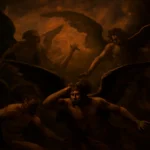
Art and iconography—Renaissance and later artists often depict the heavenly war, the fall, and the lament of the exiled. The imagery of a luminous being cast down by pride has inspired compositions that evoke beauty, tragedy, and moral admonition.
Music and popular culture—In music, literature, and film, the fallen angel frequently surfaces as a theme of rebellion, awakening, or liberation turned to peril. Contemporary works may reinterpret the archetype to examine modern questions about power, surveillance, and the ethics of knowledge.
Beyond entertainment, the fallen messenger remains a fixture of religious and philosophical reflection. The archetype invites readers to wrestle with questions about authority, conscience, and the desire to know. It also invites a sense of humility: the recognition that light, when divorced from responsibility, can become a dangerous force in the world.
Conclusion: The Fallen Messenger as a Mirror and Motif
From its earliest seeds in prophetic texts to its mature idiom in world literature, the story of the angel that fell serves as a profound mirror for human concerns. It speaks to the tension between illumination and hubris, to the lure of knowledge and the price of disobedience, and to the enduring question of whether a being who once served divine order can ever truly be reconciled with it after a fall.
When we encounter the rebel, whether in a temple scroll, a medieval manuscript, a Miltonic epic, or a modern fantasy novel, we are invited to reflect on our own relationship with power, responsibility, and truth. The fallen messenger archetype does not merely tell us about a celestial rebellion; it challenges us to consider what we do with the light we possess, how we handle information that could transform or corrupt, and what it means to seek meaningful existence after exile.
In sum, the origins of the fallen messenger lie at the intersection of myth, scripture, and imagination. The legends surrounding this figure demonstrate how cultures adapt an ancient theme to explore moral truths. And the symbolism of the rebel angel remains a versatile instrument for thinking about power, knowledge, and the limits of even the most luminous beings. As long as the question persists—what happens when light attempts to bend to will rather than to wisdom—the story of the angel that fell will continue to resonate, inspire, and caution in equal measure.









Leave a Reply