Introduction: Exploring the Promise “Ask, and It Will Be Given You”
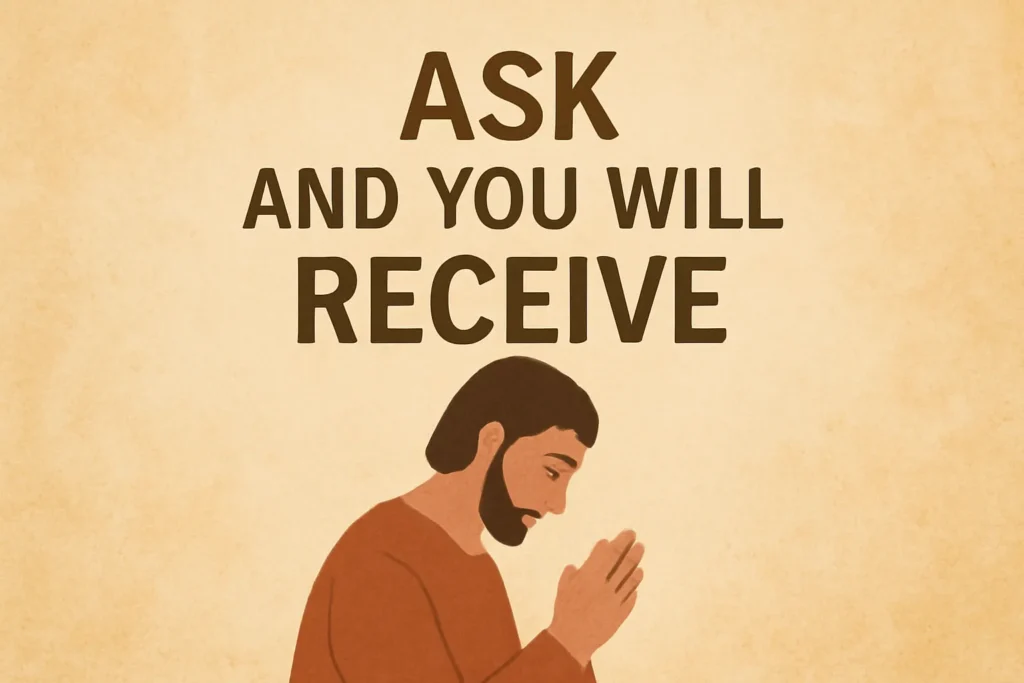
The phrase often summarized as “Ask, and it shall be given you” has resonated across generations as a concise invitation to prayer and trust. In many Bible translations, this promise appears in slightly different forms, such as “Ask, and you will receive” or “Ask, and it shall be given you; seek, and you shall find; knock, and it shall be opened to you.” These statements are paired with the broader teaching that prayer is a two-way encounter between God and the believer. For readers seeking wisdom on how to pray, what to expect, and how to interpret the promise, the verse offers both comfort and responsibility.
This article surveys the meaning of the promise, its historical and literary context, and practical steps for applying it in daily life. We will use several variations of the phrase to widen the semantic breadth and help readers recognize that the heart of the promise lies in relationship with God, not in a magical formula.
Origins and Variations: What the Bible Shows About Asking
The core idea appears prominently in two closely related passages:
Matthew 7:7-8 (NIV): “Ask, and it will be given to you; seek, and you will find; knock, and the door will be opened to you.”
Luke 11:9-10 (NIV): “So I say to you: Ask, and it will be given to you; seek, and you will find; knock, and the door will be opened to you.”
In these passages, the sequence Ask → receive, Seek → find, and Knock → the door opens functions as a triad illustrating different facets of pursuing God. Readers often encounter slightly different wording across Bible translations, such as “Ask, and it shall be given you” or “you will receive”, but the essential message remains the same: prayer is active engagement with a personal, listening God.
Beyond these two passages, the Bible contains additional statements about prayer and receiving:
John 14:13-14 emphasizes praying “in my name” so that the Father may be glorified, tying asking to alignment with Jesus’ mission and authority.
John 15:7 links fruitfulness in prayer to remaining in Jesus: “If you remain in me and my words remain in you, ask whatever you wish, and it will be done for you.”
James 4:2 notes that sometimes people do not have because they do not ask; but that asking without humility or faith is not the same as asking in God’s will.
Taken together, these texts invite readers to understand prayer as relationship with God, not as an autonomous request channel. They also anticipate that God’s responses may be shaped by wisdom, timing, and the good of the community.
Contextual Background: Where the Promise Belongs in Scripture
The central phrases about asking are found within larger teachings about prayer, trust, and discipleship. In the Sermon on the Mount, where Jesus says “Ask, and it will be given to you”, the audience is learning how to live under God’s rule in daily life. The surrounding material covers humility, dependence on God, righteous living, and nonretaliation. The promise sits within a pedagogical framework: God invites believers to pursue Him openly, with honest questions and earnest requests.
In Luke’s Gospel, the immediacy of request is paired with practical exhortations about prayer’s perseverance. Luke’s account often emphasizes the compassionate, generous nature of God and the readiness to respond to those who come to Him with courage and sincerity.
A helpful way to read these passages is to see them as frameworks for spiritual habit rather than as a one-time guarantee for every whim. The question to ask when reading any promise about receiving is not only what will God give, but why and how will He give it—and whether the request aligns with God’s larger purposes in the world and in the life of the believer.
Theological Dimensions: What It Means to “Ask” and “Receive”
The promise to “ask” presupposes a relationship with God. It is not a declaration that believers should demand anything they want; it is a call to bring genuine needs, hopes, and affections before a loving Father. The word boldly used in some translations reinforces the idea of honest, reverent communication rather than casual, presumptive bargaining.
Several key theological ideas shape how Christians understand the promise:
God’s will matters. The Epistle of 1 John 5:14-15 cautions that we ask in accordance with God’s will, and that we can have confidence that He hears us when we ask according to His purposes.
Faith and humility matter. James 1:6-7 warns against asking without faith, comparing such asking to a wave driven by the wind. Genuine faith is trustful, humble dependence on God.
Timing and patience are part of the process. God often answers according to a divine timetable, which may differ from human expectations but is always oriented toward ultimate goodness and growth in love.
Transformation through prayer—not just the delivery of a request. Prayer reshapes the heart, aligning desires with God’s character and purposes.
The interplay of desire, discernment, and surrender helps prevent prayer from becoming a mere formula for material advantage. In this sense, the promise is not about getting what you want in isolation but about receiving what God gives through honest relationship, which may include guidance, strength, peace, opportunities for service, or even long-awaited provision.
Practical Applications: How to Apply the Promise in Daily Life
How can believers translate the promise into living practice? The following steps offer a practical pathway that preserves the integrity of the Bible’s teaching while making prayer tangible in everyday life.
1) Begin with Honest Motives
Before praying, spend a moment to examine your motives. Are you seeking God’s glory, the good of others, and your own alignment with His will? When motives are mixed with self-centered goals, it can hinder the clarity of the request.
2) Pray Boldly, Yet Humbly
Bold prayer invites God into the details of life. Still, entrust the outcome to Him, recognizing that He knows what is best for us and for others. This posture blends boldness with humility.
3) Seek Alignment with God’s Will
Include time in prayer to understand God’s will. Phrases like “Your will be done” (as Jesus modeled in Gethsemane) can accompany requests, opening space for divine guidance.
4) Practice Persistent, Patient Prayer
The biblical pattern includes persistence (ask, seek, knock) without implying coercion. Persistence becomes a discipline that trains the heart to depend on God rather than on immediate answers.
Prayer is not only talking to God but listening for Him. Cultivate quiet moments, Scripture reading, and reflection to hear what God may be communicating in the exchange.
6) Be Open to Different Kinds of Receiving
“Receiving” may mean a direct answer, but it can also appear as wisdom, a change of circumstances, new opportunities, or altered desires that align more closely with God’s purposes.
7) Practice Faith, Not Control
Faith involves releasing the illusion of control and trusting a sovereign God who loves us. Even when the answer is delayed or “no,” faith remains hopeful and grounded in God’s goodness.
When applying this promise, you might find it helpful to use a simple prayer routine, such as:
Open with gratitude for God’s character and past faithfulness.
State your request clearly and briefly.
Ask for discernment to know God’s will.
End with surrender to God’s timing and plan.
Practical Examples: Variations of “Ask You Will Receive” in Real Life
Real-life applications of the promise often involve meaningful, concrete scenarios. Consider the following examples to see how the principle can operate in diverse situations:
Personal growth: yearning for courage or clarity in life decisions—pray with intention and await God’s guidance. Sometimes the answer is inner peace or a changed perspective rather than an external solution.
Health and healing: asking for healing or relief, while also seeking wisdom for medical care, rest, and spiritual resilience—trust that God hears and may provide comfort, strength, or healing in ways beyond what is expected.
Provision and employment: asking God to meet needs, while also taking practical steps—work responsibly, save wisely, seek opportunities—and trust Him to direct the outcome.
Intercession for others: asking for deliverance, provision, or transformation for someone else—recognize intercession as ministry that aligns with God’s love for all people.
In each case, the underlying posture is not control but relationship. The promise invites believers to bring concerns to a Father who cares deeply and who invites trust, even when the path forward is unclear.
As readers explore the promise, a few common questions arise. Here are some concise clarifications:
Does this promise guarantee material wealth? No. Scripture often contrasts earthly wealth with spiritual riches and emphasizes contentment, stewardship, and the alignment of desires with God’s kingdom purposes.
What about unanswered prayers? Not all prayers receive an immediate or literal answer. Sometimes God grants a better outcome, sometimes He says “wait,” and sometimes He says “no” in love because a different form of good is at work in the larger story.
How does “in my name” shape receiving? Praying in Jesus’ name signifies asking within his authority and for purposes aligned with his character and mission, not manipulating outcomes to serve personal ambition.
Is there a limit to what God will give? God’s generosity is not unlimited in the sense of granting every childish whim. He gives according to wisdom, goodness, and the growth of his people.
These clarifications help prevent common misuses, such as treating prayer as a magic spell or exploiting divine benevolence for self-centered goals. Rather, the promise is best understood within the broader narrative of God’s love, holiness, and redemptive purposes.
Balancing Promise with Biblical Wisdom
A balanced reading keeps the promise in conversation with other biblical truths:
God is good and trustworthy, even when outcomes are painful or confusing.
Prayer is relational—not a one-way request list but a living dialogue with a person who cares deeply for creation.
Scripture interprets Scripture—one verse should not drive a doctrine in isolation; cross-reference with related passages on prayer, faith, and discernment.
When read with these cautions, the promise to “ask and receive” becomes a spiritual discipline that fosters dependence on God, growth in trust, and greater sensitivity to God’s purposes in the world.
Guided Bible Study Tips: Deepening Understanding
If you want to study this topic further, here are practical steps you can take alone or in a group:
Compare translations: Look at how different Bible versions translate “Ask, and it shall be given you,” noting subtle shifts in meaning.
Contextual reading: Read surrounding chapters (for Matthew 5–7) to grasp the moral and spiritual climate in which the promise appears.
Cross-reference: Examine related passages (Luke 11:9-13; James 4:2-3; John 14:13-14; 1 John 5:14-15) to see how the concept of asking and receiving weaves through different contexts.
Journal reflections: Write about what you are asking for, what God might be teaching you through the process, and how you sense His timing.
Discuss with others: A small group can help test motives, discern God’s will, and encourage perseverance in prayer.
Conclusion: Embracing the Promise with Wisdom and Faith
The Bible’s invitation to “Ask You Will Receive” is an invitation to a confident, committed prayer life anchored in God’s character. It is not a guarantee that every desire will be instantly granted, but a guarantee that God invites us to bring our lives before Him, to seek His will, and to trust His good purposes—even when the answers come slowly or in unexpected ways.
As you explore Ask You Will Receive Bible Verse and its variations, let the centerpiece be relationship—an ongoing dialogue with a Father who loves you. Pray with honesty, discern with humility, and live with hopeful anticipation that God is at work in you and through you, shaping desires that align with His kingdom. In that light, the promise becomes not a pressure point to coerce God but a doorway into deeper communion with Him, where asking, seeking, and knocking become habits of a life lived under grace.











Leave a Reply