Aramaic Translation of the Lord's Prayer: Text and History
Aramaic Translation of the Lord's Prayer: Text and History
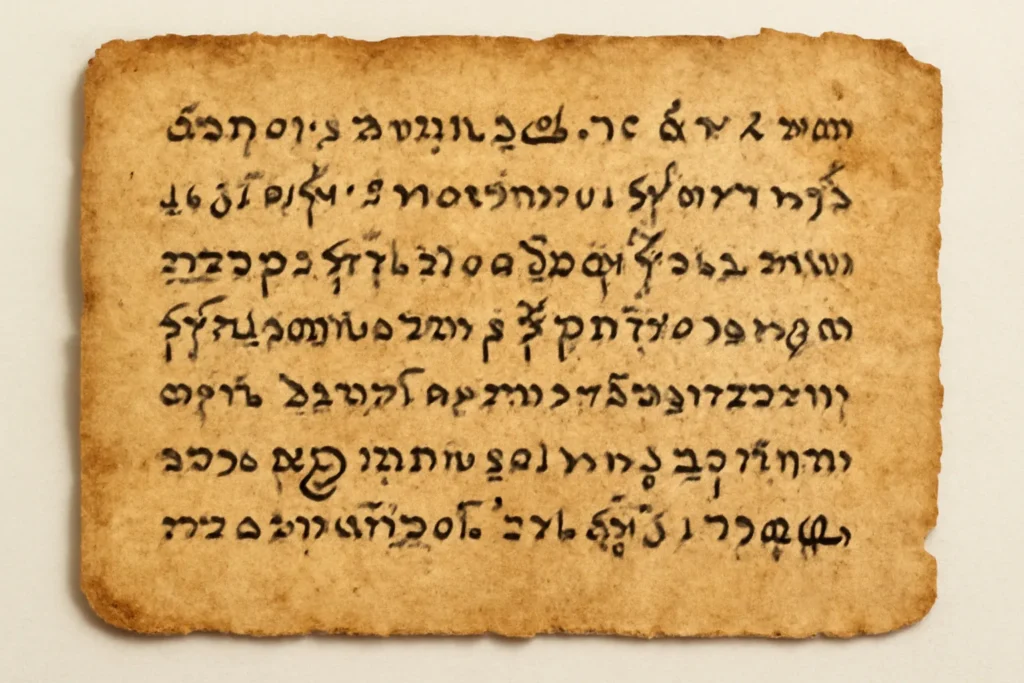
The Aramaic translation of the Lord's Prayer sits at a crossroads of language, theology, and liturgy. Though the original utterance of the prayer is found in the New Testament Greek, its soul is deeply rooted in Aramaic, the language spoken across large portions of the Near East during the Second Temple period and in early Christian communities. This article surveys the text and the history of Aramaic renderings of the prayer, with attention to dialectal variation, manuscript traditions, and the way scholars and communities approach translation. The aim is to provide a comprehensive, historically informed view that highlights semantic breadth while staying faithful to the linguistic realities of Aramaic.
Aramaic is a family of closely related languages and dialects in the Semitic group. It became the lingua franca of much of the Near East for centuries, and in many Christian communities it remained the language of worship and daily speech long after Greek and Latin dominated the broader theological conversation. Within the umbrella of Aramaic there are several major strands that linguists and liturgists distinguish:
Western Aramaic traditions, which include the classical Syriac literary heritage, still used in various forms by churches and scholars today.
Eastern Aramaic varieties, including Assyrian Neo-Aramaic and related dialects, spoken by Assyrian and Chaldean communities in the Middle East and in diaspora.
Palestinian/Palæo-Aramaic dialects that reflect the regional speech in late antiquity and the early Christian milieu.
In Christian liturgy, the Lord’s Prayer appears in several Aramaic renderings that reflect this dialectal diversity. The most influential and widely studied Aramaic version is the one that survives in the Peshitta, the canonical Syriac translation of the Old and New Testaments that circulated in the Syriac-speaking Christian world from the early centuries of the Church. Beyond the Peshitta, Neo-Aramaic communities—grassroots churches in the modern era—continue to render the prayer in their own living dialects, producing a spectrum of textual forms, phonetic spellings, and liturgical traditions.
Historical development: how Aramaic prayers traveled from spoken language to liturgical text
From Jesus’ language to the early church
Scholars generally agree that Jesus and many of his early followers would have spoken a form of Aramaic. The Gospels of the New Testament present Jesus’ teaching and some of his prayers in Greek, but the cultural and linguistic milieu from which the prayer emerges was Aramaic-speaking. In the centuries after the events portrayed in the Gospels, Christian communities began transitioning from Aramaic oral usage to written liturgical forms in Syriac and related dialects as Christianity spread along trade routes, urban centers, and monasteries in the Near East.
The shift from speech to script often involved re-phrasing for clarity in translation, careful choices about the sacred names used for God, and an effort to preserve the rhythm and cadence that made the prayer memorable in worship. This process gave rise to structured liturgical versions that could be recited in homes, churches, and monasteries across diverse communities. The result was a family of Aramaic renderings rather than a single, fixed text.
The Peshitta: standardizing the Syriac tradition
A pivotal moment in the history of the Aramaic Lord’s Prayer is the emergence of the Peshitta, the authoritative Syriac (a dialect of Aramaic) Bible translation used by many Syriac-speaking churches from late antiquity onward. The Peshitta organized and stabilized terminology, providing a template that influenced liturgical usage, catechesis, and translation philosophy. Within the Peshitta, the prayer is woven into the Syriac Christian spirituality—emphasizing values such as reverence for God’s name, the coming of God's kingdom, a plea for daily sustenance, and the practice of forgiveness.
In addition to the formal Peshitta text, there exist numerous manuscripts and later editions that preserve regional nuances, monastic copywork, or community-specific readings. The existence of these variants is a natural outcome of living languages in liturgy, where pedantic uniformity tends to yield to the needs of worshippers and the practicalities of copying by hand over generations.
With the expansion of modern Aramaic-speaking communities—especially in diaspora contexts—Neo-Aramaic languages (including Assyrian Neo-Aramaic and Chaldean Neo-Aramaic) have carried forward the tradition. Contemporary translations and recitations of the Lord’s Prayer in these languages reveal new phonetic forms, modern vocabulary, and sometimes lexicon borrowed from the local languages of diaspora communities. This ongoing living tradition illustrates how a 2,000-year-old prayer can adapt to new social, political, and linguistic environments while retaining core theological meanings.
Textual variants: key phrases and how they shift across dialects
Because the Lord’s Prayer travels across dialect boundaries, scholars and speakers encounter a range of transliterations and lexical choices. Below are some core concepts of the prayer, followed by representative Aramaic renderings and notes about dialectal variation. The aim is to show semantic breadth while highlighting how different communities render the same essential ideas.
Opening address: “Our Father in heaven”
Opening formula (common Syriac/Aramaic renderings) — The opening phrase most frequently described in scholarly and liturgical discussions is a form of Our Father addressed to heaven. In practice, parishioners hear a line that invokes God as father and as heavenly, signaling a personal relationship with the divine and a recognition of God’s transcendence.
Variations often include alternative spellings or pronunciations such as Abwoon/Abwun, d'bashmāyā/bashmayo, and minor vowel shifts. These reflect dialectal differences as well as manuscript-level preferences.
Semantic note — The core idea remains the same: the speaker addresses the divine as a paternal figure who dwells in the heavens, a formulation that situates prayer within both kinship and cosmic order.
“Let your name be sanctified” and related sanctity language
Sanctity phrase in Syriac renderings is a statement about the holiness and reverence due to God’s name. Translations tend to convey a wish or directive that God’s name be revered in the world and among the faithful.
Variants involve slight shifts in verb form or noun case that reflect different dialectal vowels and orthographic conventions in Syriac manuscripts or Neo-Aramaic speech communities.
“Thy kingdom come” and the invitation to divine governance
Kingdom concept is central to the prayer’s political and eschatological texture: it asks for God’s sovereignty to become visible in history and within creation.
Dialects typically render this with one verb or verbal form that conveys forthcoming fulfillment. Some communities spell this with a stronger sense of imminence; others express it as a more hopeful, ongoing reality.
“Thy will be done, on earth as it is in heaven” and order in creation
The line expresses alignment between divine intention and human action, a theme common to many languages' renditions of the prayer. In Aramaic, the sense is often captured with verb forms that tie “will” to both heaven and earth in a single theological arc.
Lexical choices here show the fluidity of Aramaic verbs and the way communities convey imperatives, wishes, and divine providence through nuanced morphology.
“Give us this day our daily bread” and sustenance as divine provision
Cosmology and social context shape the bread request. In some Syriac and Neo-Aramaic readings, the word for bread emphasizes daily sustenance rather than mere bread as a physical staple; in others it points to all basic necessities of life.
Different lexical options for “bread” can indicate shifts from rustic agricultural contexts to urban, merchant, or diaspora life, where bread stands in for daily necessities in a broader sense.
“And forgive us our trespasses, as we forgive those who trespass against us”
Forgiveness in Aramaic versions often carries a two-way dynamic: God’s forgiveness toward us and our willingness to forgive others. The phrasing in various manuscripts foregrounds mercy, obligation, and social ethics.
Scholars note that some communities prefer a wording that emphasizes proportional forgiveness: as we forgive others, so God forgives us. This reflects a shared moral logic across languages and loves.
“Lead us not into temptation, but deliver us from evil”
The final petition engages the tension between human vulnerability and divine protection. Translators face choices about how to render “temptation” and “evil” in Aramaic, balancing linguistic precision with spiritual significance.
In some dialects, this line is paired with additional doxologies or doxologic phrases in the surrounding liturgy, illustrating the adaptability of the prayer within local worship.
Dialects, manuscripts, and the semantic breadth of Aramaic renderings
When scholars study the Aramaic Lord’s Prayer across traditions, several recurring themes emerge:
Dialects matter. Western Aramaic traditions (notably Syriac) and Eastern Aramaic traditions (such as Assyrian Neo-Aramaic) can differ in phonology, lexicon, and syntax. These differences yield legitimate semantic breadth without altering the core theology of the prayer.
Manuscript lineage influences wording. Scribes in different monasteries and towns copied the Peshitta and related texts with their own habits, leading to small but meaningful variations that scholars track in textual criticism.
Liturgical usage shapes phrasing. In many churches, the prayer is recited in a ceremonial cadence that slightly guides pronunciation and intonation, reinforcing certain lexical choices over others.
Different textual traditions: a closer look at the main streams
The Syriac Peshitta tradition
The Peshitta is the foundational Syriac translation of the Bible that informed many Aramaic renderings of the Lord’s Prayer. In this tradition, the opening address and the following lines are shaped by a long history of Syriac Christian worship, monastic scholarship, and hymnography. The Peshitta’s influence extends beyond its own translation choices; it also informs how later communities understand God’s fatherhood, the sanctity of God’s name, and the ethical dimensions of forgiveness and mercy.
The Eastern Aramaic/Iraqi and Assyrian communities
In Assyrian Neo-Aramaic and related dialects, modern renderings preserve the ancient sense while adapting to contemporary speech realities. In these communities, the prayer is often recited in church services and in family settings, maintaining a vital link between past and present. The phonology of these dialects introduces sounds and intonations that can give the prayer a distinctive cadence, even when the meaning remains the same.
The Western Aramaic/Syriac scholarship and liturgical practice
Scholars who work with Syriac linguistic traditions emphasize how orthography, diacritics, and morphological patterns influence interpretation. For instance, where a particular Syriac manuscript uses a certain vowel system or a marginal gloss, readers may encounter alternate readings of a line or phrase. This scholarly work helps us understand the variability of the Aramaic text while acknowledging the unity of its doctrinal core.
The Lord’s Prayer in modern Aramaic-speaking communities
Today, the prayer continues to be a staple in worship and daily life for many communities that speak Aramaic varieties. The modern revival of Aramaic in diaspora contexts has given rise to new translations and performances in Neo-Aramaic, preserving the prayer’s ancient roots while rendering it accessible to new audiences. In churches and homes across the globe, speakers:
- recite the prayer in Aramaic as a living link with the Christian tradition;
- study the phonology and morphology that shape each line;
- discuss the theological significance of the petition for daily life, forgiveness, and the moral economy of human relationships.
These activities show how the prayer remains a dynamic, living text that travels well beyond its original locale and period.
Implications for translation studies and biblical interpretation
The Aramaic translations of the Lord’s Prayer offer a valuable case study for scholars interested in translation theory, interlingual transmission, and the intersection of language and worship. Several insights emerge from studying these renderings:
Semantic breadth is a natural feature of translations that travel across dialects and communities. The same theological concepts—divine Fatherhood, sanctity of God’s name, divine will, daily sustenance, forgiveness, and protection—are expressed with variations that reflect cultural and linguistic nuance.
Context matters. Liturgical context, community needs, and historical circumstances shape how a line is rendered. A line that functions as a prayer in one setting may appear slightly differently in another, even when the underlying theology remains stable.
Textual criticism and philology help us understand why versions differ. By comparing manuscripts, scholars reconstruct possible original readings while recognizing the practical realities of transmission in different places and times.
Teaching and interpreting the Aramaic Lord’s Prayer: practical approaches
For educators, students, and curious readers, here are some practical approaches to engaging with the Aramaic Lord’s Prayer in a responsible and enriching way:
Focus on meanings. Emphasize the core theological claims—intimacy with God as Father, God’s holiness, God’s reign, alignment with divine will, daily trust, mercy, and deliverance—before diving into the exact phonetics of a particular dialect.
Acknowledge variation. Show how different communities render the same ideas and invite learners to compare phrases side by side, noting how culture and language shape expression.
Use transliteration with care. Present several transliteration options when introducing a line, explaining that different transliteration schemes reflect diverse scholarly or devotional traditions.
Connect to liturgy. If possible, listen to or participate in a live or recorded liturgical reading in a Syriac or Neo-Aramaic dialect to hear cadence, stress, and musicality that influence understanding.
Conclusion: the Aramaic Lord’s Prayer as a bridge between languages and communities
The Aramaic translations of the Lord’s Prayer demonstrate how a single prayer can act as a bridge across centuries, dialects, and continents. Its textual diversity reveals the adaptability of a sacred text within real communities while its theological core remains a shared heritage: the intimate address to God as Father in a transcendent heaven, a plea for reverence of God’s name, the longing for God’s rule and will to be realized, secure daily provision, and the ethical obligation of forgiveness paired with spiritual protection. By studying the variations across Syriac, Western Aramaic, Eastern Aramaic, and Neo-Aramaic dialects, readers gain not only linguistic insight but a richer appreciation for how communities have used language to sustain faith, teach repentance, and cultivate mercy across generations.
In this way, the Aramaic translation of the Lord's Prayer: Text and History embodies a living dialogue between language and devotion. It is a testament to how sacred speech migrates from mouth to manuscript, from temple to table, and from ancient tongues into modern life. And it remains a powerful reminder that translation, properly understood, is not merely a conversion of words but a careful stewardship of meaning, intention, and spiritual memory.
Glossary of key terms
Aramaic — A Semitic language family with historical significance in the Near East; root language for many liturgical and daily forms in early Christianity.
Syriac — A major Western Aramaic dialect used in Christian liturgy and literature, central to the Peshitta tradition.
Peshitta — The canonical Syriac Bible translation, influential in shaping Aramaic readings of biblical texts and prayers.
Neo-Aramaic — Modern Aramaic dialects spoken by diaspora and contemporary communities (including Assyrian Neo-Aramaic and Chaldean Neo-Aramaic).
Dialect — A regional or social variety of a language, affecting pronunciation, vocabulary, and syntax.
Liturgical text — A written form of prayers and rites used in worship services.
Transliteration — The practice of rendering words from one writing system into another, often reflecting phonetic approximations.
Manuscript tradition — The body of handwritten copies that preserve, transmit, and occasionally diverge in textual form.








Leave a Reply