The Bible presents God with a rich constellation of attributes that together reveal who God is, how He acts, and how we are to respond to Him. This guide gathers biblical attributes alongside the verses that illuminate them, offering a practical and theologically solid overview for personal study, small groups, or classroom teaching. Each section highlights a particular attribute, provides memorable scriptural anchors, and suggests ways these truths shape worship, prayer, and daily living.
Wisdom in the Bible is not merely having knowledge but the right ordering of all things according to God’s purposes. His wisdom governs the design of creation, salvation, and history. For believers, wisdom invites trust that God’s plans are good even when human sight is limited.
O the depth of the riches both of the wisdom and knowledge of God! how unsearchable are his judgments, and his ways past finding out! For who hath known the mind of the Lord? or who hath been his counsellor? or who hath first given to him, and it shall be recompensed unto him again? For of him, and through him, and to him, are all things: to whom be glory for ever. Amen.
Trusting God’s plan replaces human certainty with confident expectation.
Discretion is learned through alignment with divine purposes rather than mere cleverness.
Prayerful discernment asks for wisdom to act in line with God’s ends (see James 1:5 for a parallel theme about asking God for wisdom).
Practical implications
In daily life, a posture of humility before God’s wisdom guards against presuming to know the outcome in advance. When plans derail, Christians who trust God’s wisdom anticipate His lead, seeking insight through Scripture, prayer, and wise counsel.
Holiness of God
Holiness is the essential attribute that sets God apart—utterly other, utterly pure, and sacred in every way. The God who is holy calls His people to pursue holiness as a response to His character. Holiness touches not only God’s moral purity but also His nature, evaluations, and judgments.
And one cried unto another, and said, Holy, holy, holy, is the LORD of hosts: the whole earth is full of his glory. ... For I am the LORD your God: ye shall therefore sanctify yourselves, and ye shall be holy: for I am holy.
Holiness is nonnegotiable; it defines how God relates to sin and how He calls His people to respond to Him.
Scripture presents holiness as the standard by which all thoughts, words, and actions are measured.
Implications for worship and living
Worship of a holy God must acknowledge His purity and demand for righteousness. Believers are called to live in a way that mirrors God’s holiness, seeking moral distinction in thought and deed and resting in God’s provision for cleansing and transformation.
Love of God
God’s love is foundational for the Christian message and the life of faith. It is not merely sentiment but active, self-giving, and costly in its expression. The love of God moves toward humanity even when humanity remains unreceptive, and it culminates in the sending of Christ for our salvation.
For God so loved the world, that he gave his only begotten Son, that whosoever believeth in him should not perish, but have eternal life.
In this was manifested the love of God toward us, because that God sent his only begotten Son into the world, that we might live through him. Herein is love, not that we loved God, but that he loved us, and sent his Son to be the propitiation for our sins.
But God commendeth his love toward us, in that, while we were yet sinners, Christ died for us.
Gospel-centered love: God acts first toward us in grace, mercy, and truth.
Consistent love: it does not depend on our merit but on his nature and promises.
Theological reflections
The boundless love of God forms the base for Christian assurance and evangelism. If God’s love remains unchanging, believers can trust that their salvation rests on a firm Foundation and that their transformation flows from that love into obedience and joyful devotion.
Mercy and Grace of God
While mercy refrains from giving us what we deserve, grace lavishes on us what we do not deserve. Together, they reveal God’s generosity and patience toward sinners, paving the way for spiritual renewal and new life in Christ.
It is of the LORD's mercies that we are not consumed, because his compassions fail not. They are new every morning: great is thy faithfulness.
The LORD is full of mercy and gracious, slow to anger, and plenteous in mercy.
But God, who is rich in mercy, for his great love wherewith he loved us, even when we were dead in sins, hath quickened us together with Christ, (by grace ye are saved;)
Mercy slows the cadence of judgment and invites repentance.
Grace is the decisive power of salvation, not human effort alone.
Living in response to mercy and grace
A grateful heart responds to divine mercy and grace with humble service, generosity, and a lifestyle shaped by the grace received. Christians are commissioned to extend that same mercy and grace to others, reflecting the character of the God who shows mercy.
Truth and Righteousness of God
God’s truth is the ultimate standard by which all claims about reality are tested. His righteousness speaks to moral perfection and faithful conduct that accords with His holy nature and covenant promises.
Thy righteousness is an everlasting righteousness, and thy law is the truth.
He is the Rock, his work is perfect: for all his ways are judgment: a God of truth and without iniquity, just and right is he.
Truth grounds all knowledge and reveals God’s will for humanity.
Righteousness requires right action in accordance with God’s character and law.
Impact on faith and ethics
When life exposes inconsistency, the truth-telling nature of God invites confession and alignment. A life lived in harmony with God’s truth bears witness to His character and offers a compelling witness to a watching world.
Justice and Judgment of God
Justice in Scripture is God’s fair, righteous ordering of all things. He judges with perfect equity, rewarding the righteous and judging sin, while always providing avenues of mercy for those who repent and trust in Christ.
Clouds and darkness are around about him: righteousness and judgment are the habitation of his throne.
Who will render to every man according to his deeds: To them who by patient continuance in well doing seek for glory and honour and immortality, eternal life: but unto them that are contentious, and do not obey the truth, but obey unrighteousness, indignation and wrath.
And therefore will the LORD wait, that he may be gracious unto you, and therefore will he be exalted, that he may have mercy upon you: for the LORD is a God of judgment: blessed are all they that wait for him.
Divine justice upholds truth and is the ground of hope for a just resolution to every wrong.
Judgment is tempered by mercy toward those who turn in faith, yet it remains a serious aspect of God’s character.
Pastoral applications
Believers can trust that God’s justice will vindicate righteousness in the end, while also offering mercy to sinners who repent. This dual aspect fuels both evangelism and exhortation toward holy living, encouraging a righteous posture before God and neighbor.
Faithfulness and Trustworthiness of God
God’s faithfulness endures across generations. He keeps His promises, remains constant in the face of changing circumstances, and invites His people to confidence that He will accomplish all He has planned.
Know therefore that the LORD thy God, He is God, the faithful God, which keepeth covenant and mercy with them that love him, and keep his commandments to a thousand generations.
Faithful is he that calleth you, who also will do it.
Faithfulness anchors the believer’s confidence in prayer, worship, and daily obedience.
God’s trustworthiness extends to every covenant, oath, and promise He makes.
Living in assurance
When life tests endurance, the faithfulness of God reassures us that He who began a good work in us will carry it to completion at the day of Jesus Christ (Philippians 1:6, though not quoted here, echoes the same assurance). Believers rest in a God who does not fail and who remains steadfast even when we falter.
God’s immutability means He does not change;His plans, purposes, and character are unaltered by time or circumstance. His sovereignty over creation expresses that He rules with ultimate authority and wisdom, guiding history toward His revealed ends.
For I am the LORD, I change not; therefore ye sons of Jacob are not consumed.
Remember the former things of old: for I am God, and there is none else; I am God, and there is none like me, Declaring the end from the beginning, and from ancient times the things that are not yet done, saying, My counsel shall stand, and I will do all my pleasure.
Immutability gives stability to God’s character and to His promises.
Sovereignty acknowledges that God is the ultimate authority who orders all events according to His perfect plan.
Pastoral reflections
A robust view of God’s immutability and sovereignty invites worship that honors His unmatched authority and comfort that His plans will prevail. It also calls believers to respond with shepherding trust, obedience, and hopeful expectation in every season.
Omniscience, Omnipresence, and Omnipotence of God
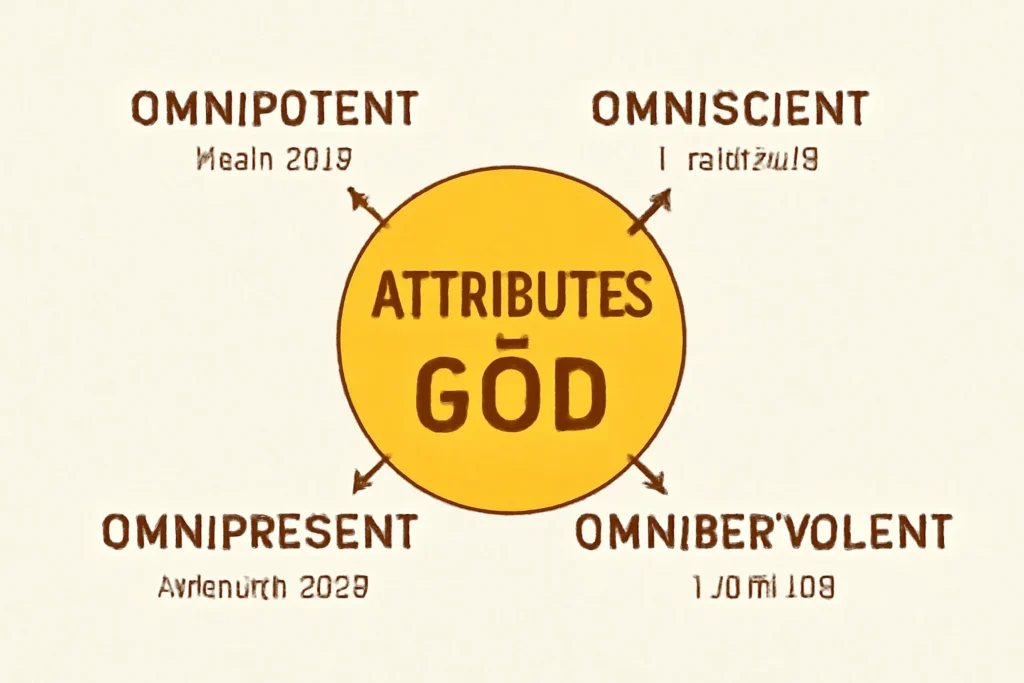
God’s omniscience means He knows all things—past, present, and future, including the depths of human heart and intention. His omnipresence means He is everywhere at all times, and His omnipotence means there is no limit to what He can do.
Great is our God, and of great power: his understanding is infinite.
Neither is there any creature that is not manifest in his sight: but all things are naked and opened unto the eyes of him with whom we have to do.
Whither shall I go from thy Spirit? or whither shall I flee from thy presence? If I ascend up into heaven, thou art there: if I make my bed in hell, behold, thou art there.
Omniscience assures us that nothing escapes God’s notice or faulty reasoning; He sees the heart and all facts alike.
Omnipresence comforts believers with the knowledge that God is with them in every circumstance.
Omnipotence emphasizes that God’s power is unlimited and his purposes cannot be thwarted.
Ways to lean on divine sovereignty in prayer
When praying or planning, acknowledge that God is both present and all-powerful. Invite His guidance and rely on His strength to accomplish what you cannot. Devotion to an omnipotent God fuels bold faith and patient endurance in trials.
Representative verses
From the psalms to the epistles, Scripture testifies to God’s comprehensive knowledge and presence, and to His mighty power shaping all things for His good purposes.
God’s wrath against sin is real and righteous, yet His mercy opens a pathway for forgiveness through Christ. The tension between judgment and mercy is resolved in the cross, where God’s justice and love meet in the person and work of Jesus.
For the wrath of God is revealed from heaven against all ungodliness and unrighteousness of men, who hold the truth in unrighteousness.
Much more then, being now justified by his blood, we shall be saved from wrath through him.
He that believeth on the Son hath everlasting life: and he that believeth not the Son shall not see life; but the wrath of God abideth on him.
Wrath upholds moral order and condemns sin, proving God’s holiness and justice.
Mercy provides a way of reconciliation through faith in Christ, offering forgiveness and new life.
How the church witnesses to these realities
The gospel proclaims that God’s wrath against sin was satisfied at the cross, and His mercy is poured out upon all who believe. This twofold emphasis invites repentance, faith, and a transformed life oriented toward love, justice, and holy living.
God is the source of all truth and the author of light. In Him there is no darkness at all, and His truth guides the paths of those who walk in the light as He is in the light.
Jesus saith unto him, I am the way, and the truth, and the life; no man cometh unto the Father, but by me.
Thy righteousness is an everlasting righteousness, and thy law is the truth.
Truth is a person (Christ) and a gift disclosed in Scripture that discloses reality as it is.
Light illuminates our path, exposing both danger and grace, guiding believers toward holiness.
Discipleship under truth and light
Following the God who is truth requires steady engagement with His Word, discerning what is true in a world of competing claims, and letting His light transform every corner of life—thought, word, and action.
Patience, Mercy, and Sovereign Grace in God’s Timing
Patience is a facet of God’s character that bears with sinners, delays judgment for the sake of mercy, and works in us a maturity that reflects His method and timing. God’s grace and sovereign mercy unfold across the arc of history, inviting hearts to repent and believe.
The LORD is good unto them that wait for him, to the soul that seeketh him. It is good that a man should both hope and quietly wait for the salvation of the LORD. The Lord is not willing that any should perish, but that all should come to repentance.
Patience is not indifference; it's a redemptive timing that allows the gospel to advance.
Grace continues to operate in the present, calling sinners to repentance and empowering believers for growth.
Application in church life
Patience and grace shape pastoral care, missionary work, and communal life. Churches that understand God’s timely mercy cultivate long-suffering love for one another, generous hospitality, and steadfast hope in God’s ultimate victory over sin and brokenness.
Practical Orientation to the Attributes of God
The attributes above are not abstract categories but living realities that shape how Christians pray, worship, and live in community. To grow in knowledge of God is to grow in love for Him and in the fruit of the Spirit, which includes patience, kindness, and self-control.
Meditate on a single attribute each week, pairing Scripture with prayer that reflects that attribute.
Use verses as memory anchors: commit a key verse to heart and practice reciting it in times of trial or temptation.
Pray with central aims: worship God for who He is, confess where our lives fall short, and ask for grace to live in light of His character.
In studying the attributes of God, readers gain a more coherent and confident faith. The Bible presents a God who is not only powerful and holy but also deeply loving, merciful, and steadfast. This multi-faceted portrait invites believers into a richer relationship with Him, marked by reverent awe, grateful worship, and obedient trust.









Leave a Reply