Overview: What does it mean to be baptized with the Holy Spirit?
The phrase baptized with the Holy Spirit (often rendered as baptism in the Holy Spirit, or Spirit baptism) refers to a distinct spiritual experience in which a believer is empowered and enabled by God through the Holy Spirit for service, testimony, and transformation. Across Christian traditions, this experience is described as more than a one-time conversion or the general indwelling of the Spirit. It is often associated with a moment or an ongoing, transformative work of God that produces tangible life changes, strengths for mission, and a renewed sense of purpose.
While the exact language and emphasis differ from denomination to denomination, most scholars and pastors agree on a few core ideas: the event is initiated by God, received by faith, evidenced by certain signs or changes in the believer, and connected to a purpose—often to witness to others about Jesus and to participate in the mission of the church. This article will explore the meaning, signs, and practical steps to receive this divine gift, while noting the diversity of beliefs that accompany it.
Meaning and scope: How to understand this experience
The baptism with the Holy Spirit is frequently described as a distinct act from the moment of salvation or from the general indwelling of the Holy Spirit. Several nuances are important to grasp:
Empowerment for witness: One major theme is that Spirit baptism equips believers to proclaim the gospel with clarity, courage, and supernatural enablement beyond natural ability.
Empowerment for service: It is often linked to gifts or an enhanced ability to serve in leadership, teaching, prayer, healing, or prophetic ministry.
Transformative experience: Many describe a shift in inner life—boldness in faith, a revival of passion for God, or a new clarity in spiritual priorities.
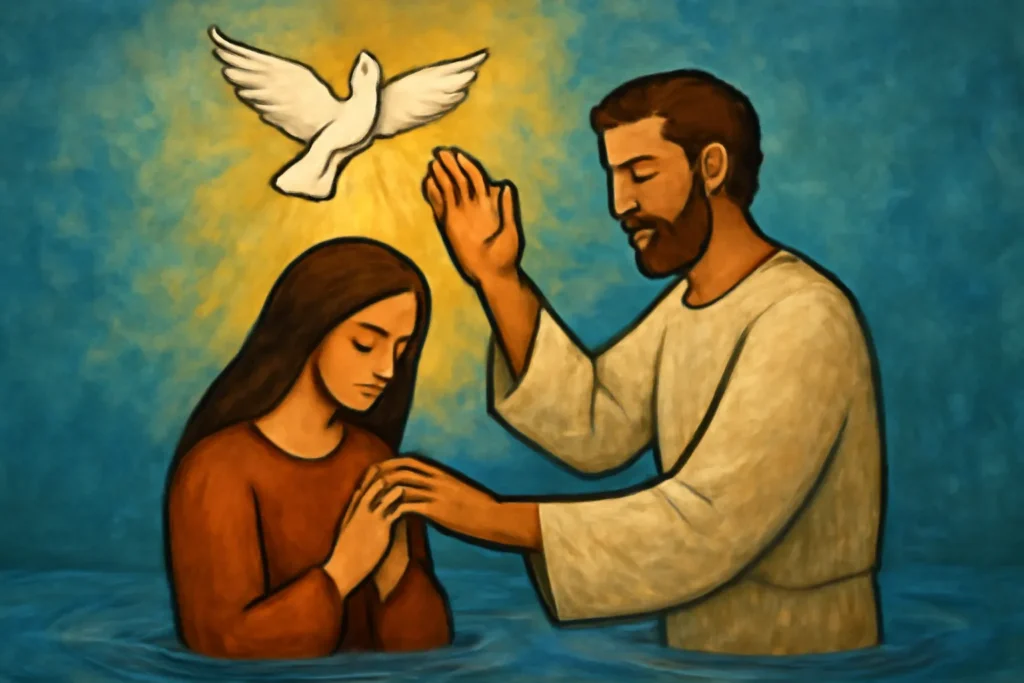
Distinct from water baptism: While water baptism symbolizes repentance and identification with Christ’s death and resurrection, Spirit baptism is typically described as an impartation or infusion of spiritual power for ongoing living and ministry.
Scriptural foundations: Key passages and their meanings
The Bible contains several pivotal accounts that have shaped the understanding of Spirit baptism. Below are the core texts often cited in teaching and practice, along with a brief note on how they are interpreted across traditions.
Acts 2:4 and the Day of Pentecost
In the narrative of the first Pentecost, the disciples were filled with the Holy Spirit and began to speak in other tongues as the Spirit enabled them. This event is commonly cited as the prototype of Spirit baptism: a divine impartation that empowered the church to bear witness publicly in a dramatic and transformative way.
When Peter preached, the Holy Spirit fell on Gentile believers as well. The outpouring was not limited to a specific ethnic group, and the reaction of the church leaders demonstrated that God’s Spirit is given to everyone who believes, not merely to a select cadre of followers. This passage is often cited to emphasize the universal accessibility of the Spirit and the inclusive nature of the gift.
Acts 19:1-6 and the Ephesian experience
In this instance, believers who had not yet heard of the Holy Spirit were baptized in the Name of Jesus and subsequently received the Holy Spirit with tongues and prophecy. The sequence has become a reference point for some traditions describing a distinct receiving event after faith.
John 7:37-39 and living water
Jesus spoke of the Spirit as living water that would become a reality in the life of the believer after his glorification. While this passage is more metaphorical, it has been used to illustrate the ongoing, vital presence of the Spirit in the Christian life.
Definitions and distinctions: Spirit baptism versus other Spirit-full experiences
To navigate the topic clearly, many theologians distinguish between several related experiences. The terminology can vary, but the underlying ideas often converge around three experiences:
Indwelling by the Holy Spirit: The belief that the Holy Spirit comes to dwell in the believer at the moment of genuine faith in Christ. This is widely taught as the initial work of the Spirit in salvation.
Baptism with the Holy Spirit or Spirit baptism: A subsequent empowering experience imparted by God for bold witness, service, and supernatural enablement. It is sometimes described as a distinct infilling beyond ordinary life in Christ.
Filling of the Holy Spirit or being filled with the Spirit: A recurring, ongoing process in which a believer lives under the Spirit’s control and influence, often expressed through obedience, prayer, and spiritual vitality. Some traditions see the filling as a continuous state rather than a one-time event.
In addition to these, there are discussions about gifts of the Spirit (such as prophecy, healing, wisdom, or tongues) which may accompany Spirit baptism in some streams of Christianity, while others see gifts as distributed throughout the ongoing life of the church to equip believers for ministry.
Signs and manifestations: What tends to accompany Spirit baptism
The manifestations associated with the baptism of the Holy Spirit differ among traditions. It is important to recognize that not all believers experience every sign, and the presence or absence of a particular manifestation does not define the validity of the experience. The core indicators often discussed include:
Boldness in witness and a greater willingness to share the gospel with others, sometimes in the face of opposition.
Enhanced prayer life and a heightened sense of God’s presence during prayer and worship.
Public or private manifestations of spiritual gifts, such as prophecy, discernment, or healing, depending on tradition and personal gifting.
Tongues or a spiritual language in some streams, particularly Pentecostal and Charismatic contexts. Other traditions emphasize prophecy or edification as primary signs rather than speaking in tongues.
Fruit of the Spirit manifesting as love, joy, peace, patience, kindness, goodness, faithfulness, gentleness, and self-control in daily life.
It is worth noting that some groups emphasize speaking in tongues as a primary or initial outward sign, while others teach that the blessing is primarily about empowerment for mission and personal transformation, with gifts appearing as the Spirit sovereignly distributes them for the church’s good.
How to receive the gift: Practical steps and pastoral guidance
For many believers, the question is not whether God wants to give the Holy Spirit, but how to posture the heart to receive what God freely offers. Below is a practical pathway that is often taught across diverse traditions, with notes on variations you might encounter.
Place faith in Jesus Christ and acknowledge Him as Lord and Savior. Spirit baptism is grounded in a responsive faith that receives God’s gift, not earned virtue or human effort.
Repent and turn toward God. A sincere turning away from self-reliance or sin prepares the heart to receive the Spirit’s action.
Invite the Holy Spirit to come and ask for empowerment for service and witness. A prayerful request aligns one’s longing with God’s promise.
Expect God to act in His timing. The exact moment of reception is known only to God, and some believers experience a distinct moment, while others sense a gradual or ongoing filling.
Receive by faith. Faith is the channel through which the Spirit’s gift is received; it is not earned by emotion or a perfect formula.
Be open to community and accountability. Often, Spirit-led life is reinforced in corporate prayer, worship, and relationship with mature believers who can provide guidance and discernment.
Different traditions describe the initial steps slightly differently. Some teach that laying on of hands by a pastor or elder accompanies the reception; others emphasize a direct, personal encounter with God. The common thread in all pathways is a posture of expectant faith and submission to God’s will.
Cross-tradition perspectives: How different traditions talk about the gift
The experience of Spirit baptism is interpreted in varied ways across Christian families. Here is a concise survey of some mainstream perspectives:
Pentecostal and Charismatic churches: Often teach that Spirit baptism is an event distinct from conversion, accompanied by observable manifestations (such as speaking in tongues) and empowering gifts for ministry. They typically encourage seeking the baptism with the Holy Spirit as a normal part of faith life.
Evangelical and many Protestant churches: May describe a broader emphasis on the baptism of the Holy Spirit as the moment of faith that unites a believer with Christ, while also recognizing an ongoing work of being filled with the Spirit for daily Christian living and service.
Baptist and Reformed traditions: Tend to emphasize the inner work of the Spirit at conversion and a steady, ongoing filling for sanctification and fruitful living, with less emphasis on tongues or dramatic signs but with a strong focus on the fruit of the Spirit and mission.
Orthodox and Catholic traditions: Often frame Spirit empowerment within the ongoing life of sacramental grace and indwelling, emphasizing the completion of the Spirit’s work through baptism, confirmation (or chrismation), and ongoing participation in liturgy and prayer. They may reserve the term Spirit baptism for a broader, life-long process of renewal rather than a single event.
Common questions and clarifications
As with many spiritual experiences, questions arise about frequency, duration, and the specifics of what qualifies as authentic Spirit-birth experiences. Here are a few commonly asked questions and concise clarifications:
Is Spirit baptism necessary for salvation? Most traditions distinguish between the moment of faith in Christ (which saves) and the Spirit’s empowering for service (which may follow faith). Spirit baptism is often viewed as a gift available to believers for the church’s mission, not a prerequisite for salvation itself.
Can a person be Spirit-filled without dramatic signs? Yes. The presence of the Spirit is not exclusively tied to visible phenomena. Fruit, obedience, and sustained faithfulness are widely recognized indicators of a Spirit-led life.
Can a non-Pentecostal believer experience spiritual gifts? Absolutely. Many Christians affirm that gifts like wisdom, discernment, and prophecy are distributed by the Spirit for the common good, irrespective of a particular tradition’s emphasis on speaking in tongues.
How should we discern genuine Spirit work from emotional experience? Ground every experience in Scripture, seek wise counsel, and look for alignment with the character of Christ, alignment with God’s Word, and the fruit of the Spirit in life and relationships.
Living out a Spirit-led life after receiving the gift
Receiving the Holy Spirit’s empowering is not an endpoint but a doorway into a daily, Spirit-guided life. Here are practical ways to cultivate ongoing Spirit-led living:
Prayer and worship: Regular, heartfelt prayer helps you stay attuned to the Spirit’s voice, moves you toward God’s will, and deepens trust in God’s timing.
Scripture engagement: The Bible shapes discernment and aligns experiences with God’s revealed will. Reading, studying, and meditating on Scripture cultivate spiritual sensitivity.
Fellowship and accountability: Community with other believers provides encouragement, correction, correction, and confirmation of gifts and callings.
Service and mission: Put your gifts to use in practical ways—local outreach, charitable work, teaching, or leadership within the church—to bear witness to Christ in daily life.
Discernment and testing: Learn to test spiritual experiences against Scripture, seek mature counsel, and practice humility as you grow.
Potential pitfalls and how to avoid them
While the Holy Spirit brings life and power, there can be misperceptions or unhealthy extremes. Consider these guardrails:
Avoid sensationalism: Do not equate strong emotion with genuine Spirit work; genuine fruit often shows up in changed character and consistent faithfulness.
Avoid coercive practices: Do not press others into experiences or manipulate outcomes. True Spirit work is personal and sovereign.
Seek alignment with Scripture: The Spirit always honors the truth of Scripture, even when gifts appear in surprising ways.
Value humility and love: The presence of the Spirit should foster humility, patience, and love toward others, not division or pride.
Historical and theological context: Why this matters
The concept of being baptized with the Holy Spirit has shaped the life of the church across centuries. It intersects with how communities interpret authority, the nature of spiritual gifts, and the calling to witness in a post-resurrection world. For many believers, this topic invites careful reflection on:
The origin and purpose of the church’s mission in the world.
The balance between personal spiritual experience and communal discernment.
How to cultivate a faithful life that is both deeply personal and publicly credible as a witness to Christ.
Practical guidance for churches and individuals
Churches that teach about the baptism with the Holy Spirit often offer practical guidance to help believers pursue a fuller experience of God’s presence while remaining grounded in faith and doctrinal integrity. Here are some commonly recommended practices:
Teaching and catechesis: Provide clear teaching on the nature, purpose, and diversity of Spirit-led experiences to prevent misunderstanding and suspicion.
Prayer ministry: Create spaces for individuals to seek God in prayer, with wise oversight to ensure safety and godly discernment.
Testimony and witness: Encourage sharing of testimonies to build faith, while avoiding pressure or coercion.
Balance with social ethics: Emphasize that Spirit-led life includes compassionate action, justice, and service to neighbors.
Frequently asked questions summarized
This section provides concise answers to common queries you might have when contemplating Spirit baptism or related experiences:
Is this a one-time event, or can it be ongoing?
For many, it is an initial empowering moment, followed by ongoing fullness and daily submission to the Spirit’s guidance.
Do you need to speak in tongues to be truly baptized with the Holy Spirit?
No universal standard exists. Some traditions view tongues as a primary sign; others emphasize different manifestations or the fruits of the Spirit.
Can someone be a Christian without this experience?
Yes. Most traditions affirm that salvation comes through faith in Christ, and Spirit empowerment for service can be a subsequent blessing that deepens life and ministry.
How can I know if I am truly being led by the Spirit?
Look for alignment with Scripture, love for others, ethical living, and a consistent pattern of obedience to God’s will.
Conclusion: Embracing the gift with discernment and devotion
The idea of baptized with the Holy Spirit remains a central, dynamic facet of Christian faith for millions of believers around the world. Whether you interpret this experience as an extraordinary moment of empowerment, an ongoing fullness of the Spirit, or a steady practice of living under divine guidance, the essential aim remains the same: to know Christ more deeply, to witness more boldly, and to serve more faithfully in love. The gift is not sought as an end in itself, but as a means to participate more fully in God’s mission—bringing good news to the poor, healing to the broken, and hope to a world in need.
If you are exploring this topic personally, consider engaging with a trusted mentor or pastor, immerse yourself in Scripture, and participate in a community where you can practice, reflect, and discern. Remember that every believer is invited to draw near to God, and the Holy Spirit’s work in your life is meant to produce a flourishing faith—one that endures, bears fruit, and honors Jesus in all things.
Whether you call it Spirit baptism, baptism with the Holy Spirit, or being filled with the Spirit, the central truth remains: God desires to empower and transform you for a life of faithful witness. May your journey toward this gift be marked by humility, curiosity, and a steady devotion to Christ.








Leave a Reply