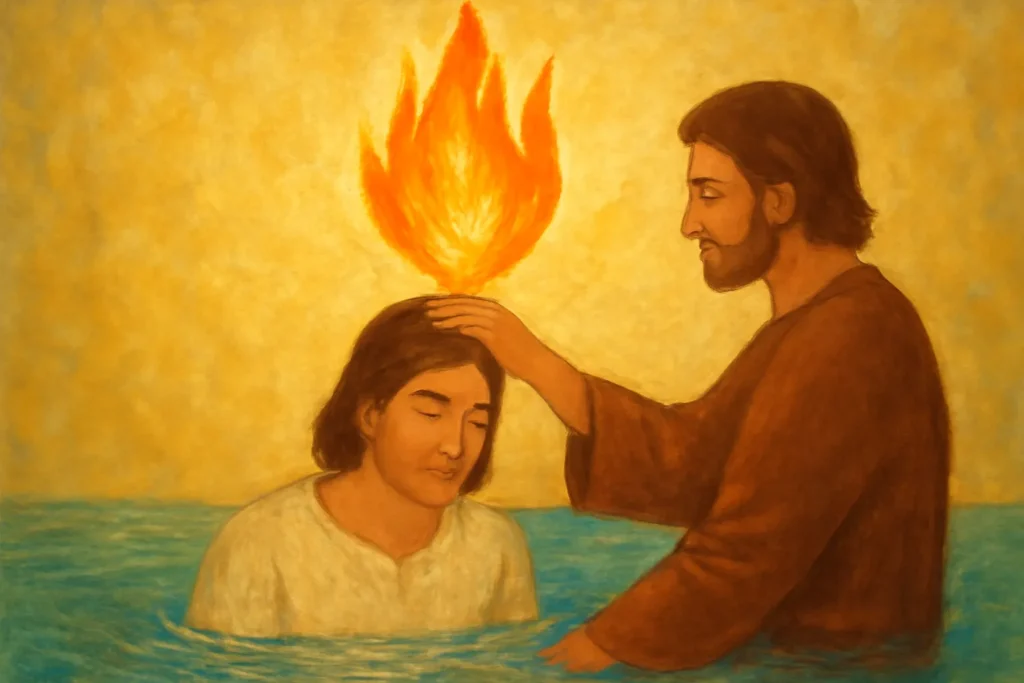
The phrase baptism in the Holy Spirit and fire brings together two powerful biblical images: the active presence of the Holy Spirit and the purifying, empowering force associated with fire. Across Christian traditions, this expression is used to describe a distinctive encounter with God that strengthens a believer for holy living and for ministry. In this article, we explore the meaning of Spirit baptism, the signs that sometimes accompany it, and the power it releases for witness, worship, and service. We also address common questions, how this experience has been understood through history, and practical guidance for individuals and churches seeking a fuller life in Christ while staying rooted in Scripture.
Note: while the terms baptism with the Holy Spirit, baptism in the Holy Spirit, Spirit baptism, and fire baptism appear in different traditions, they point toward a shared aim: an intimate, empowered life led by the Spirit for Jesus’s mission in the world.
Meaning: what does it mean to be baptized in the Holy Spirit and fire?
Two linked ideas lie at the heart of this topic. First, spiritual baptism refers to a divine act or filling where God’s Spirit comes upon a believer in a way that can empower, guide, and transform. Second, the fire aspect signals purification, zeal, and presence—God’s refining presence that touches motives, desires, and actions. Together, they describe a Christ-centered experience that leads to greater obedience, courage, and fruitfulness in ministry and daily life.
Key distinctions to understand
Water baptism vs Spirit baptism: Water baptism is an outward sign of faith and a public confession of trust in Christ. Spirit baptism is an inward work of grace that equips a believer for service and holy living.
One-time event vs ongoing infilling: Some traditions view Spirit baptism as a single decisive moment; others emphasize a daily, ongoing filling of the Spirit as believers yield to God.
Signs vary by tradition: In some settings, speaking in tongues or prophetic words may accompany Spirit baptism; in others, the primary indicators are transformed character, boldness in witness, and renewed devotion.
In exploring these ideas, it is helpful to keep in mind that the biblical record presents a range of experiences. The core throughline is not the form of the sign but the presence and work of the Spirit enabling believers to reflect Christ in increasingly faithful ways.
Scriptural foundations: where do these ideas originate?
The New Testament presents Spirit baptism and the imagery of fire in several key passages. Although the wording varies, the overarching message is consistent: the Spirit comes to empower, purify, and propel believers into mission.
John the Baptist’s prophecy about one who would baptize with the Holy Spirit and with fire (anticipating a greater work beyond water baptism).
Jesus’s promise of a Father-given gift—an outpouring of the Spirit that would enable witnesses in Jerusalem, Judea, and to the ends of the earth.
Pentecost and the early church: the Spirit’s outpouring on believers, accompanied by tangible manifestations and an extraordinary boldness to proclaim the gospel (Acts 2:1–4; 1:8).
Later apostolic experiences: believers receiving the Spirit across different contexts, sometimes with visible signs (Acts 10:44–46; 19:6) and sometimes described primarily through transformation and gifts.
There is a wide spectrum of experiences in the biblical record. Some passages emphasize the initial empowerment for public witness, others highlight the ongoing sanctifying work of the Spirit in cultivating love, patience, and holiness. The image of fire appears as both a refining force and a warm, purifying, presence of God that lights the path of discipleship.
Common signs and expressions: what the Bible describes as evidence
Because the New Testament does not prescribe a single, universal sign for Spirit baptism, various Christian traditions identify different indicators. Here are the main categories commonly discussed:
Empowerment for witness: a renewed courage, clear speech about Jesus, and a willingness to take risks for the gospel.
Gifts of the Spirit: manifestations such as prophecy, healing, discernment, and other spiritual gifts that equip the church for ministry.
Fruit of the Spirit: increased love, joy, peace, patience, kindness, faithfulness, gentleness, and self-control as evidence of the Spirit’s work (Galatians 5:22–23).
Spiritual hunger and prayer: a deeper longing for God, sustained prayer, and devotion in daily life.
Transformative obedience: changes in priorities, motives, and patterns of behavior that align more closely with Christ’s character.
Important caveats accompany these signs: the Spirit’s work is diverse and sovereign. Some believers may experience dramatic manifestations; others may experience quiet, steady growth in holiness and service. The central measure is fidelity to Christ, community cohesion, and love for others, not simply outward signs.
Variant emphases across Christian streams
In many Pentecostal and charismatic communities, speaking in tongues is often highlighted as an initial sign of the Spirit’s outpouring, with a broad array of gifts following.
In evangelical or mainline contexts, emphasis frequently rests on inner transformation and bold gospel proclamation without requiring specific manifestations.
In Catholic, Orthodox, and some historic Protestant traditions, the focus may be on the Spirit’s work within the sacramental life—for example, baptism, confirmation, and ongoing sanctification in the life of the church—and not on sensational displays.
The process and the experience: how believers encounter the Holy Spirit and the fire
The journey toward the Spirit’s empowerment, sometimes framed as the baptism with the Holy Spirit or a fuller Spirit-filled life, often unfolds through a sequence of spiritual and communal steps. While real experiences vary, the pattern below captures common elements across many Christian contexts.
Hearing and receiving the Gospel: recognizing sin, understanding Jesus’s saving work, and placing faith in him as Lord and Savior.
Faith and surrender: acknowledging Jesus’s leadership and inviting the Spirit to lead every area of life.
Invitation to the Spirit: prayerful longing for more of God, and expectation that the Father will pour out the Holy Spirit.
Impartation or infilling: a distinct encounter or a sustained sense of the Spirit’s presence that may feel like a new level of grace or power.
Expression in mission: empowered service, bold evangelism, courageous acts of love, and practical ministry.
Purification and refinement: the image of fire, which can reveal and remove impurities, producing greater faithfulness and purity.
Practical guidance for individuals seeking this experience includes:
Engaging in honest prayer and heartfelt repentance where needed.
Reading Scripture with expectant faith to know the Spirit’s intent for your life.
Seeking guidance from mature, trustworthy mentors within your faith community.
Participating in a worshiping community that prays for, supports, and tests the Spirit’s work in love and order.
Theological implications: what Spirit baptism and the fire mean for believers
When Christians are invited into the life of Spirit-led existence, several theological implications unfold. These shape identity, ethics, and community life:
Identity in Christ: believers are transformed into children of God, heirs through faith, and part of a new humanity defined by love and loyalty to Christ.
Empowerment for service: the Spirit equips for ministry—witness, teaching, healing, mercy, leadership, and creative work for God’s kingdom.
Gifts and discernment: a dynamic distribution of gifts that serve the church, promote unity, and build up the body in love.
Holiness and purification: the fire imagery emphasizes cleansing from sin, sanctification, and a passionate commitment to righteousness.
Unity and diversity: Spirit baptism draws people from diverse backgrounds into one people, while fire can refine prejudice and self-centeredness toward greater love and interdependence.
Global perspectives: how churches around the world approach Spirit baptism and fire
Across cultures and traditions, understandings vary, but many communities share a respect for a Spirit-empowered life that fosters worship, mission, and moral transformation. Some regional differences include:
Western evangelical and Pentecostal churches: often emphasize an experiential moment of baptism with the Spirit, sometimes accompanied by signs like speaking in tongues, prophecy, or healing.
Catholic and Orthodox contexts: stress the celebration of the Spirit’s presence within the sacraments—especially baptism and confirmation—while recognizing ongoing sanctification and charismatic renewal in many parishes.
Mainline Protestant churches: typically highlight the Spirit’s work in conversion, discipleship, and the formation of virtuous character, with a cautious but open stance toward charismatic gifts.
Indigenous and global mission contexts: often emphasize Spirit-led mission, social renewal, and community healing as outcomes of Spirit empowerment, alongside personal transformation.
No matter the tradition, the central aim remains a life united to Christ, empowered for service, and shaped by love for God and neighbor.
Practical guidance for churches and individuals: teaching and practicing Spirit baptism and fire responsibly
To foster healthy growth, communities can adopt practices that honor Scripture, protect spiritual integrity, and cultivate genuine transformation:
Clear teaching on distinctions: articulate the difference between water baptism and Spirit baptism, and explain how both relate to salvation and discipleship.
Discernment and accountability: create spaces for testing experiences against Scripture and in community to ensure alignment with Christ’s lordship.
Prayerful seeking: host regular prayer meetings where believers seek the Spirit’s filling, without coercion, and with consent and mutual support.
Balanced expectations: emphasize life in the Spirit as marked by love, humility, and service, not merely extraordinary signs.
Catechesis and mentorship: provide resources and mentors to help believers grow in spiritual maturity, gift discernment, and responsible use of spiritual power.
Pastors and teachers may implement practical steps such as:
Incorporate Spirit-themed teaching into Scripture study and preaching, showing how the Spirit works through Jesus’s life and the church’s mission.
Offer small-group studies focused on the Holy Spirit, spiritual gifts, and the refining work of God’s fire.
Encourage members to practice discernment, consent, and safety in any public manifestations, prioritizing dignity and communal well-being.
Common questions: practical clarifications about baptism in the Holy Spirit and fire
Is the experience the same for everyone?
No. The New Testament records diverse experiences and expressions of the Spirit’s work across different people and settings. The Spirit’s aim is consistent—bringing Christlikeness and mission—not a single uniform display.
Does Spirit baptism earn salvation or merit?
Not at all. Spirit baptism is a gracious gift received by faith that deepens discipleship and empowers ministry. Salvation is by grace through faith in Jesus, while Spirit empowerment supports and accelerates that life in Christ.
Are tongues required as evidence?
Many traditions treat tongues as one possible manifestation of the Spirit’s work, especially in early Acts accounts, but not all believers experience this sign. The essential focus is aligning life with Christ and bearing fruit in love and service.
Fire symbolizes purification, refinement, zeal, and the presence of God. It can mean God’s purifying work that removes sin and distractions, as well as a catalytic energy that fuels righteous living and bold witness.
Conclusion: embracing the baptism of the Holy Spirit and the refining fire for a transformed life
The invitation to experience a baptism in the Holy Spirit and fire remains a powerful call to believers: to live in the Spirit’s presence, to be empowered for witness, and to undergo refinement that produces holy character and effective ministry. Across traditions, the core aspiration is the same: submit to Christ, welcome the Spirit’s leadership, and live out a life of love that testifies to the transforming power of God. Whether described as baptism with the Holy Spirit and fire, Spirit fullness, or simply Spirit baptism, the goal is the same—a deeper union with Jesus, a more courageous confession of faith, and a life marked by zeal for God’s kingdom and compassion for people.
As believers navigate this terrain, they are invited to pursue a balanced path: reverent worship, robust teaching, and practical service that demonstrate the Spirit’s work in everyday life. The fire may purify, but it also illuminates the way forward—toward greater holiness, stronger community, and a brighter witness to the world.








Leave a Reply