Be Holy as I Am Holy: A Practical Guide to Embracing Holiness in Daily Life
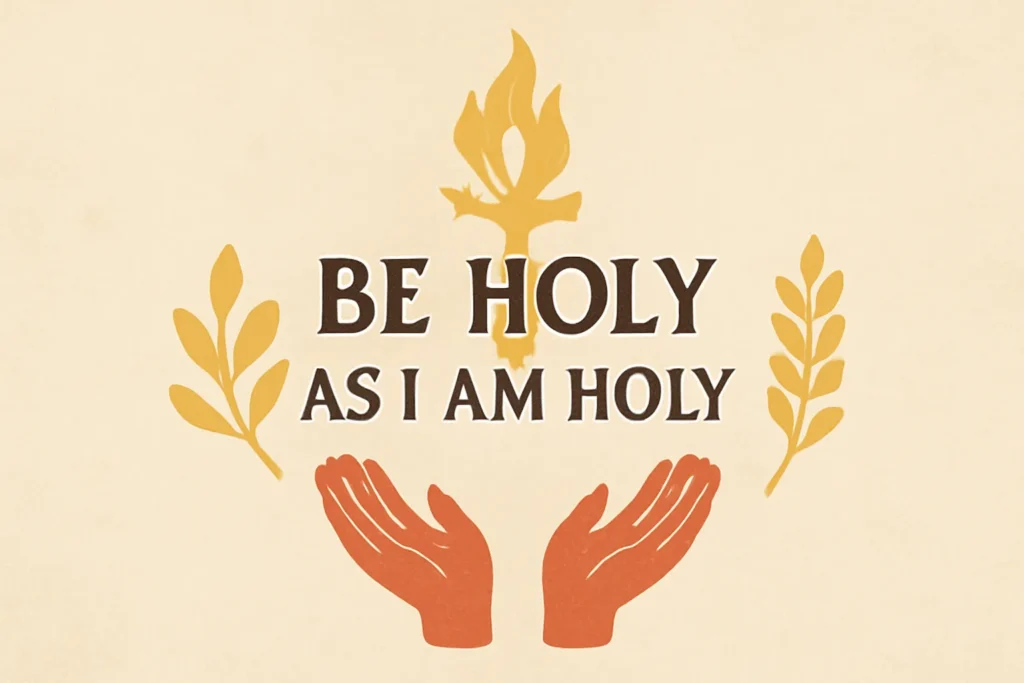
Holiness is a call that resonates across generations and denominations because it speaks to the core of what it means to live in alignment with the character of God. The phrase “Be holy as I am holy” invites a lifelong journey rather than a one-time achievement. This article offers a practical, grounded approach to translating that divine invitation into daily life—through habits, choices, communities, and a heart attuned to grace. We will explore what holiness means, how it can be lived out in concrete ways, and how to sustain growth with humility and mercy.
Understanding the invitation: what does it mean to be holy as God is holy?
In Christian thought, holiness is not merely moral perfection or religious performance. It begins with God’s nature—apartness, purity, justice, love, mercy—and invites humans to participate in that nature through a relationship with Him. The call to be holy is both a declaration of identity (you are set apart for God) and a discipline (you cultivate a life shaped by God’s character). In this sense, holiness is both positional and practical: you are drawn into God’s own holiness, and you grow in holy conduct and holy character as a result.
Key ideas to anchor the journey include:
Transformation over perfection: Holiness is a process of heart change empowered by grace, not a standard you reach by effort alone.
Grace and responsibility: God’s grace initiates and sustains the journey, while human choices reflect trust and surrender.
Whole-life holiness: Holy living touches thoughts, words, actions, relationships, work, rest, and worship.
Love as the motive: Holiness is rooted in love—love for God and for neighbor. Without love, discipline can harden into legalism.
The scope of holiness: more than behavior, a transformed life
To be holy as God is holy involves a broadening of what counts as “holy living.” It includes inner dispositions, external actions, and communal patterns. The following areas illustrate how holiness works across life domains:
Heart and mind: guarding what shapes your desires, renewing your mind with truth, cultivating peace, humility, and integrity.
Speech and relationships: using words that heal, reconcile, and build up; pursuing honesty and gentleness in all interactions.
Body and discipline: honoring the body as a temple, practicing self-control, and pursuing health and self-care that enable service.
Work and stewardship: performing duties with excellence, honesty, and generosity; stewarding resources wisely and justly.
Worship and sabbath: making daily life an act of worship and carving out regular rhythms of rest to reorient the heart toward God.
Community and mission: committing to accountability, mercy, and service that demonstrate the concrete reality of holiness in the world.
Practical pathways: how to live out holiness every day
Below is a practical map, with concrete actions you can adopt. Consider these as a menu from which you can pick what fits your season of life, and adapt as you grow. The goal is steady movement toward holy living, not instantaneous perfection.
Daily habits that form character
Morning reflection: begin the day with a short quiet time—a verse, a prayer, and a intention to embody holiness in today’s choices.
Scriptural immersion: read a manageable portion of Scripture and reflect on what it reveals about God’s character and your conduct.
Gratitude and repentance: end the day acknowledging God’s mercy and confessing where your words or actions fell short.
Accountability rhythm: maintain a trusted accountability partner or group to share wins, struggles, and next steps.
Thought life: renewing the mind
Guardrails for input: curate what you consume—books, media, and conversations that uplift truth, justice, and compassion.
Media literacy and discernment: pause before indulging sarcasm, contempt, or bitterness; choose reflections that shape virtue.
Positive replaces negative: identify one habitual thought pattern (like cynicism) and replace it with a constructive, truthful alternative.
Worship as lifestyle: let daily acts—cooking, cleaning, teaching, providing care—be expressions of devotion.
Sabbath rhythm: designate regular times of rest and delight, reframing leisure as worship rather than escape.
Gracious rhythm: welcome rhythm changes—seasonal or life-stage shifts—without abandoning the core aim of holiness.
Community, accountability, and growth
Healthy community: join or cultivate a community that encourages truth, mercy, and accountability.
Mentors and peers: seek mentors who model holy living and peers who challenge you toward growth.
Encounter and mission: engage in acts of mercy, evangelism, or social action as tangible expressions of holiness.
Common obstacles: navigating misunderstandings about holiness
Holiness can be misread in ways that hinder growth. Recognizing and reframing these obstacles helps you stay on the path toward being holy as God is holy.
Holiness vs. legalism: rules without love can produce pride or judgment; holiness must flow from grace and compassion.
Perfectionism: longing for flawless character can lead to paralysis or shame; growth happens in the context of mercy and ongoing repentance.
Private vs. public holiness: outer restraint without inner transformation is incomplete; holy living involves both the inner person and outward actions.
Cultural baggage: old patterns of moralism or irreligious modernism can distort the call; anchor growth in scriptural truth and the historical witness of the church.
Misplaced emphasis: focusing narrowly on behavior can ignore heart change; prioritize the core relationship with God that births obedient living.
Holiness is a journey sustained by grace and discipline. The rhythms you establish should be sustainable, compassionate, and realistic. Here are guiding principles to keep in mind as you pursue holy living:
Grace first: trust that God’s love and Spirit empower growth; do not measure your worth by failures or successes.
Small, steady steps: seasons of life may require slower progress; long obedience in the same direction yields lasting transformation.
Regular review: periodically assess what’s working and what’s hindering growth; adjust plans with humility.
Protection against burnout: balance zeal with rest and replenish your soul through worship, community, and creative renewal.
Hope and perseverance: hold fast to the assurance that God is shaping you toward Christlikeness, even when progress feels incremental.
If you’re looking for a concrete starting point, consider this 30-day framework designed to cultivate holy habits without overwhelming your routine. It emphasizes small, consistent steps that compound over time.
Day 1–7: establish a brief daily rhythm. Read a short passage (5–7 verses), reflect on one attribute of God (e.g., love, justice, mercy), and write one practical step you will take today to reflect that attribute.
Day 8–14: add an accountability component. Share your daily reflection with a trusted friend or mentor and invite feedback or encouragement.
Day 15–21: focus on speech. deliberate during conversations to choose words that build up, speak truth with kindness, and avoid harmful criticality.
Day 22–28: sharpen boundaries. identify one area where temptations frequently arise (digital usage, consumption, or company) and implement a concrete boundary (time limit, pause rule, or accountability mechanism).
Day 29–30: celebrate growth and plan next steps. Review what helped most, adjust the plan, and commit to a longer-term practice beyond 30 days.
Sample daily checklist
Morning: short devotion, 1 verse reflection, pray for grace to act justly and lovingly today.
Midday: pause to examine relationships and speech; offer encouragement where needed.
Evening: review the day’s choices, confess where you missed the mark, thank God for mercy.
In preaching and teaching, it helps to use varied language to convey the same core idea. Here are some phrases and concepts that widen the semantic field around holiness, without losing sight of the core call to be holy as I am holy:
Sanctified living: being set apart for God in every area of life.
Consecrated life: dedicating time, resources, and desires to God’s purposes.
Holy conduct: the outward expression of inward trust and virtue.
God-shaped character: forming inner traits that reflect divine qualities such as mercy, justice, and patience.
Ethical integrity: consistent truth-telling, fairness, and respect in all spheres of life.
Christlike holiness: growing into the character and actions exemplified by Jesus.
Purified living: a process of cleansing habits, thoughts, and motives by grace and truth.
Divine alignment: aligning desires, decisions, and direction with God’s will.
Using these variations helps you teach, discuss, and apply the call to holiness in diverse contexts—from sermons and small groups to personal journaling and family devotions. The central idea remains: be holy as I am holy, and let that imperative shape a practical, grace-filled life.
No one walks the path of holiness alone. A healthy community provides accountability, encouragement, and correction. It offers concrete examples of holy living and a framework for practicing mercy. Consider these community-based practices:
Accountability partnerships: pair up with someone you trust to share struggles, report progress, and pray for one another.
Mentoring relationships: seek mentors who model holiness in vocation, family life, and service.
Shared spiritual disciplines: participate in communal practices such as confession, study, or service projects that reinforce holy living.
Mercy-centered outreach: engage in acts of service that meet real needs, demonstrating holiness in action, not only in conduct.
Throughout history, seekers have asked about how to balance grace with effort, freedom with discipline, and personal holiness with public witness. Here are concise responses to some frequently asked questions, framed to encourage practical application rather than abstract theory:
Is holiness achievable in this life? Yes, holiness is pursued as a process empowered by the Spirit. You will not arrive perfectly, but you can grow steadily toward Christlikeness.
How much can I change by personal effort alone? Personal discipline matters, but transformation is ultimately the work of God’s grace active in you through faith and practice.
What if I fail repeatedly? Failure is conversational with grace. Confess, receive forgiveness, learn, adjust, and continue. A repentant heart is a key element of holy living.
Can holiness exist in everyday, ordinary life? Absolutely. The most powerful sanctification often happens in mundane moments—at home, at work, and in neighborly acts of love.
To be holy as I am holy is to embrace a lifelong vocation that shapes your desires, decisions, and destinies. It is not primarily about outward appearances or flawless performance; it is about a life continuously shaped by God’s presence, receiving His grace, and extending that grace to others. This journey invites you to a daily posture of humility and hope: humility because holiness reveals how far we are from perfect likeness to Christ, and hope because God’s Spirit is at work transforming us day by day.
In the end, the practical guide to holiness rests on three pillars: a growing relationship with God, a community that keeps you from isolation, and a set of daily practices that align life with the heart of Christ. When you commit to these, you begin to see holiness not as a distant ideal but as a tangible, empowering way of living that shines in ordinary moments and extraordinary seasons alike. The invitation remains clear: be holy as I am holy—and take the next faithful step today.





Leave a Reply