Introduction: A Name, a Relationship, and a Reverent Beginning
Across Christian traditions, the opening lines of the Lord’s Prayer shape how believers approach God in daily life. The familiar phrasing—whether rendered as “Our Father which art in heaven, Hallowed be thy name” in the King James Version or translated in more contemporary English as “Our Father in heaven, hallowed be your name”—summons a threefold emphasis: intimate relationship, transcendent reach, and holy reverence. When we chant or silently recite this opening, we are invited to bow before the mystery and majesty of God while also entering into a familial bond that the biblical writers describe as a divine fatherhood. In this article, we will explore the meaning of these phrases, offer a practical prayer guide for reflection and practice, and examine their biblical significance across generations and traditions.
Origins and Variations: How the Opening Address Has Shaped Christian Prayer
In its simplest form, the opening invocation is a formula of address and adoration. The text most readers know comes from the Gospels of Matthew and Luke, where Jesus teaches his disciples to pray. The most widely cited version is in Matthew 6:9 in the King James Bible: “Our Father which art in heaven, Hallowed be thy name.” A parallel version appears in Luke 11:2, though Luke’s rendition is shorter and closer to Jesus’ spoken instruction. Over the centuries, translators have varied the archaic English forms, yielding modern renderings such as “Our Father in heaven, hallowed be your name.”
Because language shapes perception, translations of this opening line influence how communities imagine God and their relationship to God. Some key variations include:
Our Father who art in heaven — traditional, the language of the King James Version and many older translations; emphasizes the divine paternal relationship and the heavenly dwelling place.
Our Father in heaven — contemporary, simpler grammar; preserves the same core meaning with modern syntax.
Our Father who is in heaven — a literal rendering found in some modern English translations; emphasizes the ongoing presence of God in heaven.
Hallowed be thy name / hallowed be your name — the petition that God’s name be kept holy, honored, and revered among people.
In addition to the linguistic shifts, some Christian traditions place slightly different emphases on the opening lines through liturgical practice or reverent readings. Still, the core idea remains consistent: a respectful address to a heavenly Father, paired with a declaration of God’s holiness and authority over all creation.
Meaning Deep Dive: What It Means to Address God as “Our Father”
Meaning of “Our Father”
The phrase “Our Father” establishes a relational foundation. It foregrounds the belief that God is not a distant force but a personal, caring, and relational presence. The plural form signals communal address—the prayer is not merely a private petition but something offered within a community of faith. Yet the term also carries intimate warmth: a fatherhood that offers guidance, provision, and protection. The biblical imagery of God as Father appears throughout both Old and New Testaments, and in Jesus’ teaching it often signals a divine accessibility that invites trust, honesty, and reconciliation.
In many traditions, this opening phrase becomes a doorway to honest conversation with God. It says, in effect, “I come to you as a child who belongs to a family—our family—whose aim is to live under your care and in harmony with your will.” This framing helps believers approach God with both boldness and humility, recognizing both the privilege of relationship and the responsibility it carries.
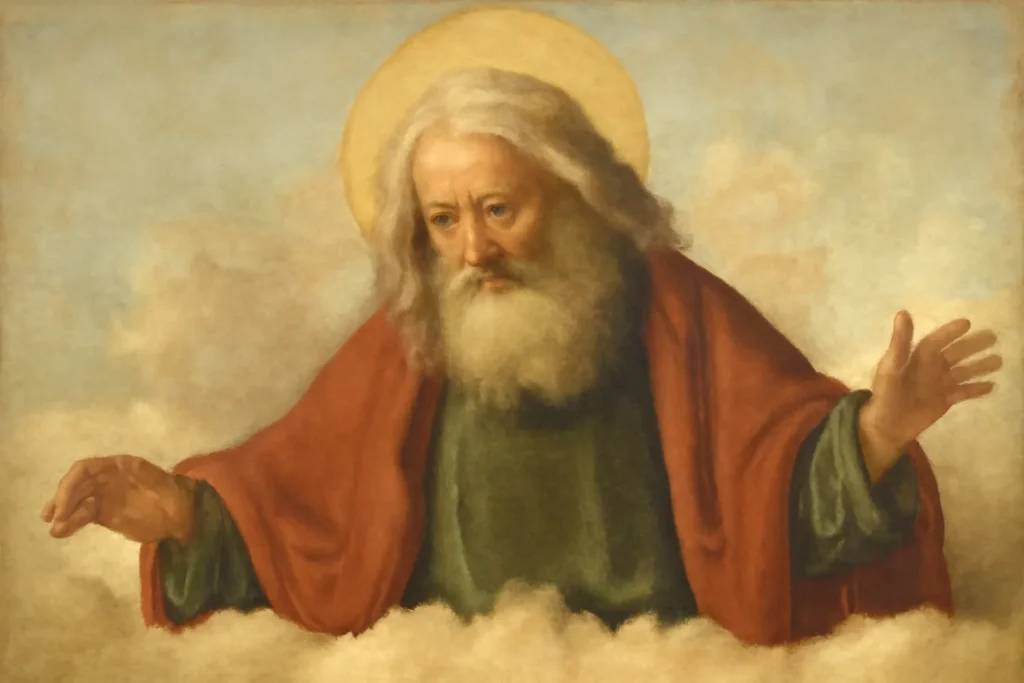
The companion clause “who art in heaven” reminds us of God’s transcendence and sovereignty. It orients prayer within the tension between God’s ascent into the divine realm and God’s nearness to humanity. The phrase affirms that God is not bound by the limitations of earthly space; God’s reign extends beyond human geography, power structures, and time itself.
Yet the same clause also suggests that heaven is the seat of God’s throne and rule, where God’s purposes are made known and justice is ultimately fulfilled. Theologically, it invites humility, reverence, and awe, while also inviting daily trust: if God reigns on high, then earthly troubles, fears, and temptations are brought into perspective under divine sovereignty.
Meaning of “Hallowed Be Thy Name”: Holiness, Reverence, and God’s Revelatory Identity
The second half of the opening line — “Hallowed be thy name” — centers on holiness and the proper honor given to God’s name. In biblical terms, a person’s name carries more than a label; it discloses character, authority, and the dynamic relationship between the named and the one who names. To “hallow” (or “sanctify”) a name is to set it apart as sacred, to treat it as holy, and to seek its honor among the people.
Holiness as relationship, not just propriety
Holiness in the biblical sense implies moral purity, righteousness, and the alignment of life with God’s character. When a prayer asks for God’s name to be hallowed, the believer is not merely asking for external ritual properness but for an inner transformation that makes God’s character visible in acts of justice, mercy, and love. In this sense, “hallowed be thy name” becomes a petition for ethical living that reflects divine holiness in daily decisions, public conduct, and personal choices.
God’s name as revelation
In biblical language, God’s name often reveals who God is—Yahweh, Adonai, El Shaddai, and countless other scriptural expressions speak of God’s identity and steadfast faithfulness. To honor God’s name is to honor God’s self-disclosure—the ways God has revealed love, mercy, justice, and faithfulness to God’s people. The prayer thus anchors worship in memory and expectation: praise for what God has already shown, and trust in what God will continue to reveal. In this sense, the opening line invites a life oriented toward God’s revealed character rather than toward human fashioning of God in our own image.
Biblical Significance: How This Opening Line Shapes Christian Theology and Practice
The Lord’s Prayer is not merely a model of phrasing; it functions as a compact theological framework. Its opening invocation frames how Christians understand prayer, God, and the purposes of worship. The following points highlight some of its biblical significance:
Relational posture: The address as “Our Father” interrupts the human tendency to approach God as distant or transactional, inviting a posture of trust, dependence, and familial love.
Cosmic scope: The phrase “in heaven” situates prayer within a cosmic frame—God’s sovereignty over all creation and the ultimate alignment of human desires with divine purposes.
Holiness and mission: Asking for God’s name to be “hallowed” positions worship as ethical action—names and reputations matter, and believers bear responsibility for how the divine name is lived out in the world.
Liturgical and devotional function: This opening line structures subsequent petitions in the prayer, directing attention to God’s holiness, will, and provision before presenting human needs.
Across Christian history, this opening has shaped debates about prayer, authority, and the nature of God. In early Christian communities, the Lord’s Prayer functioned as a catechetical formula—a compact teaching tool for new converts learning how to pray. In later centuries, it became a central element of liturgy, with variations that reflect different theological emphases (e.g., the Catholic, Orthodox, and Protestant traditions). Yet despite these differences, the core intention remains: to address God with reverence, to align one’s life with God’s holiness, and to cultivate trust in God’s provision and justice.
Prayer Guide: Practical Steps to Reflect on the Opening Lines
Turning the opening lines into a living practice involves more than recitation; it invites contemplation, confession, and renewed devotion. The following guide offers practical steps to engage with “Our Father who art in heaven” and “Hallowed be thy name” in daily life.
Set a quiet space. Begin with a brief period of stillness to silence distractions. A calm, focused environment helps you hear the voice of the Father who speaks to the heart.
Address God relationally. Say, or think, “Our Father” to acknowledge the intimate relationship and the community you belong to in the faith. Embrace the sense of belonging and responsibility that comes with being part of God’s family.
Acknowledge God’s sovereignty. Add the phrase “who art in heaven” to remind yourself that God’s reign transcends earthly concerns and that divine purposes govern history, even in seasons of uncertainty.
Honor God’s name. Pause on “Hallowed be thy name” and reflect on what it means for God to be holy and for your life to reflect that holiness. Consider areas where you may need repentance, renewal, or recalibration to align with God’s character.
Confess and commit. In a moment of quiet honesty, confess any ways you have profaned or neglected the holiness of God in thought or action, and commit to living in ways that honor the divine name in daily life—through kindness, justice, and integrity.
Pray for practical transformation. Ask God to help you live in a way that makes God’s name holy in your community: in the workplace, home, school, and public life.
Close with humility and hope. End with trust in God’s guidance and provision, even as you seek to honor God’s name in all things.
As you work through these steps, you might find it helpful to use the following prompts or questions:
In what ways can I better reflect God’s holiness in my daily choices?
How does recognizing God’s heavenly sovereignty change my response to current events or personal challenges?
What concrete acts can I undertake this week to honor God’s name in my community?
Structural and Liturgical Variety: How Different Traditions Use the Opening Line
Christians around the world recite or sing the opening of the Lord’s Prayer in diverse forms, often tailored to liturgical calendars and doctrinal emphases. Some notable variations include:
Catholic tradition: Emphasizes the petition to sanctify God’s name within the church and the world, integrating the opening with the following petitions about God’s will, daily bread, forgiveness, and guidance away from temptation.
Orthodox tradition: May place emphasis on God’s name as the revelation of divine mystery, with a strong focus on prayerful reverence and the sanctification of life in light of God’s holiness.
Protestant traditions: Often highlight personal relationship, Jesus as teacher, and the accessibility of God as Father, with a robust emphasis on God’s providence and daily provision in subsequent petitions.
Translations also shape reception. For example:
King James Version (KJV): “Our Father which art in heaven, Hallowed be thy name.”—rich in cadence and historic resonance, favored in many traditional churches.
New International Version (NIV): “Our Father in heaven, hallowed be your name.”—clear, contemporary language, widely used in modern congregations and personal devotion.
English Standard Version (ESV): “Our Father who art in heaven, hallowed be your name.”—a balance of tradition and readability with precise language.
The Message: paraphrase)
These variations demonstrate how the same theological core can be expressed in different sounds and rhythms, allowing communities to encounter the same holy invitation in ways that feel faithful and accessible within their cultural context.
Historical Context: Jesus’ Teaching, First-C Century Audience, and Early Christian Adoption
The Lord’s Prayer appears in the Sermon on the Mount in the Gospel of Matthew and in Luke’s Gospel, in slightly shorter contexts. Jesus’ audience was Jewish and Hellenistic in a world of dynamic religious and political pressures. The prayer embodies a shift from a purely ritual or ceremonial approach to prayer toward a relational and ethical practice that centers on God’s character and will. This is not merely a personal piety; it is a public invitation to live under God’s holiness and to extend that holiness into the wider world through acts of justice, mercy, and humility.
Historically, Christians have used this opening to catechize new believers, to shape worship, and to express unity across diverse communities. In monastic settings, the Lord’s Prayer, including the opening lines, has been a daily rhythm that anchors prayer life. In modern times, many families and churches recite this line as a reminder of identity in Christ, as well as a call to ethical action aligned with the divine will.
Practical Applications: Living the Message of the Opening Lines
To turn the opening lines into practical living, consider the following applications:
Relationship as a base: Let the idea of “Our Father” ground your sense of belonging and responsibility toward others in your community, especially those who are marginalized or in need.
Holiness in action: Allow the call for God’s name to be hallowed to shape your ethics—honesty in business, integrity in speech, and care for creation as an expression of reverence for the divine name.
Hopeful realism: The reminder that God is in heaven invites trust that transcends present difficulty and encourages perseverance in prayer and service.
Daily practice: Integrate a moment of contemplation on these lines into daily routine—morning quiet time, mealtime blessings, or evening reflections—as a habit that reorients life toward God’s purposes.
Contemporary Reflections: Personalizing “Our Father” in Modern Faith
Many believers today choose to adapt or deepen the language to reflect personal faith journeys, cultural contexts, and inclusive language while preserving the core meaning. For example, some communities may prefer to say “Our Father and Mother in heaven” to emphasize God’s nurturing and comprehensive parenthood. Others might explore gender-inclusive renderings while maintaining the essential theology of a holy, sovereign, and personal God. Regardless of linguistic choices, the essential invitation remains: you are invited to approach God as both intimate parent and transcendent sovereign, and to live in a way that honors God’s name in the world.
Conclusion: The Enduring Power of Opening a Prayer with Relationship, Reverence, and Hope
From its ancient origins to its modern usage, the opening lines of the Lord’s Prayer remain a dynamic invitation to approach God with both intimacy and awe. When we speak of “My Father Who Art in Heaven” or “Our Father in heaven”, we acknowledge a personal relationship that is grounded in the divine reality of heaven and the holy character of God. When we pray “Hallowed be thy name”, we commit to living in ways that honor God’s holiness in every arena of life, from personal conduct to social justice. In doing so, we participate in a pattern of prayer that is as ancient as it is timely—a rhythm of address, reverence, and daily trust that continues to shape believers across traditions, cultures, and generations.
Whether you are reciting these words as a formal liturgical practice, or meditating on their meaning in quiet moments, let these lines guide you toward a life shaped by a relationship with God, rooted in reverence for the divine name, and empowered by hope in God’s heavenly sovereignty and benevolent care.







Leave a Reply