Best Order to Read the Bible: A Beginner's Reading Plan
Best Order to Read the Bible: A Beginner's Reading Plan
Embarking on a journey through the Bible can be both inspiring and daunting. For many readers, the most helpful starting point is a clear plan that outlines the best order to read the Bible in a way that builds understanding, preserves context, and keeps motivation high. This article offers a comprehensive guide to a beginner-friendly reading plan that presents several solid approaches, practical schedules, and flexible options. Whether you prefer a chronological path, a canonical flow, or a thematic survey, you’ll find guidance designed to help you stay steady, track progress, and enjoy the process of learning from Scripture.
Before choosing a specific order, it helps to name the aims you want the plan to fulfill. At its core, a reading plan serves as a map for steady progress, not a sprint. For beginners, the primary benefits are context, coherence, and retention. By reading in a purposeful sequence, you reduce confusion caused by jumping between unrelated books and you increase the likelihood of recognizing recurring themes—such as creation, sin, redemption, law, prophecy, and fulfillment in Christ.
Another important goal is habituation: building a daily or regular rhythm that makes Scripture part of your routine. A well-designed plan accommodates real life—days with more time and days with less—while still advancing a meaningful arc. Finally, a thoughtful plan helps you answer practical questions: When should you read? How long should each session be? How can you take notes and reflect on what you read? The best order to read the Bible is the one that meets your time, comprehension, and devotional needs without sacrificing integrity or enjoyment.
Approaches to the best order to read the Bible
Chronological order
The chronological order follows the timeline of biblical events as they occurred in history. This approach can illuminate how the narratives fit together—how stories in Genesis relate to exodus, how the prophetic books speak to events in Israel’s history, and how the life of Jesus fulfills Old Testament expectations. For beginners, a chronological plan helps you see cause-and-effect threads across books and may strengthen your sense of narrative continuity.
Key considerations:
You may encounter lengthy narratives from books like Genesis, Exodus, and Kings before reaching the New Testament. Pace yourself so you don’t get overwhelmed.
Some sections cover the same events from different angles or in different literary forms (historical narrative, poetry, prophecy). Read with attention to literary genre and historical context.
To keep motivation high, pair dense passages with shorter, reflective readings or devotional notes that emphasize application and meaning.
Canonical order
The canonical order mirrors the arrangement of books in most standard Bibles. This sequence is familiar to most readers and preserves the logical flow that many readers have learned through church and Sunday school. The canonical plan often starts with Genesis and proceeds through the Pentateuch, historical books, poetry and wisdom, prophets, and finally the Gospels and Epistles in the New Testament.
Advantages include:
Comfort for new readers who want to read along with their communities and study guides that use the standard order.
A steady progression from the law and history to wisdom literature, prophetic anticipation, and the life and teachings of Jesus.
Ease of finding cross-references when using study helps that assume canonical order.
Thematic or topical order
The thematic order groups readings by topic—for example, creation, covenant, law, prayer, prophecy, kingship, mercy, justice, or the person of Jesus. This approach is especially helpful for beginners who want to trace a single idea across multiple books and genres. It can also be a bridge between Old and New Testament materials by highlighting continuity and transformation of themes.
Practical tips:
Choose a handful of themes and collect relevant passages from different books that illustrate each theme.
Rotate themes over weeks or months so you cover a broad spectrum of Scripture while staying focused on chosen topics.
Pair thematic reading with occasional reading of narrative chapters to maintain balance between ideas and stories.
A blended approach
Many find it helpful to combine methods. A blended approach might begin with a canonical reading for structure, sprinkle in occasional chronological readings to illuminate context, and insert thematic readings to reinforce interpretation. A blended plan aims to offer both the rhythm of familiar book order and the discovery that comes from seeing events in their historical setting or exploring how a theme runs through different books.
Beginner-friendly reading plans
7-day starter plan
A compact, beginner-friendly option to ignite a daily habit. The 7-day plan introduces the core storyline—creation, fall, promise, exile, Christ, and the church—through a mix of short readings from the Old and New Testaments.
Note: This plan balances narrative and teaching passages. Adjust the daily length to fit your schedule, and consider keeping a short journal of one takeaway per day.
30-day starter plan
The 30-day plan provides a more structured approach while remaining approachable for beginners. It typically covers the basics of creation, covenant, law, history, wisdom, prophecy, and the life of Jesus and the early church.
Week 1: Genesis 1–11; Job 1–2; Luke 1
Week 2: Genesis 12–50; Deuteronomy 34; Mark 1–2
Week 3: Joshua–Judges; 1 Samuel; Luke 3–4
Week 4: 2 Samuel–Esther; Job 42; John 1
Week 5: Psalms 1–41; Isaiah 1–6; Matthew 1–2
Week 6: Isaiah 7–35; Hosea; Matthew 3–4
Week 7: Luke-Acts overview; Romans; Galatians
Week 8: Ephesians–Revelation (selected portions)
As with the 7-day plan, customize the reading length per day and use journals or notes to capture insights and questions.
90-day plan
The 90-day plan is a popular middle-ground option that offers a deliberate pace and greater coverage. It can be implemented in a canonical sequence with occasional cross-genre studies to deepen understanding.
Weeks 1–4: Genesis to 2 Samuel; Psalms and Proverbs intermixed
Weeks 5–8: Kings and Chronicles; major prophets
Weeks 9–12: The minor prophets; the Gospels
Weeks 13–14: Acts and Pauline letters
Weeks 15–16: General letters and Revelation
Benefits include sustained momentum while avoiding burnout. The longer cadence also provides opportunities to revisit and reflect on difficult passages with more context.
One-year plan
A full-year plan is the Goldilocks option for many readers who want depth without overwhelm. A year-long plan can be calendar-based or mileage-based (e.g., 1–2 chapters per day, with longer readings on weekends).
Structure: Read in canonical order with periodic topical studies (e.g., a month focused on prophets, followed by a month on the Gospels).
Weekly rhythm: 5–7 days of reading totaling around 10–20 minutes per day, with optional weekend catch-up or reflection sessions.
Supplement: Use a study Bible, notes, or a trusted commentary for difficult passages.
With a year-long commitment, you’ll finish substantial portions of Scripture while having time to meditate deeply on key passages and themes. Consistency matters more than speed.
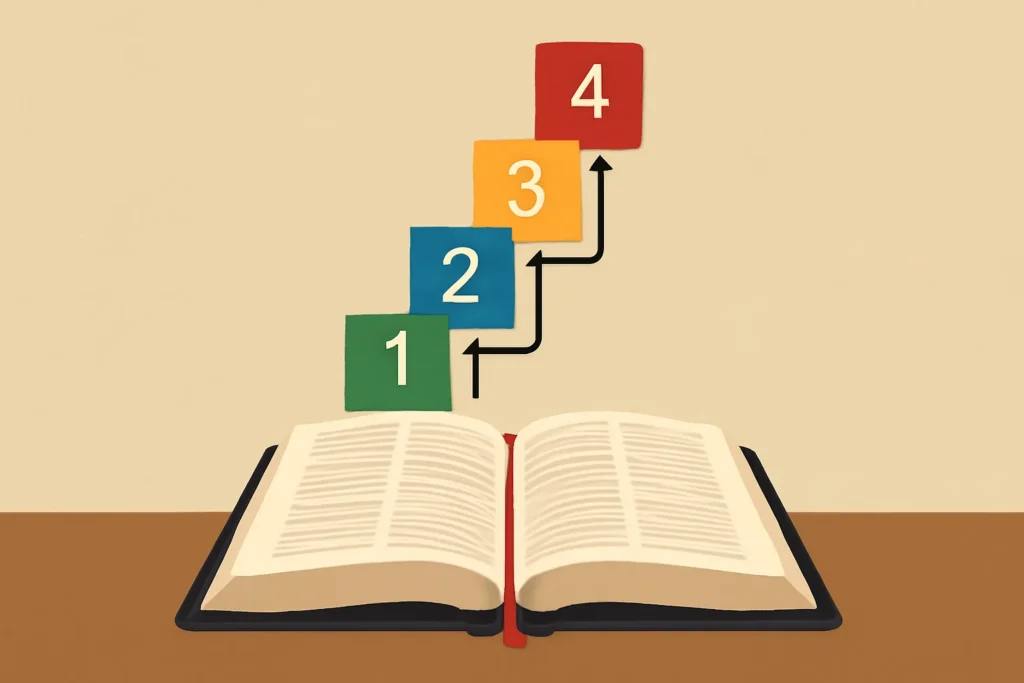
Step-by-step sample plan: Best Order to Read the Bible—A Beginner’s Reading Plan
Week-by-week outline for a blended beginner plan
Below is a practical, beginner-friendly outline that blends canonical sequencing with occasional chronological insights and thematic touchpoints. This structure is flexible enough to adapt to your schedule while offering a coherent arc from creation to the early church.
Week 1: Creation, fall, and early revelation – Genesis 1–3; John 1; Romans 1
Week 2: The patriarchs and Exodus – Genesis 12–22; Exodus 1–14; Psalm 90; Luke 2
Week 3: Covenant, wanderings, and law – Genesis 26; Exodus 19–24; Deuteronomy 6; Matthew 5
Week 4: Conquest and judges; wisdom literature – Joshua 1–6; Judges 2–5; Proverbs 1–3; Luke 6
Time availability: Short daily readings, longer weekend sessions, or a mix.
Previous exposure: If you’re new, start with more narrative and fewer prophetic or genealogical sections; if you’ve read before, you might prefer more rapid coverage of prophets or letters.
Devotional goals: If your focus is personal devotion, you may want to intertwine readings with reflective questions or devotional apps.
Community rhythm: Align with your church’s sermon series or weekly study topics for a sense of shared progress.
Adapting the plan for different needs
For new believers
New believers often benefit from a plan that emphasizes the narrative arc and the message of salvation. A canonical or blended plan can guide readers toward a clear understanding of the Bible’s central storyline, while periodic short studies on key verses help with memory and application.
For busy schedules
Time-efficient readers can maximize impact with short daily readings, such as 10-minute sessions that combine a chapter and a reflection question. Even a five-minute daily rhythm, maintained consistently, yields progress over time. Don’t underestimate the value of rest days or flexible days for catch-up to prevent burnout.
For goal-oriented readers
Some readers want measurable outcomes—completing a year, finishing a book series, or tracing a specific theme. In that case, set concrete milestones (e.g., “Finish Genesis by Day 25” or “Read all of the prophets by Month 3”) and track progress with a simple chart or a digital tracker.
Tools, resources, and supports
Translations and study aids
Choose a translation that is readable and faithful to the original texts. Some beginners prefer modern, readable translations, while others opt for more formal equivalents. Helpful tools include study Bibles, marginal notes, maps, timelines, and cross-references that illuminate context and literary structure.
Study Bibles with readable notes help you understand historical background and literary forms.
One-volume introductions or overviews that summarize each book can accelerate orientation.
Online platforms and apps may offer daily reading plans, audio listening, and bookmarking for progress tracking.
Audio and visual aids
For many, listening to Scripture enhances comprehension. Consider a daily audio reading or a podcast-style narration of the plan. Visual timelines and book-by-book summaries can also reinforce how each portion fits into the broader story.
Journaling and reflection practices
Complement reading with a simple journaling practice. Note a verse that stood out, a question you have, how the reading connects to your life, or how the passage reveals God’s character. Regular reflection deepens retention and helps you apply the lessons you encounter.
Most beginners find 15–20 minutes per day to be a sustainable target. If you’re pressed for time, aim for a focused 10-minute reading with one takeaway. The key is consistency more than the exact duration.
Is it necessary to read every book in order?
No. A well-designed plan can follow canonical order, chronological order, or thematic order—whatever helps you stay engaged and understand the text. The most important factor is that you read with intention and regularly return to the text for deeper reflection.
When you encounter challenging passages, avoid rushing through them. Use notes, cross-references, or a reliable commentary to gain context. If needed, set aside a challenging section and return later, or pair it with a more accessible portion to maintain momentum without neglecting the complexity of Scripture.
Motivation builds when progress is visible. Use a simple progress tracker, celebrate milestones, and connect with a study buddy or a small group. Integrating the plan with church teaching, devotional guides, or sermon series can also provide encouragement and accountability.
From reading to living: practical steps after finishing
Transitioning to ongoing study
Completing a reading plan is a milestone, not the end of learning. Consider repeating the plan with a different focus—such as a deeper dive into Jesus’ life, the letters of Paul, or prophetic literature. A second pass often reveals new insights you didn’t notice the first time.
Developing a long-term rhythm
Develop a sustainable rhythm by reserving a fixed time slot, integrating Scripture into daily routines (meals, commutes, or morning routines), and pairing reading with prayer or meditation. Over time, the plan can become less about completing books and more about ongoing formation and growth.
Building a personal theology in community
Share insights and questions with trusted friends, mentors, or a church community. Discussing how passages intersect with life, culture, and ethics helps you articulate and refine your understanding. Community study can reveal diverse perspectives and deepen humility in interpretation.
The journey through Scripture is as much about the process as the product. The best order to read the Bible for you is one that balances clarity, context, and personal growth while remaining sustainable. Whether you choose a chronological path, the standard canonical sequence, or a thematic route, the aim remains the same: to encounter God through the story of Scripture, to learn its truth, and to let it shape your life.
As you begin, keep these guiding principles in mind:
Consistency beats intensity: a small daily reading habit compounds over time.
Context matters: read passages with awareness of literary genre, historical background, and the overall arc of the Bible.
Balance is essential: mix narrative, poetry, prophecy, and letters to gain a well-rounded understanding.
Reflection fuels transformation: slow down to meditate, journal, and apply Scripture to your life.
Final recommendations for practical adoption
If you’re just starting, you might experiment with a 7-day or 30-day starter plan to build the habit, then transition to a longer 90-day or year-long plan that provides more comprehensive coverage. The important thing is to begin with a plan you can maintain and to adjust as you learn what helps you understand and apply the Bible most effectively.
Simple starter checklist
Choose a preferred reading order (canonical, chronological, or thematic).
Set a realistic daily time and commit to it for at least 4 weeks.
Keep a notebook or digital document for notes, questions, and applications.
Use a study Bible or trusted commentary for tough passages.
Share your plan with a friend or family member for accountability.








Leave a Reply