Bible Reading Plan in One Year: A 365-Day Daily Bible Reading Schedule
Establishing a year-long Bible reading plan can transform how a person engages with Scripture. A 365-day daily Bible reading schedule is designed to spread the breadth and depth of the Bible across an entire calendar year, offering a steady rhythm that accommodates busy lives while providing a holistic view of God’s story. This article explores what a bible reading plan in one year looks like, why it can be beneficial, the different formats available, practical tips to implement it, and common questions readers often ask as they begin or revisit a year-long journey through the Scriptures.
Why choose a one-year Bible plan?
A one-year Bible plan is more than simply reading chapters; it creates a disciplined habit that can deepen comprehension, memory, and spiritual reflection. Consider these core benefits:
Consistency: A daily commitment builds a reliable routine that becomes second nature over time.
Comprehensive coverage: You encounter a broad sweep of genres—historical narratives, prophetic books, wisdom literature, gospels, epistles, and poetry—without feeling overwhelmed by long, uninterrupted blocks of text.
Context and coherence: Reading the Bible in a structured sequence helps you notice connections, themes, and foreshadowing that might be missed when jumping randomly between sections.
Spiritual formation: Daily exposure to Scripture with a companion practice such as prayer or journaling can cultivate humility, gratitude, and discernment.
Accessibility for all levels: Whether you are a seasoned reader or a newcomer, a well-designed plan can accommodate different paces and provide clear milestones.
Different formats of a one-year Bible plan
There isn’t a single “right” way to organize a year-long journey through the Bible. The best plan is the one that fits your personality, schedule, and goals. Below are common formats, each with distinct advantages. You can also mix elements to create a personalized bible reading plan in one year that matches your needs.
A chronological Bible reading plan arranges the texts roughly in the order in which events occurred in the biblical narrative. This approach helps readers trace the storyline from creation to the early church, providing a narrative flow that emphasizes cause-and-effect, development of themes, and the unfolding of God’s salvific plan. You might read Genesis alongside Job or Proverbs when appropriate to thematic placement, and you’ll work through the Gospels in a sequence that mirrors the historical development of Jesus’ ministry.
The canonical order plan follows the order found in most traditional Bibles: a sequential progression from Genesis to Revelation. This format emphasizes the unity of the Bible as a single book with many authors and genres, each contributing to a cohesive whole. It’s particularly helpful for readers who want a straightforward, predictable schedule and who prefer to read in the exact order in which the books appear in their Bible edition.
Thematic plan
In a thematic Bible reading plan, each day combines passages that illuminate a shared theme—justice, grace, faith, suffering, kingship, or wisdom. This approach can deepen insight by inviting comparison across books and genres that address the same question from different angles. Thematic plans are especially suitable for group study, sermon preparation, or personal meditation on spiritual truths that recur throughout Scripture.
A blended or balanced plan divides each day among multiple sections, typically including an Old Testament reading, a New Testament passage, and a portion from Psalms or Proverbs. The goal is to maintain exposure to the entire Bible while also providing the lyrical beauty of the Psalms and the practical wisdom of Proverbs. This format can be more approachable for beginners and keeps daily life in perspective with devotional poetry and prophecy alongside gospel and epistle teaching.
How to start a Bible reading plan in one year
Starting a plan is less about finding the “perfect” schedule and more about establishing a sustainable routine. Here are practical steps to launch a year-long journey through Scripture:
Choose a plan that suits your pace. If you are new to daily reading, a Blended plan or a thematic approach may be more encouraging. If you enjoy narrative, a Chronological plan could be especially engaging. For seasoned readers, a Canonical order plan offers a familiar progression.
Set a sensible daily target. Many plans allocate 3–4 chapters per day, but you can adjust to shorter daily chunks or longer bursts on weekends, depending on your schedule.
Dedicate a consistent time and place. A predictable window—morning, lunch break, or evening—paired with a quiet space supports focus and retention.
Prepare a simple journal or note-taking system. Write one or two reflection questions, a prayer, or a takeaway verse to reinforce learning and memory.
Use a checklist or app for accountability. Digital tools, printed trackers, or a simple checklist can provide a sense of progress and motivation to continue.
Plan for interruptions. Travel, illness, or stress can disrupt reading. Build buffer days or lighter goals to stay on track without guilt.
Structuring a daily reading in a one-year plan
Consistency is the backbone of a successful year-long Bible reading schedule. A well-structured day typically includes a short devotional moment, the daily readings, and a brief reflection or prayer. Here are common structure patterns:
OT + NT + Psalms/Proverbs: A three-part daily form that balances the breadth of the Bible with devotional poetry or wisdom literature.
NT-first or Gospel-led approach: Some readers find it more engaging to start the day with the life and teachings of Jesus, then explore the rest of the New Testament before returning to the Old Testament portions.
Balanced length: Each day includes roughly equal portions in different sections to avoid feeling overwhelmed by long passages in one part of the Bible.
Sample daily schedule for illustration
Here is a representative example of what a day might look like on a typical one-year Bible plan. This example uses a blended approach, pairing Old Testament, New Testament, and Psalms or Proverbs. The exact chapters will vary by the plan you choose, but the structure gives a concrete sense of daily rhythm:
Genesis 1–2 (creation and early humanity)
Matthew 1–2 (genealogy and infancy of Jesus)
Psalm 8 (glory of God and the place of humanity in creation)
These examples illustrate how a daily schedule can blend narrative history, gospel teaching, and wisdom literature, reinforcing a cohesive sense of the biblical story.
Tools and resources to support a year-long plan
There are many resources available to support a Bible reading plan in one year. Depending on your preference for print, digital, or interactive formats, you can choose tools that fit your lifestyle:
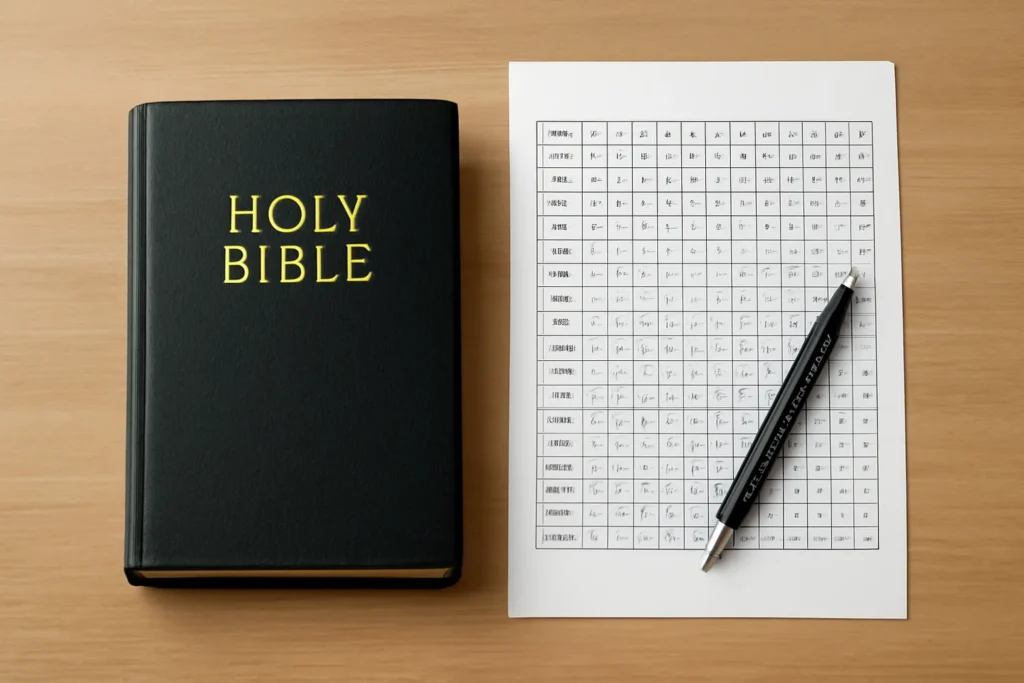
Printable calendars and checklists that show daily readings, space for notes, and reflection prompts.
Bible reading apps and websites offering built-in plans, reminders, and progress trackers.
Study Bibles and commentaries that provide context, maps, timelines, and devotional commentary for daily passages.
Journaling journals or note-taking apps to capture insights, questions, and applications.
Group plans or parish programs for accountability and shared reflection, which can increase motivation and consistency.
Common challenges and strategies to overcome them
Even with a well-designed plan, readers encounter obstacles. Here are frequent challenges and practical strategies to sustain momentum during a year-long Bible journey:
Time constraints: Prioritize the daily slot and treat it as an appointment with the divine rather than a luxury activity.
Fatigue from heavy sections: If you encounter dense prophetic passages or genealogies, pause for a moment of reflection, then continue. You can return later with a fresh perspective.
Jumping between translations: If you switch to a more accessible translation for daily reading, remain consistent in the plan's structure and then revisit more literal translations for study at a later time.
Plateau or losing motivation: Change up the plan by adding a thematic thread (e.g., mercy, leadership) or reading with a friend or small group for accountability.
Surrendering to distraction: Create a distraction-free zone—silence notifications, set a timer, and close other tabs—to protect your reading time.
Variations in language and translation considerations
When you engage with a year-long bible reading schedule, translation choices can shape your experience. Some readers prefer the classic cadence of the King James Version for its poetry and historical resonance, while others opt for modern readability provided by translations like the New International Version, English Standard Version, or Christian Standard Bible. Regardless of the version, a Bible reading plan in one year remains a tool for steady exposure to the Scriptures. Consider these points when choosing a translation for a year-long effort:
Readability: A readable translation reduces friction and helps you stay in the text daily.
Accuracy: A thought-out translation balances readability with faithful rendering of original languages.
Study aids: Some editions include timelines, maps, and cross-references that can enrich a year-long schedule.
Integrating reflection, prayer, and application
Reading the Bible consistently is powerful, but integration is where real transformation often occurs. A robust bible reading plan in one year should invite you to pause, reflect, and act on what you read. Here are practical ways to integrate reading with spiritual practice:
Soaking in a single verse: Each day, choose one verse to memorize, meditate on, and apply in a concrete way that day.
Prayer prompts: Begin with a brief prayer that asks God to illuminate the text and guide your life in response to it.
Journaling applications: Write down an action step, a change you want to make in behavior, or a dose of gratitude prompted by the passage.
Group discussion: If possible, discuss the day’s readings with a friend, family member, or study group to hear fresh perspectives.
Creating a long-term habit: tips for beginners and seasoned readers alike
Whether you are starting the journey or returning after a pause, these habit-building tips can help sustain a durable practice:
Start small: If 3–4 chapters feel daunting, begin with 1–2 chapters and gradually increase.
Consistent reminder: Set a daily alarm or reminder to read at the same time each day.
Environmental cues: Keep your Bible or reading device in a designated spot to reduce friction in finding your material.
Celebrate milestones: Mark the end of each month or every 90 days with a small reward or shared meal with a friend.
Review and adjust: If a plan isn’t fitting your life well, switch to a different structure or pace. The goal is lasting engagement, not rigid perfection.
Outcome expectations: what a year of reading can yield
Embarking on a bible reading plan in one year can yield measurable outcomes over time, including:
Enhanced biblical literacy: A broader familiarity with the storyline, major characters, and theological themes.
Historical and literary awareness: A sense of how different books address universal questions across eras and genres.
Spiritual discernment: A cultivated ability to relate Scripture to daily decisions, relationships, and vocation.
Community and shared language: When done in groups, a shared habit can foster meaningful conversations and mutual encouragement.
FAQ: common questions about Bible reading plans in one year
Below are answers to questions readers often ask about embarking on a year-long reading journey. This section helps clarify expectations and provide practical guidance.
Is a one-year Bible plan suitable for everyone? Most people can benefit from a disciplined approach to Scripture, but it’s wise to adapt the pace and format to fit personal commitments, past experiences with Bible study, and spiritual goals.
What if I miss a day? Don’t panic. Return to the plan the next day and continue. Some plans offer optional “catch-up” days or lighter days to absorb missed readings without guilt.
Should I start with a plan that includes Psalms and Proverbs? Including Psalms and Proverbs regularly can provide devotional balance and practical wisdom for daily life, which many readers find encouraging.
How do I stay motivated all year long? Pair your readings with a friend or group, set short-term goals, and keep a visible progress tracker. Remember to celebrate incremental wins, not just endpoints.
Conclusion: a journey through the Bible in a year
Adopting a Bible reading plan in one year — whether you choose a chronological, canonical, thematic, or blended approach — invites you into a steady, lifelong engagement with Scripture. The year-long schedule is not merely about finishing a quota of chapters; it is about cultivating a deeper know-how of God’s voice, a richer understanding of biblical narrative, and a practical framework for applying biblical truths in everyday life. Through daily exposure to diverse literary forms—narrative history, law, poetry, prophecy, gospel, and epistles—you can grow in wisdom, grace, and understanding. The ultimate aim is not simply to read the Bible in a year, but to allow the Bible to reframe your year, your decisions, and your heart in light of God’s revelation.
Whether you are exploring one-year Bible reading plans for the first time or revisiting them after a season away, this format offers a reliable pathway to engage with God’s Word consistently. With the right plan, tools, and community, a full year of daily Bible reading can become a transformative practice—one that sustains faith, fosters understanding, and nurtures spiritual growth across all seasons of life.






Leave a Reply