Bible Devil: What the Bible Says About Satan and Demons
Bible Devil: What the Bible Says About Satan and Demons
Welcome to a thorough, Bible-centered look at the bible devil—often referred to simply as Satan or the Devil—and the world of demonic beings the Scriptures describe. This article surveys what the Bible says about the origin, nature, activity, and ultimate fate of Satan and his demonic hosts, drawing from both the Old and New Testaments. The aim is to provide a clear, balanced, and accessible guide to one of the Bible’s ongoing themes: the reality of spiritual evil and the biblical response to it.
Overview: who is the biblical devil and why it matters
In the biblical narrative, evil is not a mere abstraction. It is personified and opposed by a real spiritual adversary. The devil is presented as an intelligent, purposeful antagonist who opposes God, seeks to deceive humans, and exerts influence over the world. Yet the Bible also emphasizes the sovereignty of God, the power available to believers through faith, and the ultimate defeat of evil in God’s redemptive plan. Readers encounter a spectrum of terms and roles that point to a single overarching figure—the one described in several distinct ways as the adversary, the tempter, the accuser, the Beelzebul, and the dragon in the book of Revelation.
Key terms and names used for the evil one
In Hebrew and Aramaic
Satan — often translated as “the Adversary” or “the accuser.” In biblical Hebrew, this term points to a specific role within God’s heavenly council at times, acting as a prosecuting figure or a tester who challenges human integrity under God’s permission.
Ha-Satan (the Satan) — a title that can refer to a figure who opposes or tests, rather than a blanket synonym for all evil.
Other terms that appear in scenes involving temptation or opposition to God’s people, sometimes in the context of manifestations of evil rather than a single, unified being.
In Greek
Diabolos — often translated as “the Devil” or “the accuser,” this term echoes the sense of one who accuses or slanders before God, as well as one who opposes the truth.
Beelzeboul/Beelzebub — a title associated with demon-kingdom power or a leader of unclean spirits, appearing in confrontation with Jesus in the Gospels.
Diabolos and related phrases are used in the New Testament to describe a powerful, malevolent force opposed to God and goodness.
Common titles and roles
The Adversary — a general designation emphasizing opposition to God and to the people of God.
The Tempter — the one who invites humans to disobey or test God’s commands, especially visible in the wilderness temptations of Jesus.
The Accuser — a prosecuting voice that seeks to highlight human unworthiness or failure before God, sometimes within the divine council framework.
The Evil One or the Evil One — a broad, biblically common descriptor for malevolent spiritual power.
Beelzebul / Prince of Demons — a designation used in the Gospels when Jesus is accused of casting out demons by the power of a demon king.
The Dragon — a symbolic title in Revelation for the ultimate evil force behind the demonic realm and the wickedness of the world.
The Old Testament view: glimpses of opposition and testing
The nature of the figure in the Hebrew Bible
In the Hebrew Scriptures, the presence of a single, fully developed antagonist who fits the later New Testament portrait is not uniformly laid out. Instead, the text presents a range of snapshots—a heavenly figure who challenges, tests, or accuses, and human beings who must resist evil powers. The emphasis is less on a metaphysical, cosmic battle and more on the moral and spiritual dynamics at play in human life and salvation history.
Notable examples and their themes
Satan as tester or accuser in the book of Job. The narrative frames a testing scene in which a member of the divine council permits hardship to challenge Job’s fidelity, illustrating the possibility of spiritual testing within God’s permissive will.
The term the Satan appears in other biblical passages as a prosecuting voice or obstacle, such as when an adversarial figure opposes Israel or a righteous person.
In Zechariah 3, a heavenly opponent appears and is rebuked by the high priest Joshua, illustrating the ongoing drama of spiritual opposition within the judged community.
In 1 Chronicles 21, Satan is described as standing against Israel and moving David to conduct a census, a scene that shows spiritual warfare intersecting with human leadership and national judgment.
Overall, the Old Testament establishes that evil is real and that God’s people live within a milieu where spiritual forces may exert influence. Yet it also consistently points toward God’s sovereignty and the eventual triumph of righteousness, a theme that is amplified and clarified in the New Testament.
The New Testament portrait: a richer, more explicit map of opposition and deliverance
In the New Testament, the biblical devil appears with greater clarity and in more varied settings: temptation, possession, teaching, exorcism, deception, and cosmic warfare. This section surveys key motifs in the Gospels and across the apostolic writings.
Satan in Jesus’ life and ministry
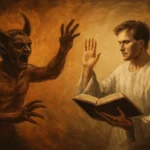
Temptation in the wilderness (Matthew 4:1-11; Luke 4:1-13): Satan tempts Jesus to test His messianic mission by appealing to physical needs, political power, and spiritual shortcuts. Jesus responds with Scripture, modeling a biblically grounded resistance to temptation.
Confrontations with the religious leaders who attribute Jesus’ miracles to the power of demons, particularly Beelzebul (Beelzebub). Jesus reverses the accusation, underscoring that His power to cast out demons demonstrates that the kingdom is at hand.
Exorcisms and authority: Jesus casts out many demons, demonstrating authority over the spiritual realm and teaching about the true source of power—God’s rule over creation. These acts reveal the in-breaking of God’s kingdom and the defeat of demonic power in His ministry.
Demons and demonic power
Unclean spirits and possession: The Gospels repeatedly describe individuals tormented or controlled by unclean spirits. The narrative emphasizes the compassionate healing of those afflicted and the demonstration of God’s power over spiritual oppression.
Beelzebul and the “kingdom divided” argument: The hostility of the spiritual forces is shown in the accusations that Jesus’ exorcisms are accomplished by demon power. Jesus answers by arguing that a kingdom divided against itself cannot stand, and He points to the work of the Holy Spirit as evidence of God’s presence.
The missionary advance and exorcisms in Acts show the disciples continuing Jesus’ work, sometimes with resistance from spiritual forces that oppose the gospel, and yet with God granting power to cast out demons in the name of Jesus.
Cosmic conflict and eschatology
The devil’s deception and ultimate defeat are framed within salvation history and future hope. The New Testament speaks of ongoing spiritual warfare in which believers are urged to stand firm in faith, pray for deliverance, and rely on God’s strength.
The dragon, the beast, and the false prophet appear in Revelation as symbolic portrayals of the ultimate, organized powers of evil opposing God and His people. The text closes with the decisive defeat of Satan and the establishment of God’s eternal reign.
Origin, nature, and fate: what the Bible teaches about the devil and his angels
Origin of the demonic realm
The canonical texts do not give a single, explicit origin story for all demons. However, several passages imply a background of divine judgment and rebellion linked to certain angels who sinned. Two often-cited references point to this idea:
2 Peter 2:4 and Jude 6 mention angels who sinned and were judged, suggesting a class of rebellious beings tied to demonic activity.
The New Testament’s overall tone, especially in Revelation, presents a cosmic battle between the forces of God and the powers of evil, reinforcing the sense that the devil and his hosts operate within God’s sovereign framework and ultimate plan for creation.
The fate of Satan and his demons
Scripture consistently couches the end of evil in terms of divine judgment. Key milestones include:
Final judgment of Satan and evil powers is portrayed in Revelation 20, where the devil is bound for a season and later cast into the lake of fire, signaling the definitive defeat of wicked spiritual opposition.
The Eternal state of the damned and the broken powers of darkness is described as a reality under God’s justice, followed by the creation of a new heavens and new earth where God’s people dwell in perfect harmony with their Creator.
Common questions and biblical clarifications
Is Satan omnipotent, omniscient, or equal to God?
In biblical teaching, Satan is a created being with real power to tempt, deceive, and oppose God’s purposes. However, he is not omnipotent, omniscient, or sovereign like God. The Bible resists elevating the devil to the level of God’s authority. God remains fully in control, and Christ’s victory over the devil is definitive for those who belong to Him.
Can Christians be oppressed or possessed by demons today?
The biblical record includes accounts of demonic oppression and exorcism in the first-century world. The question of how this translates to today’s church is debated among Christians. Most traditions emphasize the ongoing reality of spiritual warfare and encourage believers to resist temptation, rely on the Holy Spirit, and seek deliverance or pastoral care when facing severe spiritual oppression. The central message remains that faith in Christ, Scripture-grounded discernment, prayer, and community support are essential defenses against spiritual harm.
What is the difference between Satan and demons?
“Satan” is typically treated as a singular figure—the chief adversary of God and humanity—while “demons” (often linked with unclean spirits) are numerous and operate either independently under deception or under the broader influence of satanic power. The Bible portrays both as evil powers to be resisted, with God’s authority and Jesus’ victories providing the means of deliverance and protection for believers.
How to read biblical passages about Satan and demons responsibly
Reading these passages requires careful attention to context and genre. Here are practical guidelines:
Consider the genre: In narratives (historical books, gospels) the focus is often on theological meaning and historical context. In apocalyptic literature (like Revelation), symbols convey cosmic truths about good and evil.
Pay attention to language: Terms such as “Satan,” “Beelzebul,” and “unclean spirits” carry specific meanings in their original languages (Hebrew/Aramaic and Greek). Translations vary, so cross-check key terms.
Balance the parts: The Old Testament provides background and anticipation; the Gospels and epistles provide explicit teaching about Jesus’ victory and the believer’s response. Reading as a whole helps prevent overemphasizing one aspect at the expense of another.
Avoid over-spiritualizing or under-spiritualizing: The Bible affirms the reality of spiritual beings, but it also grounds human responsibility, moral choice, and divine purpose in concrete history and everyday life.
Contextualize doctrinal claims: Do not lift a single verse out of its surrounding passage. The narrative around a temptation, exorcism, or judgment often carries more weight than a standalone line.
Practical takeaways: how the Bible guides believers in a world of spiritual realities
Understanding the biblical view of the devil and demons is not primarily about fascination with evil, but about recognizing who God is, how He protects His people, and how to live faithfully in light of spiritual realities. Here are some practical lessons drawn from the Bible’s depiction of these beings and events:
Rely on God’s strength: Spiritual warfare is ultimately about depending on God’s power rather than personal prowess. Believers are called to stand firm in faith, using the spiritual resources God provides (Scripture, prayer, the Holy Spirit, and the community of faith).
Know the Word: Jesus answered temptation with Scripture. A solid knowledge of biblical truth equips believers to discern deception and resist moral and spiritual compromise.
Embrace Jesus’ victory: The New Testament emphasizes that Christ’s life, death, and resurrection defeated the powers of evil in a decisive way. Believers share in that victory through faith and obedience.
Practice discernment and prayer: The Bible encourages believers to pray for protection and discernment in daily life, recognizing that not every misfortune or struggle is demonic in origin, while some are spiritual attacks requiring spiritual response.
Live in community: The church is described as a community under God’s authority that resists the forces of evil together. Mutual accountability, pastoral care, and communal worship strengthen believers against spiritual pressure.
Glossary of important terms encountered in this topic
Satan — the adversary or accuser; a central figure in biblical descriptions of opposition to God and humanity.
Devil — a common English label for the evil one, often used interchangeably with Satan in the New Testament.
Demons — unclean spirits or evil spirits that influence or oppress people and that Jesus and the apostles cast out in power.
Beelzebub/Beelzebul — a title used in the Gospels for a demon king or the prince of demons, invoked during debates about the source of Jesus’ power.
Unclean spirits — another phrase for demons, highlighting their ceremonial and ritual impurity in the ancient world.
Dragon — a symbolic figure in Revelation representing the ultimate source of evil who wages cosmic warfare against God’s people.
Conclusion: a biblical framework for understanding Satan and demons
The Bible presents bible devil figures as real, personal, and dangerous forces that oppose God and seek to deceive and destroy human beings. Yet it also presents a robust, hopeful vision: evil is not sovereign, and God’s plan to redeem and restore creation remains sure. Through Christ, believers are invited into a life of trust, discernment, and spiritual resilience. The biblical witness does not sensationalize the demonic realm; rather, it places spiritual reality within the larger story of God’s redemption—the story in which Jesus defeats the powers of darkness, the gospel advances through the Spirit’s power, and the future promises the total removal of every form of evil. By reading the Bible with care, curiosity, and humility, readers gain a clear, biblically grounded understanding of Satan and demons—one that equips them to live faithfully in a world where spiritual realities are undeniably present but ultimately under God’s authority and care.










Leave a Reply