Bible Evil Spirits: Demons and Spiritual Warfare Explained
Bible Evil Spirits: Demons and Spiritual Warfare Explained
Across the Bible, the reality of evil spirits—often labeled as demons or unclean spirits—is presented as a spiritual reality that intersects with human life. This article explores the biblical concept of demonic influence, the variety of terms used to describe these beings, notable scriptural accounts, and how Christians understand spiritual warfare today. While the language and emphasis vary among traditions, the shared aim is to understand the Bible’s teaching about a realm beyond the visible and how believers may walk wisely in light of that teaching.
In biblical terms, the evil spirit is an agent or force opposed to God’s will. The word demon comes from a term meaning a divine or semi-divine being in some ancient contexts, but in the Bible it is most often associated with beings that oppose God and torment or oppress humans. In the Old Testament, the term shedim appears in a few passages (for example, Deuteronomy 32:17; 2 Chronicles 11:15; Psalm 106:37), traditionally translated as demons or idols of demons. In the New Testament, the vocabulary shifts toward daimons (Greek for demons) and unclean spirits, used to describe real beings who, under God’s sovereignty, exercise influence over people and nations.
Three core ideas recur across biblical texts when discussing evil spirits:
Personhood: Demons are described as personal agents, not abstract forces. They speak, respond, and contend with humans and with Jesus.
Authority under God: Demons operate only within the boundaries of God’s permission and sovereignty. They are not omnipotent and cannot act outside God’s plan.
Impact on humanity: The Bible portrays these beings as sources of oppression, possession, temptation, or deception, affecting individuals, communities, and even regions.
Across biblical literature, the emphasis is not primarily on cataloging a distant catalog of evil entities but on understanding their role in relation to God’s redemptive work. The biblical record presents both warning about their influence and assurance of victory through God and Christ.
Throughout this article, you will encounter a range of terms used to describe this phenomenon. To help with clarity, biblical evil spirits will serve as a general umbrella term, with demons, unclean spirits, and spiritual oppression used in context wherever the text or theological tradition employs them.
The phrase unclean spirit occurs frequently in the Gospels as Jesus encounters or confronts beings that afflict people. These terms signal a spiritual condition rather than purely psychological phenomena. Demons are depicted as sent by spiritual adversaries, often seeking to hinder or distort a person’s life, faith, or healing.
Key distinctions often discussed in biblical scholarship include:
Demons: Personal spiritual beings who oppose God and exercise influence over people and places.
Possession: A strong, observable form of demonic influence in which a person’s body or life is claimed or controlled by a demon, with varying degrees of manifest action.
Oppression or oppressive influence: A broader category describing persistent spiritual pressure or bondage that can affect thinking, behavior, and life circumstances without full possession.
Afflicted or harassed: Descriptions of suffering caused by demonic influence, including physical, emotional, or spiritual distress.
Fallen angels, and the origin of these entities
Many readers of the Bible encounter the question: where do these beings come from? The biblical text presents Satan (the adversary) as a chief figure who leads or commands other evil spirits. Some traditions describe these beings as fallen angels who rebelled against God, though the Bible does not always present a uniform, systematic genealogy for all demons. The accounts emphasize their opposition to God’s purposes and their role in tempting, deceiving, or afflicting humanity, all within God’s sovereign ordering.
In practical terms, this means that bible evil spirits are not merely myths or folklore; they are presented as real personalities with strategic aims. This is especially evident in scenes where Jesus rebukes the demons, frees captives, or commands them to depart, underscoring their subordinate status under divine authority.
The Gospels provide several canonical examples where spiritual warfare and the activity of evil spirits are front and center. These narratives illustrate how Jesus confronted, constrained, and ultimately defeated demonic powers, offering patterns for Christian faith and practice.
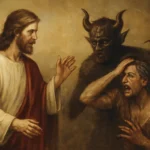
The Gerasene demoniac (found in Matthew 8:28-34, Mark 5:1-20, Luke 8:26-39): A man possessed by a legion of demons who recognizes Jesus and pleads for mercy. Jesus orders the demons to depart and sends them into a herd of pigs, demonstrating the authority to command and disarm hostile spiritual forces.
The boy with an unclean spirit (Mark 9:14-29): A father's child suffers from seizures and convulsions caused by a spirit that Jesus describes as a “deaf and mute spirit.” Jesus rebukes the spirit, and the boy is healed, illustrating how demonic activity can manifest in physical affliction and how faith and prayer are central to deliverance.
The slave girl with a spirit of divination (Acts 16:16-18): A servant girl who foretells fortunes by a spirit of divination follows Paul and Silas, leading to an arrest of the gospel workers. The Apostle rebukes the spirit, and the girl’s fortune-telling ability is rendered powerless, highlighting the conflict between spiritual forces that seek to profit from others and the gospel’s liberating power.
Jesus’ authority over temptations (Matthew 4:1-11; Luke 4:1-13): Although commonly described as a test rather than possession, the temptation narratives show that even the Son of God faced and opposed spiritual coercion, exposing the way evil spirits operate through deception and temptation.
Exorcism and commissioning (Matthew 10:1, Luke 9:1): Jesus empowers his disciples with authority over demons, signaling the shift to an apostolic ministry where believers participate in the ongoing defeat of demonic powers through proclamation and prayer.
Other examples and passages reinforce the same motifs: the reality of spiritual beings who oppose God, their compulsion to mislead or control, and the authority given to God’s people to confront and overcome their influence through faith, confession, and obedience.
Authority, deliverance, and spiritual warfare
For Christians, the concept of spiritual warfare is not primarily about sensational confrontation but about living in alignment with God’s purposes in the face of hostile spiritual forces. The New Testament provides several axes for understanding and enacting this warfare.
Christ’s victory: The Bible presents Jesus as the one who decisively defeats the power of evil. The cross, resurrection, and ongoing work of Christ in believers are foundational to spiritual deliverance and freedom from demonic influence.
Prayer and dependence on God: Faithful prayer, confession, and reliance on God’s strength are central to resisting temptation and oppression. Jesus models and teaches persistent prayer against spiritual forces (for example, in Matthew 26:41 and Luke 11:1-13).
Armor of God: In Ephesians 6:10-18, believers are urged to put on the “armor of God”—truth, righteousness, the gospel of peace, faith, salvation, the Word of God, and prayer—so as to stand against the schemes of the devil.
Preamble to deliverance: While the exact form of ministry can vary (deliverance, prayer for healing, spiritual counsel), the goal is always restoration to full humanity and alignment with God’s will. Deliverance ministries emphasize discernment, compassion, and accountability, ensuring that healing touches the whole person—body, mind, and spirit.
Apostolic authority: The apostles’ practice of healing and exorcism in the early church demonstrates that the church bears a continuing mandate to stand against demonic power in the name of Christ, guided by Scripture and ecclesial discernment.
In practical terms, spiritual warfare involves a mix of worship, prayer, repentance, communal discernment, and the use of Scripture to resist deception. It also includes pastoral care—recognizing that some experiences may involve trauma or mental health concerns that require sensitivity, medical understanding, and appropriate professional help.
Dialogue about biblical evil spirits must avoid sensationalism and respect the dignity of individuals who experience distress. The Bible itself does not encourage fear or sensationalism; rather, it invites discernment, wisdom, and compassionate care. In pastoral settings, several guiding principles help balance biblical truth with present-day realities:
Distinguishing possession from oppression: The Bible rarely speaks of full possession as a common state for Christians, and many scholars suggest the more frequent experience is oppression or influence. Pastoral care should assess whether someone’s distress arises from spiritual, emotional, or medical causes and respond accordingly.
The primacy of Christ: Any discussion of spiritual forces centers on Christ’s lordship. Believers gain victory not through fear but through faith in Jesus and obedience to God’s will.
Stewardship of power: When discussing deliverance or exorcism, leaders must exercise discernment, avoid coercive or sensational methods, and prioritize the person’s safety and well-being. Biblical accounts emphasize mercy and restoration rather than spectacle.
Pastoral caution: Mental health realities can mimic spiritual distress. A careful, compassionate approach often requires collaboration with healthcare professionals and mental health experts to ensure holistic care.
Modern perspectives: tradition, denominations, and practice
Throughout Christian history, the interpretation and practice concerning demonic activity have varied. Some traditions emphasize a robust, ongoing practice of exorcism and deliverance, while others stress spiritual warfare primarily through prayer, sanctification, and communal discipline. Here are some representative strands:
Roman Catholic perspective: Catholic theology distinguishes between exorcism and general deliverance. The Rite of Exorcism is a formal rite used in specific cases of suspected possession, performed by ordained priests under church oversight. Catholic teaching emphasizes the authority of Christ, the intercession of saints, and the power of the Church's liturgy and sacraments in liberation.
Protestant and charismatic streams: Many Protestant churches recognize a real but spiritual phenomenon and encourage a combination of prayer, faith in Christ’s authority, and practical steps toward freedom. Charismatic and Pentecostal groups often include public or private deliverance sessions, vigorous prayer, and spiritual discernment as parts of spiritual growth.
Reformed and evangelical cautions: Some traditions emphasize the sufficiency of Scripture, the authority of Jesus, and the caution against sensationalism. They may focus on guarding against occult practices, addressing spiritual strongholds in prayer, and promoting spiritual growth through doctrinal clarity and moral formation.
Non-Christian or interfaith perspectives: From outside the Christian tradition, various cultures have their own understandings of spiritual beings, often integrating them into broader cosmologies. When engaging with these views, Christians typically seek to articulate how biblical teaching about evil spirits relates to universal questions about suffering, temptation, and moral choice.
Regardless of the tradition, most believers agree on a core principle: the ultimate power lies with God through Christ, and any legitimate preaching or practice of deliverance must be anchored in love, truth, and the gospel’s message of restoration.
Common questions and myths
Are all psychological or medical problems caused by demons? No. The Bible describes demonic influence but also acknowledges physical illness, mental health, and human brokenness. Careful discernment is required to distinguish between spiritual oppression and medical or psychological conditions, and seeking appropriate care is wise.
Can Christians be demon-possessed today? Many theologians and pastors would argue that a regenerated believer cannot be possessed in the same sense as an unbeliever since the Holy Spirit dwells within. Some still speak of oppression or strongholds that believers must address through prayer and sanctification.
Does exorcism guarantee freedom? Not always. Biblical deliverance stories emphasize God’s sovereignty and the community’s role in sustaining freedom. Ongoing discipleship, accountability, and pastoral care are commonly needed after any deliverance experience.
Is spiritual warfare always dramatic? Not necessarily. Biblical warfare often unfolds through faithful living, moral courage, prayer, and persistent reliance on God. The most important victory is faithfulness to Jesus and adherence to God’s Word, even in quiet, everyday contexts.
Glossary of key terms used in discussions of biblical evil spirits
Demon: A personal, malevolent spiritual being opposed to God, described in biblical literature as influencing or possessing humans.
Unclean spirit: A specific biblical term used in the Gospels to describe a demon that afflicts a person with disruptive or destructive power.
Possession: A state in which a demon or demons inhabit or claim control over a person’s body or life, with varying degrees of observable impact.
Deliverance: The process of being set free from demonic influence or oppression, often through faith, prayer, and pastoral care.
Exorcism: A formal act or ritual by which a church authority seeks to cast out or remove a demon from a person or place, within a defined liturgical framework in certain traditions.
Satan: The principal adversary in Scripture, sometimes depicted as the accuser or tempter who opposes God and His people.
Beelzebub (or Beelzebul): A title used for a ruler of demons, mentioned in the Gospels as a charge used against Jesus’ healing and exorcism.
Shedim: A Hebrew term appearing in the Old Testament, often translated as demons or malevolent spirits in certain passages.
Conclusion: living in light of biblical teaching about evil spirits
The Bible presents evil spirits as real, personal beings who oppose God and seek to influence humanity in ways that distort truth and undermine righteousness. Yet the biblical narrative also centers on the confident claim that Christ’s authority over all demonic powers is a present and continuing reality for believers. The message of biblical spiritual warfare is not to cultivate fear but to strengthen faith, deepen dependence on God, and cultivate a life aligned with the gospel. By studying the biblical accounts, embracing Christ’s Lordship, and practicing disciplined prayer and community support, readers can navigate the complexities of spiritual influence with wisdom and discernment. The Bible’s ethics of compassion, justice, and mercy remain the enduring framework for confronting any form of oppression—whether seen or unseen—so that people might experience the fullness of life that God intends.










Leave a Reply